How to Grow a Good Garden With 3 Essential Tips
Starting a garden can feel overwhelming when plants struggle to grow or you’re unsure where to begin. You’re not alone—many people find it tricky to choose plants, prepare the soil, and get watering right. These simple tips for how to grow a good garden can help you get started with confidence.
To grow a good garden, start by matching plants to your goals, sunlight, and available space. Check mature plant sizes so everything has room to grow.
Next, remove weeds and debris, loosen dry soil, and mix in finished compost. Plant at the depth and spacing on each label, handling seedlings gently.
Finally, water deeply when the top inch of soil feels dry, keep moisture near roots, and add mulch away from stems. A few simple checks can help your garden thrive.
Key Takeaways
- Assess sunlight throughout the day, measure your space, and choose plants suited to the available light and room to grow.
- Plan your garden around what you want to grow, how you’ll use it, and how much time you can spend maintaining it.
- Prepare healthy soil by removing debris, loosening dry ground, and mixing in finished compost.
- Follow plant labels for spacing and depth; set each plant at its original container depth and firm soil gently around it.
- Water deeply when the top inch of soil is dry, mulch to retain moisture, and monitor plants for pests and growth needs.
Choose Plants for Your Sunlight and Space
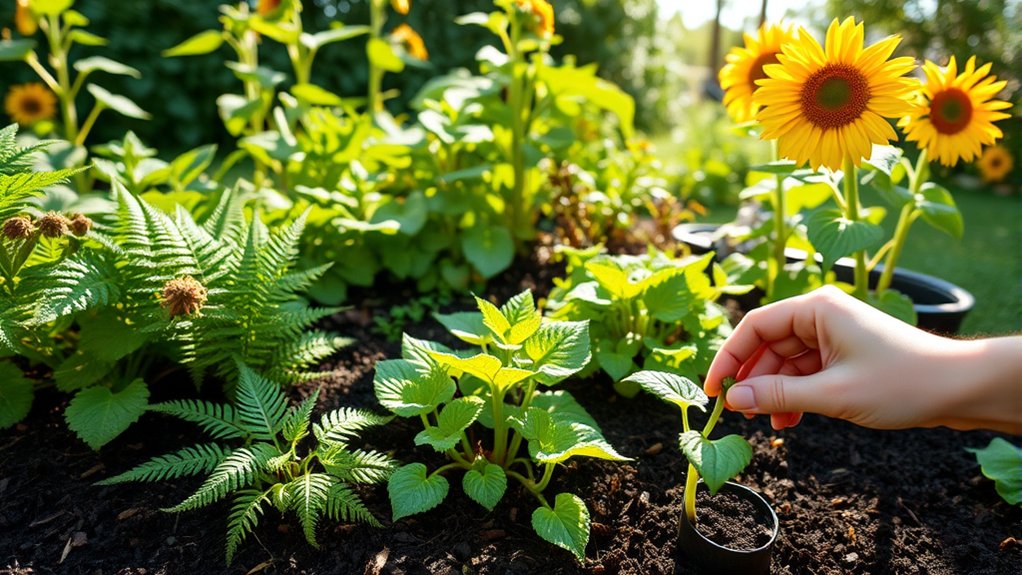
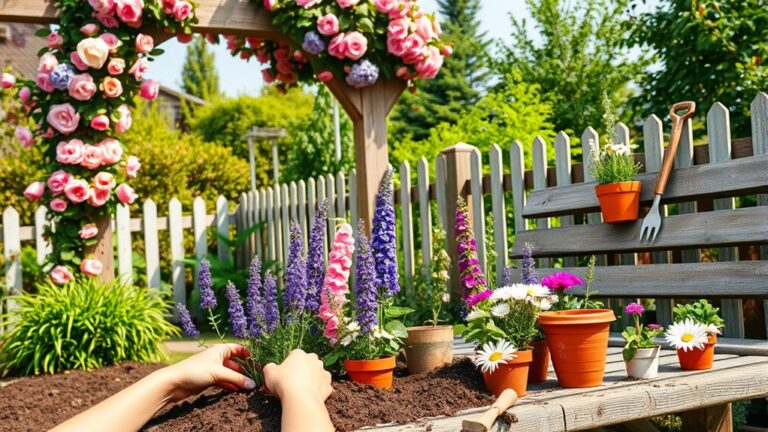
Before choosing plants, notice how much sunlight your garden gets and how much room you have. Track direct light throughout the day, since a spot that looks bright in the morning may sit in shade later. This sunlight assessment helps you match plants to the conditions they’ll actually receive. Check each plant’s label for its preferred light level, such as full sun, partial shade, or shade.
Next, measure your beds, containers, or available ground. Good space planning lets you choose plants that fit without crowding paths, windows, or neighboring crops. Look up each plant’s mature height and width, not just its size at purchase. Leave enough room for growth and airflow, and consider whether tall plants might shade shorter ones.
Think about how you’ll use the garden, too. Choose flowers for color, herbs for cooking, or vegetables your household enjoys. When you match plant needs to your light, space, and goals, you’ll create a garden that’s easier to manage and more likely to thrive.
Prepare Healthy Soil and Plant With Care
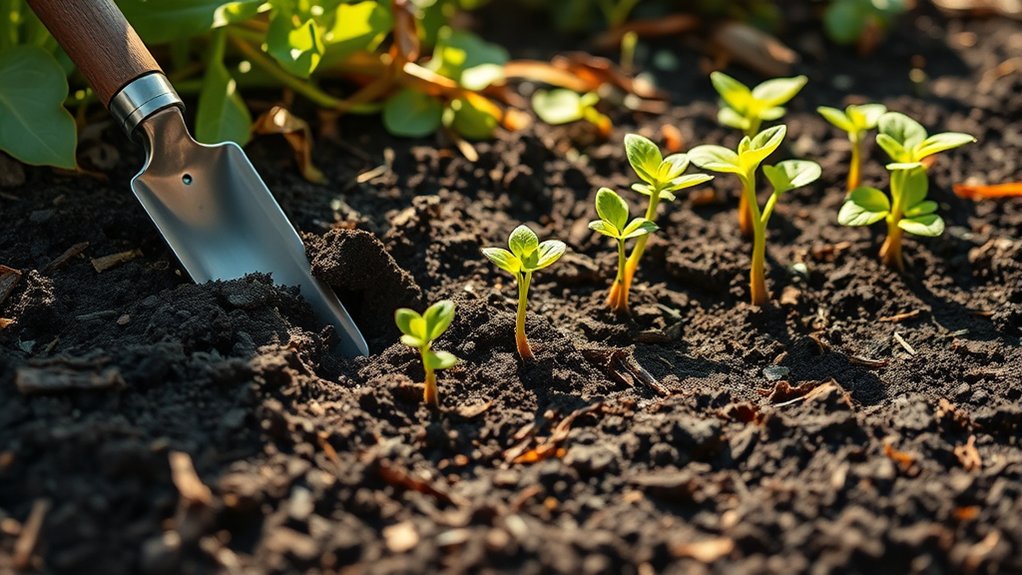
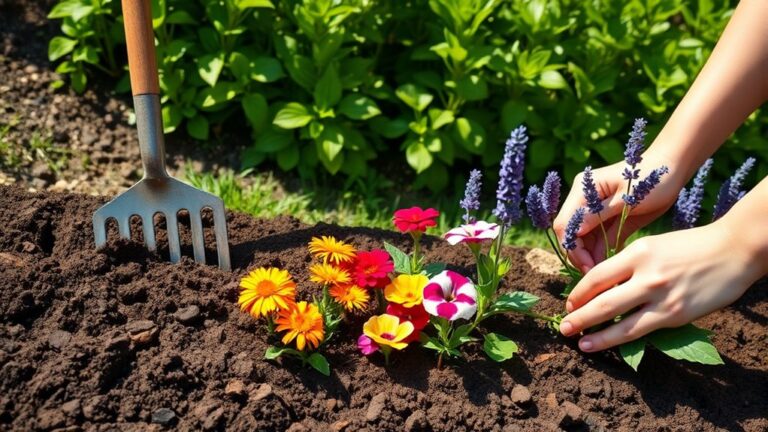
Healthy soil gives plants the support and nutrients they need to grow. Before planting, remove weeds, rocks, and debris from your beds. Loosen the ground with a garden fork, taking care not to dig when soil feels wet and sticky. This protects soil structure and helps roots spread through the bed.
Healthy soil starts with a clean bed and gentle loosening when the ground is dry enough to protect its structure.
Mix in finished compost to add organic matter and improve fertility. Check compost maturity: it should look dark and crumbly, smell earthy, and contain few recognizable scraps. If your soil is compacted or poor, consider a raised bed filled with quality garden soil.
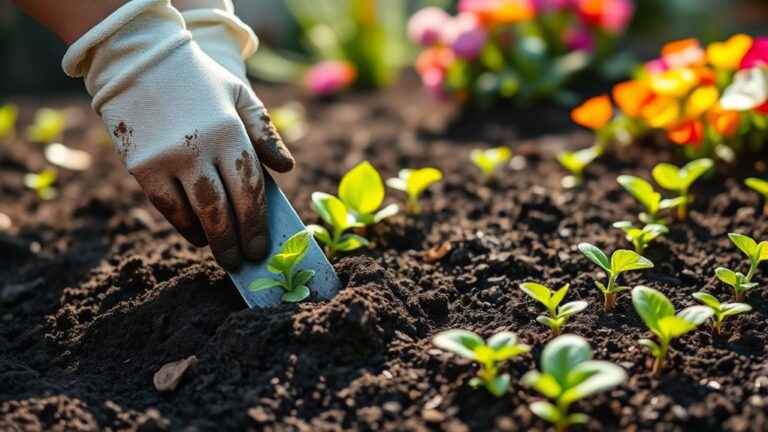
Read each plant label for spacing and depth, then follow its guidance. Dig a hole wide enough for the roots, set the plant at the same depth it grew in its container, and gently firm soil around it.
Handle seedlings by their leaves rather than their stems to avoid damage. Give each plant enough room to reach its mature size, and label varieties so you can identify them later.
Water and Maintain Your Garden Regularly
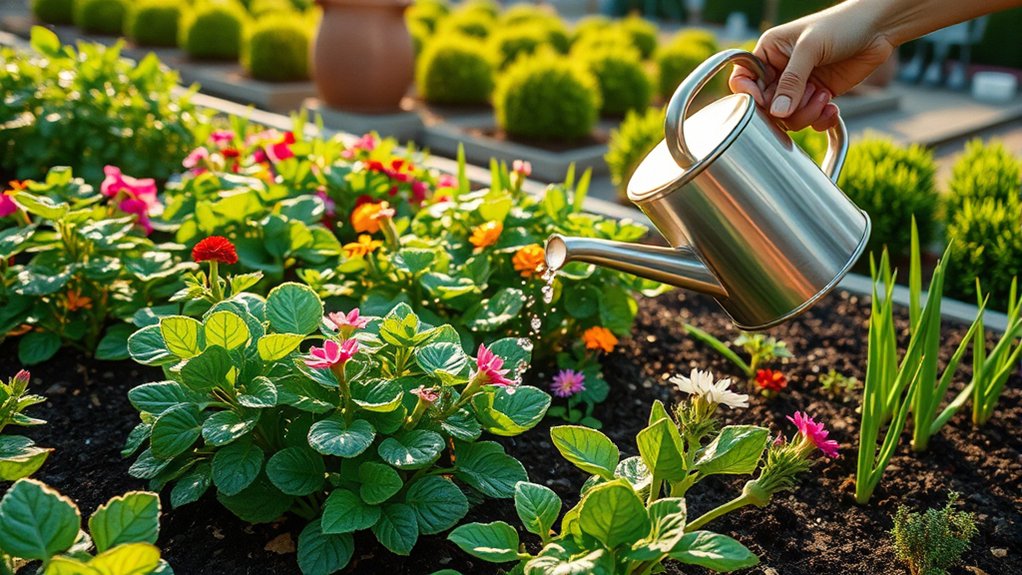
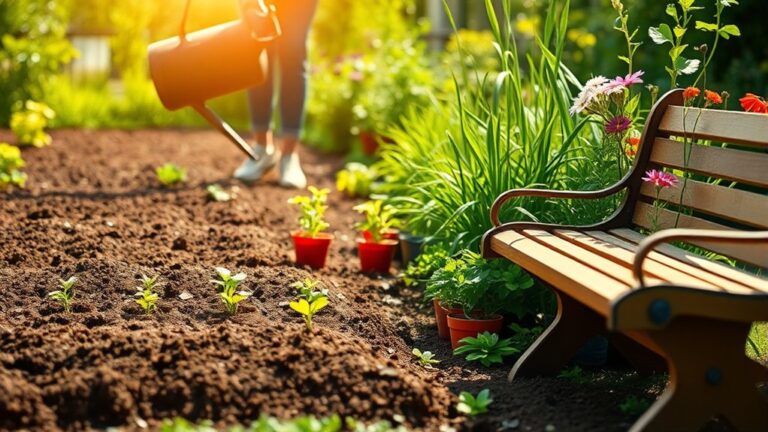
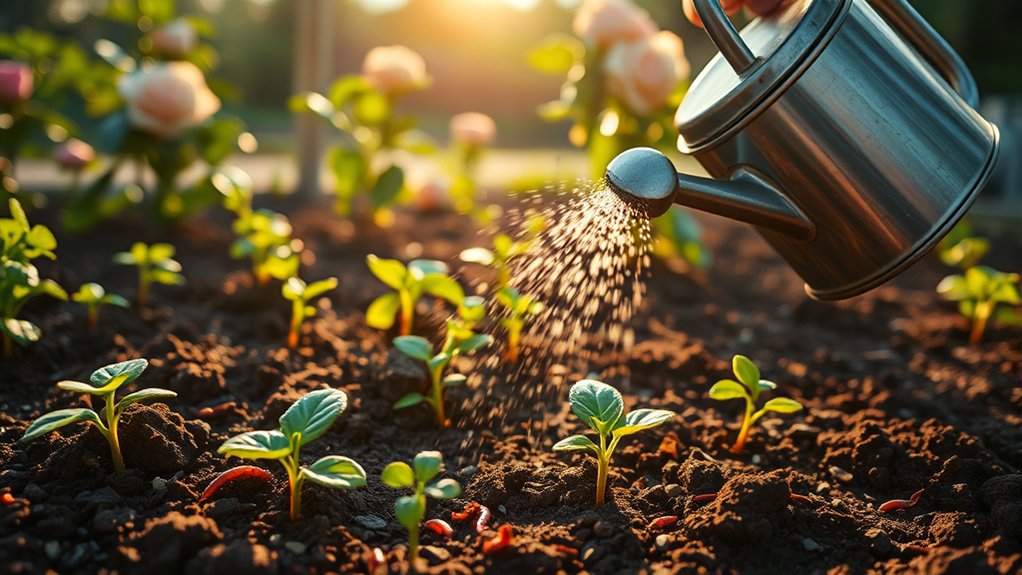
Water plants deeply when the top inch of soil feels dry, adjusting for rainfall, heat, and soil type. Aim water at the roots rather than the leaves to reduce evaporation and disease. A soaker hose or drip system can deliver moisture efficiently, while irrigation scheduling helps you keep a consistent routine.
Check your garden often, since containers and sandy soil may dry out faster than beds with rich soil.
Spread mulch around plants to conserve moisture, suppress weeds, and regulate soil temperature. Keep it a few inches from stems, and refresh it as it breaks down. Regular mulch maintenance prevents a soggy, compacted layer.
Pull weeds before they set seed, and inspect leaves for pests or signs of stress. Prune damaged growth with clean tools, and support climbing plants as they grow. Remove spent flowers and harvest ripe produce promptly.
These small, steady tasks help your garden stay healthy and productive throughout the season. Don’t overwater; soggy soil can harm roots.
Frequently Asked Questions
How Can I Attract Pollinators to My Garden?
You can attract pollinators by planting a varied, pesticide-free garden that offers food and shelter throughout the growing season. Choose pollinator friendly plants with different bloom times, shapes, and colors, and prioritize native nectar sources suited to your region.
Group flowers together so bees and butterflies can find them easily. Add shallow water with landing stones, leave some bare soil for nesting bees, and provide sheltered spots for overwintering insects.
What Tools Are Essential for Beginner Gardeners?
You’ll need a sturdy trowel, pruners, gloves, a watering can, and a hand fork to turn fresh soil into a thriving garden. These Essential tools cover beginner basics without cluttering your shed.
Add a hose with a gentle nozzle, plus a weeder and basket. Your pollinator magnets will flourish, while simple pest defenses protect tender leaves.
A thermometer helps with harvest timing and season extension, guiding you through changing weather and crisp autumn mornings.
How Can I Protect My Garden From Pests?
Protect your garden by checking plants often, removing damaged leaves, and covering vulnerable crops with fine mesh. Encourage beneficial insects with diverse flowers, and handpick larger pests before they spread.
For pest proofing basics, keep beds tidy, rotate crops, and water at soil level. Don’t rely on garden pest myths, such as assuming every insect harms plants; identify the culprit first, then choose targeted controls. Avoid broad pesticides that can kill pollinators and helpful predators.
When Should I Harvest Fruits and Vegetables?
Harvest fruits and vegetables when they reach their ideal size, color, texture, and flavor; check each crop’s specific signs because timing varies. For ripe fruit timing, taste a sample and look for easy separation from the stem, rich color, or a fragrant aroma.
Pick leafy greens young and tender, and harvest root crops when they’re large enough to use. With harvest window planning, inspect your garden every day or two so produce doesn’t become overripe.
How Can I Extend the Growing Season?
You can stretch your garden’s calendar like a rubber band with simple season extension techniques. Start seeds indoors, then transplant them when temperatures suit each crop.
Use row covers, cold frames, or a small greenhouse to shield plants from frost, and add mulch to keep soil warm. Choose quick-maturing varieties for late sowings, and protect roots with cloches.
Include pollinator friendly plants near crops so beneficial insects keep visiting as the growing season shifts.
Conclusion
With these three essentials, you’re ready to help your garden thrive. Choose plants that suit your sunlight and space, give them healthy soil and a careful start, then water and tend them regularly.
Don’t worry if a few plants take an unexpected little vacation. Gardening is a learning process, and each season teaches you something new.
Keep an eye on your garden, adjust as needed, and celebrate every fresh leaf, bright bloom, and homegrown harvest along the way. With these tips, you can grow a good garden season after season.