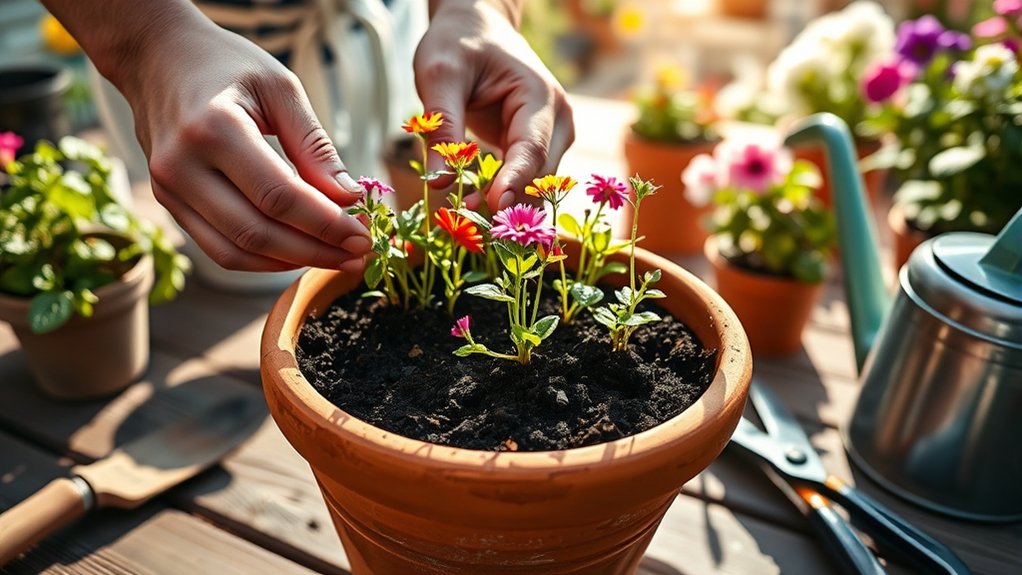
5 Easy Steps to Plant Flowers in Containers
Choosing the right flowers and getting them to thrive in pots can feel harder than it should. If you’ve struggled with wilting blooms or unsure where to start, you’re not alone. These 5 easy steps to plant flowers in containers will help you create a colorful display with confidence.
To plant flowers in containers, choose a pot with an unobstructed drainage hole, then match flowers to the spot’s sunlight and the container’s size. Fill the pot with lightweight potting mix rather than garden soil. Set each flower at the same depth it grew in its nursery pot, keeping leaves and the crown above the mix. Water thoroughly, let excess drain, and check soil regularly. With a few simple care tips, you can keep your container blooms thriving.
Key Takeaways
- Choose a pot with unobstructed drainage holes, or place a draining pot inside a decorative container.
- Match flowers to the spot’s sunlight and choose a container large enough for their mature size.
- Fill the pot with lightweight, container-specific potting mix, not garden soil.
- Plant at the nursery-pot depth, keeping the root ball level with the soil surface.
- Water thoroughly, then water when the top inch of soil feels dry and remove faded blooms.
Choose a Pot With Drainage for Flowers
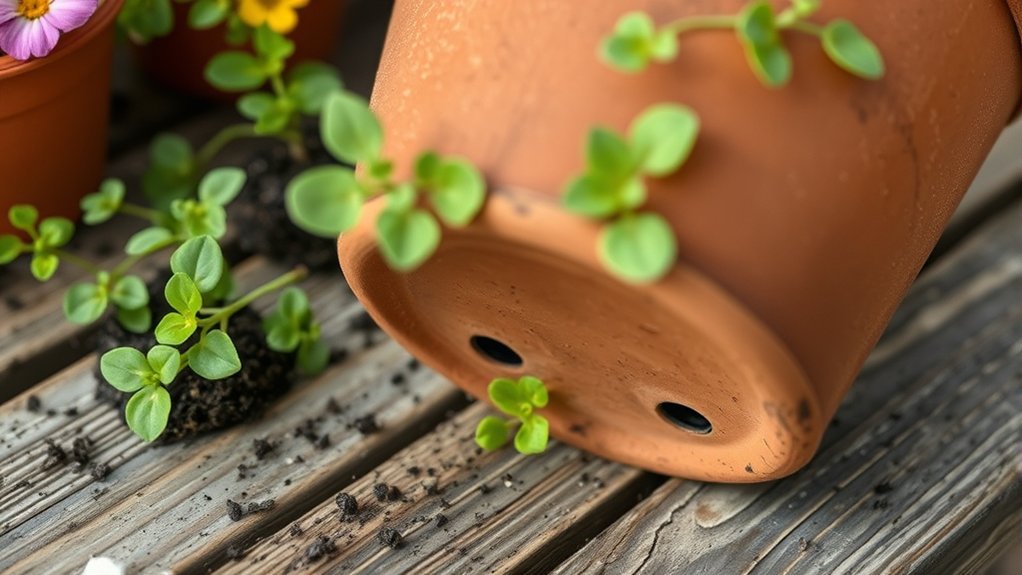
Choose a pot with drainage holes so excess water can escape and your flowers’ roots don’t sit in soggy soil. This simple feature helps prevent root rot and keeps watering manageable. If you find a decorative container you love without holes, use it as a cover pot: set a smaller, draining pot inside, then empty any collected water.
Drainage holes help prevent soggy roots and root rot; use a smaller draining pot inside decorative containers without holes.
When Choosing pots, check that each has at least one unobstructed hole and a saucer or tray to protect surfaces. Drainage importance goes beyond preventing puddles; it also lets air reach roots as water moves through the soil.
For better Soil drainage, use a suitable potting mix rather than dense garden soil, which can compact in containers. Consider Pot material benefits, too. Terracotta is porous and allows moisture to evaporate, so you may need to water more often. Plastic and glazed ceramic retain moisture longer and weigh less or offer a polished look.
Choose a sturdy size that gives roots room without making the container difficult to handle.
Match Flowers to Your Sunlight and Space
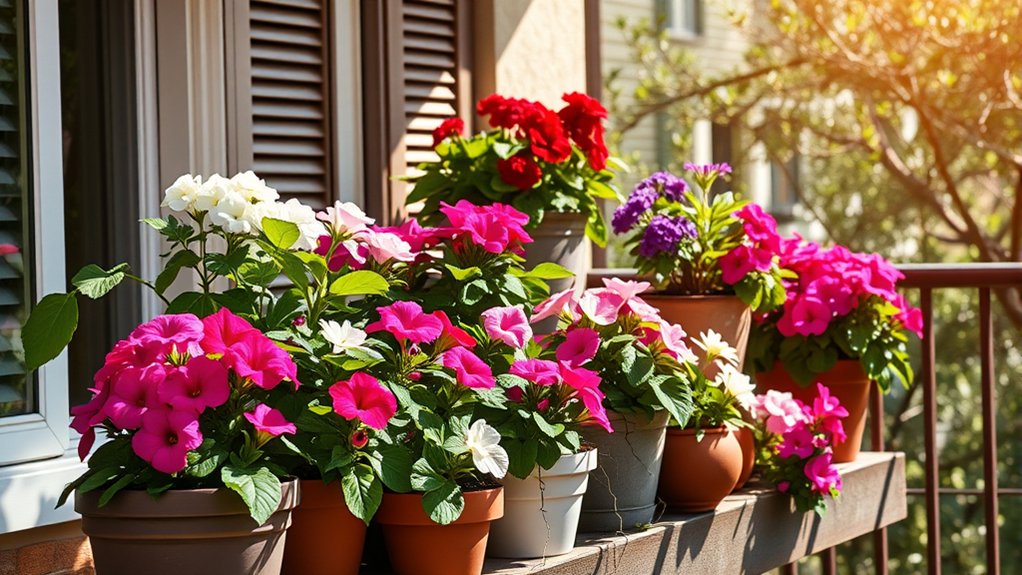
Before selecting flowers, note how many hours of direct sunlight your container spot gets each day. This simple sunlight mapping helps you choose plants that’ll thrive instead of struggle. Check the area at different times, since nearby walls, trees, or balconies can change the light.
- Full sun: If your spot gets six or more hours, choose sun lovers such as petunias, marigolds, or zinnias.
- Partial sun: For three to six hours, try begonias, impatiens, or snapdragons.
- Shade: With less than three hours, look for shade-tolerant choices such as fuchsias or torenia.
- Tight spaces: For space optimization, pick compact varieties, or use trailing flowers to soften the edges without crowding the center.
Next, consider the container’s width and height, plus how large each plant will grow. Give flowers room to spread, and avoid pairing vigorous growers with delicate companions. If you’re working with a small balcony or doorstep, group a few well-matched plants rather than squeezing in too many. Check plant labels for mature size and light needs before you buy.
Fill the Pot With Quality Potting Mix
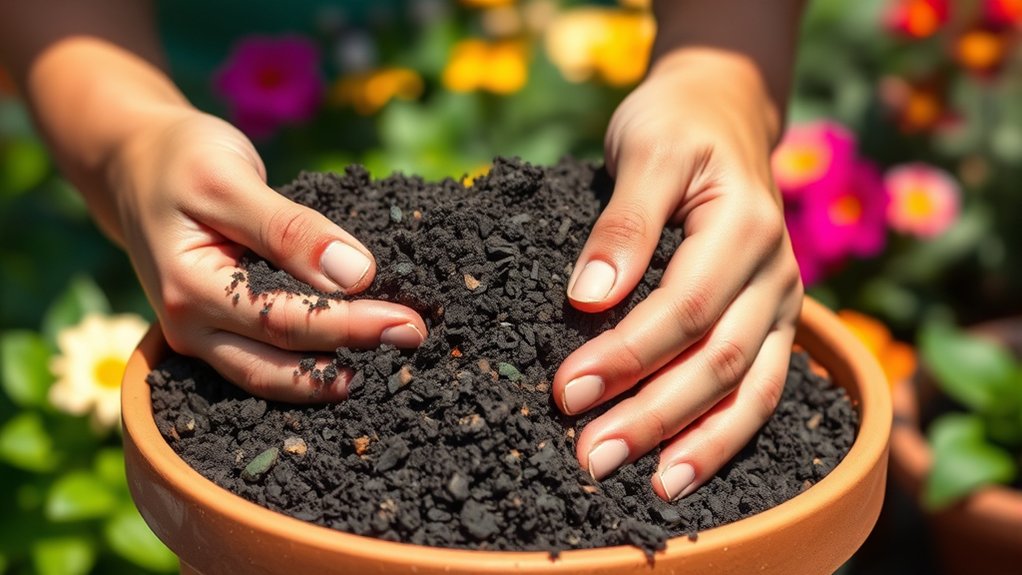
Once you’ve matched flowers to the light and space, fill the container with quality potting mix. Don’t use garden soil: it can compact in a pot, limiting airflow and holding too much water.
Choose a lightweight potting mix for flowering plants instead of garden soil, which can compact and hold too much water.
Instead, choose a lightweight blend made for containers, with ingredients such as peat or coir, compost, and perlite. Check the label to confirm the mix suits flowering plants and offers the potting mix quality your flowers need.
Before adding mix, check the pot’s container drainage. Make sure it has open holes at the bottom so excess water can escape.
If you’re reusing a container, clear any blocked holes and wash away old soil or residue. You can place a piece of mesh over each hole to keep mix from spilling out, but don’t cover the openings with stones; that can slow drainage.
Add fresh mix to the pot, leaving room at the top for watering. Lightly moisten it if it feels dry, and avoid packing it down.
Plant Flowers in Pots at the Right Depth
How deep should you plant each flower? Check the plant tag or nursery label first; it usually gives the best guidance for depth of planting. Most flowers do best when you set them at the same level they grew in their nursery pot. Planting too deeply can bury stems, while planting too shallowly can leave roots exposed.
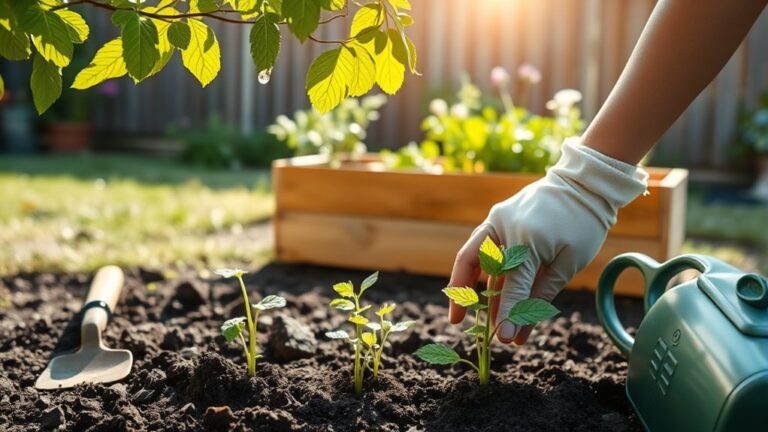
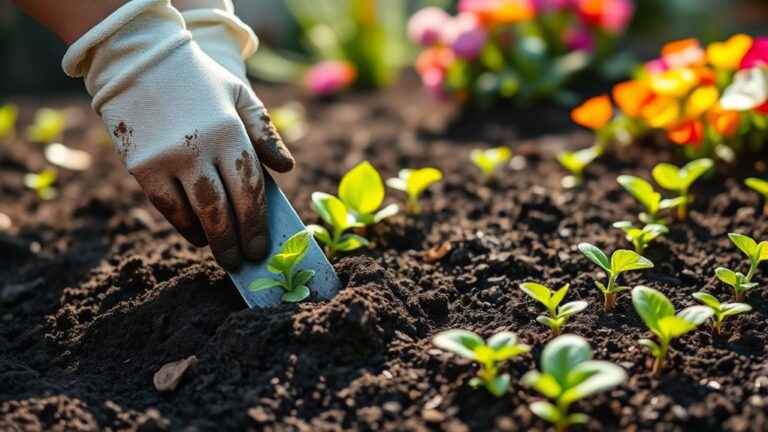
Before you place each flower, make a hole wide enough to fit its root ball without crowding. Ease the plant from its container, loosen any tightly circling roots, and position it upright. Keep the top of the root ball level with the potting mix, then fill around it and gently firm the mix to create good root to soil contact.
- Match the nursery soil line to the mix in your pot.
- Keep leaves and stems above the surface.
- Cover exposed roots, but don’t bury the crown.
- Leave enough space between flowers for their mature size.
Take a moment to check each plant’s position before moving on.
Water and Care for Flowers in Pots
Water your flowers thoroughly after planting, letting excess moisture drain from the pot. Check the soil every day by touching the top inch. When it feels dry, water slowly until moisture runs through the drainage holes.
These watering tips help you avoid both parched roots and soggy soil. Pots in hot, windy spots may need water more often, while cool or rainy weather calls for less.
Keep your containers where each flower gets the sunlight it needs. Remove faded blooms and yellowing leaves to encourage fresh growth and improve airflow.
Check leaves and stems regularly for pests or signs of disease, and deal with problems promptly. Don’t let water collect in saucers, since standing moisture can damage roots.
Feed your flowers with a balanced fertilizer, following the product label for dosage and frequency. Set a fertilizer schedule that suits the plant variety and growing season.
Too much fertilizer can harm roots and produce excess foliage. Adjust care as conditions change, and your flowers can thrive.
Frequently Asked Questions
When Is the Best Time of Year to Plant Flowers in Containers?
The best time to plant flowers in containers depends on your climate and the varieties you choose. Plant cool-season blooms in early spring, as soon as you can work the soil; they’ll tolerate chilly weather.
Wait until frost danger has passed before adding warm season varieties, such as petunias or zinnias. Check your local forecast, and protect tender plants from unexpected cold snaps. You can also plant containers later in summer or fall with suitable flowers.
Can I Combine Different Flower Varieties in One Container?
Yes, you can combine different flower varieties in one container. Pair bold blooms with delicate flowers for contrast, and use color coordination to create a harmonious display.
For plant synergy, choose varieties that need similar sunlight, water, and soil conditions; otherwise, one plant may struggle while another thrives. Check each flower’s mature size, too, so vigorous growers don’t crowd smaller companions.
With thoughtful choices, you’ll create a lively, balanced container garden that blooms beautifully together.
How Often Should I Replace Container Flowers?
Replace container flowers when they stop blooming, decline despite proper care, or outgrow their pot—often seasonally for annuals and every few years for perennials. You don’t need to replace healthy plants on a fixed schedule.
For regular replacements, remove spent flowers and refresh the potting mix between plantings. Check the fertilizer label for feeding frequency, since needs vary by flower type. Keep plants that thrive, and swap only those that look tired or unhealthy.
Which Flowers Attract Butterflies and Hummingbirds to Container Gardens?
For a container garden buzzing with more visitors than a flower festival, choose nectar-rich blooms like zinnias, lantana, salvia, and verbena to attract butterflies. Hummingbirds favor tubular flowers, including fuchsia, petunias, and trumpet honeysuckle.
Combine these flowers nectar seekers love, and you’ll offer color through the season. Place pots in sunny spots, keep soil moist, and group plants together. Sweet plant scents may draw pollinators, but bright colors and abundant nectar matter most.
Can I Bring Outdoor Container Flowers Indoors for Winter?
Yes, you can bring some outdoor container flowers indoors for winter, but success depends on the plant and your home’s conditions. Before frost, check for pests, trim dead growth, and gradually acclimate plants to indoor air.
Match each flower’s light requirements by placing it near a suitable window or adding a grow light. Reduce watering as growth slows, and avoid drafts or heating vents during indoor wintering. Some plants may still need dormancy.
Conclusion
With the right pot, flowers suited to your sunlight, quality mix, proper planting depth, and steady watering, you’ve given your container garden a strong start. Keep an eye on moisture and fading blooms, and adjust care as the seasons change.
Soon, your small space can feel like a secret garden, where each new blossom turns toward the sun like a tiny Icarus. Enjoy the color, but don’t let thirsty soil fly too close to the sun.
With these easy steps to plant flowers in containers, your flowers will reward your care with beauty all season long.