How Do You Prepare Perennials for Winter in 3 Steps?
Preparing perennials for winter can feel tricky—cut them back too soon, and you may remove shelter and food for wildlife; leave them untouched, and diseased foliage can linger. You’re not alone: many gardeners struggle to know what to do. These simple steps can help you prepare perennials for winter with confidence.
Prepare perennials for winter in three steps. First, cut back only plants that need fall cleanup; remove diseased foliage, but leave healthy stems and seed heads on plants such as coneflowers and ornamental grasses. Next, water deeply during a dry spell before the ground freezes, especially around new plants or in sandy soil. Finally, spread 2 to 3 inches of loose mulch around the roots, keeping it away from crowns and stems. Plant-specific timing and spring care can help you get each step right.
Key Takeaways
- Assess what to cut back: Remove diseased or pest-damaged foliage, but leave healthy stems and seed heads on plants such as coneflowers and ornamental grasses.
- Prune at the right time: Check plant-specific guidance; clean up some perennials after frost, while others should stand until spring.
- Water before the ground freezes: Slowly soak the root zone during dry spells, especially for new plants or sandy soil, and stop when the ground freezes.
- Mulch to protect roots: After temperatures cool but before freezing, apply 2–3 inches of loose mulch, keeping it away from crowns and stems.
- Clear mulch gradually in spring: As temperatures rise, pull mulch back to make room for new growth and avoid covering dormant buds.
Decide Which Perennials to Cut Back
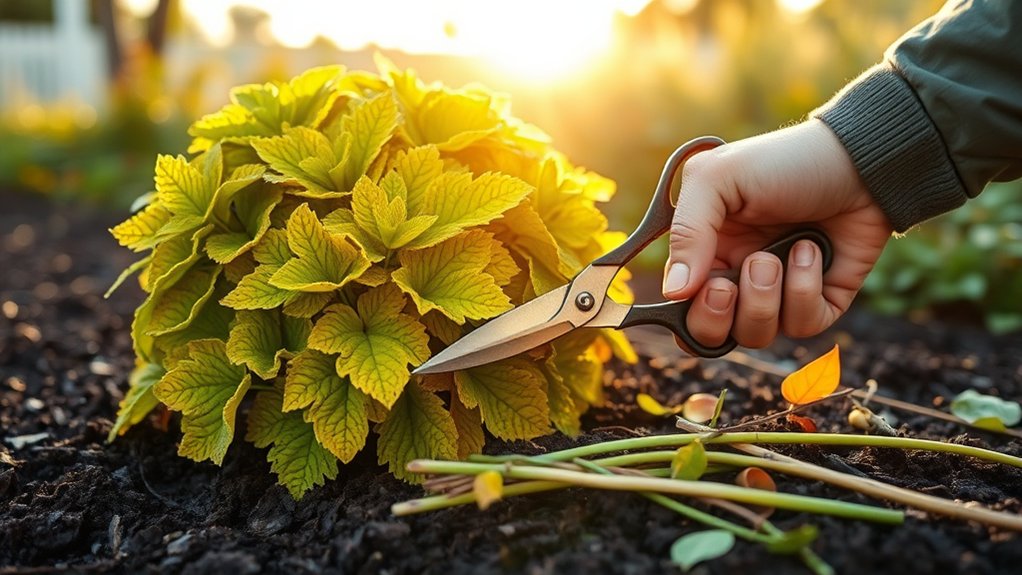
Before reaching for the pruners, check which perennials benefit from a fall trim. You don’t need to cut every plant back once blooms fade. Leave sturdy stems and seed heads on coneflowers, black-eyed Susans, and ornamental grasses; they add winter interest and provide food or shelter for wildlife. In spring, you can remove them before new growth takes over.
For plants with diseased or pest-damaged foliage, remove affected material to limit problems from carrying into next season. Don’t compost infected leaves; discard them according to local guidance. As you assess disease risks, distinguish genuine damage from normal seasonal browning, and avoid cutting healthy foliage that still feeds roots.
To decide pruning timing, consider each plant’s needs and your climate. Some perennials, such as peonies, benefit from cleanup after frost, while others are best left standing until spring. Check plant labels or reliable local advice before you prune, and use clean, sharp tools for any necessary cuts.
Water Perennials Before the Ground Freezes

As fall winds down, give your perennials a deep watering before the ground freezes, especially if rain has been scarce. Moist soil helps roots stay hydrated through winter and reduces stress from dry conditions. Focus on plants that are newly planted, growing in sandy soil, or sheltered from rainfall by eaves and dense branches.
Good watering timing matters: water in the morning on a mild day, giving moisture time to soak in before temperatures drop overnight. Apply water slowly at the base of each plant so it reaches the root zone rather than running off. Check the soil first; if it’s already moist, you can skip watering.
Continue to monitor rainfall until the ground begins to freeze, and water during dry spells as needed. This step supports root health and offers practical frost protection by helping plants enter winter well hydrated. Don’t water frozen soil, since it can’t absorb moisture effectively. Stop once the ground freezes.
Mulch Perennials to Protect Their Roots

Once the ground has cooled but before it freezes, spread a 2- to 3-inch layer of mulch around your perennials to insulate their roots and limit damaging freeze-thaw cycles. Keep mulch a few inches away from crowns and stems to prevent rot and discourage pests.
Check the mulch depth after settling, and add more only where the layer has thinned. Choose loose, breathable mulch materials that protect soil without forming a soggy mat.
| Mulch material | Benefit |
|---|---|
| Shredded leaves | Insulate and enrich soil |
| Clean straw | Provides light, airy cover |
| Pine needles | Resist compacting when wet |
Use healthy, disease-free material, and avoid thick layers of whole leaves, which can block air and water. If you’ve already watered your plants before the ground freezes, mulch afterward to help retain moisture.
In spring, pull mulch back gradually as temperatures rise, giving new growth room to emerge while reducing the risk of crown damage. Don’t mound it over dormant buds.
Frequently Asked Questions
When Should I Divide Overgrown Perennial Plants?
Divide overgrown perennials when they’re dormant or just beginning active growth: usually in early spring or fall. The best time depends on the plant and your climate.
Spring-blooming varieties generally benefit from division after flowering, while fall bloomers often divide well in spring. To decide when to divide, check your plant’s needs and allow several weeks for roots to establish before extreme heat or freezing weather. Water divisions thoroughly after replanting.
How Can I Protect Potted Perennials From Winter Cold?
Protect potted perennials by moving them to a sheltered spot, such as an unheated garage, shed, or area beside your home’s foundation. Group perennial containers together, then wrap pots with burlap, bubble wrap, or insulating material to shield roots from freezing temperatures.
Raise containers off cold ground, and water occasionally during dry spells. Choose winterizing methods suited to your climate and plant hardiness, and make sure pots have drainage to prevent waterlogged roots.
Should I Move Tender Perennials Indoors Before Frost?
Yes, move tender perennials indoors before the first expected frost, especially if they’re in pots. Check each plant for pests, remove damaged leaves, and place it in bright light with suitable temperatures.
If moving indoors isn’t practical, group pots in a sheltered spot, insulate containers, or use burlap wraps. Don’t wrap foliage tightly; allow airflow and check soil moisture regularly.
How Do I Protect Perennials From Winter Pests?
Protect perennials from winter pests by clearing fallen leaves, dead stems, and weeds where insects and rodents hide. Add a thin layer of mulch, but keep it away from crowns and stems to discourage nesting.
For how to deter winter pests, install wire mesh around vulnerable plants and check it regularly. Avoid piling snow against beds. When replacing damaged plants, try selecting pest resistant perennials suited to your climate and garden conditions.
Which Perennials Benefit From Winter Protection With Burlap?
Like a winter cloak, burlap shields exposed perennials from drying winds and harsh sun. You’ll find perennial protection especially helpful for broadleaf evergreens, young shrubs, and tender plants such as roses, lavender, and heuchera in cold, windy sites. Wrap or loosely screen them, leaving airflow and room for growth.
Burlap benefits plants by reducing windburn and temperature swings, but it won’t reliably stop heavy frost. Mulch roots and choose hardy varieties for stronger winter defense.
Conclusion
As winter approaches, prepare your perennials in three simple steps: cut back only what needs trimming, water deeply before the ground freezes, and add mulch to shield roots from harsh cold. Leave seed heads that feed birds and give your garden winter interest.
With a little care now, you’ll help your plants endure the season and return in spring, like Persephone rising from the underworld, ready to bring fresh color and life back to your garden. Don’t wait for the first hard freeze. These three steps will help prepare perennials for winter.