How to Do the Garden in 3 Simple Steps
Starting a garden can feel overwhelming when you’re unsure where to begin or worried your plants won’t thrive. You’re not alone—many people struggle to turn a patch of yard or a few containers into a healthy garden. This guide to how to do the garden in 3 simple steps makes it easier to get started.
Start your garden in three simple steps: plan the space, choose suitable plants, then plant and care for them. First, pick a sunny spot near water, observe drainage and wind, and sketch beds and paths. Next, match plants to the available light and space, checking mature sizes and local frost dates. Finally, prepare the soil, follow planting instructions, and water gently. Keep plants healthy with deep watering, compost, early weeding, light mulch, and regular checks for pests. A few practical details can make each step easier.
Key Takeaways
- Choose a sunny, accessible spot near water, and check sunlight, drainage, soil, and underground utilities before digging.
- Sketch a manageable layout with paths and beds, then plan irrigation and planting around local frost dates and rainfall.
- Select plants suited to each spot’s sunlight and space, checking mature sizes and following planting instructions.
- Prepare the soil by removing weeds and debris, loosening it, and adding compost or using raised beds if needed.
- Water deeply after planting and when soil dries; weed, mulch lightly, and inspect plants regularly for problems.
Choose a Spot and Plan Your Garden
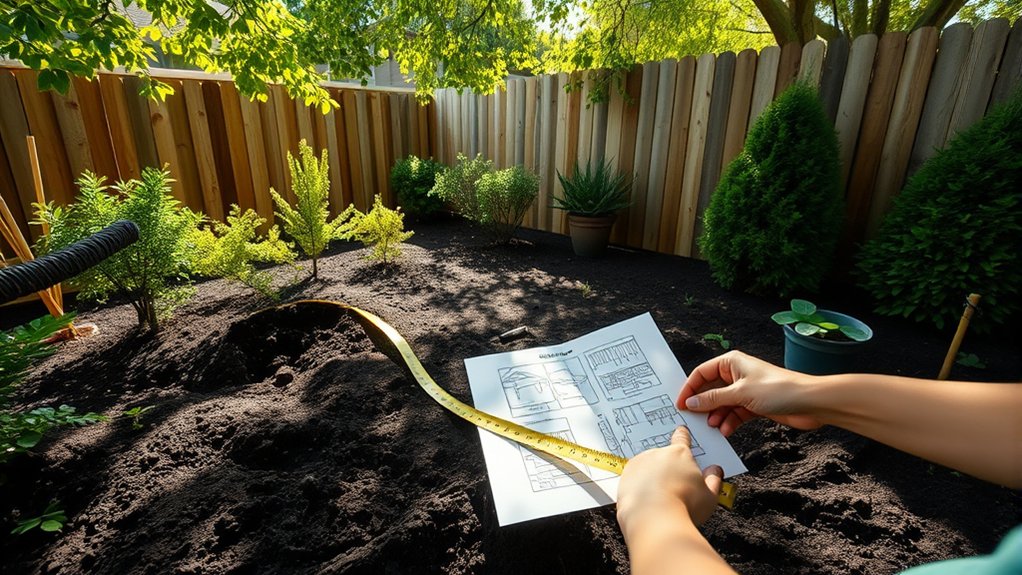
Start by choosing a sunny spot with easy access to water. Check how sunlight moves across your yard, and note areas that stay soggy, dry, or exposed to strong winds.
Pick a location you can reach easily, so you’ll tend it regularly and carry tools without hassle.
Choosing soil type starts with a simple test: grab a handful of damp soil and see whether it crumbles, clumps, or feels gritty. Improve poor soil with compost, or use raised beds if drainage or ground quality poses a problem.
Before digging, call your local utility service to mark underground lines.
For planning layout, sketch the space and mark paths, beds, and room to work. Keep the design manageable, with clear access to every area.
Selecting irrigation early helps you place hoses, drip lines, or a watering source where they’ll serve the whole garden efficiently.
When forecasting seasons, consider your local frost dates and typical rainfall. Plan the garden’s timing around your climate, and leave space for adjustments as conditions change.
A practical plan saves time, water, and effort.
Pick Plants for Your Sunlight and Space
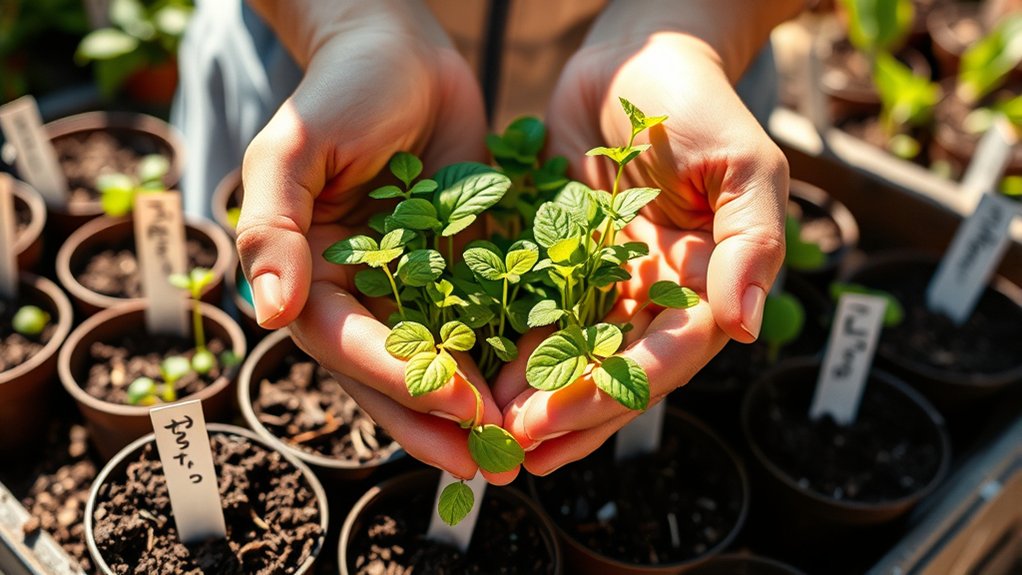
Choose plants that match the sunlight and space your garden can provide. Observe how many hours of direct light each area receives, then compare those conditions with plant sunlight requirements. Full-sun varieties need several hours of direct light, while shade-loving choices thrive with less. If your garden gets a mix, select plants suited to each location rather than forcing one type to fit everywhere.
Next, consider mature size, not just how seedlings look at the store. Check plant labels for expected height and width, and leave enough room for each variety to grow. For space utilization, pair compact crops with larger plants only when their needs and growth habits work well together. A small garden can still offer variety: choose dwarf vegetables, herbs, or container-friendly flowers. In a larger bed, combine different heights and shapes to make good use of available room. Match your choices to your climate and preferences, and keep your list manageable. You’ll enjoy a garden that fits.
Plant Your Garden and Keep It Healthy
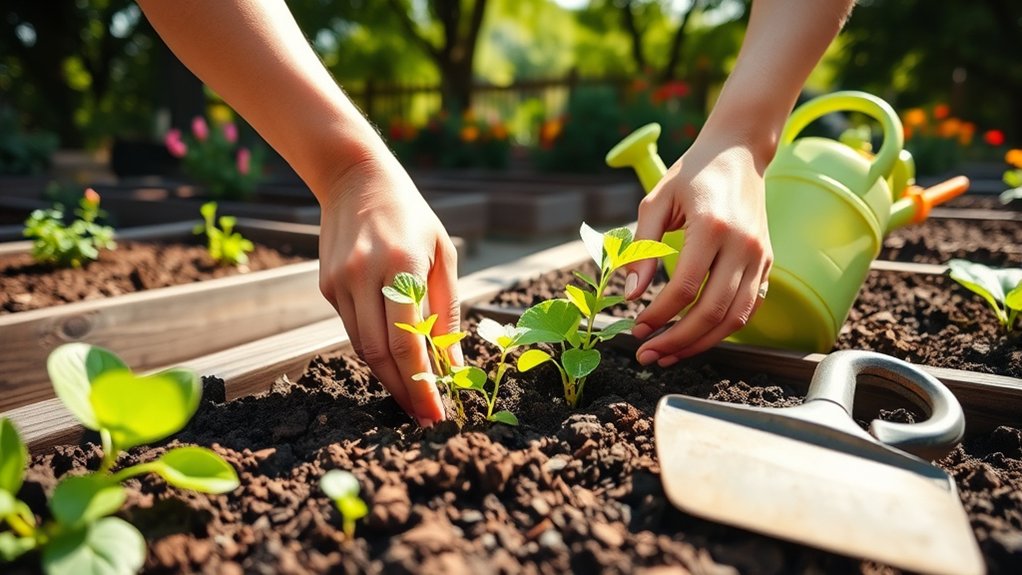
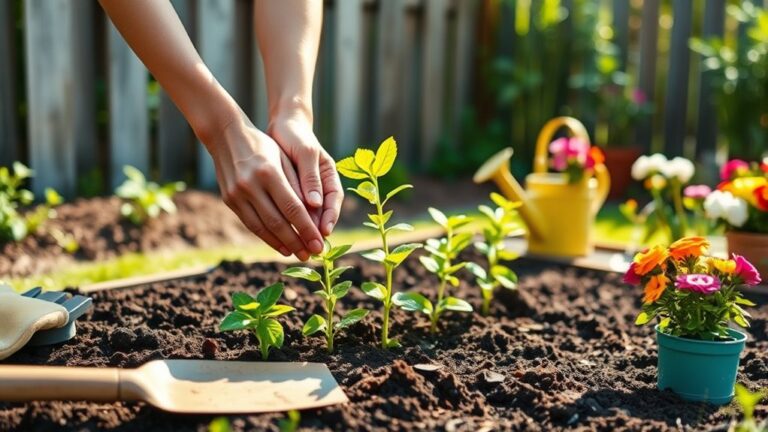
Plant at the right time for your climate, following seed-packet or nursery instructions for depth and spacing. Before you sow, loosen the soil and remove weeds, rocks, and debris.
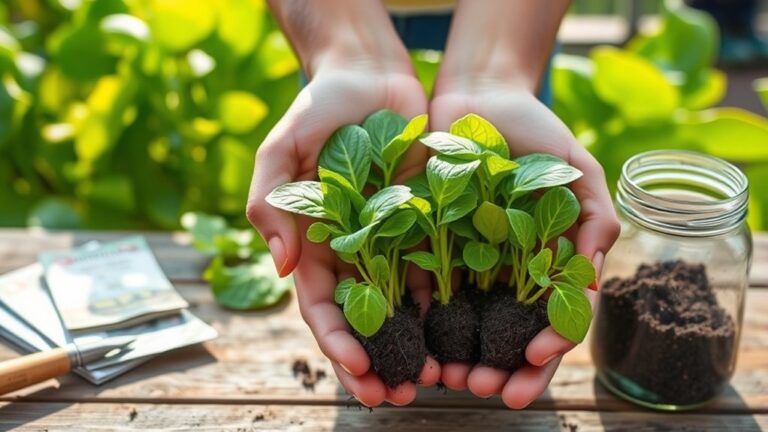
Check seed spacing carefully; crowded plants compete for water, light, and nutrients. Set nursery plants at the same depth they grew in their pots, then firm the soil gently around their roots. Water slowly after planting so moisture reaches the root zone.
Keep your garden healthy with steady, attentive care. Check soil moisture often, and water deeply when the top layer feels dry. Aim water at the soil rather than the leaves to limit disease.
Add compost as needed to support growth, and pull weeds before they spread. Learn mulch basics: spread a thin layer of straw, shredded leaves, or bark around plants, leaving space around stems. Mulch helps conserve moisture, suppress weeds, and moderate soil temperature.
Inspect leaves and stems regularly. If you spot pests or damage, identify the cause and respond early with the least harmful effective method.
Frequently Asked Questions
When Is the Best Time of Year to Start Gardening?
The best time to start gardening is usually spring, after your area’s last frost, when soil warms and daylight increases. For the right seasonal timing, check your local frost dates and choose crops suited to your climate.
You can start cool-season vegetables earlier, while warm-season plants need warmer soil. If you’re wondering when to plant, follow seed-packet guidance and local forecasts; you’ll give each plant a stronger start and avoid frost damage.
What Basic Tools Should a Beginner Gardener Buy?
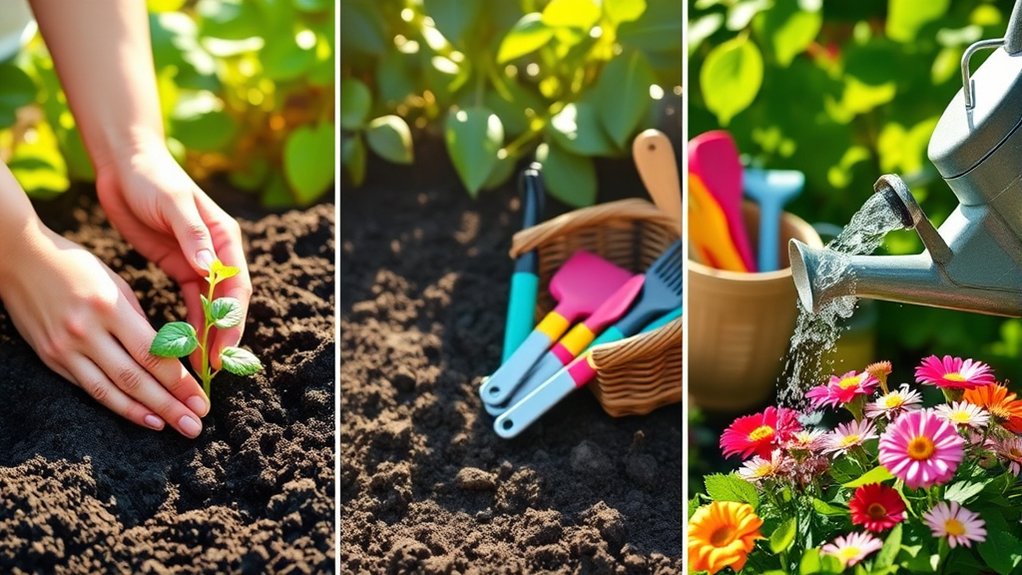
Start with a hand trowel, pruning shears, gardening gloves, a watering can, and a sturdy hand fork. For example, if you’re planting tomatoes in a small bed, these basic tools help you dig, trim, loosen soil, and water comfortably.
Choose beginner gear that fits your hands and feels durable; you don’t need a shed full of equipment. Add a hoe or shovel later if your garden grows or your tasks demand them.
How Can I Make Compost at Home?
Start composting at home by choosing a shaded, well-drained spot or a lidded bin. Layer fruit and vegetable scraps, coffee grounds, and dry leaves or shredded cardboard.
Keep the pile damp like a wrung-out sponge, and turn it every week to add air. Avoid meat, dairy, and oily foods.
You can also try worm farming in a small bin. These composite materials will break down into rich compost for your plants.
How Do I Keep Pests Out of My Garden Naturally?
You can keep pests out naturally by making your garden a fortress, not a battlefield. Try pest resistant strategies: rotate crops, choose hardy varieties, remove diseased leaves, and encourage helpful insects with diverse flowers.
Use natural repellents, such as garlic spray or diluted neem oil, and apply them carefully according to label directions. Cover young plants with row fabric, handpick larger pests, and keep beds tidy. Check leaves often so you can act early.
How Much Does It Typically Cost to Start a Garden?
You can start a garden for about $50–$300, depending on its size, location, and what you already own. A small container garden may cost just $30–$100, while a raised bed with soil, tools, and plants can reach $150–$500.
For a budget friendly garden setup, reuse containers and borrow tools. Beginner friendly soil care starts with compost and a simple soil test, helping you avoid unnecessary purchases and grow healthy plants from the start.
Conclusion
You’ve chosen a spot, matched plants to your sunlight and space, and learned how to plant and care for them. Now take it one step at a time: water regularly, watch for new growth, and adjust as needed.
Your garden doesn’t need to be perfect to bring joy. Think of each seed as a small promise; with your care, it can blossom into a welcoming space you’ll love.
Start today, and enjoy seeing your hard work grow. With these three simple steps, you’re ready to do the garden and watch it flourish.