How to Build a Flower Garden in 5 Simple Steps
Starting a flower garden can feel overwhelming when you’re unsure where to plant or which flowers will thrive. You’re not alone—many people struggle to get the right mix of sunlight, soil, and care. These five simple steps can help you build a flower garden with confidence.
Build a flower garden in five simple steps. First, choose a level, accessible spot with at least six hours of sun, and avoid areas that collect water. Second, match flowers to the site’s sunlight, drainage, and soil pH. Third, clear weeds and stones, loosen soil 8 to 12 inches deep, and mix in finished compost. Fourth, plant according to frost dates and plant tags. Finally, water deeply, mulch, remove spent blooms, and watch for pests. A few planning tips can help your garden thrive.
Key Takeaways
- Choose a level, accessible site with at least six hours of sunlight, good drainage, and room for maintenance.
- Check sunlight, soil texture, and pH, then select flowers suited to those conditions.
- Clear weeds and stones, loosen soil 8–12 inches deep, and improve it with finished compost as needed.
- Plant at the right time for each flower, following seed-packet or plant-tag guidance and local frost dates.
- Water deeply when the top inch of soil is dry; mulch, weed, deadhead, and monitor plants regularly.
Choose a Sunny Spot for Your Flower Garden
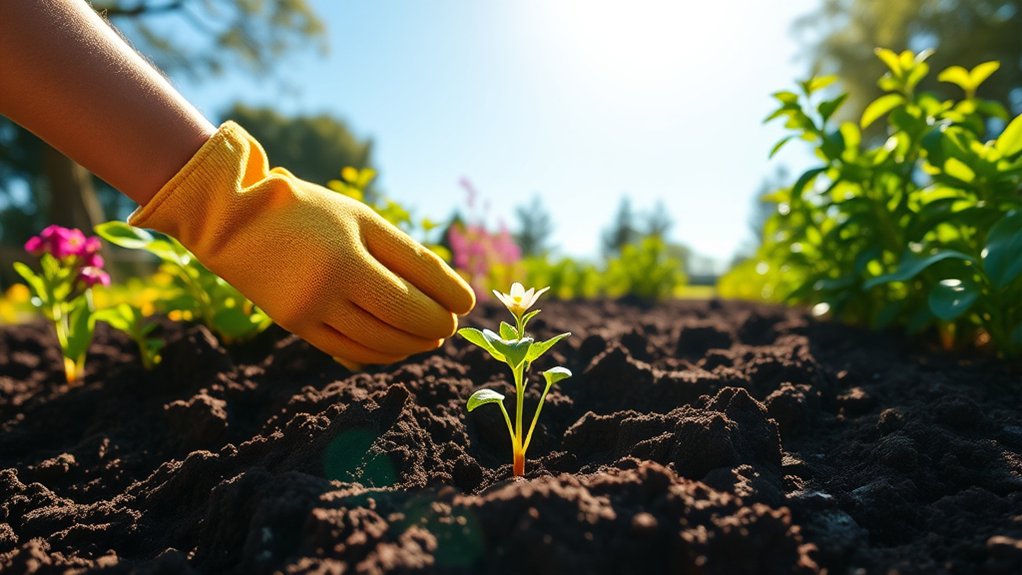
Choose a spot that gets at least six hours of direct sunlight each day, since most flowering plants thrive in full sun. Before you commit, observe the area at different times. Buildings, fences, and trees can cast shifting shadows, so check where sunlight falls in the morning and afternoon. This simple check helps you judge the site’s Sun exposure accurately.
Look for a level place that’s easy to reach with a hose and convenient to maintain. Avoid low spots where water collects after rain, because soggy ground can harm roots.
You’ll also want enough room to move around the bed without stepping on plants or compacting the earth. Check the soil fertility by noticing whether nearby plants grow well, but don’t choose a location based on appearance alone. A basic soil test can reveal useful details about the ground.
Once you’ve picked a sunny, accessible site, mark its boundaries and clear away weeds, rocks, and debris. Your garden will have a practical foundation for planting.
Match Flowers to Your Garden’s Sun and Soil
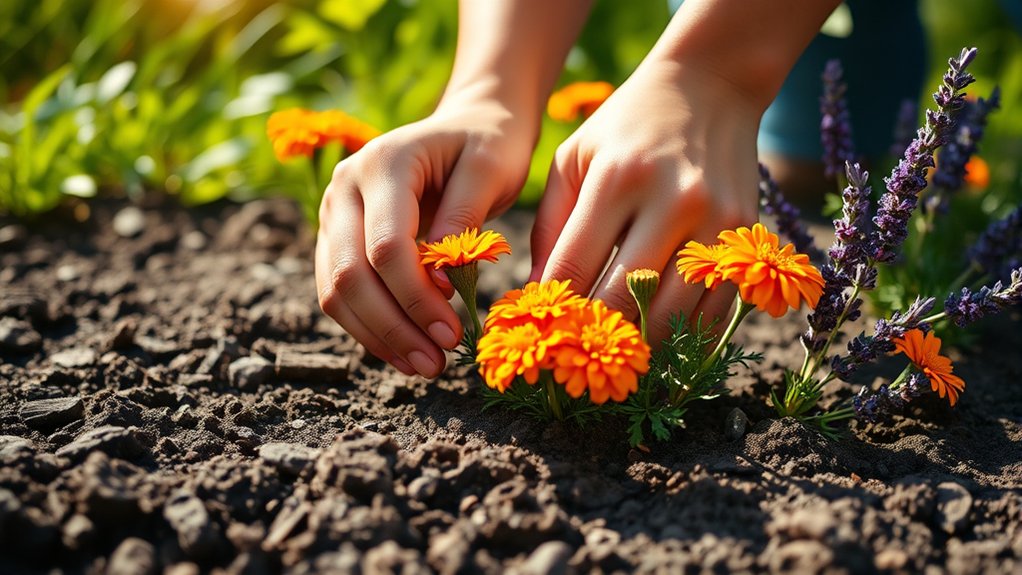
With your sunny spot selected, match flowers to its light and soil conditions. Check how many hours of direct sun each area receives, then choose plants suited to those patterns. Full-sun blooms need at least six hours daily, while shade-tolerant varieties thrive with less. This matching sunlight helps your flowers grow well without constant intervention.
Next, consider your garden’s existing soil. Note whether it drains quickly or stays damp, and check soil pH values with a simple test kit. Compare the results with each plant’s preferences before choosing varieties. Some flowers favor acidic conditions; others do better in neutral or alkaline soil. Pick plants that naturally suit your site.
Think about upkeep, too. Review pruning strategies for each flower so you know when and how to trim spent blooms or shape growth. Compare annual vs perennial care: annuals need replacing each year, while perennials return and may need dividing. Choose a mix that fits your schedule and keeps the garden attractive through the growing season.
Prepare the Soil for Healthy Blooms
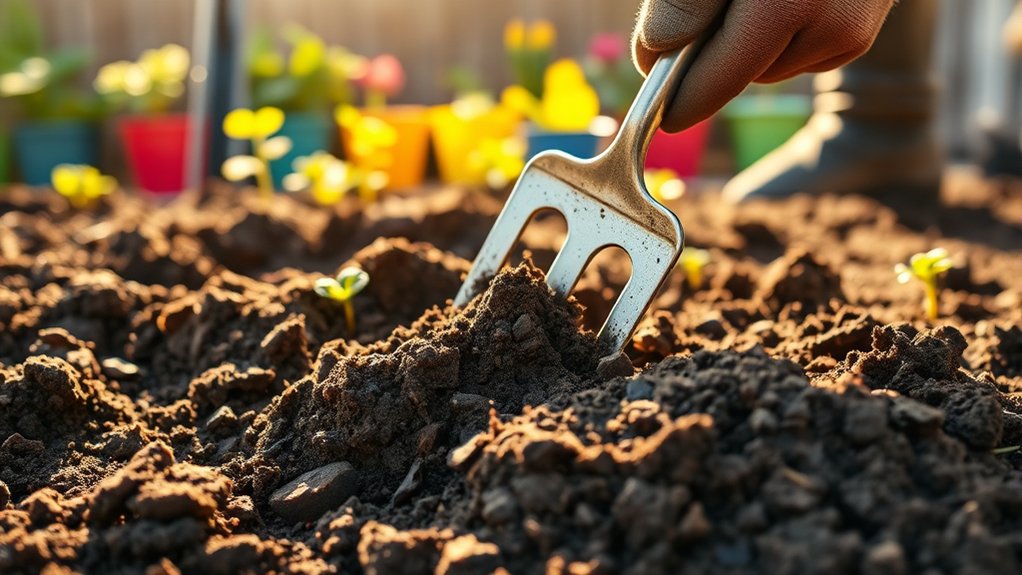
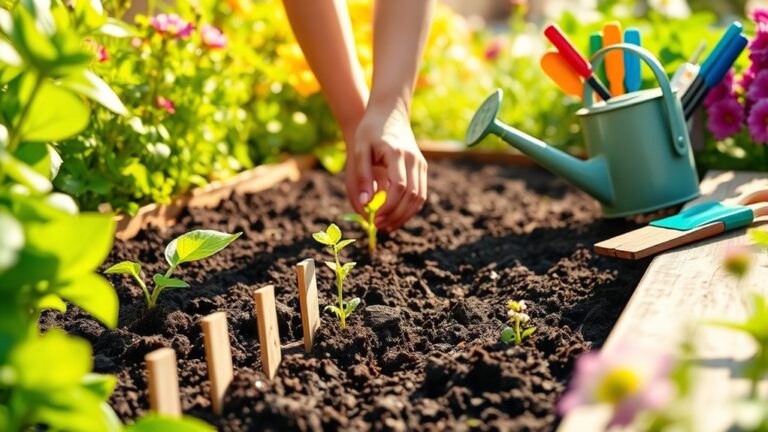
Prepare the bed by removing weeds, grass, and stones, then loosen the soil about 8 to 12 inches deep. Break up compacted clumps so roots can spread easily, and rake the surface smooth.
Clear debris, loosen soil 8 to 12 inches deep, break up clumps, and rake the bed smooth for healthy root growth.
Check your soil’s texture and pH with a simple test. If it’s heavy clay, mix in finished compost to improve structure; if it’s sandy, compost helps hold moisture and nutrients.
These composting basics give you a practical way to enrich the bed without relying on excessive fertilizer. Healthy soil supports strong roots and steady growth.
Address drainage improvement before planting. If water pools after rain, raise the bed or work in organic matter to help excess moisture move through. For a low spot, consider a shallow channel that directs runoff away.
Finish with Mulching strategies that protect the prepared soil: spread a two-inch layer of shredded bark or leaf mulch, keeping it clear of stems. This helps conserve moisture, suppress weeds, and reduce erosion.
Plant Your Flowers at the Right Time
Once your soil is ready, check your area’s last frost date before planting. Frost-sensitive flowers can suffer if you set them out too early, while hardy varieties tolerate cooler conditions. Your local extension service can help you find reliable dates.
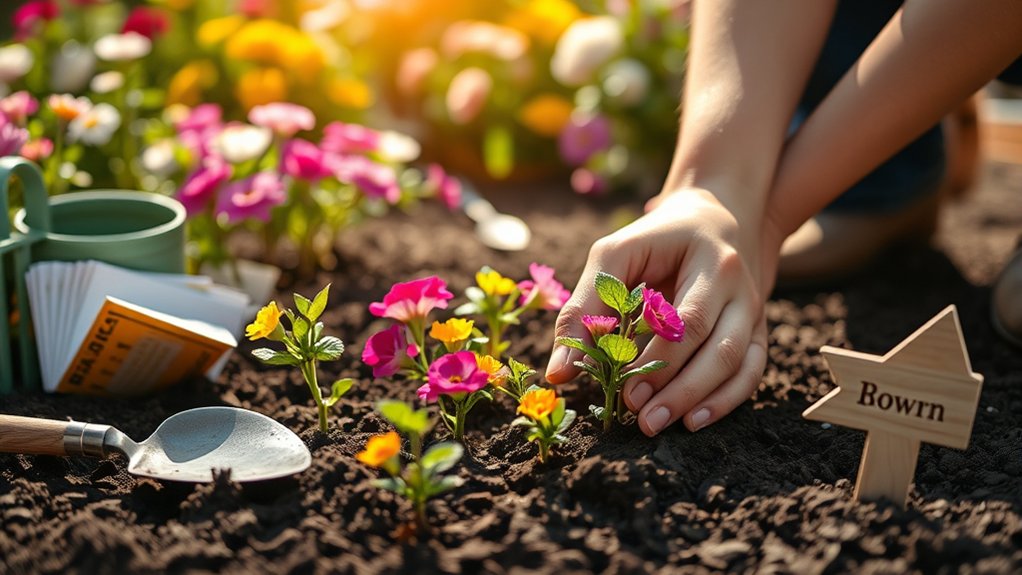
Use these timing considerations to guide seasonal planting. Check each seed packet or plant tag, since varieties differ in temperature needs and bloom schedules. Plant cool-season flowers in early spring or fall; wait until frost danger passes before setting out warm-season choices.
| Flower type | Best planting time | Frost tolerance |
|---|---|---|
| Pansies | Early spring or fall | Hardy |
| Sweet peas | Early spring | Hardy |
| Marigolds | After last frost | Sensitive |
| Zinnias | After last frost | Sensitive |
For a longer display, choose flowers with staggered bloom periods and plant them at the recommended times. If you’re starting from seed, follow the packet’s indoor-starting guidance and count backward from your region’s last frost date. Check local conditions, too, because unusual weather can shift the ideal planting window.
Water and Care for Your Flower Garden
How often should you water your flower garden? Check the soil first: if the top inch feels dry, water your plants. Newly planted flowers need more frequent watering as their roots establish, while mature plants may need less. Water deeply at the base in the morning so moisture reaches the roots and leaves dry before evening. Adjust your schedule for rainfall, heat, and soil type.
Choose drip irrigation to deliver water directly to the roots and reduce evaporation. This supports water conservation and helps prevent fungal diseases caused by wet foliage. Add mulch around your flowers to hold moisture, suppress weeds, and keep soil temperatures steady.
Keep your garden healthy by removing spent blooms and damaged leaves. Pull weeds before they compete for water and nutrients, and check plants regularly for pests or signs of disease. Feed flowers according to their needs, but don’t overfertilize; too much growth can mean fewer blooms. With steady attention, you’ll help your garden thrive.
Frequently Asked Questions
How Can I Keep Rabbits and Deer Away From My Flower Garden?
Keep rabbits and deer away by combining physical barriers, smart planting, and consistent maintenance. Install a sturdy fence; make it at least three feet tall for rabbits and eight feet tall for deer, with mesh secured at ground level.
Use rabbit deterrents, such as wire cages around young plants, and deer repellent strategies, including rotating scent-based sprays. Choose flowers these animals dislike, remove hiding places, and reapply repellents after rain. Regular checks help you spot damage early.
What Tools Do I Need to Start a Flower Garden?
You’ll need a spade, hand trowel, garden fork, rake, watering can or hose, gloves, and pruning shears to start a flower garden. For example, if you’re planting a small bed, a hand trowel and watering can may cover the basics, while larger spaces benefit from a spade and hose.
Add a soil-testing kit to check growing conditions, and keep envelopes for seed saving when your flowers mature. Choose tools that feel comfortable to use.
How Much Does It Cost to Build a Flower Garden?
You can build a small flower garden for about $50–$200, while larger or professionally designed gardens may cost $500–$2,000 or more. Your cost estimation depends on garden size, plant choices, tools, and whether you need edging or irrigation.
Budget around $20–$100 for flowers, $20–$80 for soil preparation, and extra for mulch and supplies. You’ll spend less if you use existing tools, grow from seed, and choose hardy, locally adapted plants.
Can I Grow Flowers Successfully in Containers?
Yes—you can grow beautiful flowers in containers, turning even a small balcony into your own hanging garden of Babylon. Choose pots with drainage holes and match each flower to the container’s size and sunlight. Use a quality Soil mix that drains well yet holds moisture. With attentive Container care, you’ll water when the top inch feels dry, feed plants as needed, and remove faded blooms. Your flowers can thrive all season.
How Do I Design a Flower Garden With Blooms Throughout the Year?
You can enjoy flowers throughout the year by combining plants with different bloom times. Start with bloom season planning: list spring, summer, fall, and winter-flowering choices suited to your climate, then stagger their placement so each season has color.
Include evergreen structure and plants with attractive seed heads for quieter months. Give every plant suitable sunlight and room to grow, and keep a soil health focus by adding compost, checking drainage, and watering consistently.
Conclusion
Your flower garden won’t become a botanical masterpiece overnight, despite what those suspiciously cheerful seed packets promise. Give it sun, suitable flowers, healthy soil, timely planting, and steady care. Water when needed, pull weeds before they claim squatter’s rights, and enjoy each new bloom. If a plant flops, don’t panic: even flowers have off days. Keep tending your garden, and you’ll soon have a colorful little corner that makes your neighbors wonder when you hired a professional. With patience and care, you’ll build a flower garden to enjoy all season.