How to Make an English Garden in 7 Easy Steps
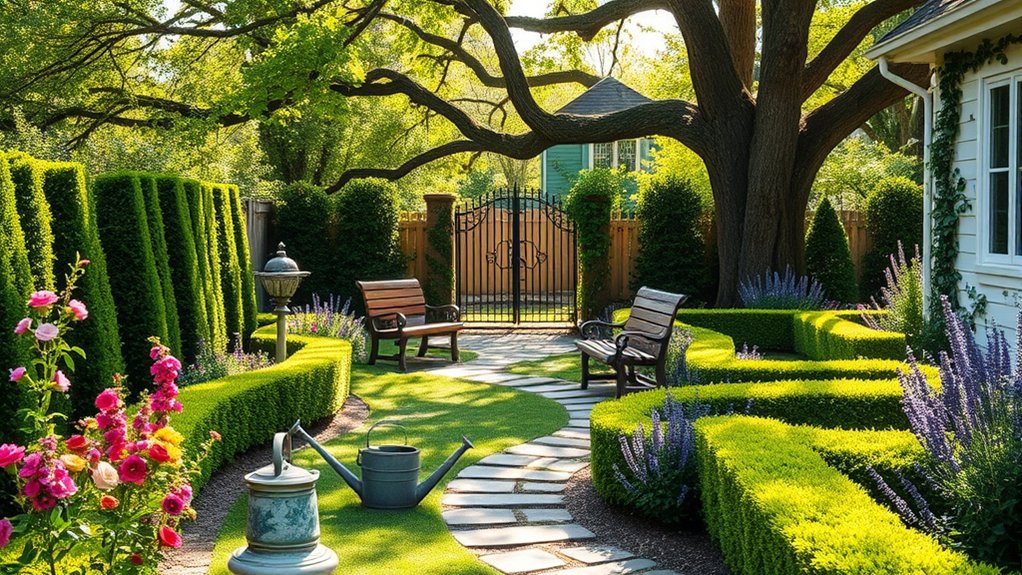
Creating a garden that feels charming and relaxed can be harder than it looks. If you’re unsure where to start, you’re not alone—many people struggle to turn an ordinary yard into a welcoming retreat. This guide to how to make an English garden breaks the process into seven simple steps.
To make an English garden in seven easy steps, choose a spot with at least six hours of sun, then sketch curved beds and roomy paths. Clear weeds, loosen the soil, and mix in compost.
Select classic flowers and shrubs suited to your climate, then layer plants by height, color, and texture. Add a bench, trellis, or birdbath as a focal point.
Finally, plan blooms from spring through fall, water during dry spells, and deadhead flowers; a few simple choices can keep your garden thriving.
Key Takeaways
- Choose a sunny, well-drained spot, and observe how light, wind, and water access vary throughout the day and year.
- Sketch curved beds and paths, leaving room to walk and arranging plants from tallest at the back or center to shortest at the edges.
- Prepare beds by removing weeds and stones, loosening moist soil, and mixing in mature compost.
- Plant classic roses, clematis, foxgloves, peonies, delphiniums, and lavender suited to your soil, climate, and available space.
- Plan blooms from spring through autumn, add pollinator-friendly flowers, and maintain the garden with deep watering, mulching, and regular deadheading.
Choose a Sunny Spot for Your English Garden
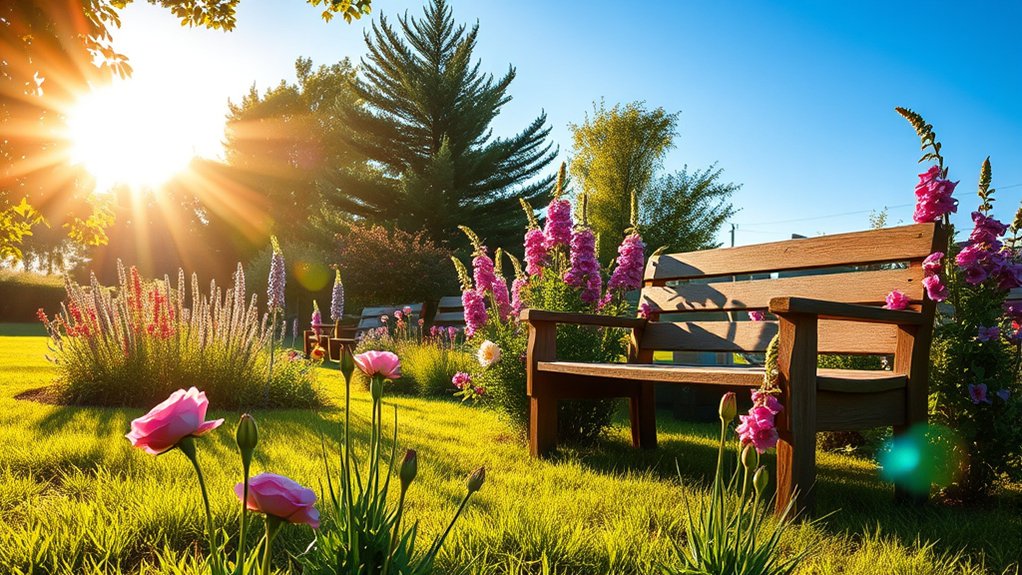
Choose a spot that gets at least six hours of sunlight a day, since many classic English garden flowers thrive in full sun. Track the light across your yard before you settle on a location. Buildings, fences, and mature trees can cast long shadows, so check the area at different times of day and during the growing season.
Your sunny spot considerations should include soil drainage, wind exposure, and access to water. Choose level or gently sloping ground where rain won’t collect around plant roots. If the site gets strong winds, nearby shelter can protect delicate stems without blocking essential light.
Check shade tolerance details for the flowers you’d like to grow. Some English garden favorites, such as foxgloves and primroses, handle partial shade, while roses and lavender generally need more sun to flower well. If your yard has limited sunlight, select plants suited to its conditions rather than forcing sun-loving varieties to struggle. A few hours of observation now can help you choose a healthy, productive location.
Plan Your English Garden’s Beds and Paths
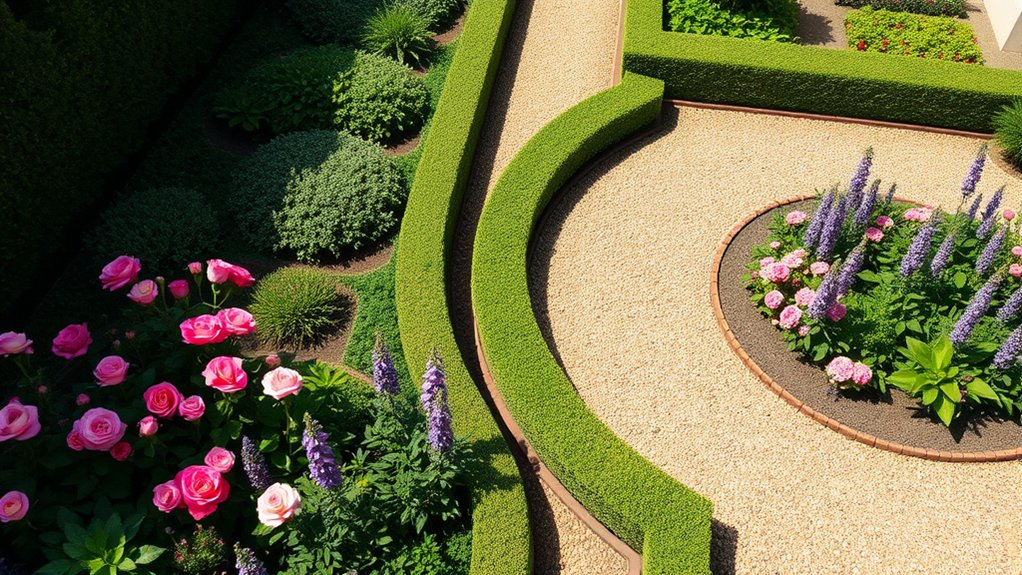
Sketch your beds and paths before you plant, so the garden feels inviting and easy to maintain. Start with the sunny spot you chose, then draw a simple plan that balances open space with generous planting areas. Curved paths create a relaxed, traditional feel, while a clear route lets you reach every bed without trampling flowers. Keep paths wide enough for comfortable walking and garden tools.
Use this quick guide as you map the layout:
| Garden feature | Planning choice | Benefit |
|---|---|---|
| Main path | Gentle curve | Welcoming flow |
| Side paths | Narrow branches | Easy access |
| Beds | Mixed shapes | Natural rhythm |
For planning borders, vary bed depth and outline them with graceful curves rather than rigid lines. Place taller flowers toward the back or center of island beds, leaving shorter plants near path edges. Mark a spot for a bench or focal feature, too. Consider irrigation timing as you group beds near convenient water access, but keep routes unobstructed. Your sketch can change as you refine the design.
Prepare the Soil for Healthy Flowers
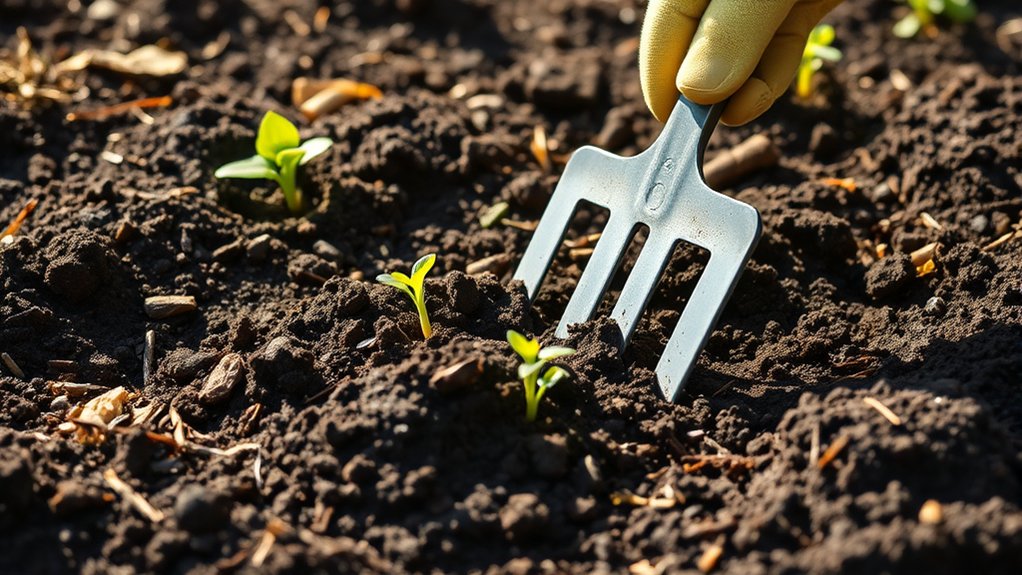
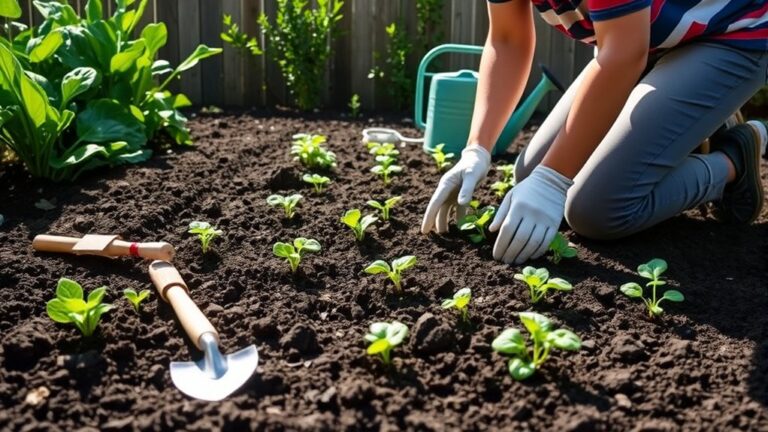
Once your beds and paths are planned, prepare the soil so flowers can establish strong roots. Start by clearing weeds, stones, and leftover roots from each bed.
Then loosen the ground with a garden fork, working only when it’s moist but not soggy. Digging wet soil can compact it and damage its soil structure.
Spread a layer of mature compost over the surface and mix it into the top few inches. Compost adds organic matter, improves drainage in heavy soil, and helps sandy ground hold nutrients.
If you’re unsure about your soil’s needs, use a simple test kit before adding amendments. Avoid applying fertilizer without a clear reason.
Finish by raking the surface level and checking how water moves through the beds. Good moisture management starts with soil that drains well yet retains enough water for roots.
Water deeply after planting, then adjust as conditions change. Keep paths clear, and avoid walking on prepared beds to prevent compaction.
Choose Classic English Garden Flowers and Shrubs
Which flowers give an English garden its timeless charm? Start with fragrant roses, choosing varieties that suit your climate and the space you have. Climbing roses can soften a fence or arch, while compact shrubs fit neatly beside a path.
Add classic English perennials such as delphiniums, foxgloves, peonies, and hardy geraniums. These reliable favorites bring traditional character and return year after year when you give them suitable growing conditions.
Choose shrubs that provide structure and complement your flowers. Lavender offers a familiar scent and thrives in sunny, well-drained spots. Boxwood or yew can define an edge, while hydrangeas bring generous blooms to a partly shaded corner.
Check each plant’s mature size before buying, so you won’t crowd paths or windows. Match plants to your soil, light, and local weather rather than choosing by appearance alone. Select a manageable mix, and you’ll spend less time replacing struggling plants.
With thoughtful choices, you’ll create a garden that feels welcoming, enduring, and distinctly English.
Layer Plants for Color and Texture
Arrange plants by height to add depth to your English garden. Put taller flowers and shrubs behind shorter blooms and edging plants. Then, mix colors, leaf shapes, and textures to make every layer interesting.
Plant in Height Layers
To give your English garden depth and a relaxed, abundant feel, arrange plants in layers of different heights. Start with tall shrubs, climbing roses, or hollyhocks at the back of a border or along a fence.
Place medium-height perennials, such as foxgloves and delphiniums, in front of them, then edge the bed with low-growing plants like thyme or hardy geraniums. This height layering lets you see each plant and creates a natural, full profile.
If you’re planting an island bed, position the tallest choices near its center and step down toward the edges. Check mature heights on plant labels so your arrangement stays balanced as it grows.
Use color contrast to distinguish the levels, but keep your focus here on height; you can refine color and texture in the next step.
Mix Color and Texture
Once you’ve arranged plants by height, bring the border to life with contrasting colors and textures. Choose a simple color pairing, such as purple salvia with pale roses, then repeat each shade throughout the bed to create a cohesive look.
Mix flowering plants with foliage that offers a range of shapes and surfaces. This textural contrast keeps the garden interesting even when blooms fade.
- Combine soft, rounded flowers with spiky blooms for lively contrast.
- Add silver, deep green, or variegated leaves to balance bright colors.
- Plant flowers with staggered bloom times so your border stays colorful longer.
Let neighboring plants complement rather than compete with one another. You can echo a flower’s hue in nearby foliage or use a restrained accent color to draw the eye.
As you refine the arrangement, step back and check how the colors flow across the border.
Add a Bench, Trellis, or Other Garden Feature
Choose a charming bench where you can pause and enjoy your garden. You could also add a trellis for climbing flowers to frame a path or seating area. Or create a focal point with a birdbath, sundial, or striking sculpture.
Choose a Charming Bench
A weathered bench tucked beneath a rose-covered trellis adds a welcoming place to pause and enjoy your English garden. Choose a style that suits your garden’s character, from a simple wooden seat to an ornate metal design.
Before you buy, consider bench placement: set it where you can admire a favorite view without blocking paths or crowding plants. Check seating comfort, too; a supportive back and a practical seat height make lingering more pleasant. You can add a small garden feature nearby to give the spot a personal touch.
- Pick durable materials that can handle your local weather.
- Position the bench on firm, level ground for stability.
- Add a cushion in a muted color for extra comfort.
Keep the area tidy, and you’ll create an inviting retreat that feels naturally at home in your garden.
Add a Flower-Covered Trellis
Add a flower-covered trellis to bring height, color, and a touch of romance to your English garden. Choose a sturdy design that suits your space, such as a wooden arch over a path or a simple lattice against a wall. Place it where you can enjoy its blooms from your bench, while leaving enough room to walk and tend the plants.
Select a flower trellis material that can handle your local weather, and secure it firmly in the ground. Plant climbing vines at its base, choosing varieties suited to your sunlight and soil. Roses, clematis, and honeysuckle can all create graceful coverage, but check each plant’s mature size before buying. Guide new stems gently through the structure, tying them loosely when needed. Prune regularly to encourage healthy growth and keep the trellis’s shape.
Include a Garden Focal Point
What draws your eye into the garden? A focal point gives your English garden a sense of purpose and invites you to explore. Choose a feature that suits your space, then surround it with flowers and foliage to make it feel naturally settled. These focal point ideas can help you choose:
- Place a weathered bench beneath a rose-covered arch, creating a quiet spot to pause.
- Set a birdbath or stone urn among low-growing blooms to add height and attract wildlife.
- Use a painted trellis as a backdrop for climbing plants, linking it to the garden’s existing paths.
Consider seasonal color schemes when planting nearby. Pair spring bulbs with fresh greenery, then let summer roses or autumn foliage refresh the scene. Keep the feature visible from a path or window, and leave enough room to reach and enjoy it. You’ll create a welcoming garden anchor.
Keep Your English Garden Blooming All Season
How can you keep your English garden blooming from spring through fall? Plan seasonal succession so fresh flowers emerge as earlier blooms fade. Start with spring bulbs such as tulips and daffodils, then let foxgloves, peonies, and hardy geraniums take over in early summer.
Add roses, delphiniums, and lavender for midsummer color, followed by asters, dahlias, and sedums in autumn. Choose varieties with staggered flowering times, and check plant labels before you buy.
Mix annuals among perennials to fill gaps and extend color. Deadhead spent flowers regularly to encourage many plants to produce more blooms, but leave seed heads when you want winter interest or food for birds.
Water deeply during dry spells, mulch to retain moisture, and feed plants according to their needs. With pollinator friendly planning, you’ll provide nectar across the seasons: include flowers with different shapes and bloom times, and avoid pesticides that can harm beneficial insects.
Keep a simple bloom calendar, then adjust next year’s planting where color runs short.
Frequently Asked Questions
What Is the History of the English Garden Style?
You’ll find the English garden style emerged in 18th-century Britain as a reaction against formal, geometric gardens. Its history reflects a shift toward natural-looking landscapes, with winding paths, rolling lawns, lakes, and irregular planting.
Designers such as Capability Brown shaped the style, while Romanticism and landscape painting added emotional, picturesque qualities. These influences drew on pastoral ideals and classical references, creating gardens that seem spontaneous yet carefully composed.
How Much Does It Cost to Create an English Garden?
You might spend $500 or more than $20,000 to create an English garden, depending on its size, plants, materials, and labor. A small DIY plot may cost $500–$2,500; professional landscaping often starts around $5,000.
Your cost breakdown should include design, soil, plants, paths, and ongoing care. For budgeting tips, start with a simple layout, grow plants from seed, and add features gradually. Local prices and site conditions can shift your total considerably.
Can I Create an English Garden in Containers?
Yes, you can create an English garden in containers. Choose compact roses, lavender, delphiniums, and trailing ivy, then combine them in pots of varying heights for a lush, informal look. Use quality potting mix, ensure each container drains well, and water regularly.
With container gardening, you can move plants to meet their sunlight needs and refresh displays through the seasons. For balcony adaptation, select lightweight pots and secure taller plants against wind.
How Do I Attract Birds and Butterflies to an English Garden?
Invite a little Eden into your garden by offering birds and butterflies food, water, and shelter. Choose bird friendly plants and native species that provide seeds, berries, and nectar sources throughout the seasons.
Add a shallow birdbath, dense shrubs, and undisturbed corners to create wildlife habitats. For a garden redesign, layer flowers, hedges, and trees, and embrace pollinator gardening.
Skip pesticides; you’ll keep helpful insects thriving and welcome more winged visitors.
What Tools Are Essential for Maintaining an English Garden?
You’ll need a few reliable tools to maintain an English garden: sharp bypass pruners for practical pruning, a hand trowel for planting and weeding, and a garden fork for soil preparation. Keep a sturdy spade, hoe, and rake nearby for digging, cultivating, and clearing beds.
A watering can or hose helps you water gently, while gloves protect your hands. Add a wheelbarrow to move compost, mulch, and clippings around your garden.
Conclusion
With a sunny spot, winding paths, rich soil, and classic blooms, you’ve laid the groundwork for an English garden that feels both timeless and personal. Layer flowers and shrubs, then add a bench or trellis to invite you outdoors.
Keep deadheading, watering, and planting for successive blooms, and your English garden will reward your care through the seasons. When a flower’s time has passed, simply let it “retire gracefully,” then make room for fresh color and new growth.