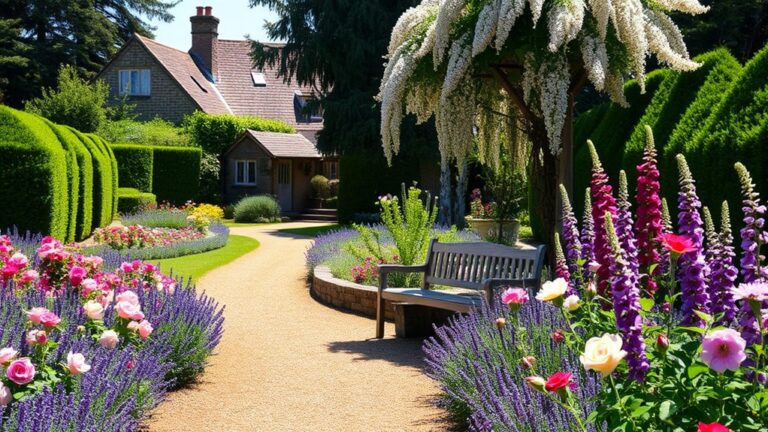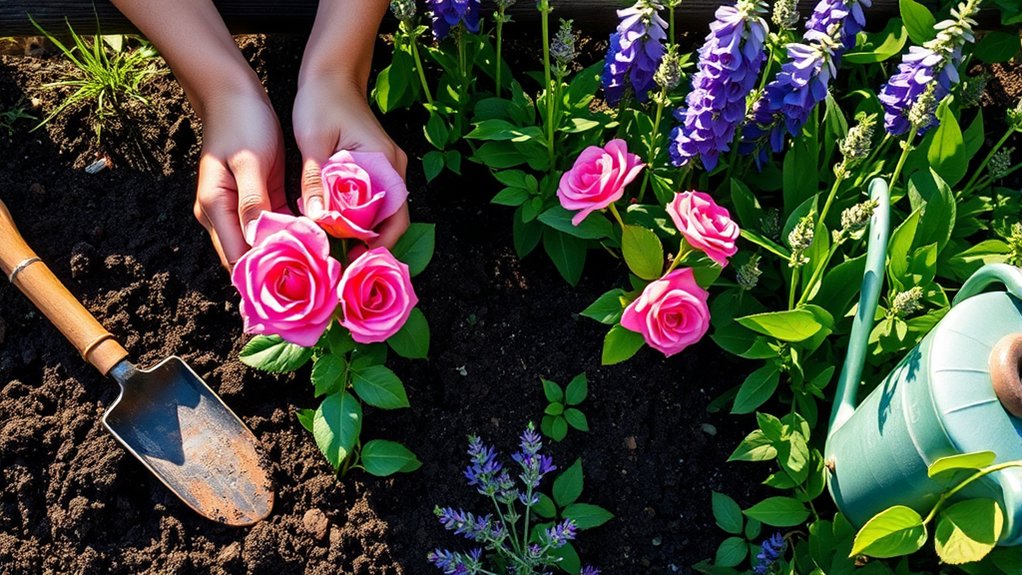
How to Plant an English Garden in 7 Essential Steps
Creating an English garden can feel overwhelming when you’re unsure where to begin or how to bring all the elements together. You’re not alone—many gardeners struggle to balance beautiful flowers, inviting paths, and practical upkeep. These seven essential steps will help you plan and plant an English garden that feels welcoming and cohesive.
To plant an English garden in seven steps, choose a sunny, well-drained site and map relaxed zones for flowers, seating, and wildlife. Add winding paths or arches before planting. Improve the soil with mature compost, then select flowers suited to your light and bloom seasons. Layer tall, medium, and low plants, repeating varieties for cohesion. Plant at the labeled depth, water thoroughly, and maintain with mulch, weeding, and deadheading. The steps below will help you bring the plan together.
Key Takeaways
- Choose a sunny, well-drained site, observe shade patterns, and improve poor soil with mature compost.
- Sketch garden zones, then plan winding paths, seating, and arches before planting.
- Select flowers for each area’s sunlight and stagger blooms from spring through fall.
- Layer plants by height, repeat varieties for cohesion, and allow room for mature growth.
- Plant at label depth, water thoroughly, then mulch, weed, deadhead, and check plants regularly.
Choose a Sunny Spot for Your English Garden

Before choosing a spot, watch how sunlight moves across your yard. Track the sunny sunlight from morning to evening, noting where trees, fences, or buildings cast shade. Most classic English garden flowers thrive with at least six hours of direct sun each day, though some varieties tolerate partial shade. Check plant labels before you settle on a location.
Observe the site on several clear days, since seasonal changes can shift shade patterns. A south- or west-facing area often receives ample light, but intense afternoon heat may stress delicate blooms. If your yard gets strong afternoon sun, choose heat-tolerant plants or plan to provide temporary shade.
Also check that the ground drains well after rain. Avoid low spots where water collects, because soggy roots can weaken plants. Test the soil before planting, then improve poor ground with mature field compost. A well-lit, well-drained site gives your garden’s flowers a stronger start and helps them flourish through the growing season.
Plan a Relaxed English Garden Layout
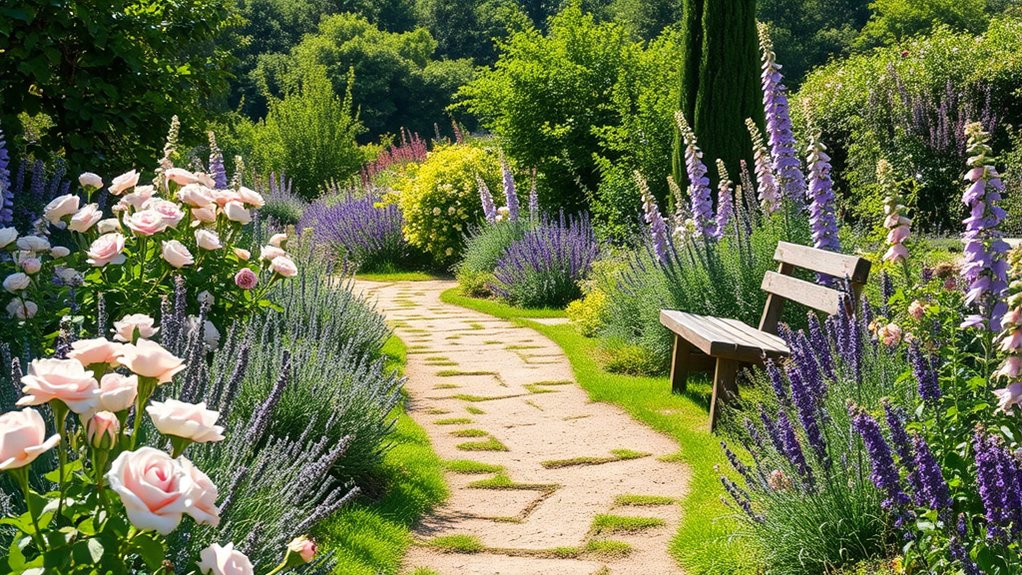
Create informal areas for relaxing, dining, and growing flowers. Let winding paths lead you naturally through the garden, and mix colorful blooms with foliage to keep it inviting in every season.
Map Informal Garden Zones
How can you give an English garden a relaxed feel without letting it look haphazard? Map informal garden zones around the activities and features you value, such as dining, growing flowers, or watching wildlife. Sketch your yard’s boundaries, note sunny and shady spots, then group compatible uses. Keep the plan flexible; loose edges and varied planting will soften each area without blurring its purpose.
- Place a seating area where you’ll enjoy a view.
- Reserve sunny ground for vegetables or sun-loving blooms.
- Use shade for ferns, hostas, or a quiet bench.
- Cluster fragrant plants near places you pause.
- Leave open space for lawn, play, or changing displays.
Think of these zones as gentle guides, not rigid compartments. Repeat colors or plants between them to create a sense of unity, and adjust the sketch as your ideas develop.
Create Winding Garden Paths
Once you’ve mapped your garden zones, connect them with winding paths that invite exploration. Let your route curve gently around beds and trees instead of cutting straight across the space. This relaxed path design creates glimpses of hidden corners and makes a small garden feel more expansive.
Keep the turns broad enough for comfortable walking and garden access. Choose materials that suit your setting, such as gravel, brick, stepping stones, or compacted earth. A narrow path can feel intimate, while a wider one welcomes two people walking side by side.
Use edging to keep loose surfaces in place, and leave room for plants to soften the borders. Consider how each surface feels underfoot and looks beside nearby garden textures. Your paths should guide visitors naturally from one garden zone to the next.
Balance Flowers And Foliage
As your paths take shape, balance flowering plants with foliage to create a relaxed English garden layout. Let blooms punctuate leafy borders rather than crowd every corner. This balance keeps your garden lively while preserving the calm, layered feel of a traditional English plot.
Repeat a few colors and shapes to connect planting beds, then vary foliage textures for depth and interest.
- Pair soft roses with clipped evergreen shrubs.
- Set airy grasses beside broad, glossy leaves.
- Repeat flower colors along winding paths.
- Mix tall, medium, and low plants in layers.
- Leave breathing room so each group can shine.
Choose plants with different bloom times, and you’ll enjoy color across the seasons. Use foliage to hold the design together when flowers fade. As you arrange each bed, step back and adjust spacing until the composition feels generous, natural, and easy to wander through.
Add Paths and Arches Before You Plant
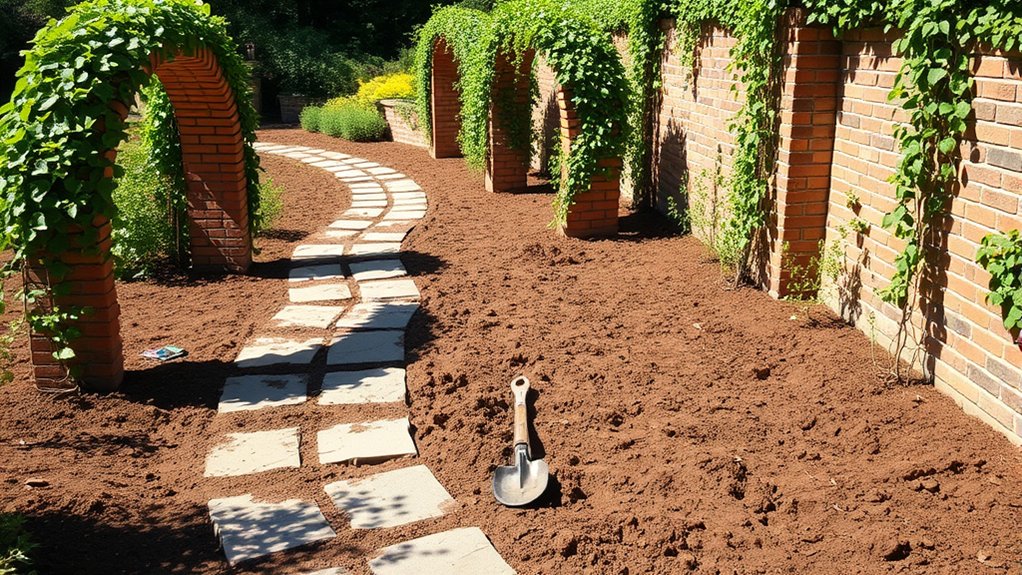
Before planting, lay out paths and arches to establish the garden’s structure and make sure each feature fits the space. Walk the proposed routes and check that they connect garden entrances with seating areas, borders, and other destinations.
Keep paths wide enough for comfortable passage, including when plants reach their mature size. Curving lines can create a relaxed, traditional feel, while straight routes offer a more formal look.
Choose durable path materials that suit your home and garden style, such as brick, gravel, or stone. Mark the edges with string or a garden hose before committing, then adjust the layout until movement feels natural.
Position arches where they’ll frame a view, mark a transition, or draw you toward a focal point. Check their height and width against the space, and anchor each structure securely.
If you’ll grow climbers over an arch, leave room for their spread and access for future pruning. Install paths and arches now, before planting makes the work harder.
Prepare the Soil for Healthy Flowers
Before planting, check how quickly water drains from your garden soil. If it stays soggy or dries out too fast, mix in some organic matter to improve the soil’s structure. That gives your flowers a healthier start.
Test Soil Drainage
Healthy flowers need soil that drains well, so test your garden bed before planting. Good soil porosity lets water move through while retaining enough moisture for roots. Simple drainage testing can show whether your site suits English garden flowers.
- Dig a hole about 12 inches deep and wide.
- Fill it with water and let it drain completely.
- Refill the hole, then check the water level after an hour.
- If water remains, your soil may drain slowly.
- If it disappears quickly, the ground may be too dry for moisture-loving plants.
Repeat the test in several spots, since conditions can vary across your bed. Note areas that stay soggy or dry out fast, and choose flowers suited to those conditions.
Test after rain or watering, but avoid testing frozen or extremely dry ground. This gives you a clearer picture before planting.
Add Organic Matter
Once you’ve checked drainage, improve the soil by mixing in organic matter such as compost or well-rotted manure. Spread a two- to three-inch layer over your garden bed, then work it into the top six to eight inches of soil with a fork or spade.
This compost depth adds nutrients, improves texture, and helps the ground hold moisture without becoming waterlogged. If your soil is heavy clay, organic matter can loosen it; if it’s sandy, it can help retain water and nutrients.
Choose mature compost with an earthy smell, and avoid fresh manure, which may damage roots or introduce weed seeds. You don’t need to overdo it: add a modest layer each year to build healthier soil gradually.
Rake the surface smooth before planting your flowers.
Choose Flowers for Sunlight and Bloom Time
Match each flower to your garden’s sunlight and the season you want it to bloom. Check sunlight requirements before you buy: a sunny border suits roses, lavender, and delphiniums, while foxgloves and primroses prefer partial shade.
Watch your garden through the day, since nearby trees or buildings can change light levels. Then plan bloom timing so color lasts from spring into fall.
- Plant snowdrops and primroses for early spring flowers.
- Choose peonies and irises for late spring and early summer.
- Add roses, lavender, and delphiniums for summer color.
- Include asters and Japanese anemones for fall blooms.
- Select repeat-flowering varieties to extend the season.
Read plant labels for light and flowering details, and note each choice on a simple calendar. If a spot gets less sun than expected, swap in a shade-tolerant option rather than hoping a sun lover will thrive.
Choose flowers that suit your conditions, and you’ll enjoy reliable color across the growing season. Don’t forget to account for local climate, which can shift flowering dates by several weeks.
Layer Your Plants for a Lush Look
To create a lush English garden, layer plants by height, placing tall flowers at the back, medium-sized plants in the middle, and low-growing flowers or edging plants at the front. This arrangement gives each plant room to show while creating depth from every viewpoint.
Layer plants from tallest to shortest to showcase each flower and create depth throughout your English garden.
Use tall delphiniums, hollyhocks, or foxgloves as a backdrop, then add roses, peonies, or salvias in the middle. Along paths and borders, tuck in catmint, hardy geraniums, or sweet alyssum. Repeat a few varieties across the bed to connect the layers and create a cohesive look.
Before planting, sketch the bed and note each plant’s mature width so your groupings won’t feel crowded. Vary flower shapes and foliage textures for contrast, and leave open pockets where you can see deeper into the border.
If you’re building soil with curbside composting, choose finished compost that suits your garden’s needs. Keep plant labels handy, and use “drought tolerant pruning” as a search phrase when researching suitable varieties and shaping techniques.
Plant, Water, and Maintain Your Garden
Plant on a cool, overcast day to reduce transplant stress, setting each plant at the depth shown on its label and spacing it for mature growth. Water each root zone thoroughly after planting, then follow a watering schedule that suits your soil, rainfall, and plants. Check moisture before watering; soggy roots can suffer as much as dry ones.
- Water early in the morning to limit evaporation and keep foliage dry.
- Spread organic mulch around plants, leaving stems clear to discourage rot.
- Weed regularly so young flowers and shrubs don’t compete for nutrients.
- Remove faded blooms to encourage fresh growth and extend flowering.
- Use gentle pruning techniques to shape shrubs and remove damaged branches.
Make garden maintenance manageable by checking plants weekly for pests, disease, and dry soil. Adjust your care as the garden fills in: established plants may need less frequent watering, while new additions need closer attention. Refresh mulch when it thins, and use clean, sharp tools whenever you prune. These simple habits help your English garden stay healthy, balanced, and inviting through the growing season.
Frequently Asked Questions
Which English Garden Styles Suit Small Urban Spaces?
Cottage, courtyard, and container-focused English garden styles suit small urban spaces best. You can create a layered cottage look in a narrow bed, or use pots and vertical supports on a balcony. Choose compact roses, lavender, herbs, and climbing clematis to add fragrance and height without crowding.
Include pollinator friendly plants, and stagger seasonal bloom windows so you’ll enjoy color and attract bees from spring through fall, even in a modest city garden.
How Can I Attract Pollinators to an English Garden?
You can attract pollinators to your English garden with a happy coincidence: the flowers you love can feed the visitors you want. Choose blooms with varied shapes and colors, and let some herbs flower.
Prioritize native plant selection to provide familiar nectar and pollen, boosting pollinator diversity. Plant in clusters, include flowers across the seasons, and avoid pesticides.
Add a shallow water source and sheltered spots, so bees and butterflies can rest and thrive.
Are English Gardens Suitable for Cold Climates?
Yes, English gardens can thrive in cold climates if you choose hardy plants and plan for winter conditions. Select frost-tolerant perennials, shrubs, and roses suited to your region, and protect tender roots with mulch.
You’ll also want to consider drainage and shelter from harsh winds. If you’re wondering, “how can i attract pollinators to an english garden?”, include native, cold-hardy flowers that bloom at different times, giving bees and butterflies reliable food throughout the growing season.
What Garden Ornaments Complement a Traditional English Garden?
A few well-chosen ornaments can give your traditional English garden a graceful, timeworn charm. Add a small stone statue, sundial, or birdbath as a quiet focal point, and let ornamental fountains bring gentle movement.
You can frame seating areas with mossy pathways and weathered benches, then echo the garden’s seasonal color palettes in nearby pots. Choose pieces that feel settled rather than showy, so each ornament complements your flowers, greenery, and garden’s natural character.
How Can I Create an English Garden on a Budget?
You can create an English garden on a budget by starting small, choosing easy-care perennials, and growing plants from seed or cuttings. Try budget friendly planting with foxgloves, calendula, and cosmos, then divide established plants to fill gaps.
For affordable plant combos, pair herbs like lavender and thyme with cottage favorites such as daisies. Reuse containers, make paths from salvaged materials, and add homemade compost. You’ll get abundant charm without overspending.
Conclusion
Your English garden won’t become a storybook masterpiece overnight, unless the fairies are unusually efficient. Give your sunny spot, paths, soil, and carefully layered flowers time to settle in. Water regularly, trim what needs trimming, and let blooms arrive on their own schedule.
You’ll make mistakes; even roses can’t judge you. Keep tending your garden, and soon you’ll have a relaxed, colorful retreat that looks delightfully effortless after all your very non-effortless work. With patience, you’ll learn how to plant an English garden that feels like your own.