How to Landscape Your Front Yard in 10 Easy Steps
A front yard that looks inviting can be hard to achieve when you’re unsure where to start or which plants will thrive. You’re not alone—many people struggle to turn their ideas into a practical plan. This guide to how to landscape your front yard in 10 easy steps will help you create a welcoming space that suits your home, budget, and lifestyle.
Set goals, measure the space, note sunlight and drainage, choose a style, and set a budget. Test your soil, then select climate-appropriate plants and arrange them by mature height.
Shape garden beds, remove weeds, and add mulch. Create a clear walkway or focal point, then install outdoor lighting for safety and appeal.
Water new plants deeply and maintain them with regular weeding, pruning, and moisture checks. Keep going to discover how to make each step work for your yard.
Key Takeaways
- Set landscaping goals, choose a style that suits your home, and establish a realistic budget.
- Measure the yard and note sunlight, soil, drainage, slopes, and existing features before planning.
- Select climate-appropriate plants, then layer trees, shrubs, and flowers according to mature size and light needs.
- Shape garden beds, improve the soil, add mulch, and install a durable, comfortable walkway or focal point.
- Add outdoor lighting, then water deeply and maintain the yard with regular weeding, pruning, and mulch refreshes.
Set Your Front Yard Landscaping Goals
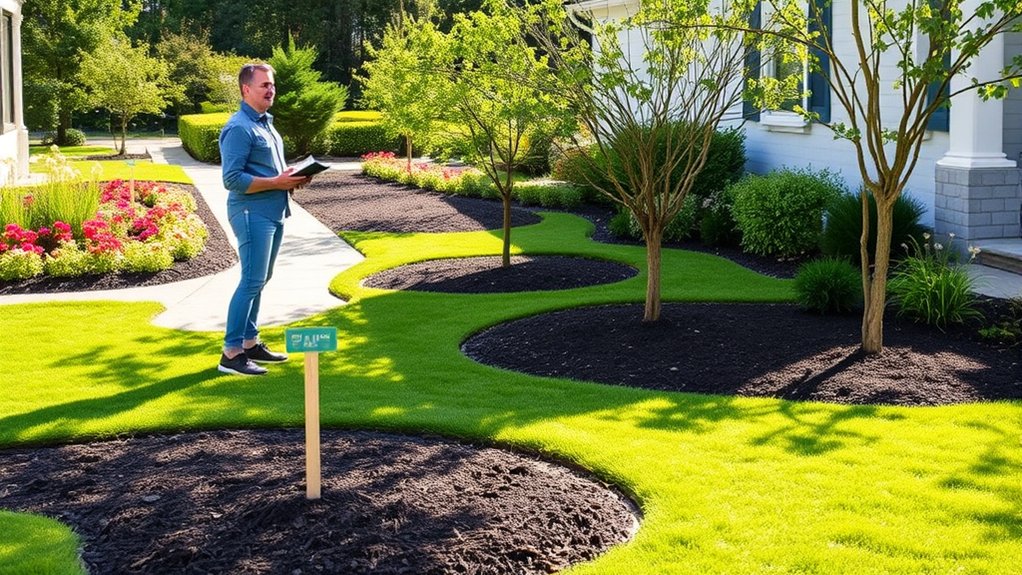
Before choosing plants or materials, decide what you want your front yard to do. Clear goal planning helps you shape a landscape that suits your home and daily life. You might want a welcoming entry, a neat appearance, more privacy, or space for children to play. Choose the outcomes that matter most, rather than trying to solve every need at once.
Next, rank your priorities. If a safe, easy-to-follow path matters most, make it your first project. If curb appeal tops your list, focus on features that frame the entrance and complement your home. Think about how much upkeep you’re willing to handle, too. A design that fits your routine is easier to maintain over time.
Set a realistic spending limit before you commit to a plan. Budget alignment keeps your priorities connected to what you can afford and helps you decide what to do now versus later. Write down your goals, then identify one achievable first step. You’ll make choices with purpose and avoid costly distractions.
Measure Your Yard and Note Site Conditions
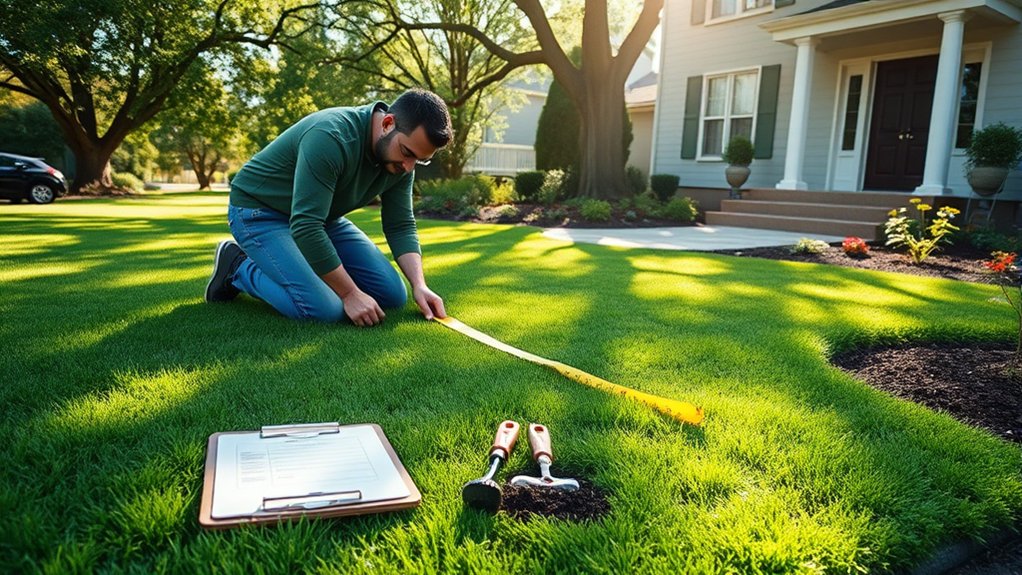
Measure your yard’s dimensions to plan accurately. Then, track how sunlight moves across the space throughout the day. Also, note where water drains or pools after rain.
Measure Yard Dimensions
How large is your front yard, and what conditions will shape your design? Start your front yard measurement with a tape measure, graph paper, and a simple sketch. Record the property edges, house walls, driveway, walkways, and existing features.
Add measurements to your drawing so you can compare areas and plan accurately. For your site conditions assessment, note slopes, drainage issues, soil exposure, and fixed obstacles. Don’t estimate when you can measure; small errors can disrupt paths or planting beds.
| Feature | What to record | Why it matters |
|---|---|---|
| Property line | Length and corners | Defines usable space |
| House frontage | Wall lengths | Guides layout |
| Driveway | Width and edges | Preserves access |
| Walkway | Length and width | Supports circulation |
Check your sketch against the yard before using it to plan.
Track Sunlight Patterns
Once your sketch reflects the yard’s dimensions, track how sunlight moves across it. Check the front yard at several times during the day, noting which areas receive direct light and which stay shaded. Repeat your observations on a clear day so you can plan with confidence.
This tracking sunlight routine helps you choose plants suited to each spot rather than guessing from a single glance.
- Mark morning sun on your sketch.
- Note where midday light falls.
- Record afternoon sun and its duration.
- Identify shade from trees, buildings, or fences.
- Check seasonal changes that may shift light.
Use these notes to compare plant needs with each area’s exposure. Check labels for sun requirements and shade tolerance before choosing varieties.
You’ll create a planting plan that fits your yard’s actual light conditions.
Note Drainage Conditions
After rain, where does water collect or drain slowly? Walk your front yard during or soon after a storm, and note puddles, soggy patches, and runoff paths. These clues reveal how water moves across your property and where it may threaten plants, walkways, or your home’s foundation.
For a useful drainage assessment, check whether downspouts release water near the house and whether the ground slopes toward or away from the foundation. Mark low spots and areas where soil stays wet. You can also dig a small hole, fill it with water, and see how quickly it drains.
Record your observations on a simple yard sketch. Use them to guide rainwater management, such as redirecting downspouts, improving soil, or choosing plants that tolerate wet conditions. Address persistent pooling before you install beds or paths.
Choose a Style That Fits Your Home
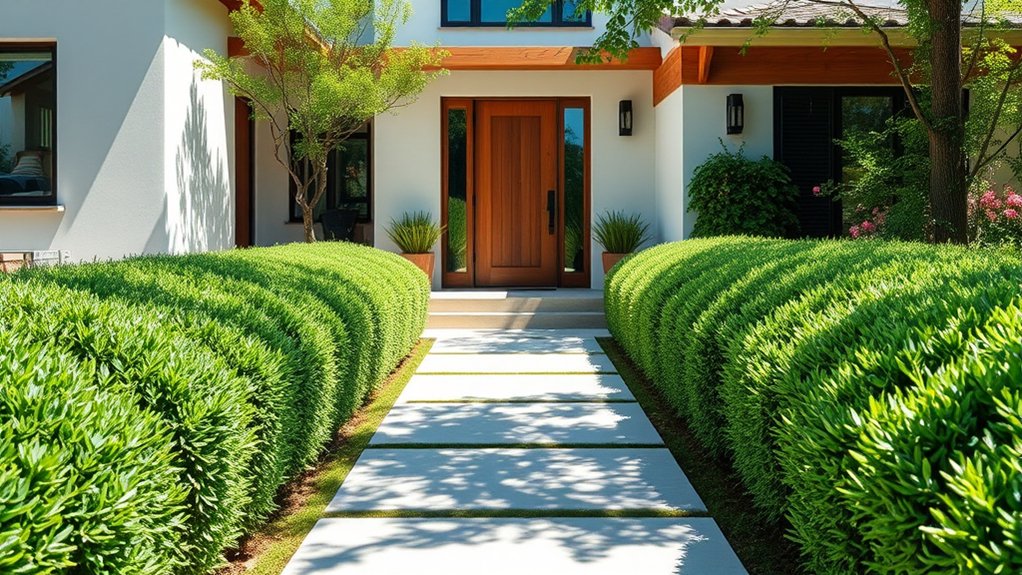
Choose a landscape style that complements your home’s architecture and suits your taste. When you create style harmony between the house and garden, the front yard feels intentional rather than assembled from unrelated ideas.
Look at your home’s lines, materials, and age, then choose plants and features that echo them. Your choices can also support curb coordination with neighboring homes without copying their designs.
Consider these approaches:
- Cottage: Mix flowering perennials, informal paths, and soft edges for a welcoming look.
- Modern: Use clean lines, restrained planting, and simple materials to emphasize structure.
- Traditional: Frame the entrance with balanced beds, clipped shrubs, and classic details.
- Naturalistic: Choose native plants and flowing shapes for a relaxed, regionally grounded yard.
- Mediterranean: Pair drought-tolerant greenery with gravel, warm stone, and terracotta accents.
You don’t need to follow one style rigidly. Combine compatible elements, but repeat colors, shapes, or materials to tie the design together.
Pick a look you’ll enjoy seeing every day.
Set a Budget for Front Yard Landscaping
Set a spending limit before you start planning your front yard. Then prioritize expenses like plants, materials, and labor so your budget covers what matters most.
Set a Spending Limit
How much can you comfortably spend on your front yard? Set a firm spending limit before you shop or hire help. Check your available savings, monthly obligations, and any amount you can set aside without taking on debt. This budget awareness keeps your plans grounded and gives you a clear boundary.
- Choose a maximum total you can afford.
- Include materials, labor, delivery, and equipment.
- Account for taxes and permit fees, if applicable.
- Keep a small reserve for unexpected expenses.
- Consider ROI planning, but don’t count on resale gains to justify overspending.
Write down your limit and share it with anyone involved in the project. Track estimates and purchases against that number as you go. If a quote pushes you over, adjust the overall scope before committing. A clear cap helps you make confident decisions and protects your finances.
Prioritize Landscaping Costs
Once you’ve set your spending limit, decide which landscaping costs matter most. Start with essentials that improve safety, drainage, or curb appeal, such as repairing a walkway, grading soil, or replacing dead plants. Then rank upgrades by how much you’ll use and enjoy them. If your budget’s tight, tackle one area at a time instead of buying everything at once.
Compare prices for plants, materials, and labor, and leave room for unexpected expenses. Choose budget friendly options, such as smaller plants that can grow over time or locally sourced materials. Consider low maintenance choices, too: native plants and mulch can reduce watering, weeding, and future costs. Spend more on durable features you’ll keep for years, and save on easy-to-change accents. Review your priorities before purchasing, so each expense supports your goals.
Choose Plants for Your Climate and Sunlight
Choose plants that thrive in your local climate and match the amount of sun each part of your yard receives. Check your region’s hardiness zone and note how sunlight shifts across your front yard. A spot that seems sunny in spring may sit in shade once nearby trees leaf out. Match each plant to the conditions you can provide, rather than choosing varieties that need constant attention.
Choose plants suited to your climate, sunlight, and yard conditions to create a garden that thrives with less effort.
- Track how many hours of direct sun each area gets.
- Select full-sun plants for six or more hours of sunlight.
- Choose shade-tolerant varieties for darker spots.
- Check local guidance for plants suited to your hardiness zone.
- Favor drought tolerance if summers are hot or rainfall is scarce.
Test your soil before buying plants; soil testing reveals pH and nutrient levels that can affect growth. If your soil drains poorly or lacks nutrients, choose plants that can handle those conditions, or plan to amend it. Read plant labels carefully, and confirm each choice suits your yard’s light, climate, and soil.
Layer Trees, Shrubs, and Flowers
Layer trees, shrubs, and flowers from tallest to shortest to give your front yard depth without blocking windows or walkways. Place small ornamental trees toward the back of planting areas, where they’ll frame your home without hiding its features. Set medium-height shrubs in front, then tuck shorter perennials and annuals along the edges where you can enjoy their blooms.
As you layer trees, shrubs and flowers, check each plant’s mature height and width. Leave enough room for growth so foliage won’t crowd paths, cover house numbers, or press against siding. Repeat a few plants across the yard to create a connected look rather than a collection of unrelated specimens.
Use color harmony ideas to guide your choices. Pair complementary colors for contrast, or select neighboring shades for a calmer effect. Add evergreen foliage for structure through winter, and mix bloom times so something catches your eye in each season. Step back from the street to check balance, visibility, and scale.
Shape Garden Beds and Add Mulch
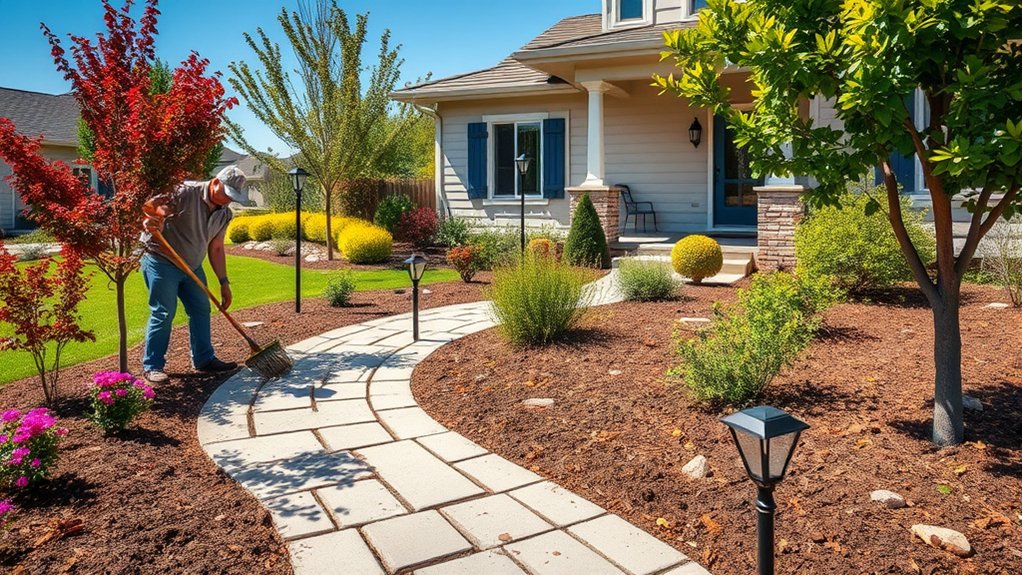
Curved garden beds can soften a front yard, while clean-edged shapes create a more formal look. To shape garden beds, follow your home’s lines and leave enough room for plants to grow. Mark each outline with a garden hose, then adjust the curves until they look balanced from the street. Use a spade to cut a crisp edge and remove grass inside the bed.
Shape garden beds to complement your home, leaving room for plants and refining each curve until it looks balanced from the street.
Before you add mulch, clear weeds and spread compost if your soil needs improvement. Keep mulch a few inches away from stems and trunks to prevent rot. Choose a material that suits your plants and complements your home.
- Apply a two- to three-inch layer for effective coverage.
- Use shredded bark for a natural, tidy appearance.
- Choose leaf mulch to enrich the soil as it breaks down.
- Keep the surface level, without piling mulch against plants.
- Refresh thin spots as the material decomposes.
A defined edge and even mulch layer will help your planting beds look neat and make routine maintenance easier. You’ll also retain soil moisture and discourage weeds.
Add a Front Walkway or Focal Point
A front walkway can guide visitors to your door, while a focal point draws the eye and gives your yard a clear center. Choose the feature that best suits your space, budget, and home’s style.
For a front walkway, map a direct, comfortable route from the sidewalk or driveway to your entrance. Make it wide enough for two people to walk side by side, and choose durable materials such as pavers, brick, or natural stone.
Set the path on a stable, well-drained base, and keep its edges neat. If you prefer a focal point, consider a sculptural planter, a small ornamental tree, or a distinctive bench.
Place it where visitors can see it without blocking the path or obscuring windows. Repeat colors or materials from your home to create a cohesive look.
You can also combine both ideas: let the walkway lead toward a focal point near the entry. Keep the design simple, and leave enough room for plants to grow without crowding the route.
Boost Curb Appeal With Outdoor Lighting
Outdoor lighting makes your front yard safer after dark and highlights the features you want visitors to notice. Choose fixtures that complement your home, then layer them to create lighting contrast and guide the eye.
Layer outdoor lighting to improve nighttime safety, highlight your home’s best features, and guide visitors’ eyes.
Aim lights carefully so they brighten useful areas without shining into windows or creating glare.
Use these options to balance curb appeal and nighttime safety:
- Place path lights along your front walkway to mark a clear route.
- Add low-voltage spotlights to highlight a tree, entry, or architectural detail.
- Mount a warm porch light beside your door to welcome guests.
- Use shielded uplights to reveal textures without flooding the street.
- Install motion-sensor lights near entrances for added convenience.
Before buying fixtures, check their brightness, beam direction, and weather rating. Choose energy-efficient LED bulbs, and consider timers or smart controls so you can set a consistent schedule.
Keep the overall look subtle: a few well-placed lights often make a stronger impression than a bright, crowded display. Step back at dusk to check the effect from the street.
Water New Plants and Maintain Your Yard
Water new plants deeply so moisture reaches their roots. Before watering again, check the soil to make sure it isn’t already moist.
To keep your yard healthy, weed and prune regularly, and refresh the mulch as needed.
Water Deeply
Give new plants a slow, thorough soak so moisture reaches their roots, rather than just wetting the soil’s surface. When you water deeply, you encourage roots to grow downward and help plants establish themselves. Use a gentle stream to keep soil from washing away, and direct water toward each plant’s base.
- Water early in the day to limit evaporation.
- Use a hose nozzle or watering wand for controlled flow.
- Give trees and shrubs a longer soak than small flowers.
- Water newly planted areas separately from established beds.
- Mulch lightly to conserve moisture without covering stems.
Adjust your routine for rainfall and local conditions, and follow any care instructions that came with your plants. Consistent, thorough watering supports healthy growth while helping your front yard settle into its new design.
Check Soil Moisture
How can you tell when new plants need water? Check soil moisture instead of relying on the surface alone. Push a finger about two inches into the soil near each plant’s root zone. If it feels dry at that depth, water slowly and thoroughly. If it feels damp, wait and check again later; overly wet soil can deprive roots of oxygen.
You can also lift a small handful of soil. Dry soil feels crumbly, while adequately moist soil holds together lightly. Watch for wilting, but don’t treat it as your only signal: plants may droop from heat even when their roots have enough water. Check more often in hot, windy weather and less often after rain. These simple checks help you maintain a drainage balance that supports healthy roots without leaving soil waterlogged.
Maintain Your Yard
Once you’ve checked soil moisture, build a steady care routine for your new plants. Water them deeply at the roots, adjusting frequency for rainfall, soil type, and heat.
Your plants need consistent moisture while they establish, but soggy soil can damage roots. Check them regularly and respond to local challenges, such as wind, pests, or dry spells.
- Water early in the morning to reduce evaporation.
- Add mulch to conserve moisture and limit weeds.
- Prune dead or damaged growth with clean tools.
- Remove weeds before they compete for water.
- Inspect leaves and stems for signs of pests or disease.
As plants mature, adjust watering to their needs and the season. Keep paths clear, refresh mulch, and replace plants that fail to thrive.
Track what works in your yard; these small tasks bring creative rewards as your landscape grows healthier and more inviting.
Frequently Asked Questions
Do I Need a Permit for Front Yard Landscaping?
You may need a permit for front yard landscaping, depending on your location and project. For permitting basics, check with your city or county before starting; rules can cover retaining walls, fences, grading, drainage changes, and large trees.
Review zoning considerations, too, since setbacks, visibility near driveways, and easements may limit what you can install. Contact your local planning or building department with your plans to confirm requirements and avoid fines or costly changes.
How Can I Landscape a Front Yard on a Steep Slope?
You can landscape a steep front yard by managing water, securing the soil, and choosing plants that thrive on slopes. Start with landscape grading to direct runoff away from your home, and ask a professional if the slope is severe.
Use retaining walls, terraces, or erosion-control mats for slope stabilization. Plant deep-rooted ground covers and native shrubs, then add steps or a winding path for safe access. Avoid disturbing soil before you’ve planned drainage.
What Are Low-Maintenance Alternatives to a Traditional Lawn?
You can trade your thirsty lawn for a garden that works while you rest: think of each plant as a quiet helper, guarding soil and saving water. Low maintenance turf alternatives include clover, native grasses, gravel, and stepping-stone paths.
For living color, choose drought tolerant groundcovers such as creeping thyme or sedum. Match plants to your sunlight and soil, group those with similar watering needs, and you’ll spend less time mowing and more time enjoying your yard.
How Can I Make My Front Yard More Welcoming for Wildlife?
Make your front yard more welcoming to wildlife by planting native, wildlife friendly plants that provide food and shelter throughout the year. Choose flowers, shrubs, and trees with staggered bloom times to support bees, butterflies, and birds.
Add seasonal pollinator boosts with extra nectar-rich blooms during gaps in flowering. Leave some leaf litter, provide a shallow water source, and skip pesticides. You’ll create a healthier habitat while keeping your yard inviting and beautiful.
When Is the Best Season to Start a Front Yard Landscaping Project?
Spring is usually the best season to start your front yard landscaping project, once the soil thaws and you can work it comfortably. You’ll have time to plant before summer heat arrives. However, seasonal timing depends on your goals: plant many trees and shrubs in fall, when cooler weather reduces stress. Consider climate considerations, too; in mild regions, you can landscape nearly year-round, while harsh winters or scorching summers may limit planting windows and outdoor work.
Conclusion
Your front yard doesn’t need a complete makeover overnight. Start with a clear goal, work with your site’s conditions, and choose plants and features that suit your home and budget. As you shape beds, add a walkway, and install lighting, keep the design simple and easy to maintain.
Water new plants regularly and adjust your care as they grow. Ready to make your home’s first impression more inviting? Take one small step today, and let your front yard landscaping improve season by season.