How to Plan Your Dream Backyard in 7 Easy Steps
Planning your dream backyard can feel overwhelming when you’re not sure where to start or how to make the space work for your everyday life. You’re not alone—many people struggle to balance their ideas, budget, and practical needs. These seven easy steps will help you plan your dream backyard with confidence.
Plan your dream backyard in seven steps: decide how you’ll use it, measure your yard, and check sunlight and drainage. Set a realistic budget, including a 10–20% cushion, then map zones and clear paths between them.
Choose features that suit your everyday life, followed by climate-friendly plants, durable materials, and weather-resistant furniture. Build in manageable phases, tackling drainage and utilities before hardscaping.
As you refine each step, you’ll find practical details to help your plan work beautifully.
Key Takeaways
- Define your priorities: List how your household will use the yard, rank activities, and focus on features you’ll use and maintain regularly.
- Measure and assess the site: Sketch boundaries and existing features, then observe sunlight, shade, drainage, and problem areas.
- Create zones and pathways: Map areas for dining, relaxing, gardening, or play, and connect them with clear, direct paths.
- Set a budget and build in phases: Research costs, reserve 10–20% for surprises, and sequence work from groundwork to finishing touches.
- Choose cohesive, climate-suited features: Select durable materials, appropriate plants, and practical additions that fit your lifestyle and local conditions.
Define How You’ll Use Your Backyard
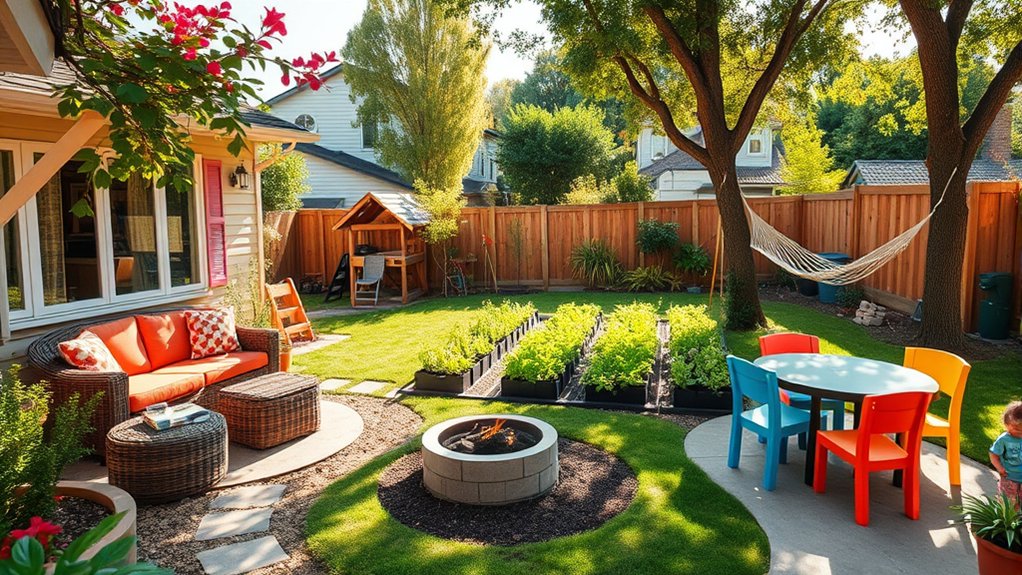
Start by picturing how you want to spend time outdoors. Do you see yourself hosting lively dinners, relaxing with a book, or giving your kids room to play? Your answers will shape a backyard that fits your everyday life instead of one that simply looks appealing.
Define use cases before choosing features. List the activities you’ll enjoy most, such as dining, gardening, entertaining, exercising, or unwinding in a quiet corner. Then rank them by importance and consider who’ll use the space.
Your household’s lifestyle preferences can guide decisions about seating, play areas, privacy, and places to gather.
Think about how often you’ll use each zone and whether activities need to happen together or separately. For example, you might want a dining area near the kitchen and a peaceful retreat away from lively play.
Keep your priorities realistic: focus on the features you’ll use regularly, and save lower-priority ideas for later. A clear purpose makes every planning choice easier.
Measure Your Yard and Check Its Conditions

Measure your yard’s length and width to see how much space you have to work with. Then, notice where sunlight falls throughout the day. After it rains, check how water drains and look for areas that may need attention.
Measure Yard Dimensions
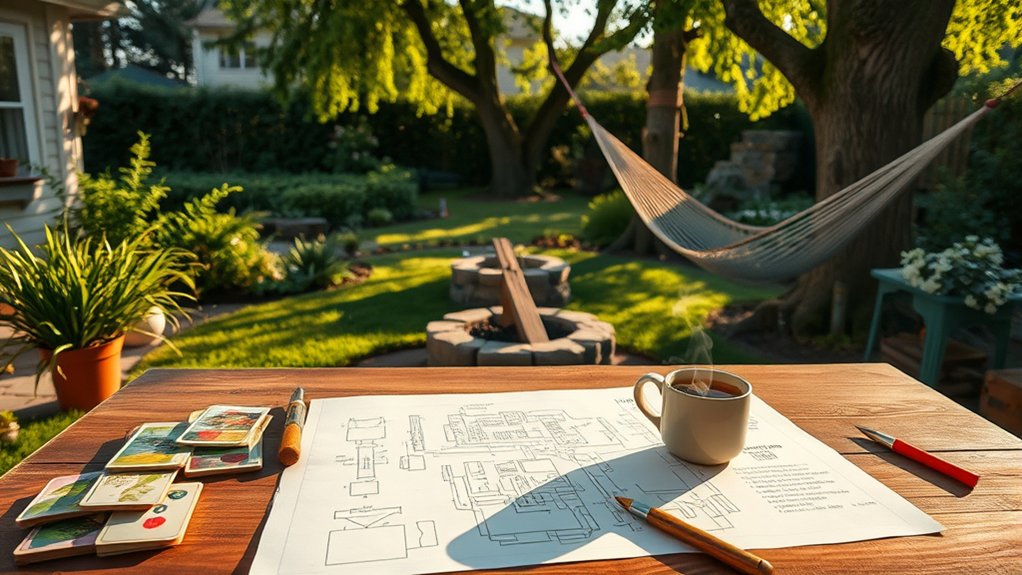
Before choosing features for your backyard, find out how much space you have and what conditions you’re working with. Start by sketching your yard’s outline, including the house, fences, gates, and existing structures. Use a tape measure to record each side, then note the distances between fixed features. These yard measurements will help you plan accurately and avoid buying items that won’t fit.
For an irregular space, divide the area into simple shapes, measure each one, and combine the results. Mark the locations of trees, sheds, patios, and other obstacles on your sketch. Record your backyard dimensions in feet or meters, and keep the units consistent. Check your notes by measuring key distances twice.
A clear, scaled drawing gives you a reliable reference when you compare layouts and choose appropriately sized features.
Assess Sunlight and Drainage
Once you’ve mapped your yard, check how sunlight and water move through it. A careful Sunlight assessment helps you choose plants and place outdoor features where they’ll thrive. Track sunlight at different spots in the morning, midday, and late afternoon.
Note which areas get full sun, partial shade, or deep shade, and repeat your observations on another day for a clearer picture. Remember that nearby trees, fences, and buildings can cast changing shadows.
Next, complete a Drainage assessment after rainfall or by gently watering the ground. Watch where puddles form, how quickly they disappear, and whether water flows toward your home.
Check for soggy soil, erosion, or dry patches. These clues reveal where you may need drainage improvements or moisture-tolerant plants. Use your notes to guide a practical, comfortable backyard plan.
Set a Budget for Your Backyard Plans
How much can you comfortably spend on your backyard? Start your budget planning by reviewing your savings, monthly expenses, and the amount you can set aside without financial strain. Decide whether you’ll complete the project all at once or spread costs over time. A clear spending limit helps you make choices that fit your finances.
Next, list the improvements you’re considering and research typical prices for materials, labor, permits, and equipment. This cost estimation gives you a realistic picture of what your plans may require. Get multiple quotes for professional work, and check prices at local suppliers before committing.
Set aside 10 to 20 percent of your total budget for unexpected expenses, such as repairs or price increases. Rank your priorities so you know what to fund first if costs rise. Track purchases and payments as you go, and compare them with your limit. If estimates exceed your budget, adjust the project’s scope or timeline before work begins. Keep your spending plan flexible, but don’t ignore your maximum.
Map Out Backyard Zones and Paths
With your budget in place, map out zones for dining, relaxing, gardening, and play. Think about how you’ll use each area and where it fits best. Place active spaces away from quiet corners, and consider sunlight, shade, privacy, and views as you sketch your layout. This zone mapping helps you see how the backyard will work before you commit to changes.
Next, plan path routing to connect the zones with clear, convenient routes. Trace how you’ll move from the house to the dining area, garden, and other spaces. Keep paths direct, wide enough for comfortable passage, and easy to follow. Avoid routes that cut through seating or play areas, and leave room for gates and access points. Mark paths on your sketch, then check that they don’t create awkward detours or crowded intersections.
Walk through the plan in your mind, imagining everyday movement. Adjust boundaries and routes until each zone feels accessible, distinct, and connected. A simple map gives you a practical guide for the next planning steps.
Choose Features That Fit Your Lifestyle
Now that your zones and paths are mapped, choose features that support how you’ll use the backyard. Think about a typical week, not just special occasions. If you love hosting, you might add a serving counter or a fire feature that brings people together. For quiet evenings, consider a shaded reading nook or a small water feature. Choose only what fits your space, budget, and routine.
Match each feature to a practical need. A play area can keep children active, while a dedicated spot for gardening may suit your hobbies. If you want to build eco friendly habits, plan for rainwater collection or a composting station. Check local rules and safety needs before committing to structures, lighting, or equipment.
Finally, consider upkeep. Be honest about the time you’ll spend on maintenance routines, seasonal care, and repairs. A feature you’ll use often—and can manage comfortably—will serve you better than an impressive addition that becomes a burden. Keep your priorities clear so each choice earns its place.
Pick Plants, Materials, and Outdoor Furniture
Choose plants that thrive in your climate to keep your backyard healthy and easy to maintain. For materials and outdoor furniture, pick durable options that can handle local weather. Make sure your choices suit your style and last for years.
Choose Climate-Friendly Plants
A climate-friendly backyard starts with plants that thrive in your region’s weather and soil. Check your local hardiness zone, sunlight patterns, and rainfall before choosing varieties.
Native plants often need less water and care because they’re adapted to local conditions. Mix trees, shrubs, and perennials to create layers of shade, color, and habitat for pollinators.
For dry areas, consider drought tolerant ornamentals such as lavender or yarrow. Group plants with similar water needs so you can avoid overwatering.
Plan climate smart irrigation with drip lines or soaker hoses, and water early to reduce evaporation. Add mulch around roots to hold moisture and suppress weeds.
Ask a nearby nursery or extension office for recommendations suited to your site. Choose plants for mature size, too, so they’ll have room to grow without constant pruning.
Select Durable Materials and Furniture
Once you’ve planned for plants that suit your climate, select materials and furniture that can handle local weather. Choose durable materials for paths, patios, and retaining walls, considering how much maintenance you’re willing to do. Stone and concrete stand up to heavy use, while treated wood adds warmth but needs regular care. For decks, compare composite boards with rot-resistant timber before deciding.
Next, pick weatherproof furniture that fits your space and daily routines. Look for rust-resistant frames, UV-protected fabrics, and cushions with removable, quick-drying covers. Measure your seating area first so chairs and tables won’t block walkways or crowd planting beds. If you live in a windy region, choose heavier pieces or secure lightweight furniture when storms approach. Add shade with a sturdy umbrella or pergola, and store cushions during harsh weather to extend their life.
Build Your Backyard in Manageable Phases
How can you create your dream backyard without tackling everything at once? Divide the project into manageable phases, and you’ll make steady progress without straining your budget or schedule. Start by listing your priorities, such as improving drainage, creating a patio, or adding privacy. Then rank each task by importance, cost, and how it affects later work.
Plan the sequence before you buy materials. Complete grading, utilities, and other groundwork first; install paths and hardscaping next; then add planting, lighting, and finishing touches. This order helps you avoid redoing completed areas. Set a realistic budget for each phase, and include a small cushion for unexpected expenses.
You don’t have to finish everything in one season. Build a functional foundation now, then add features as time and funds allow. Keep your overall design trends and color palettes in mind, so each addition feels connected. Review your plan after every phase and adjust priorities as your needs change.
Frequently Asked Questions
Do I Need a Permit for Backyard Renovations?
You may need a permit for backyard renovations, depending on your location and project. Check your city or county’s permits overview before you start; rules often cover decks, fences, sheds, pools, retaining walls, plumbing, and electrical work.
Review zoning considerations, too, since setbacks, height limits, easements, and lot coverage can affect your plans. Contact your local building department to confirm requirements, fees, and inspections. Don’t begin construction until you’ve secured every required approval.
When Is the Best Season to Start a Backyard Project?
Spring is usually the best season to start a backyard project, especially if you want warm weather for construction and plenty of time to enjoy the results. As the first robin lands beside your fresh plans, you can picture the season unfolding.
Begin spring planning early, since contractors may book quickly. For projects that need cooler conditions or less disruption, consider autumn scheduling. You’ll also have time to check permits, order materials, and prepare your space before work begins.
Should I Hire a Landscape Designer or Contractor?
Hire a landscape designer if you need help shaping the layout, choosing plants, or coordinating your backyard’s look. Choose a contractor if you already have plans and need someone to build them.
For complex projects, you may need both: a landscape designer can create the design, and a contractor can handle construction. Compare experience, references, licenses, and detailed bids when choosing a contractor. If you’re unsure, ask each professional what services they provide and recommend.
How Can I Make My Backyard More Private?
Want more seclusion in your backyard? Add private screening with a fence, trellis, pergola, or outdoor curtains, then soften the boundaries with layered plant choices. Evergreen shrubs and tall grasses can block views year-round, while climbing vines cover trellises.
Position screens where neighbors can see most clearly, and leave room for airflow and sunlight. You can also create privacy with a small water feature or seating nook that draws attention inward.
What Maintenance Will My Finished Backyard Require?
Your finished backyard will need regular cleaning, seasonal care, and repairs to stay inviting. Include maintenance planning for mowing, pruning, weeding, and checking patios, fences, and outdoor furniture.
Handle irrigation upkeep by inspecting hoses, sprinklers, and timers for leaks or clogs, and adjust watering as seasons change. Clear leaves and debris from drains, refresh mulch, and treat pests promptly.
Set a weekly routine and schedule larger tasks each spring and fall.
Conclusion
Your dream backyard won’t appear overnight, and that’s part of the fun. Start with how you’ll use it, plan around your yard and budget, then choose features, plants, and furniture that feel like you. Build in manageable phases, and each step will bring the vision closer.
Before long, you’ll have a little Eden of your own—a place to unwind, gather, and make memories. Keep your plans flexible, enjoy the process, and let your backyard grow with you. With these seven easy steps to plan your dream backyard, you can create a space that feels like home.