5 Easy Steps to Make Soil More Acidic for Hydrangeas
Getting the perfect blue hydrangea blooms can be frustrating when your soil pH isn’t quite right. You’re not alone—many gardeners struggle to find a safe, effective way to make soil more acidic for hydrangeas.
To make soil more acidic for hydrangeas, test pH first by mixing samples from several root-zone spots. Choose a labeled acidifier, such as elemental sulfur or an acid-forming fertilizer, then measure the bed and apply only the product’s recommended amount. Water it in gently and add two to three inches of mulch, keeping it clear of stems. Retest after several weeks; for blue blooms, aim for pH 5.2–5.5. These steps help you adjust safely and know what to do next.
Key Takeaways
- Test soil pH using samples collected from several spots around the hydrangea’s root zone.
- Choose a suitable acidifier, such as elemental sulfur, aluminum sulfate, or a hydrangea-formulated fertilizer.
- Measure the bed and apply the product at its label rate, wearing gloves and eye protection.
- Water amendments evenly into the root zone, then add 2–3 inches of mulch, keeping it away from stems.
- Retest after several weeks; for blue blooms, aim for pH 5.2–5.5 and adjust gradually as directed.
Test Your Hydrangea Soil’s pH

Before you try to acidify the soil, test its pH to see where it stands. Hydrangeas generally grow well in soil with a pH between 5.5 and 6.5. A reading above that range may limit the plant’s access to nutrients, while a lower reading can make some nutrients unavailable. Don’t guess based on nearby plants or soil appearance; use a reliable test.
Collect samples from several spots around your hydrangea’s root zone, avoiding compost, mulch, and fertilizer granules. Mix the samples in a clean container, then follow the instructions for a home test kit or send the sample to a local extension service. Testing gives you a useful baseline and helps you track changes over time.
Keep notes on each result and the date you tested. You can also monitor bloom color, but don’t rely on it alone: flower color depends on the variety and other conditions. Check the soil again before making adjustments.
Choose an Acidifier for Hydrangeas
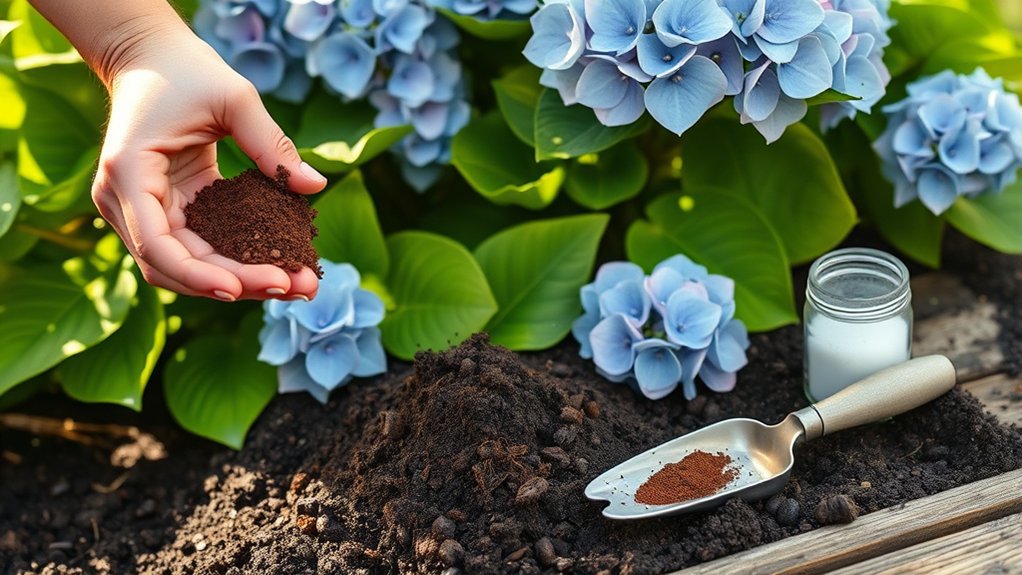
Once you know your soil’s pH, choose an acidifier suited to your soil and how quickly you want to adjust it. Elemental sulfur offers a lasting option, but soil microbes need time to convert it, so you won’t see an immediate change. Aluminum sulfate works faster, though you’ll need to consider its potential effects on plant roots and soil life.
Elemental sulfur provides lasting acidity, while aluminum sulfate acts faster but may affect roots and soil life.
For a gentler, gradual approach, use an acid-forming fertilizer labeled for hydrangeas or other acid-loving plants. Read the label to confirm it fits your soil and gardening goals.
You may also consider cheap options and home remedies, such as coffee grounds or pine needles. These materials can add organic matter, but they usually won’t lower soil pH reliably on their own. Don’t count on vinegar for lasting results; it can create a brief, localized change without correcting the underlying soil conditions.
Choose a product based on your test results, soil type, and patience. If you’re unsure, ask your local extension office for guidance.
Apply Acidifiers at Safe Rates
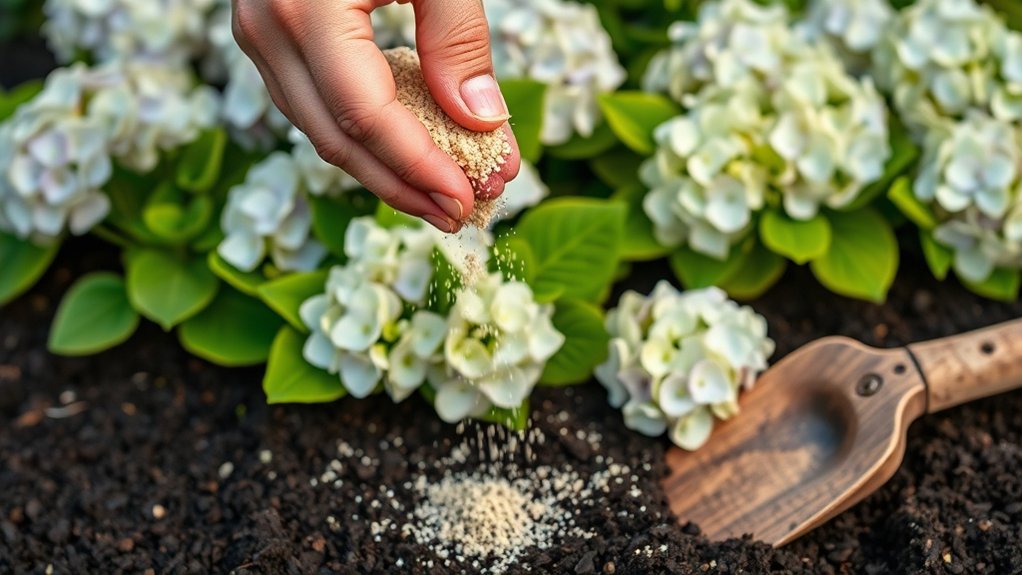
After choosing an acidifier, follow its label’s application rate rather than guessing. Your soil type, current pH, and product strength affect how much you should use. Applying too much can stress hydrangeas, damage roots, and make soil excessively acidic. For disaster prevention, test your soil first and measure each dose carefully.
- Read the product label to find the rate for your soil and treatment area.
- Measure the bed, then calculate the amount required; don’t estimate by handfuls.
- Wear gloves and eye protection, and keep acidifiers away from children and pets.
- Spread the product evenly around the root zone, avoiding direct contact with stems and leaves.
These safety considerations help you apply the right amount without exposing yourself or your plants to unnecessary risk. Don’t combine products or repeat applications sooner than the label allows. If you’re unsure about the calculation, ask your local extension service or garden center before applying. Retest soil before deciding whether another treatment is needed.
Water and Mulch Acidified Soil
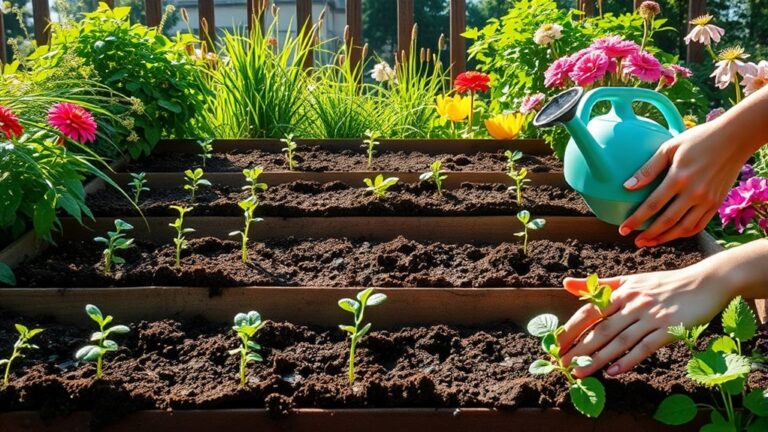
Water the treated soil slowly and evenly, following the product label’s directions, so the acidifier reaches the root zone without washing away. Keep watering soil gently around the hydrangea, rather than spraying the leaves or creating runoff. If rain is forecast, wait to apply water until the ground needs it.
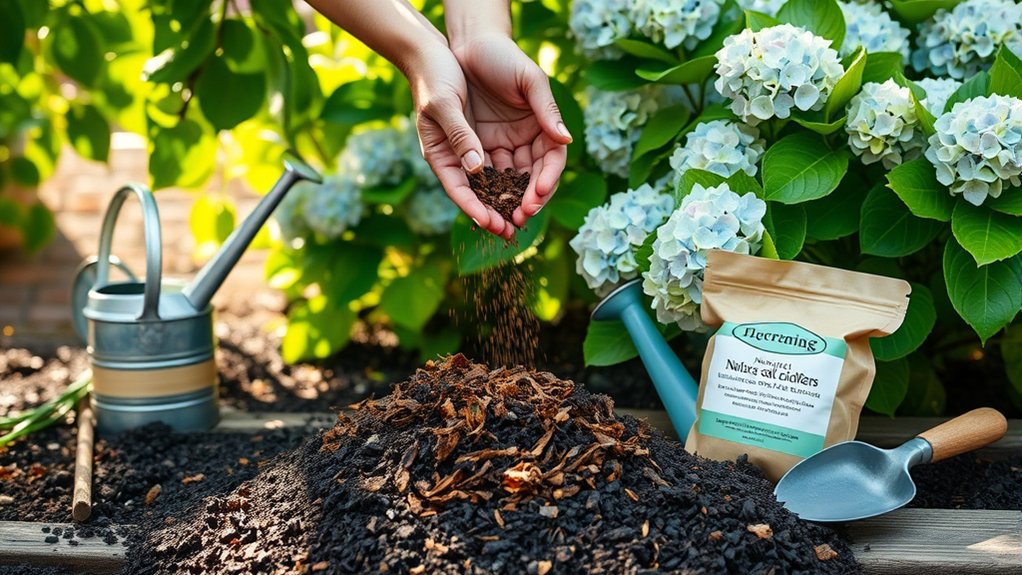
Add a 2- to 3-inch layer of organic mulch, such as shredded bark or pine needles, over the root area. Keep mulch a few inches away from stems to prevent rot and allow airflow. Mulch helps hold moisture and moderate soil temperature; it won’t quickly change acidity on its own.
| Mulch choice | Main benefit |
|---|---|
| Shredded bark | Retains moisture |
| Pine needles | Adds light, loose cover |
Don’t rely on mulch acidity as a substitute for a labeled acidifier. Replenish mulch as it breaks down, and water when the top inch of soil feels dry. Avoid soaking the bed, which can displace amendments and stress roots.
Retest Soil and Adjust for Blue Blooms
How will you know whether the treatment worked? Retest soil with a reliable garden pH kit after several weeks, following its instructions carefully. Soil changes gradually, so don’t add more acidifying material just because your hydrangeas haven’t turned blue yet.
Check pH again during the growing season, especially after heavy rain or repeated watering.
- Test consistently. Collect small samples from several spots near the shrub’s roots, avoiding fertilizer granules and surface mulch.
- Read the result. Blue hydrangeas generally need acidic soil, often around pH 5.2 to 5.5. Your cultivar and local conditions can affect color.
- Adjust cautiously. If pH remains too high, apply an appropriate soil acidifier at the label’s rate. Water it in, and wait before testing again.
- Check bloom color. If flowers stay pink, confirm pH and aluminum availability; some varieties won’t turn blue. To adjust for blue blooms, make small, measured changes rather than over-acidifying.
Keep records of test results and treatments. This helps you track progress and avoid harming roots with excessive amendments.
Frequently Asked Questions
Do All Hydrangea Varieties Change Color With Soil Acidity?
No, you won’t see every hydrangea variety change color with soil acidity. Bigleaf and mountain hydrangeas can shift between blue and pink, depending on available aluminum and soil pH thresholds. White varieties generally stay white, while many panicle and smooth hydrangeas don’t respond to soil acidity this way. Even among responsive plants, color change varies by cultivar and growing conditions, so check your variety before adjusting your soil.
How Long Do Acidic Soil Conditions Last?
Your acidic soil conditions may last a few months to several years—soil chemistry doesn’t sign a lifetime contract. The acidic soil duration depends on rainfall, irrigation, soil type, and amendments.
Sandy soil often shifts faster than clay or organic-rich soil, so test your soil every few months after treatment, then annually. Don’t expect endless blooms to obey: color change limits vary by hydrangea variety, and some won’t change color, whatever your soil’s pH.
Can Acidic Soil Harm Nearby Plants?
Yes, acidic soil can harm nearby plants if its pH falls below what they tolerate. The acidic soil risks include nutrient imbalances, reduced root growth, and toxic levels of aluminum or manganese.
Your nearby plant impact depends on each species’ preferences, soil type, and how far acidity spreads. Check soil pH around sensitive plants before making changes, and apply amendments gradually.
You’ll protect neighboring roots by keeping treatments targeted and retesting regularly.
Are Blue Hydrangeas Naturally Blue?
Blue hydrangeas aren’t always naturally blue; their color depends on genetics and growing conditions. The blue color chemistry involves aluminum availability: when your soil lets the plant absorb aluminum, its flowers can turn blue.
Soil pH influence matters because acidic soil generally makes aluminum more available, while alkaline soil often produces pink flowers. You can’t make every hydrangea blue, though. Some varieties lack the genetic ability to develop blue blooms, whatever your soil conditions.
Is Acidic Soil Safe for Pets and Children?
Acidic soil can be safe for pets and children when you manage it carefully. For acidic soil safety, test the soil before adding amendments, follow product directions, and keep children and pets away while you apply them.
Store materials securely, and water the area as directed. Don’t let anyone eat soil or treated plants.
If you use concentrated products, wear gloves and wash your hands afterward. Check labels for specific pets children safety precautions.
Conclusion
To make soil more acidic for hydrangeas, test its pH first, then choose an appropriate acidifier and apply it at the recommended rate. Water the soil and add mulch to help maintain moisture.
Retest regularly, since pH changes take time, and adjust gradually if you’re aiming for blue blooms. Think of soil care like tuning an instrument: small, careful changes help you find the right balance without stressing your plants.
Follow product directions, and give your hydrangeas time to respond. With patience, these steps can help make soil more acidic for hydrangeas.