How to Begin a Vegetable Garden in 3 Simple Steps
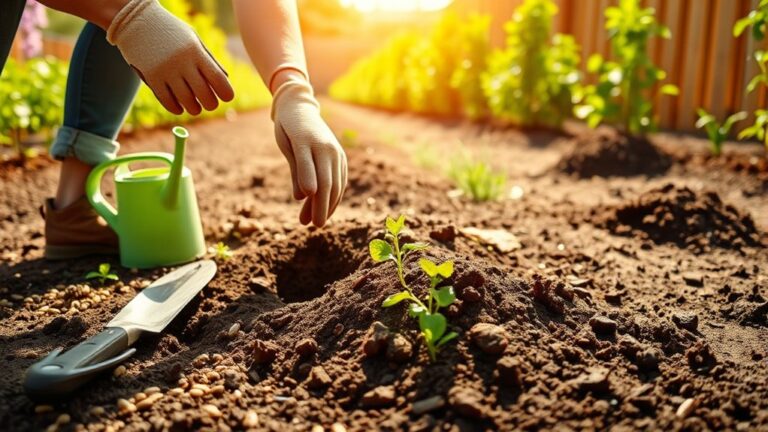
Starting a vegetable garden can feel overwhelming when you’re unsure where to begin or which supplies you need. You’re not alone—many new gardeners face the same challenge. This guide to how to begin a vegetable garden in 3 simple steps will help you get growing with confidence.
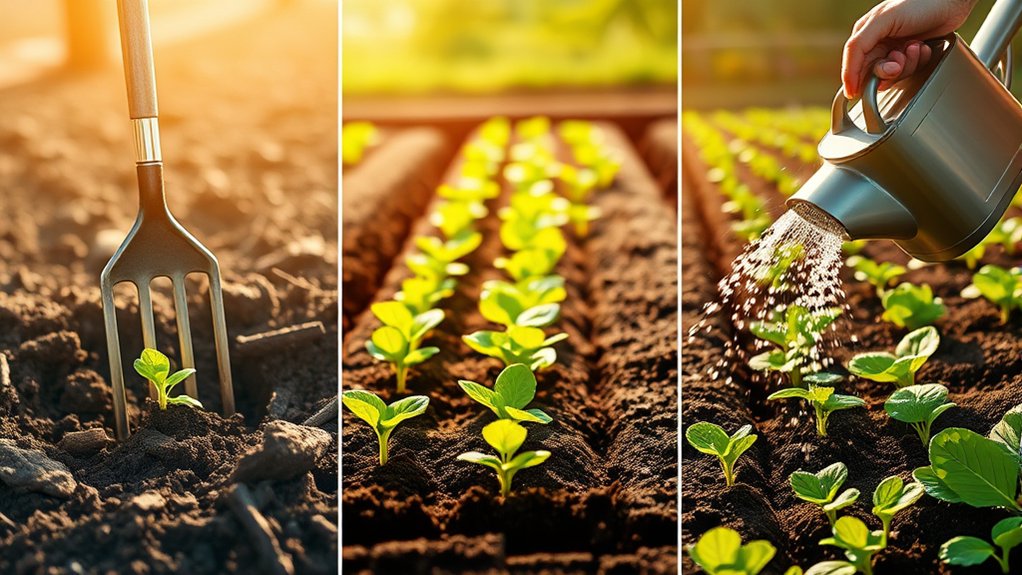
To begin a vegetable garden in three simple steps, first choose a spot that gets several hours of direct sunlight, drains well, and is easy to reach. Next, test and loosen the soil, mix in finished compost, and plant beginner-friendly vegetables such as lettuce, radishes, or bush beans, following seed-packet instructions. Finally, water when the top inch feels dry, pull weeds while they’re small, and harvest crops at the right time. A few practical tips can help your garden thrive.
Key Takeaways
- Choose a sunny, accessible spot with well-drained ground, and sketch a simple layout with room to move around.
- Test the soil, loosen it, remove rocks and roots, and mix finished compost into the top few inches.
- Start with easy vegetables suited to your climate, such as lettuce, radishes, bush beans, or zucchini.
- Follow seed-packet instructions for planting depth and spacing; start seeds indoors if your growing season is short.
- Water when the top inch of soil is dry, pull weeds early, mulch around plants, and harvest crops at the right time.
Check Sunlight and Plan Your Vegetable Garden
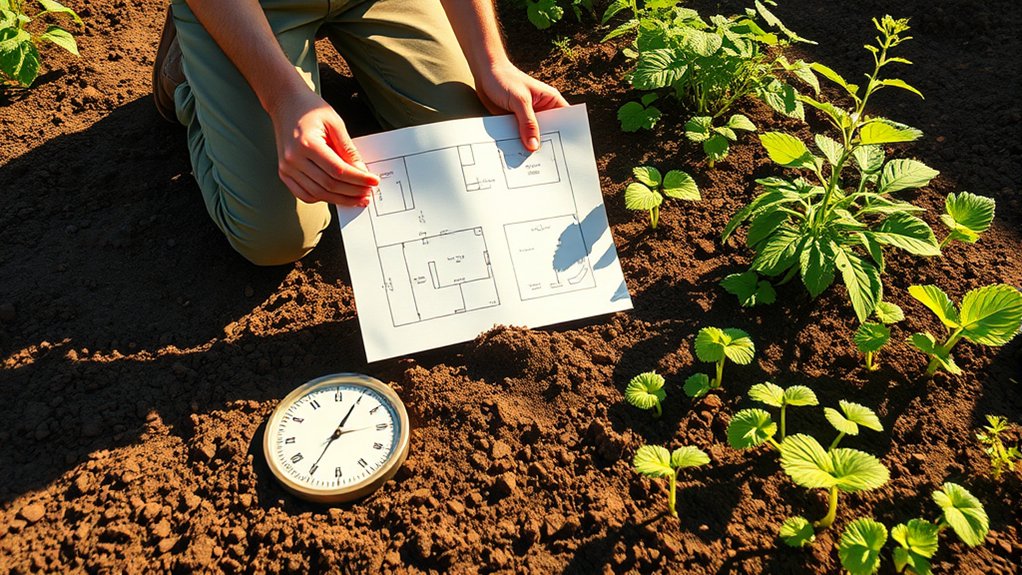
Before you choose a spot, check how much sunlight it gets throughout the day. Spend a day observing your yard, noting when direct light reaches different areas and when shadows move across them. This sunlight assessment helps you match your available space to the vegetables you may want to grow later. Most vegetables need several hours of direct sunlight, so prioritize the brightest practical location.
Next, consider access and convenience. Choose a spot you can reach easily from your home, with room to walk around and tend your plants. Check that nearby trees, fences, or buildings won’t block light as the seasons change. Notice whether the ground stays soggy after rain, and avoid low areas where water collects.
Use garden layout planning to sketch your options before you commit. Mark sunny zones, paths, and nearby structures, then estimate how much space you can manage. Keep the design simple and flexible; you can adjust it as you learn what works in your yard. Don’t finalize planting choices until you’ve checked the conditions.
Prepare the Soil and Plant Beginner-Friendly Vegetables
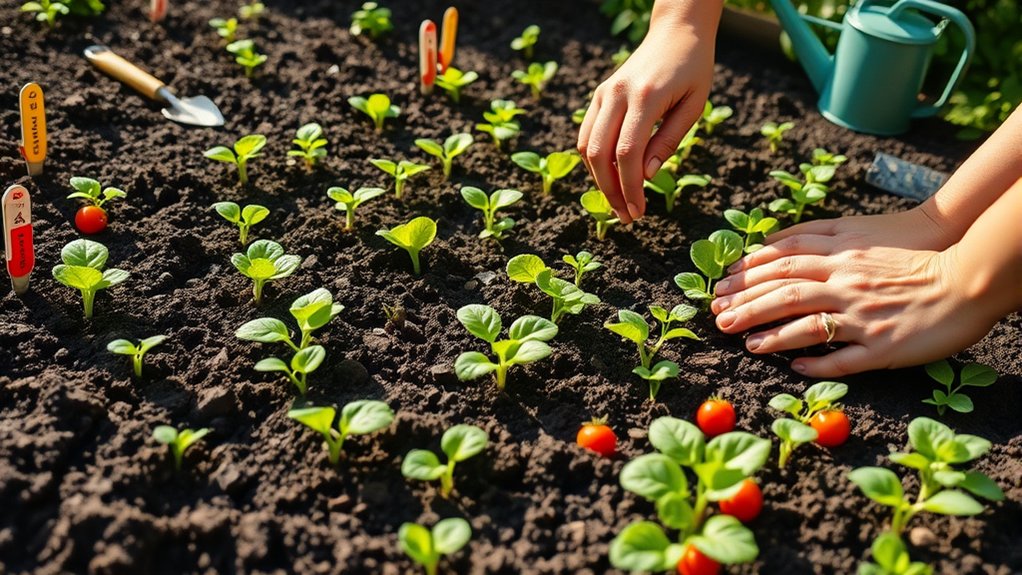
Once you’ve chosen a sunny spot, prepare the soil so roots can grow and water can drain well. Start with soil testing to learn whether your garden needs adjustments to its pH or nutrients. Loosen compacted ground and remove rocks and roots.
For composting basics, mix finished compost into the top few inches; it adds nutrients and improves moisture retention without relying on synthetic fertilizer.
Choose beginner-friendly vegetables that suit your climate, such as lettuce, radishes, bush beans, or zucchini. Check seed packets for spacing and planting depth, then sow directly outdoors when conditions are right.
If your growing season is short, try seed starting indoors and transplant sturdy seedlings after frost danger passes. Protect young plants with simple pest prevention: use row covers, inspect leaves, and leave enough space for airflow.
Apply mulch strategies by spreading a thin layer of straw or shredded leaves around plants, keeping it clear of stems. Label each row so you can identify varieties as they grow.
Water, Weed, and Harvest Your Vegetable Garden
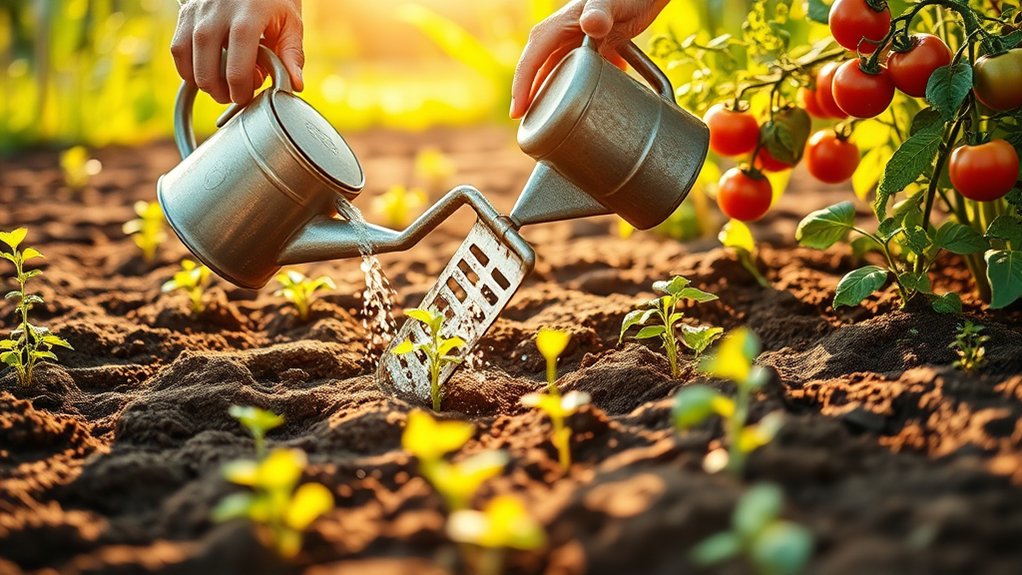
Water your garden deeply when the top inch of soil feels dry, aiming the flow at the soil rather than the leaves. Consistent water planning helps roots grow strong; water early in the day so plants can absorb moisture before the heat. Adjust your schedule after rain, and check soil instead of following a rigid routine.
Practice weed control by pulling weeds while they’re small, especially near young plants. Mulch around vegetables to conserve moisture and block new weeds, keeping mulch away from stems. As your garden grows, watch for signs of pests or disease and remove affected leaves promptly.
Good soil nutrition supports steady growth, so replenish beds with compost when plants need a boost. Consider sun exposure, since heat and light affect how quickly soil dries and crops mature. Learn harvest timing for each crop: pick leafy greens while tender, and harvest ripe tomatoes when they’re fully colored. Regular picking encourages many beginner friendly veggies to keep producing.
Frequently Asked Questions
What Tools Do I Need to Start a Vegetable Garden?
You’ll need a sturdy trowel, garden fork, hand pruners, gloves, and a watering can or hose with a gentle spray nozzle. A rake helps level beds, while a hoe controls weeds.
For soil preparation, use a shovel or spade, plus a compost bin or wheelbarrow to move amendments. Seed starting calls for trays or small pots, labels, and a spray bottle.
Add a measuring tape if you’re planning rows or spacing plants carefully.
Can I Grow Vegetables in Containers on a Balcony?
Yes, you can grow vegetables in containers on your balcony. Choose pots with drainage holes and fill them with quality potting mix. Grow compact varieties of tomatoes, peppers, lettuce, or herbs, and water them regularly.
For successful balcony container gardening, match each plant to its container size and sunlight needs. Track direct sunlight, then place sun-loving crops in the brightest spots and shade-tolerant greens in cooler areas.
How Much Does It Cost to Start a Vegetable Garden?
You can start a small vegetable garden for about $50–$150, while larger or raised-bed gardens may cost $200–$500 or more. Your cost estimates depend on whether you need containers, soil, tools, seeds, seedlings, and fencing.
Reuse pots and tools to spend less, and start with a few easy crops. For effective budget planning, price essentials locally, set a spending limit, and add a small cushion for replacements or unexpected needs.
How Can I Protect My Garden From Pests?
Protect your garden by building a living fortress around your plants. Use pest proof barriers, such as row covers, collars, and fine mesh, to block hungry insects before they arrive.
Invite beneficial insects like ladybugs and lacewings by planting flowers and herbs nearby. Check leaves often, remove pests by hand, and clear away damaged growth.
Rotate crops each season, too; you’ll make it harder for pests to settle in and feast.
When Should I Start Seeds Indoors?
Start seeds indoors 4–8 weeks before your area’s last expected spring frost; check each seed packet because crops vary. For accurate seed start timing, use your local frost date and count backward from the transplanting date.
Indoor germination basics include clean containers, moist seed-starting mix, suitable warmth, and bright light once seedlings emerge. Sow cool-season crops earlier if needed, and wait to move seedlings outside until conditions suit them. Harden them off gradually before transplanting.
Conclusion
You’ve learned how to check sunlight, prepare your soil, and choose easy vegetables for your first garden. Keep watering consistently, pull weeds before they take over, and harvest crops when they’re ready.
Don’t worry if everything doesn’t grow perfectly—gardening takes practice, and each season teaches you something new. Start small, enjoy watching your plants thrive, and you’ll soon reap what you sow.
With a little care and patience, your vegetable garden can bring fresh food and plenty of satisfaction. Follow these simple steps to begin a vegetable garden of your own.