How to Plan a Cottage Garden in 3 Simple Steps
Planning a cottage garden can feel overwhelming when you’re unsure what to plant or where to put it. You’re not alone—many gardeners struggle to create a garden that looks charming and thrives in their space. These simple steps can help you get started.
Plan a cottage garden in three simple steps. First, assess your sunlight, soil, climate, and space, then choose flowers suited to your conditions. Second, arrange tall plants at the back or center, medium-height blooms in front, and low growers along the edge; combine early, midsummer, and late flowers for a longer display. Finally, water deeply when needed, mulch, pull weeds, and remove spent blooms. Keep these basics in mind, and you’ll be ready to build a garden that thrives.
Key Takeaways
- Assess sunlight, soil, climate, and bed size; observe daily light and test soil before choosing flowers.
- Match plants to site conditions, selecting hardy varieties and a manageable mix of perennials and easy annuals.
- Arrange flowers in layers: tall plants at the back or center, medium varieties in front, and low growers along edges.
- Plan staggered bloom times, repeat a few varieties for cohesion, and include long-blooming flowers to bridge seasonal gaps.
- Prepare for upkeep with mulch, deep watering, regular weeding, deadheading, and seasonal cleanup.
Choose Cottage Garden Flowers for Your Site
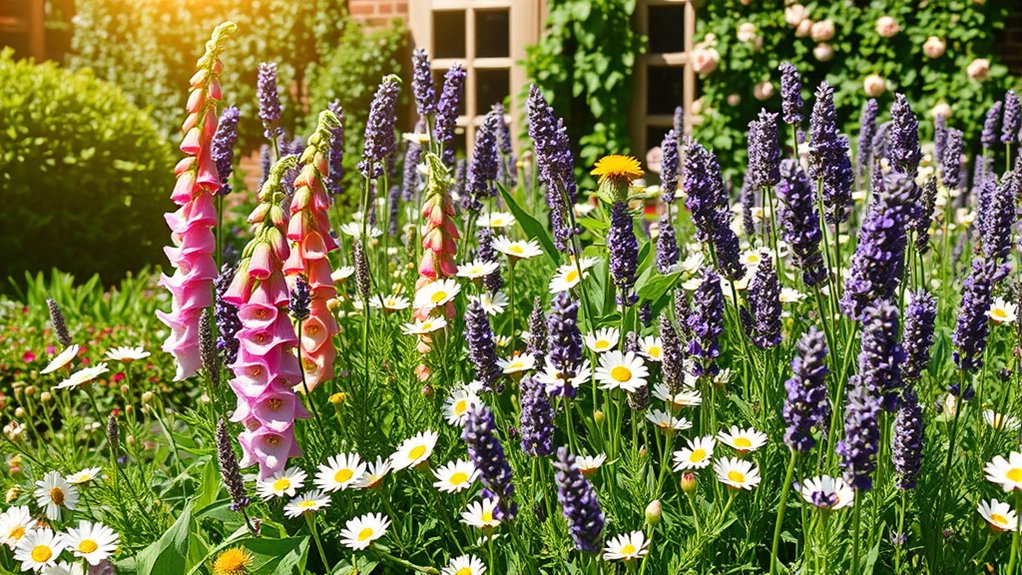
Choose cottage garden flowers that suit your site’s sunlight, soil, climate, and available space. Spend a day observing how light moves across your yard.
> Choose flowers that fit your garden’s sunlight, soil, climate, and space. Observe how light moves across your yard before planting.
For a sunny site selection, note which areas receive at least six hours of direct sun; choose sun-loving blooms such as cosmos, zinnias, and salvias for those spots. If your garden gets partial shade, consider foxgloves, columbines, or hardy geraniums.
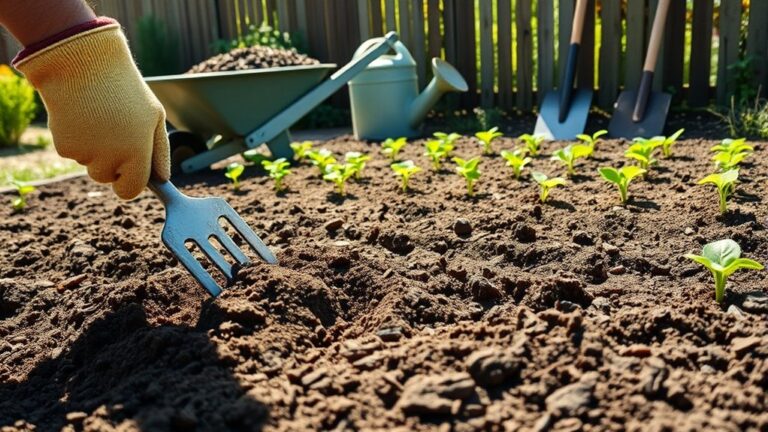
Check your soil before you shop. A simple test can reveal whether it’s sandy, clay-heavy, or rich in organic matter, and whether its pH suits your preferred plants. Match flowers to those conditions, or amend the soil with compost when needed.
Choose varieties that tolerate your local winters and summers so you won’t have to replace them each season.
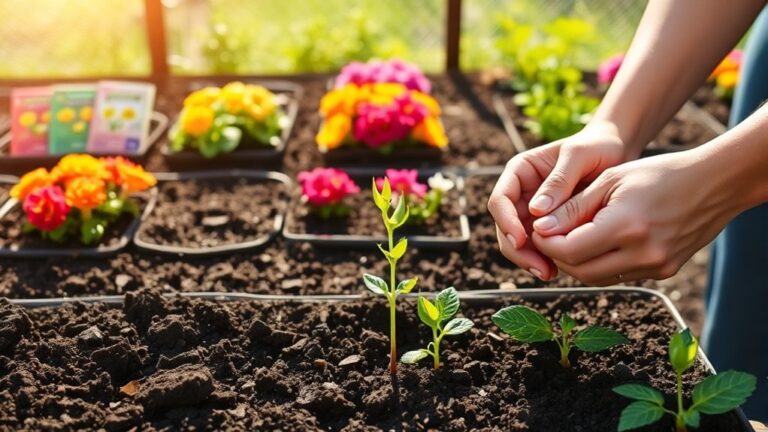
Measure your garden bed and consider how much time you can give it. Select a manageable mix of dependable perennials and a few easy annuals. Read plant labels for mature width, water needs, and care requirements before buying.
Arrange Flowers by Height and Bloom Time
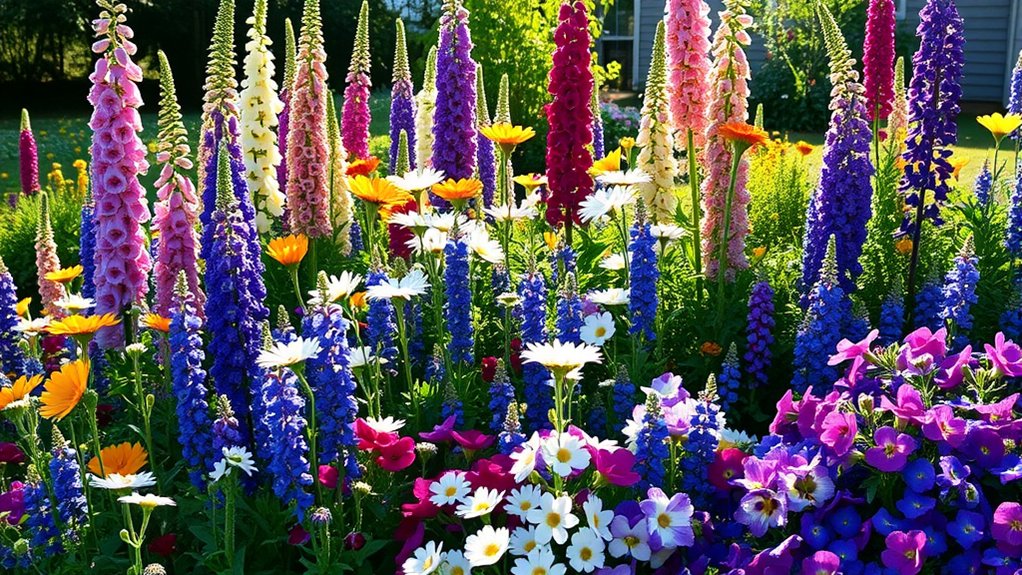
Arrange flowers by height and bloom time to create a layered display that stays colorful through the season. Place tall plants, such as hollyhocks or delphiniums, at the back of a border or in its center if you can view it from all sides.
Set medium-height flowers in front of them, then edge the bed with low growers that won’t hide their neighbors. This arrangement gives each plant room to show its shape and blooms.
Next, plan for sequencing by bloom time. Check when each variety flowers, then combine early, midsummer, and late-season choices so one group takes over as another fades.
Add plants with long blooming periods to bridge gaps, and repeat a few varieties across the bed for a cohesive look. Consider foliage, too: varied leaf shapes and colors keep the garden appealing between flower flushes.
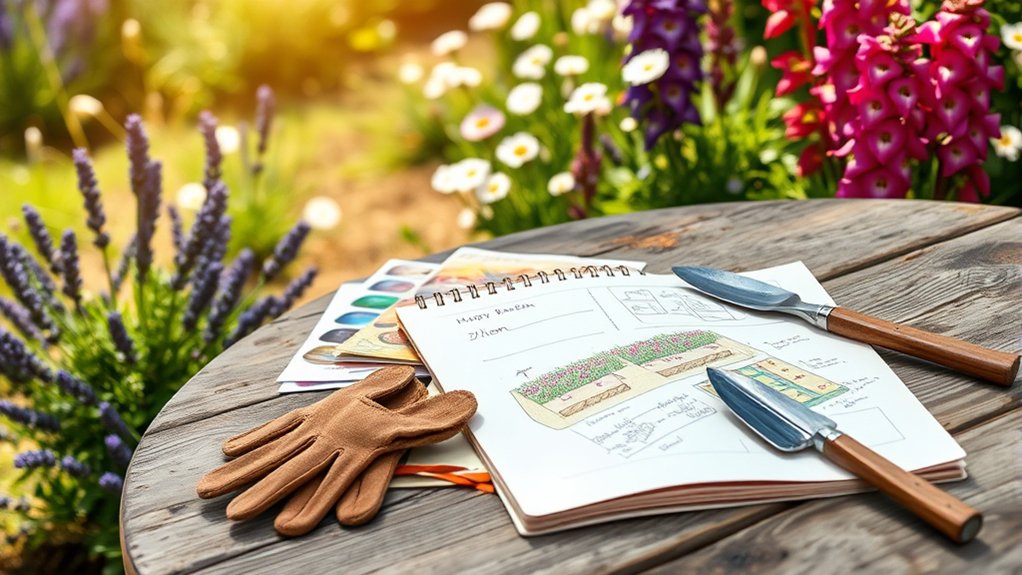
Sketch your layout, mark approximate heights and flowering months, and adjust placements until the display feels balanced from spring through fall.
Maintain Your Cottage Garden With Simple Routines
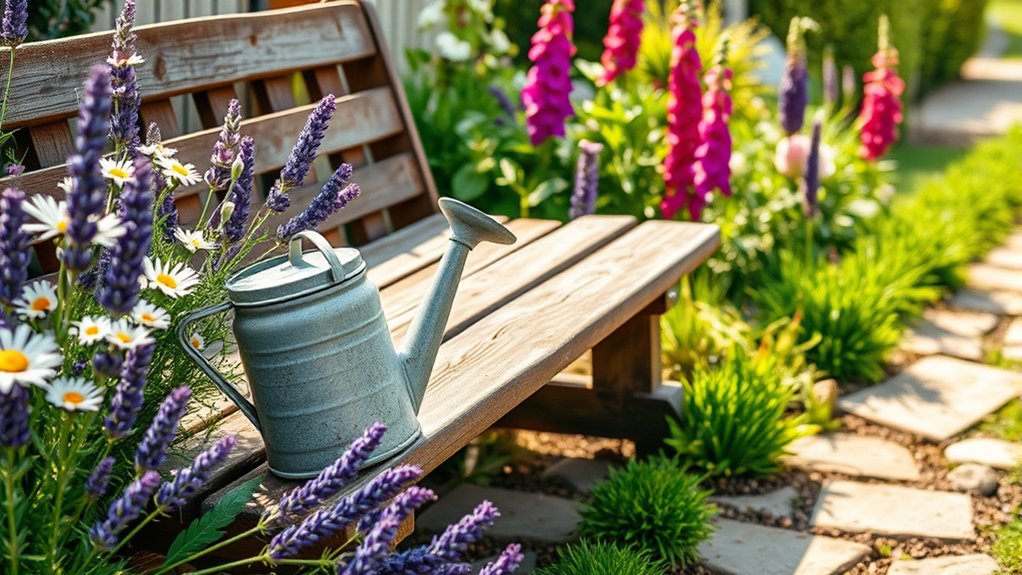
Once you’ve planned a garden that blooms in layers, keep it thriving with a few simple routines. Walk through your beds each week to spot weeds, pests, and wilting stems before they become bigger problems. Pull weeds while they’re small, and remove spent flowers to encourage fresh blooms. Water deeply at the soil level when rainfall doesn’t meet your plants’ needs; a layer of mulch helps hold moisture and suppress weeds.
Feed plants sparingly, guided by soil testing rather than guesswork. Add compost to improve soil and support steady growth, but avoid overfertilizing, which can produce leafy plants with fewer flowers.
As blooms fade, note gaps in your display and use succession planning to sow seeds or plant replacements for continued color. Stake tall varieties before they lean, and prune only when each plant’s needs call for it.
At season’s end, clear diseased debris, save suitable seeds, and record what worked so you can adjust next year’s garden.
Frequently Asked Questions
What Is the History of Cottage Gardens?
Cottage gardens began in medieval England, where rural families grew vegetables, herbs, fruit, and flowers near their homes. Their history origins lie in practical self-sufficiency, not ornamental design. Over centuries, you can trace their cultural evolution from working plots into informal gardens admired for abundant blooms, mixed planting, and a relaxed appearance. By the Victorian era, writers and designers celebrated this style, and today you can still see its blend of beauty and usefulness.
Can I Create a Cottage Garden in Containers?
Yes, you can create a cottage garden in containers, even with limited space. Choose pots with drainage holes and group them at different heights for a relaxed, abundant look.
For Plant selection for containers, combine compact flowers, herbs, and trailing plants that share similar sunlight and water needs. Try dwarf roses, lavender, sweet alyssum, or nasturtiums.
Water regularly, feed during the growing season, and remove faded blooms to encourage fresh color.
How Much Does It Cost to Start a Cottage Garden?
You can start a cottage garden for $50–$300, depending on its size and what you already own. Spend less with seeds, spend more with mature plants, and reuse pots or buy new ones.
Your cost breakdown might include $10–$40 for seeds, $30–$150 for plants, and $20–$100 for soil and compost. A container setup may add $15–$50 per pot.
You’ll save by starting small, growing from seed, and adding plants over time.
Are Cottage Gardens Suitable for Small Urban Spaces?
Yes, cottage gardens suit small urban spaces when you plan thoughtfully. On urban lots, use vertical supports, compact plants, and layered heights to create abundant blooms without crowding walkways. Container planning lets you grow herbs, flowers, and even small shrubs in pots you can rearrange as needed.
For balcony gardening, check weight limits and sunlight before choosing containers. You don’t need a large yard; you need a mix of plants that fits your space and care routine.
Can a Cottage Garden Attract Pollinators and Wildlife?
Yes, you can attract pollinators and wildlife with a cottage garden. Choose pollinator friendly planting, such as nectar-rich flowers that bloom across the seasons, and include varied shapes and colors to welcome bees, butterflies, and other beneficial insects.
Add wildlife friendly features like a shallow water source, native shrubs, seed heads, and sheltered spots. Avoid pesticides, and you’ll give visiting creatures food, water, and places to rest, nest, and thrive in your garden.
Conclusion
Plan your cottage garden in three simple steps: choose flowers that suit your site, arrange them by height and bloom time, and keep them thriving with easy routines. You might discover that the blooms you picked for color also attract the pollinators your garden needs. That happy coincidence is part of the charm.
Start small, adjust as you learn, and enjoy a cottage garden that feels relaxed, personal, and wonderfully alive throughout the seasons.