How to Make a Flower Garden in 7 Easy Steps
Starting a flower garden can feel overwhelming when you’re unsure what to plant or how to keep it thriving. You’re not alone—many new gardeners struggle to know where to begin. This guide to how to make a flower garden in 7 easy steps will help you get started with confidence.
To make a flower garden in seven easy steps, choose a sunny, well-drained spot; pick flowers suited to your climate and space; and sketch a layout with paths and plant heights in mind. Test and prepare the soil, then plant seeds or seedlings at the recommended depth and spacing. Water deeply and add mulch to hold moisture.
Keep your garden blooming by weeding, deadheading, checking for pests, and protecting tender plants from frost. The steps below will help you get started.
Key Takeaways
- Choose a sunny, well-drained location that receives at least six hours of direct sunlight daily.
- Measure and sketch the garden, noting paths, shade, slopes, and areas where water collects.
- Select flowers suited to your climate, soil, sunlight, and frost dates; plan for varied heights and bloom times.
- Prepare the soil by removing weeds and debris, loosening it 8–12 inches, and mixing in finished compost.
- Plant at recommended depths and spacing, water deeply, mulch lightly, and maintain flowers by weeding, deadheading, and checking for pests.
Choose a Sunny, Well-Drained Garden Spot
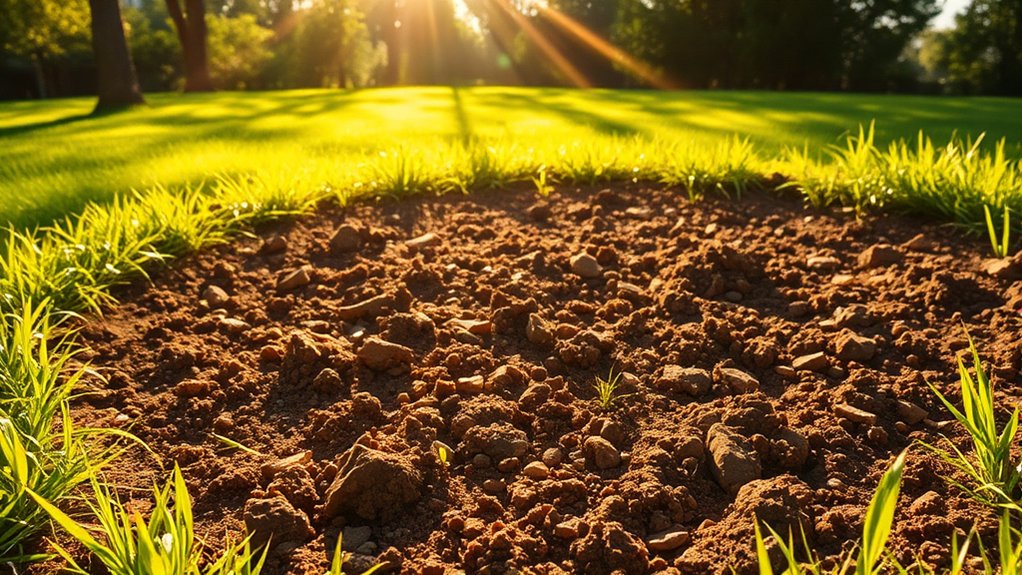
Before you plant, choose a spot that gets at least six hours of direct sunlight each day and drains well after rain. Watch your yard throughout the day to see where sunlight falls, and note areas shaded by buildings or trees. A sunny soil location helps many flowers grow strong, though you can improve the ground before planting.
Check drainage by digging a small hole, filling it with water, and watching how quickly it empties. If water remains for hours, choose a higher area or loosen compacted soil with compost. Avoid low spots where runoff collects, since soggy roots can struggle.
Also consider access: you’ll want to reach the garden easily for watering, weeding, and upkeep. Keep it clear of heavy foot traffic and place it where you can see and enjoy it. Before spreading mulch, confirm well drained mulch compatibility with your soil and plants; a thin layer can help retain moisture without covering stems.
Pick Flowers for Your Climate and Space
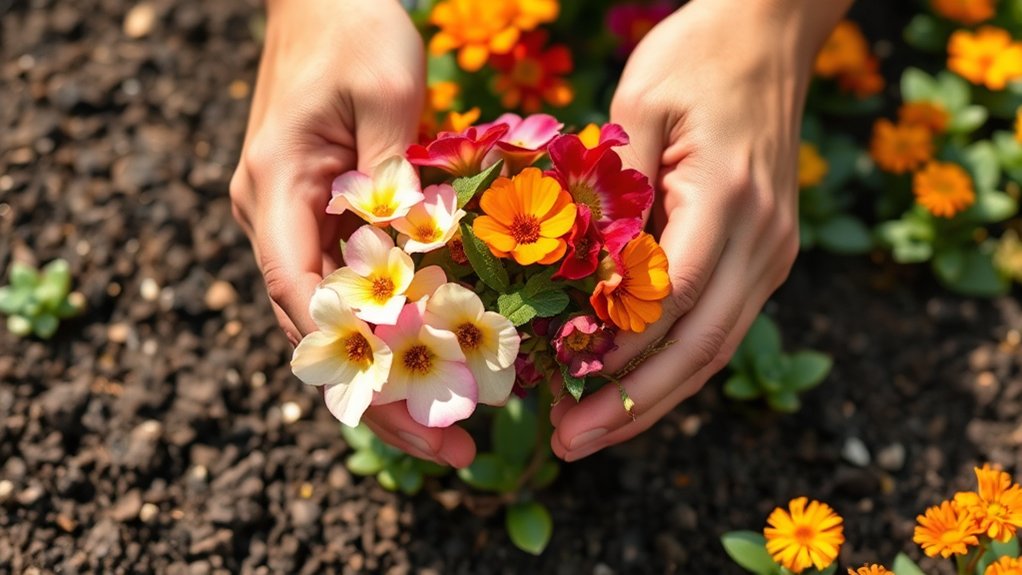
Check your climate zone and typical weather to find flowers that will thrive where you live. Then measure your garden and note how much sun it gets and what the soil is like. With those details in mind, choose flowers that suit both your local climate and your available space.
Know Your Climate
What grows beautifully in one garden may struggle in another, so choose flowers suited to your climate and the space you have.
Know climate conditions before you shop. Check your garden zoning to identify plants that can handle your region’s typical temperatures. Then review local weather patterns, including summer heat, rainfall, wind, and humidity.
These details help you choose flowers that can thrive rather than merely survive. Find your average last spring frost date and first fall frost date through a local gardening service or extension office.
Use these frost dates to determine when it’s safe to plant outdoors and how long your growing season lasts. If you’re unsure about a flower, read its label for hardiness and temperature needs.
Choose varieties suited to your climate, and you’ll give your garden a stronger start and enjoy healthier blooms.
Assess Your Space
Where does the sun linger, and where does shade fall? To assess your space, observe your garden at different times of day. Note sunny patches, shaded corners, and areas that get morning or afternoon light. These details help you understand what your plot can support without choosing specific flowers yet.
- Measure the bed’s length and width, then sketch its shape.
- Check how much room you have for paths, seating, and access.
- Notice slopes, low spots, and places where water tends to collect.
- Touch the soil after rain to see whether it drains quickly or stays soggy.
Also consider wind exposure and nearby walls or trees, which can affect warmth and moisture. Forecast rainfall for your area, and watch how water moves across the bed. Keep your notes handy as you plan the garden.
Choose Suitable Flowers
Choose flowers that suit your local climate and the conditions you noted in your garden. Check plant labels or local gardening guides to find varieties that thrive in your hardiness zone, sunlight, and soil.
If your space gets strong afternoon sun, choose heat-tolerant blooms. For shady spots, pick flowers that flourish with less light. Match each plant’s mature height and spread to your garden so blooms have room to grow without crowding.
Next, choose color combinations that complement your home and create the mood you want. Mix flower shapes and heights for visual interest, and select bloom times so something’s flowering from spring through fall.
Consider maintenance, too. Drought-tolerant varieties can save water, while native flowers often support local pollinators. Start with a manageable mix you’ll enjoy tending throughout the season.
Plan Your Flower Garden Layout
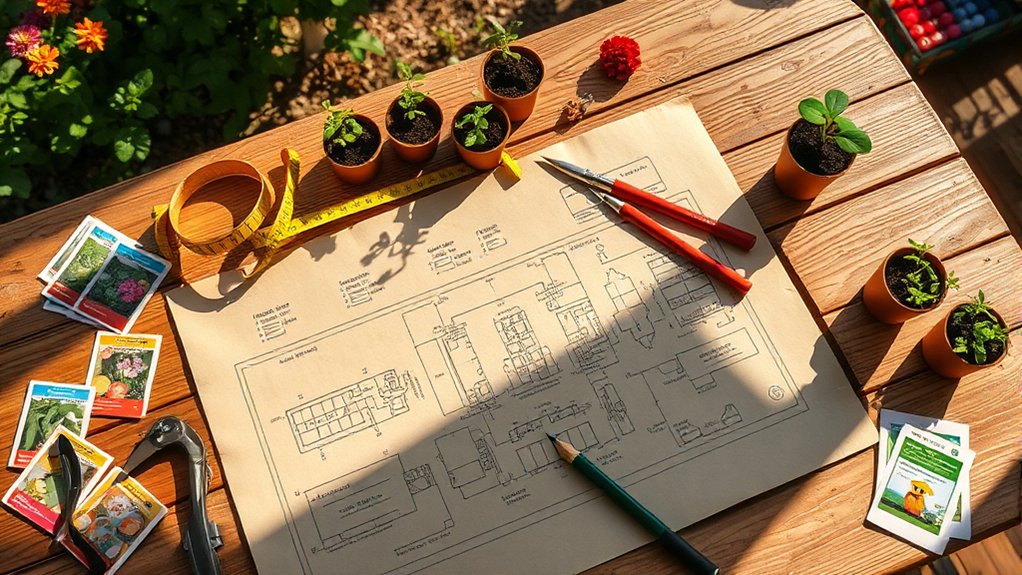
Before you plant, sketch a layout that fits your garden’s size, sunlight, and style. Use graph paper or simple layout diagrams to map the space, noting paths, fences, and existing features. Then place your chosen flowers where you can see and care for them easily.
Think about each plant’s mature height, bloom time, and color. Set taller flowers toward the back of a border or the center of an island bed, and keep shorter varieties near the edges. Group flowers with similar light needs, and use companion planting to create pleasing combinations that also attract pollinators.
- Leave enough room for paths so you can reach every bed.
- Repeat a few colors or flower shapes to create a cohesive look.
- Mix bloom times for color across more of the growing season.
- Mark focal points, such as a favorite flower or garden ornament.
Walk through your plan before committing. Adjust crowded spots, preserve clear views, and make sure the arrangement feels inviting from the places you’ll enjoy it.
Prepare the Soil for Flower Planting
Once your layout is set, prepare the soil so flowers can establish strong roots. Start with soil testing to learn your garden’s pH and nutrient levels. Use a home kit or send a sample to a local extension service, then follow the results to adjust the soil. If it’s too acidic or alkaline, add the recommended amendment rather than guessing.
Clear away weeds, rocks, and old plant debris. Loosen compacted ground with a garden fork, working about 8 to 12 inches deep. This improves airflow and drainage, making it easier for roots to grow later.
Next, focus on compost preparation. Mix a layer of finished compost into the loosened soil to add organic matter and support healthy soil life. If your soil drains poorly or dries quickly, compost can help improve its texture over time. Avoid fresh manure, which may harm plants. Rake the surface smooth, but don’t pack it down; keep the soil loose and ready for planting.
Plant Seeds or Seedlings at the Right Depth
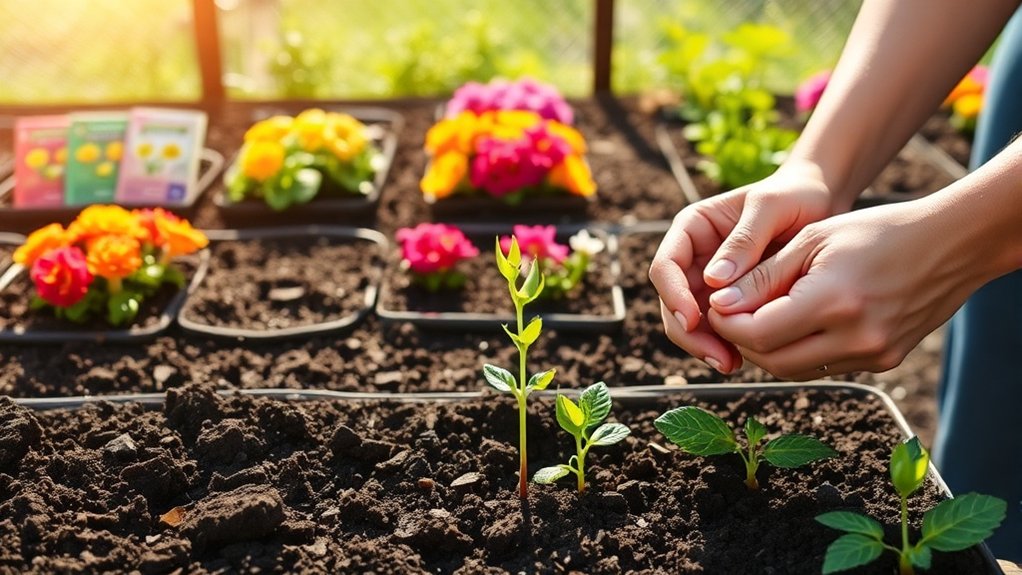
Plant seeds and seedlings at the depth recommended on the seed packet or plant label, since planting too deep or too shallow can slow growth. Check each variety’s instructions before you begin, because seed depth differs among flowers. Some seeds need light to sprout, while others should sit beneath a thin layer of soil.
Plant seeds and seedlings at their recommended depth to support healthy growth and give every flower a strong start.
- Make a shallow furrow with your finger or a garden marker, then sow seeds evenly.
- Cover seeds lightly, using the packet’s depth guidance rather than burying them by guesswork.
- Set seedlings in holes that match the depth of their containers; keep the stem base level with the soil surface.
- Follow the label’s seedling spacing so mature plants have room to grow and show off their blooms.
Handle seedlings gently by their leaves, not their delicate stems. If roots circle the container, loosen them carefully before planting. Label each row or group with the flower name, so you’ll remember what you planted as your garden fills in.
Water and Mulch Your New Flower Garden
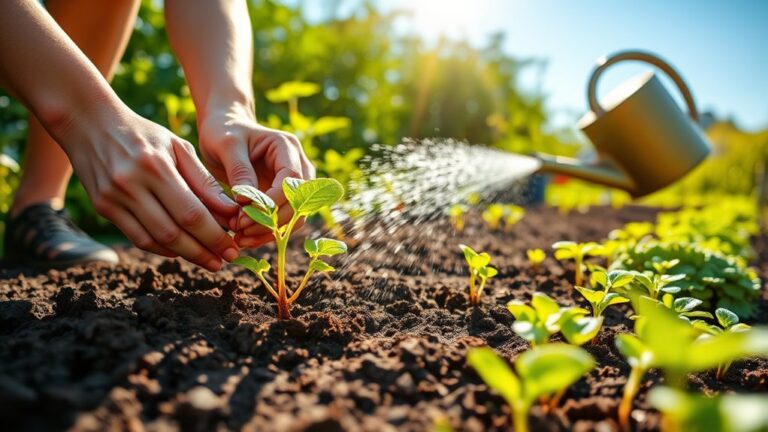
After planting, water the bed gently to settle the soil around seeds and roots without washing them away. Use a fine spray or a watering can with a rose attachment, directing water close to the ground. Moisten the soil evenly, but don’t leave it soggy; standing water can harm roots and seeds.
Set a watering schedule based on your soil, weather, and plants’ needs. Check the soil with a finger: if the top inch feels dry, water again. Newly planted flowers need consistent moisture while they establish, so don’t let the bed dry out completely. Water early in the day when possible, giving leaves time to dry.
Once the soil has settled, water and mulch the bed with a thin layer of organic material, such as shredded bark or compost. Keep mulch a few inches away from stems and seed rows so it won’t smother growth. A light, even layer helps retain moisture and keeps soil from crusting.
Care for Your Flower Garden All Season
How do you keep your flower garden thriving all season? Build simple care routines, then adjust them as weather and blooms change. A few minutes of attention each week can prevent small problems from becoming bigger ones.
- Water deeply when the soil feels dry, aiming at the roots rather than the leaves. Check more often during hot, windy spells.
- Deadhead faded flowers to encourage fresh blooms, and remove damaged leaves before disease spreads.
- Pull weeds while they’re small, and refresh mulch when the soil starts showing through.
- Inspect stems and leaf undersides for pests. Handpick a few, or use a gentle treatment if needed.
As seasons shift, tackle seasonal chores such as staking tall plants, trimming spent growth, and protecting tender flowers from frost. Feed plants only as their labels recommend; too much fertilizer can produce leafy growth at the expense of flowers.
Keep a simple garden note on what blooms, struggles, or needs dividing. That record helps you make smarter choices next season and keeps your garden colorful with less guesswork.
Frequently Asked Questions
What Tools Do I Need to Start a Flower Garden?
To start a flower garden, you’ll need a spade or shovel, hand trowel, garden fork, gloves, watering can or hose, and pruning shears. A rake helps level soil, while a tape measure supports garden planning.
For soil preparation, use a wheelbarrow to move compost and a hoe to loosen ground. You may also want plant labels and a kneeling pad. Start with these basics; add tools as your garden grows and your needs change.
How Much Does It Cost to Create a Flower Garden?
Your flower garden can cost $50–$500 or more, depending on its size and choices; the price tag is the garden’s first seed. For a small bed, expect to spend $50–$150 on seeds or starter plants, soil, compost, and basic tools. A larger garden with edging, irrigation, or mature plants may reach $500+.
Your cost breakdown should include setup and delivery, while your maintenance budget should cover water, fertilizer, replacement plants, and seasonal care.
Can I Grow Flowers in Containers Instead of Garden Beds?
Yes, you can grow flowers in containers instead of garden beds. Choose pots with drainage holes and enough room for each plant’s roots. Fill them with quality potting mix, then select flowers suited to your sunlight and climate.
Container flowers work well on patios, steps, and balconies, making balcony gardening a flexible option. Water regularly, since pots dry out faster than beds, and feed your plants as needed to encourage healthy growth and abundant blooms.
How Can I Make My Flower Garden Attract Butterflies?
You can attract butterflies by planting sunny, sheltered spots with clusters of nectar-rich flowers. Choose butterfly attracting nectar plants, such as coneflowers, zinnias, milkweed, and asters, and arrange bloom time sequencing so something flowers from spring through fall.
Add native plants suited to your region, provide shallow water with stones for perching, and skip pesticides, which can harm caterpillars and adult butterflies. Leave a few leaves or stems for shelter and overwintering.
When Is the Best Time of Year to Start a Flower Garden?
You’ll usually get the best start in spring, after your region’s last frost; fall also works for many perennials. About 70% of the world’s flowering plants rely on pollinators, so choosing bloom times across seasons can help support them.
For successful seasonal planting, check your local frost dates and each flower’s needs. Begin soil preparation a few weeks ahead: clear weeds, loosen the ground, and add compost. You’ll give roots a healthier place to grow.
Conclusion
With a sunny spot, suitable flowers, and a little planning, you’ve laid the groundwork for a garden that blooms beautifully. Prepare the soil, plant seeds or seedlings at the right depth, then water well and add mulch to hold moisture.
Keep tending your flowers through the season, adjusting care as they grow. Remember, “April showers bring May flowers,” and your steady attention helps those blooms thrive.
Start small, enjoy each new blossom, and let your flower garden grow with you.