How to Grow Plants in Your Garden in 3 Easy Steps
Starting a garden can feel overwhelming when you’re not sure which plants to choose or how to keep them healthy. You’re not alone—many people struggle to get their garden growing. These simple steps can help you grow plants in your garden with confidence.
Grow plants in your garden in three steps. First, choose varieties that match your sunlight, climate, hardiness zone, and available space; ask a local nursery for advice if needed. Next, clear weeds and debris, loosen the soil, and mix in finished compost. Plant each seedling at its original soil level, leaving room for mature growth. Finally, water slowly at the base when the top inch feels dry, and fertilize only when needed. A few practical details can help your garden thrive.
Key Takeaways
- Choose plants suited to your garden’s sunlight, climate, hardiness zone, and available space.
- Clear weeds and debris, loosen the soil, and mix in finished compost before planting.
- Arrange plants according to their mature size, placing taller varieties where they won’t shade smaller ones.
- Plant each seedling in a hole as deep as its root ball, firm the soil, and label varieties.
- Water when the top inch of soil is dry, and fertilize only when needed according to package directions.
Choose Plants That Match Your Sunlight and Climate
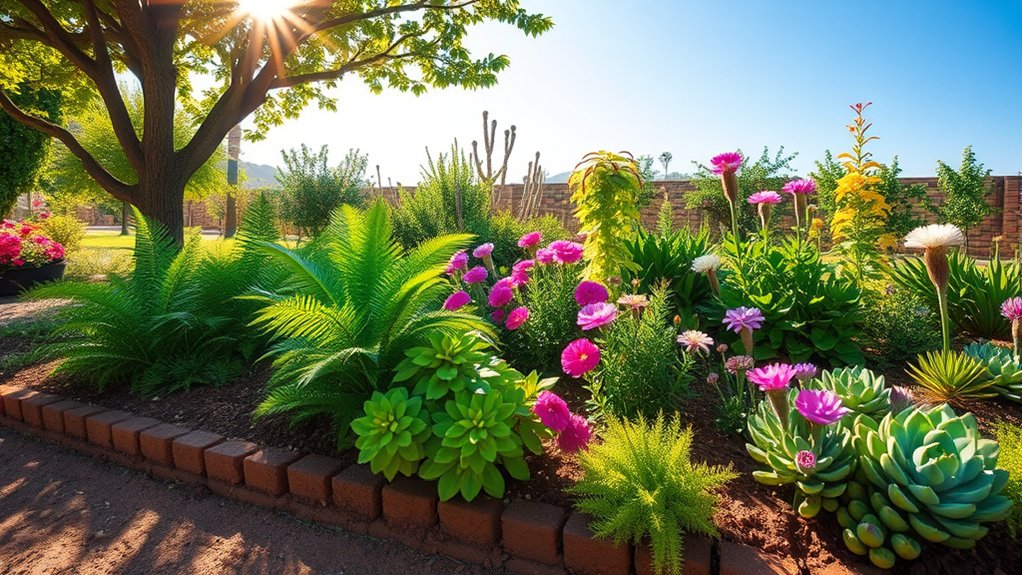
Before choosing plants, check how much sunlight your garden gets and what your local climate can support. Watch your garden at different times of day, noting which areas receive full sun, partial shade, or mostly shade. A spot’s sunlight compatibility can determine whether a plant thrives or struggles, so compare its needs with the conditions you’ve observed.
Next, consider your region’s temperatures, rainfall, humidity, and growing season. Check your local hardiness zone, but don’t rely on it alone: nearby buildings, slopes, and coastal conditions can create small climate differences. Climate matching helps you select plants that can handle your typical weather and seasonal changes.
Read plant labels or reliable gardening guides before you decide. Look for varieties suited to your sun exposure and climate, and check their mature size so they’ll fit your available space. If you’re unsure, ask a local nursery or extension service for recommendations. Choosing well-adapted plants gives you a stronger start and helps you avoid varieties that need conditions your garden can’t provide.
Prepare Your Soil and Plant Your Garden

Once you’ve chosen plants suited to your garden, prepare the soil to give them a healthy start. Good soil preparation creates room for roots to grow and helps plants settle in.
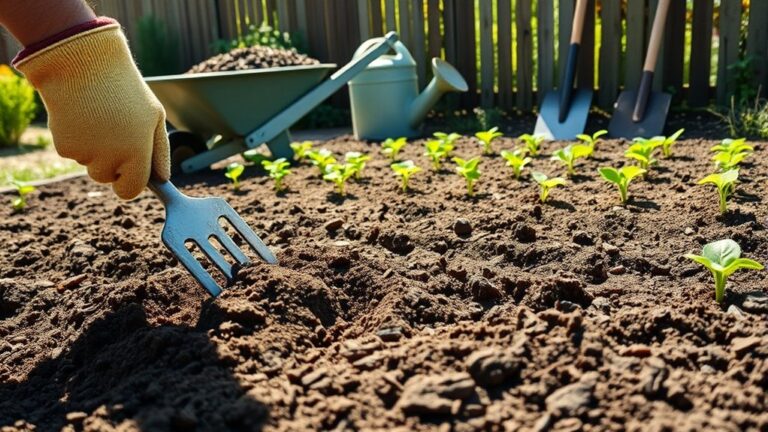
Clear away weeds, stones, and old plant debris, then loosen the top several inches with a garden fork. Mix in finished compost to improve the soil’s texture and add organic matter. If you’re unsure about your soil’s condition, use a simple test to check its pH and composition.
Clear debris, loosen the soil, and mix in finished compost to create a welcoming foundation for healthy roots.
For successful garden planting, follow these steps:
- Plan the layout: Check each plant’s mature size and arrange seedlings with enough space between them. Place taller varieties where they won’t shade smaller ones.
- Dig carefully: Make each hole slightly wider than the root ball and about as deep. Handle seedlings gently by their leaves, not their stems.
- Set and firm: Position each plant at its original soil level, fill around the roots, and press the soil lightly to remove large air pockets.
Label your rows so you can identify each variety as it grows.
Water and Feed Plants to Keep Them Healthy
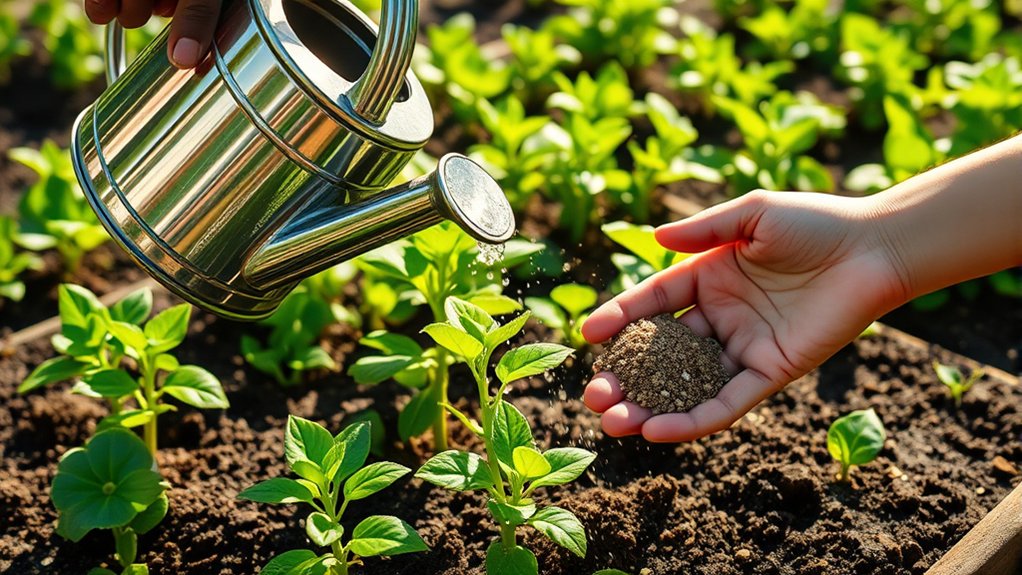
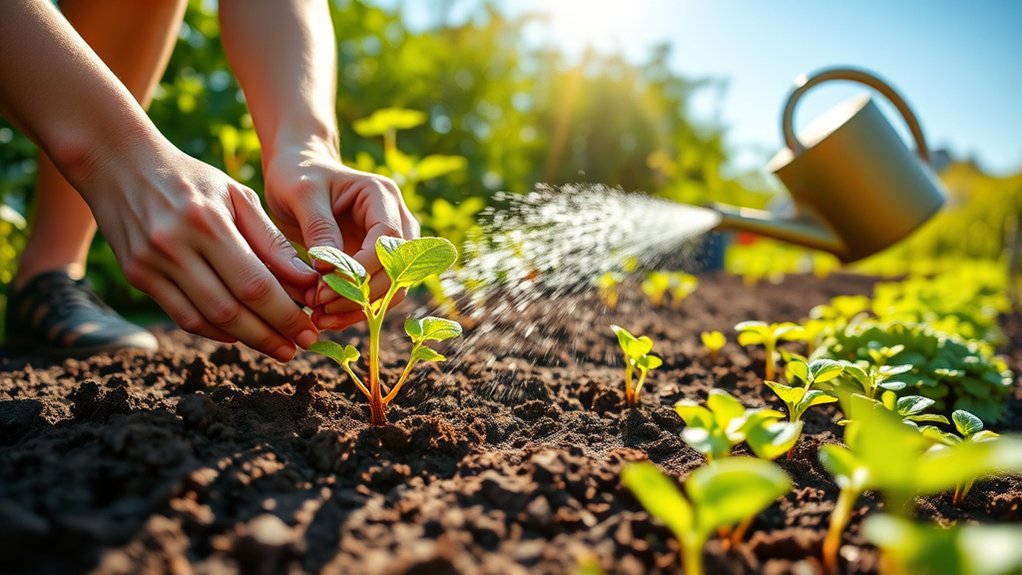
How often should you water your garden? Check the soil before you reach for the hose. If the top inch feels dry, water slowly at the base of each plant until the soil is moist.
Your watering basics depend on weather, soil, and plant type: hot, windy days and sandy soil may call for more frequent watering, while rain and clay soil may call for less. Water in the morning to limit evaporation and give leaves time to dry.
Feed plants only when they need nutrients. Read each plant’s care label and choose a fertilizer suited to its needs. Follow the package directions; adding too much can damage roots or encourage leafy growth at the expense of flowers and fruit.
Good fertilization timing matters, so apply nutrients during active growth and avoid feeding dormant plants. Water after applying granular fertilizer to help it reach the roots. Keep notes on growth, rainfall, and feeding so you can adjust your routine as your garden changes.
Frequently Asked Questions
How Can I Keep Pests Away From My Garden Naturally?
You can keep pests away naturally by encouraging helpful insects and making your garden less inviting to unwanted visitors. Try companion planting: grow herbs such as basil, rosemary, or mint near vulnerable crops.
Use natural pest repellents, including diluted neem oil or soapy water, and apply them carefully according to label directions. Remove weeds, fallen fruit, and damaged leaves, and cover young plants with lightweight row covers. Check leaves regularly so you can act early.
When Is the Best Time to Prune Garden Plants?
Prune at the wrong time, and you could send your garden into a botanical meltdown! For the best pruning timing, match your cuts to each plant’s growth cycle.
Prune most spring-flowering shrubs right after they bloom; trim summer-flowering shrubs in late winter or early spring. Remove dead or damaged branches anytime.
Your seasonal pruning windows depend on the plant, so check its specific needs before cutting. Use clean, sharp tools to help your plants recover quickly.
How Do I Prevent Weeds From Taking Over My Garden?
You can prevent weeds from taking over by covering bare soil, removing young weeds promptly, and keeping your garden healthy. Use weeds suppression methods such as hand-pulling, hoeing, or planting dense ground covers before weeds spread.
Try mulch strategies: spread a two- to three-inch layer of bark, straw, or shredded leaves, keeping it clear of plant stems. Water your plants at their roots, and avoid disturbing soil unnecessarily, since that can expose buried weed seeds.
What Tools Are Essential for Maintaining a Garden?
Your garden’s essential toolkit is a small orchestra: each instrument helps you keep plants thriving. Gardening tools you’ll reach for most include a hand trowel for planting, pruning shears for trimming, a sturdy spade for digging, and a rake for clearing leaves.
Add a watering can or hose, gloves, and a weeder to handle routine jobs. For Essential maintenance, keep tools clean and sharp; you’ll work more safely and efficiently.
How Can I Protect Plants From Frost?
Protect your plants by covering them before temperatures drop. Check local forecasts to understand frost timing, then water the soil during the day; moist soil holds warmth better overnight. Drape protective coverings, such as frost cloths, sheets, or blankets, over plants before sunset, and secure them to the ground without crushing foliage. Remove coverings in the morning once temperatures rise. Move potted plants indoors or beside a sheltered wall whenever possible.
Conclusion
Your garden’s success starts with choices that fit your sunlight and climate, then grows from well-prepared soil and careful planting. Keep watering consistently and feeding plants as needed. Don’t assume every day will bring visible change.
Roots are settling, leaves are reaching, and something is happening beneath the surface. Watch closely, adjust your care, and give your plants time.
Soon, the first new growth will appear, and your next surprise may be just around the corner. With these three easy steps, you’ll know how to grow plants in your garden and help them thrive.