10 Steps to Get Grass Out of Your Flower Bed
Grass creeping into your flower bed can quickly crowd out the plants you’ve worked hard to grow. You’re not alone—many gardeners struggle to keep unwanted grass at bay. These 10 steps to get grass out of your flower bed can help you reclaim your space and protect your flowers.
To get grass out of your flower bed, first identify it and mark any patches. Work when the soil is damp, then loosen roots with a hand fork and pull clumps gently, following runners to remove fragments. Cut large patches into sections and lift them with a spade. Bag removed grass, add 2–3 inches of mulch, and edge the bed to deter invasion. Check often for new shoots and remove them early; the steps below can help you protect your flowers.
Key Takeaways
- Identify the grass and mark the affected area before removing it.
- Lightly water dry soil until damp and workable, but avoid creating mud.
- Loosen soil around each clump with a hand fork, taking care near flower roots.
- Lift out the grass, following runners and removing visible root fragments to limit regrowth.
- Bag removed grass, then mulch bare soil 2–3 inches deep, leaving space around flower stems.
Identify the Grass in Your Flower Bed
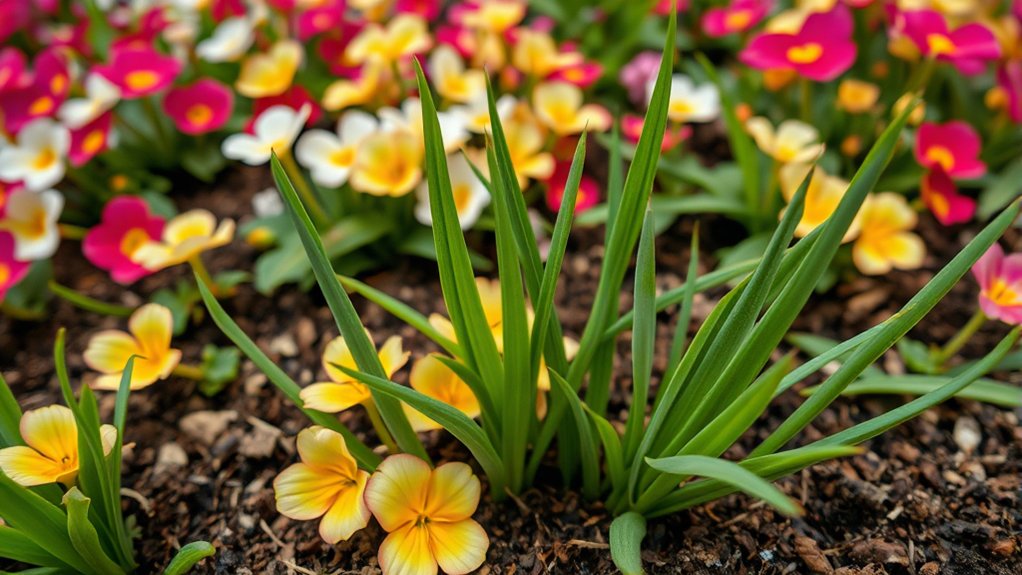
Before you pull grass from your flower bed, identify what’s growing there. Grass-like leaves may belong to ornamental plants, bulbs, or young flowering plants, so check before you decide what to remove. Misidentifying a desirable plant can leave a bare spot or damage a display you’ve carefully maintained.
Look closely at each clump. True grasses usually have narrow blades with parallel veins and jointed stems; many also form dense tufts or spread through runners. Compare unfamiliar growth with nearby plants, and note where it appears. A plant that emerges in a regular pattern may be part of a bulb planting, while scattered shoots may signal a weed.
If you can’t identify grass with confidence, take a clear photo and compare it with a trusted plant guide or ask a local nursery for help. Check the plant’s mature size and growth habit, too. Knowing what you’re seeing helps you choose a suitable removal method without harming the flowers you want to keep.
Pull Grass by Hand Around Flowers

Pulling grass by hand helps protect nearby flowers while you target unwanted growth. Gently loosen the soil, then lift out the grass without disturbing the flower roots. Be sure to remove the grass roots completely to help prevent regrowth.
Loosen Soil Carefully
Loosen the soil around each grass clump with your fingers or a hand fork, taking care not to disturb nearby flower roots. Work slowly, especially near stems, and stop if you feel strong resistance. Your gentle touch protects soil structure and supports careful edge care along the bed.
| Tool | Best use |
|---|---|
| Fingers | Loosening soil near delicate blooms |
| Hand fork | Breaking compacted soil farther from stems |
Insert the fork shallowly beside the grass, then wiggle it to open the soil rather than digging deeply. Brush loose soil away from flower crowns, and keep your movements within the grass clump’s area.
If the ground feels dry and hard, moisten it lightly and wait a few minutes before continuing. Avoid levering against nearby plants or turning over a wide patch; small, controlled movements keep the bed tidy and reduce disturbance. Check the loosened area before moving on.
Remove Roots Completely
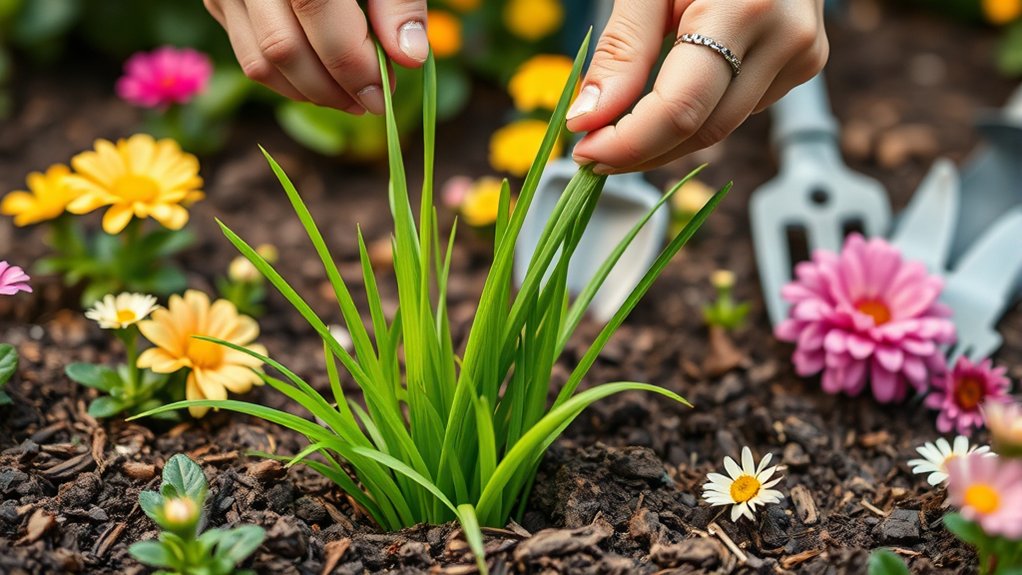
Once the soil is loose, grip the grass low at its base and pull steadily upward to remove the roots with the clump. Work slowly near flower stems so you don’t disturb their roots. If the grass resists, loosen the soil again rather than yanking; a sharp pull can break the roots and leave pieces behind.
Check the hole and surrounding soil for pale runners or small root fragments, then lift them out by hand. Follow each runner to its end, since controlling rhizomes helps prevent fresh shoots from returning. Place removed grass in a bag, not on the bed, where fragments may take root.
After clearing the area, add organic mulching around flowers to shade the soil and discourage new grass growth. Keep mulch clear of plant crowns.
Dig Out Grass Roots and Runners

Dig out grass roots and runners to keep the grass from growing back in your flower bed. Water the soil lightly first so it loosens without turning muddy. Use a narrow hand fork or trowel to lift the soil around each grass clump, then follow the pale roots and horizontal runners as far as you can. Pull slowly; snapping a runner can leave a piece behind that sprouts again.
Work carefully near flowers, loosening soil by hand when roots intertwine. If a runner passes beneath a plant, trace it gently rather than tugging hard. Remove every visible fragment, then sift the loosened soil for small root pieces. Don’t shake soil over the bed if it may contain seeds or runners; discard the debris in the trash.
Check the area regularly for new shoots and remove them while small. A mulched barrier can help discourage regrowth, but it won’t replace careful removal. Keep at it with patience: persistent grass may need repeated checks.
Cut Out Large Grass Patches
For a large grass patch, mark the boundaries before you start cutting. Then use a sharp spade to slice beneath the roots and free the sod. Lift out each section and remove it.
Mark Patch Boundaries
Before removing a large patch of grass from your flower bed, mark its boundaries with a garden hose or spray paint. Shape the outline to match the area you want to clear, keeping nearby flowers and shrubs outside the marked line. A hose works well for curves and lets you adjust the shape before you commit. Spray paint creates a clear, lasting guide, but use it sparingly and choose a product suitable for garden use.
Check the marked area from several angles to make sure you’ve captured all the grass without including plants you want to keep. If the soil is very dry, water lightly beforehand; consistent soil moisture can make the work easier. Clear boundaries support careful grass management and help you focus removal on the patch you intend to clear.
Slice Beneath Roots
Once the patch is marked, use a sharp spade to slice beneath the grass roots, cutting the area into manageable sections. Keep each cut straight and steady so you can work through the marked patch without disturbing nearby flowers.
Push the blade down at a slight angle, aiming to sever roots just below the soil surface. For dense or stubborn growth, press the spade with your foot and rock the handle gently to finish each cut.
Overlap your cuts slightly to avoid leaving connected roots between sections. Work carefully along the bed’s edge, where grass may intertwine with plant roots.
This focused approach keeps your effort relevant to the subtopic and avoids unrelated ideas. Once you’ve cut beneath the roots throughout the patch, pause before handling the sections.
Lift and Remove Sod
With the roots cut, slide the spade beneath each section and lift the sod out of the bed. Keep the blade level to remove the grass and its root mat without digging too deeply.
If a section resists, cut it into smaller pieces rather than pulling hard; this helps protect nearby plants and preserve soil structure. Choose a spade or flat-edged shovel suited to your soil and strength—careful tool selection makes lifting easier and reduces strain.
Shake loose soil from each piece back into the bed, then carry the sod away in a wheelbarrow or bucket. Check the cleared area for remaining roots and grass runners, and remove them by hand.
Avoid tossing sod onto nearby lawn, where it could take root again. Dispose of it or compost it separately.
Choose the Right Time to Weed
Weed after rain or watering, when the soil is moist and loose enough to release grass roots easily. Choose a calm, cool part of the day, such as morning or late afternoon, so you can work comfortably and spot grass before it blends into nearby foliage.
Good weed timing helps you pull clumps cleanly instead of snapping stems and leaving roots behind.
Use seasonal timing to plan your effort. Tackle invading grass early in the growing season, while young shoots are easy to identify and remove. Check the bed regularly during warm months, when grass can spread quickly, and pull new growth before it sets seed.
- After a shower: Look for softened ground and upright grass blades.
- On a cool morning: Work before heat makes the task tiring.
- Before seed heads form: Remove grass before it can scatter seed through your flowers.
Skip windy, scorching afternoons; choose a clear window when you can focus and finish the bed carefully.
Water the Bed to Loosen Roots
Water the bed before removing the grass to soften the soil. This makes the roots easier to pull up. Loosen them gently so you don’t disturb nearby flowers.
Water Before Removal
Before removing grass from your flower bed, soak the soil to help loosen its roots. Water the area several hours beforehand, giving moisture time to reach the ground without leaving it muddy. You want soil that feels damp and workable, not waterlogged.
A slow, steady soak helps water efficiently and reduces runoff, especially in compacted beds.
- Check the soil with your finger; water again if the top few inches feel dry.
- Aim the hose or watering can at the grass, keeping nearby flowers’ needs in mind.
- Pause if puddles form, then let the water drain before you begin.
If rain has already softened the bed, skip extra watering. Once you’ve finished removing the grass, mulch helps the soil retain moisture and discourages new weeds. Don’t add mulch yet if you’re still working through the bed.
Loosen Roots Gently
Once the soil is damp and workable, loosen the grass roots with a hand fork or trowel. Slide the tool beneath the grass and gently lift, working around nearby flowers rather than digging straight down. Keep the fork shallow to avoid damaging desirable plants’ roots.
If the grass resists, loosen the soil a little more instead of yanking; pulling hard can tear roots and disturb the bed. Separate the grass clump from the soil by easing its roots free with your fingers. This careful approach limits accidental root pruning of flowers and preserves soil structure.
Shake excess soil back into the bed, then inspect for runners or small root fragments you can remove. Once you’ve cleared the area, add mulch to discourage regrowth; its mulching benefits include retaining moisture and shading leftover grass seeds.
Stop Grass Without Using Chemicals
To stop grass from invading your flower bed without chemicals, block its access to light and remove its roots. You can use simple, non toxic methods to stop chemicals from entering your garden while protecting nearby flowers.
Block grass from sunlight, remove its roots, and protect nearby flowers with simple, non-toxic methods.
First, check the bed for grass runners that may have crept beneath edging. Follow each runner to its source and pull it out, taking care not to disturb flower roots. For stubborn patches, choose one of these approaches:
- Cover the grass with a flat piece of cardboard, then secure it with stones while you work nearby.
- Place an opaque container over a small clump to deprive it of sunlight.
- Trim grass shoots at soil level whenever they appear, and remove each cutting.
Keep covers away from delicate stems, and check beneath them regularly. If you uncover surviving roots, loosen the soil and lift them out by hand. Consistent attention weakens remaining grass and helps you reclaim space without sprays or harsh treatments. Don’t let runners spread unnoticed.
Add Mulch to Block Grass Regrowth
After removing grass and its roots, spread a 2- to 3-inch layer of mulch over the bare soil to block light and discourage regrowth. Keep the layer even, but leave a little space around flower stems and plant crowns so moisture doesn’t collect against them.
Choose an organic mulch, such as shredded bark, wood chips, or straw, to improve the soil as it breaks down. These mulch benefits include retaining moisture, moderating soil temperature, and adding organic matter.
Check the mulch depth periodically, especially after heavy rain or watering. If it settles or thins, top it up to maintain effective weed suppression.
Pull any grass shoots that appear before they establish deep roots. Mulch can slow growth, but it won’t eliminate every stray blade.
Avoid piling mulch too deeply, since a thick, compacted layer can limit airflow and hold excess moisture. Refresh the surface as needed, and keep it loose enough for water to reach your flowers’ roots.
This simple cover helps protect your cleared bed.
Edge the Bed to Keep Grass Out
A clear edge helps keep grass from creeping back into your flower bed. Create a narrow trench along the border with a half-moon edger or spade. Cut straight down, then angle the blade toward the lawn to lift a clean strip of turf. Remove the grass and soil so roots can’t bridge the gap. Keep the trench several inches deep, but avoid cutting into nearby plant roots.
For a crisp, practical border, you can:
- Shape gentle curves to match the bed’s outline.
- Keep the edge distinct from the lawn and mulch.
- Use a steel or plastic edging strip for extra separation.
If you install edging, set its top just above soil level and secure it firmly. Don’t let it press against stems or block drainage; good plant health depends on air and water reaching roots. Refresh the trench when it fills with soil or mulch. Consistent edge care preserves the boundary and helps your bed look tidy.
Check for New Grass and Remove It Early
Check the bed every week for new grass, especially along the edge and around established plants. Catching shoots while they’re small saves effort and helps protect your flowers. After rain, inspect the soil when it’s soft; otherwise, water lightly before pulling.
| Where to look | What to do | Why it helps |
|---|---|---|
| Bed edges | Pull shoots by hand | Stops spread |
| Near flowers | Loosen soil gently | Protects roots |
| Mulch gaps | Remove grass roots | Limits regrowth |
Grip each shoot near the soil and pull slowly, removing as much root as possible. Use a hand fork for stubborn clumps, but work carefully around plant roots. Don’t leave pulled grass on damp soil, where it may reroot; discard it in yard waste.
Check again a few days later, since missed roots can send up fresh growth. Hand-pulling has pros and cons: it’s precise, but requires regular attention. For larger patches, consider alternative methods, such as carefully targeted digging, while avoiding damage to nearby flowers.
Frequently Asked Questions
Can Grass Harm Flowers if Left in the Bed?
Yes, grass can harm flowers if you leave it in the bed. Through grass competition, it steals water, nutrients, and sunlight, weakening nearby plants. Its roots can spread aggressively, causing root disruption when you pull them or crowding flower roots as they grow.
A small patch may seem harmless, but unchecked growth can become a meadow invasion. Turf interaction also makes maintenance harder, so remove encroaching grass before it spreads and stresses your flowers.
Will Grass Clippings Spread Grass Into Flower Beds?
Yes, grass clippings can spread grass into flower beds because they may carry seeds or rooted runners. Fresh clippings usually don’t sprout on their own, but seed heads and stolons can increase the risk.
Keep clippings out of beds, trim carefully, and use lawn edging to block creeping growth. Check your maintenance schedule, especially after mowing mature or seeding grass, and remove any clippings you spot promptly.
Can Landscape Fabric Keep Grass Out of Flower Beds?
Yes, landscape fabrics can help keep grass out of flower beds, but they won’t stop every blade. You’ll get the best results if you remove existing grass and roots first, then lay the fabric flat with overlapping seams. Cover it with mulch to protect it from sunlight and damage. Grass may still creep in from the edges or grow through tears, so check your weed barriers regularly and pull any shoots promptly.
How Do I Prevent Grass From Spreading From a Nearby Lawn?
Create a clear, persistent barrier between your lawn and garden bed to prevent grass from spreading. Install edging at least six inches deep, with a few inches above soil, and check regularly for runners crossing over or beneath it.
Trim grass along the boundary and remove new shoots promptly, digging out rhizomes rather than just cutting them. These tips for lawn to bed grass prevention are effective methods to stop rhizome spread. You’ll need consistent maintenance.
When Should I Hire a Professional to Remove Grass From a Flower Bed?
Hire a professional when grass keeps returning like green threads through your flower bed, spreads beneath plants, or resists careful hand removal. You’ll also want help if the infestation covers a large area, roots run deep, or removal risks damaging valuable flowers.
A professional lawn care specialist can remove persistent grass safely and recommend soil restoration if digging or treatment has depleted your bed. Get help promptly before the grass takes over.
Conclusion
With grass gone, your flower bed can breathe again—but the work isn’t quite finished. Check for new shoots, pull them while they’re small, and refresh your mulch and edging as needed.
Like Sisyphus, you may have to return to the task, but each early removal makes the next round easier. Keep tending the bed, and you’ll give your flowers room to thrive. A little persistence now can spare you a much bigger battle later.
Stay consistent, and you’ll keep grass out of your flower bed and give your flowers room to thrive.