How to Make a Garden in 3 Simple Steps
Starting a garden can feel overwhelming when you’re not sure where to begin or which supplies you need. You’re not alone—many people struggle to turn a patch of soil or a few containers into a thriving garden. With the right basics, learning how to make a garden in 3 simple steps can be easy and enjoyable.
To make a garden in three simple steps, choose a sunny spot that gets at least six hours of direct light and start with easy plants like lettuce, radishes, or marigolds. Next, loosen the soil and mix in compost, or fill containers with fresh potting mix and drainage holes.
Plant seeds or seedlings at the depth and spacing on their labels. Water gently, check soil moisture daily, pull weeds, and add mulch. A few small choices can help your garden thrive.
Key Takeaways
- Choose a sunny spot with at least six hours of sunlight, and start with a few beginner-friendly plants suited to your climate and space.
- Prepare garden beds by removing weeds and stones, loosening soil, and mixing in compost; use containers with drainage holes and fresh potting mix.
- Check plant labels for spacing and depth, then sow seeds or set seedlings in place without crowding them.
- Water gently and regularly, checking soil moisture and watering near the base, preferably early in the day.
- Weed often, inspect plants for pests, add mulch, and harvest produce when ripe.
Choose a Sunny Spot and Beginner-Friendly Plants

Choose a spot that gets at least six hours of direct sunlight a day, then start with easy-to-grow plants like lettuce, radishes, or marigolds. Watch how sunlight moves across your yard before deciding where to grow.
A sunny selection helps your plants thrive, but consider your climate, too. In hot regions, a location with afternoon shade can protect tender leaves from scorching.
Think about how much time you can give your garden. If you’re busy, choose hardy beginner plants that need little attention, such as chives, zucchini, or nasturtiums.
Check each plant’s label for its mature size and growing season, so you can pick varieties suited to your space and local weather. You might also choose plants you enjoy eating or seeing; that gives you a reason to care for them.
Start with just a few types rather than filling every available space. A manageable selection lets you learn what grows well and build confidence before expanding your garden next season.
Prepare Soil or Pots and Plant Your Garden
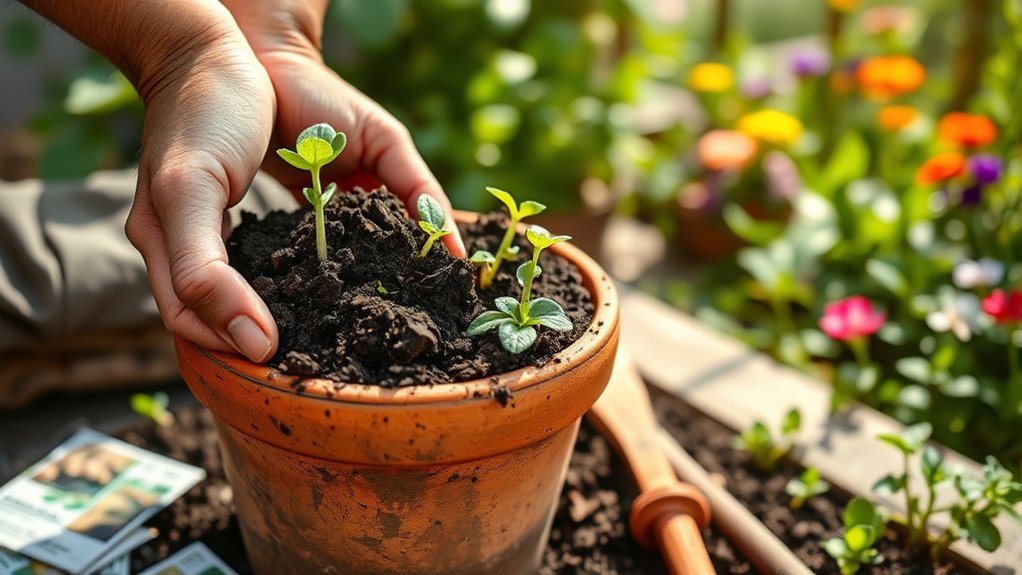
Before planting, loosen the soil and mix in compost to improve its texture and nutrients. If you’re using a garden bed, remove stones and weeds, then break up clumps so roots can spread easily.
Loosen the soil, mix in compost, and clear away stones and weeds to give roots room to grow.
A soil testing kit can help you check pH and nutrient levels; follow its directions and adjust the soil as needed.
- Prepare containers: For container gardening, choose pots with drainage holes and enough room for mature roots. Fill them with fresh, suitable potting mix rather than heavy garden soil.
- Plan spacing: Check seed packets or plant labels for depth and spacing. Mark positions before planting to avoid crowding.
- Sow seeds: Make holes or shallow rows at the recommended depth. Drop in seeds, cover them lightly, and label each variety.
- Set out seedlings: Gently loosen tangled roots, place each plant at the same depth it grew in its nursery pot, and firm soil around its base.
Keep labels visible so you can identify what you’ve planted. Don’t pack soil tightly; roots need room to establish.
Water and Care for Your New Garden

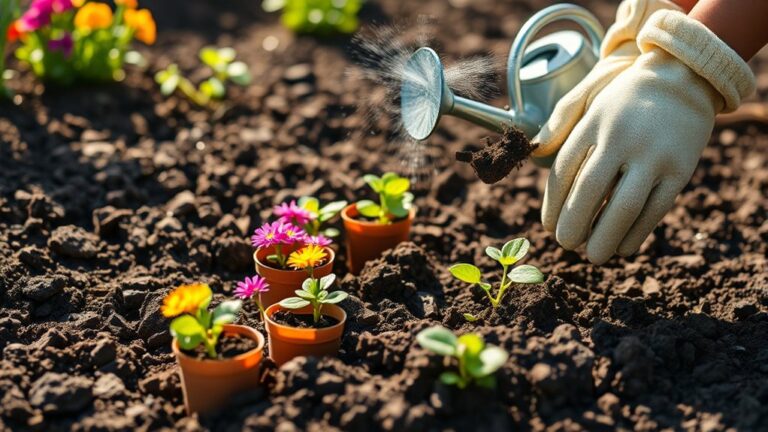
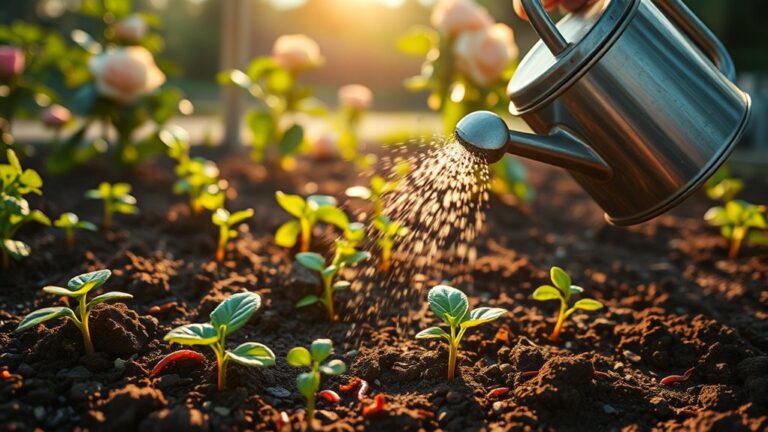
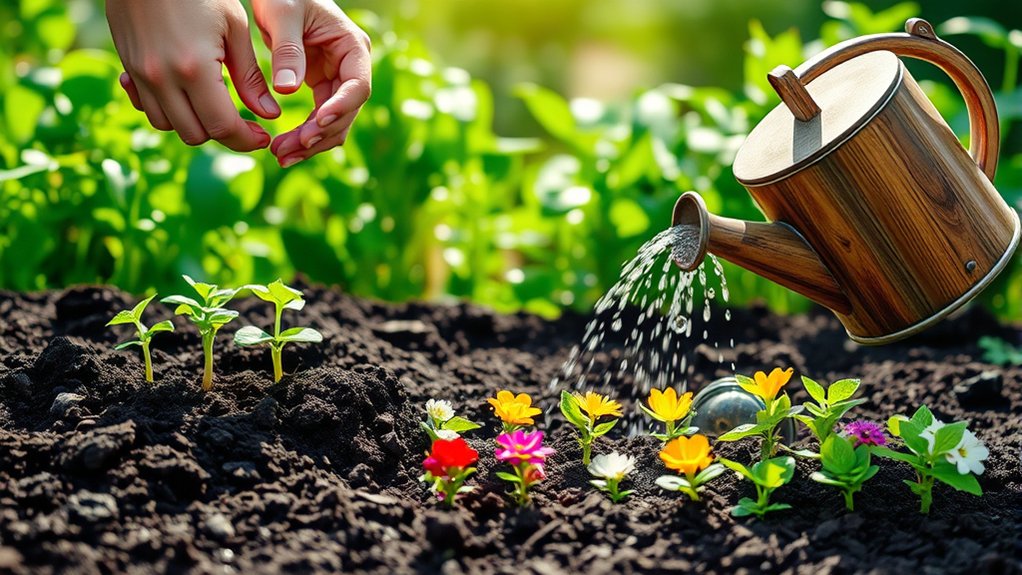
Once your seeds or seedlings are in place, water them gently to moisten the soil without washing seeds away or exposing roots. Check moisture daily by pressing a finger into the top inch; water when it feels dry.
Your watering schedule should reflect rainfall, temperature, and plant needs, not a rigid calendar. Water near the soil early in the day to reduce evaporation and keep leaves dry.
| Garden check | What to do | Why it helps |
|---|---|---|
| Soil moisture | Feel the top inch | Prevents overwatering |
| Weeds | Pull them promptly | Reduces competition |
| Leaves | Inspect both sides | Supports pest prevention |
Remove weeds before they spread, and look for spots, holes, or insects as you tend your plants. Handpick pests when practical, and use a gentle, garden-safe treatment only when needed.
Add mulch to conserve moisture and suppress weeds, keeping it clear of stems. Support tall plants, harvest ripe produce, and adjust care as your garden grows. Consistent attention helps you catch problems early and gives plants a healthy start.
Frequently Asked Questions
What Is the Best Time of Year to Start a Garden?
The best time to start a garden is spring, after your area’s last frost, when the soil has warmed and plants can grow steadily. You can also plant cool-season crops in early fall if your climate allows.
Check local frost dates to choose your seed start timing, since some seeds need indoor growing time. Begin best soil preparation a few weeks ahead by clearing weeds, loosening soil, and adding compost. Adjust your schedule for your region and crops.
How Much Does It Cost to Start a Garden?
You can start a small garden for about $50–$200, while larger or raised-bed projects may cost $300–$1,000 or more. Your total depends on garden size, tools, seeds or plants, containers, and amendments.
Consider the cost benefit of raised beds: they can improve access and drainage, but materials add expense. Soil quality considerations matter, too; testing and improving poor soil may increase upfront costs, yet help your plants thrive.
Begin small, then expand as you learn.
Do I Need a Permit to Build a Garden?
Usually, you don’t need a permit to plant a garden—your tomatoes aren’t likely to trigger a city council hearing. However, permit requirements depend on your location and what you’re building. A simple flower bed may be fine, while fences, retaining walls, sheds, irrigation systems, or work near utilities could require approval.
Check local rules before you start garden planning, and contact your municipality if you’re unsure. A quick call can prevent costly surprises later.
How Can I Keep Pets Out of My Garden?
Keep pets out of your garden by installing a sturdy fence with no gaps, and secure gates with reliable latches. For effective garden security, choose a barrier tall enough to discourage jumping and bury its base to prevent digging.
Try these pet proofing ideas, too: use raised beds, cover vulnerable plants with mesh, and add motion-activated sprinklers. Give your pets a designated play area so they’re less tempted to explore your garden.
What Tools Are Useful for Beginner Gardeners?
You’ll need a few reliable tools to get started: a hand trowel for planting, pruning shears for trimming, gardening gloves for protection, and a watering can or hose for watering. Add a sturdy spade if you’re working with larger areas, plus a hand fork to loosen soil and remove weeds. These basic garden tools make everyday tasks easier. Choose comfortable, durable options, and consider a soil scoop and kneeling pad as helpful beginner gardening extras.
Conclusion
You’ve chosen a sunny spot, prepared your soil or pots, and planted beginner-friendly favorites. Now the real contrast begins: a bare patch becomes a burst of green, while a few minutes of watering can bring weeks of color.
Keep checking your plants, give them what they need, and enjoy each small change. Your garden won’t transform overnight, but with simple care, quiet seeds can become a lively space you’ll love to visit every day. Making a garden in 3 simple steps is a rewarding way to bring that space to life.