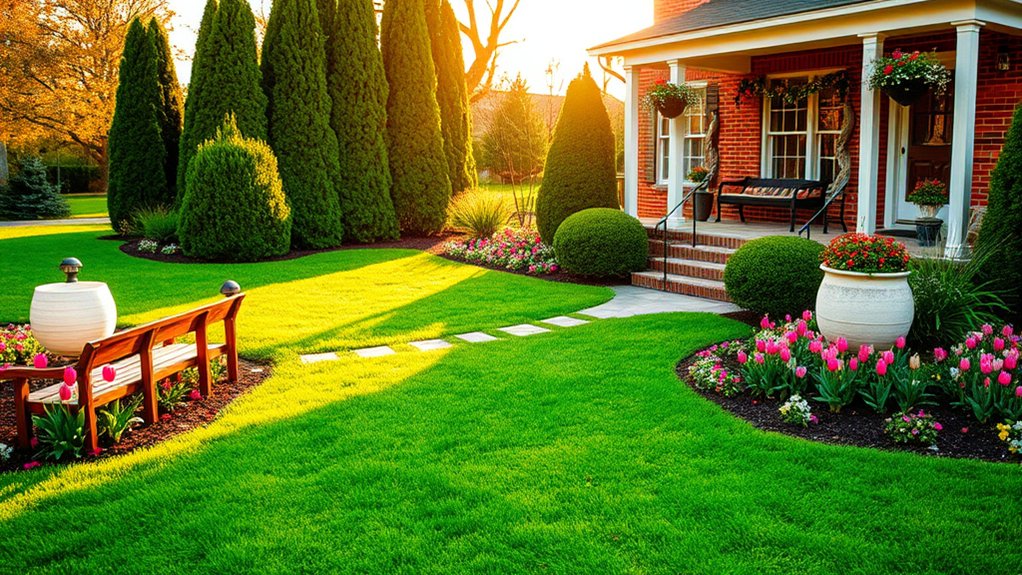
7 Tips to Decorate Your Front Lawn
A front lawn can be tricky to decorate: you want it to feel welcoming without spending too much or taking on endless upkeep. If you’re unsure where to start, you’re not alone. These front lawn decorating ideas can help you create an inviting entrance that suits your home.
To decorate your front lawn, plan a layout that suits your home, yard size, sunlight, and budget. Create a clear, comfortable path to your door, then add colorful flower beds and grouped planters.
Use trees and shrubs for year-round structure, and choose low-maintenance varieties. Add outdoor lights to guide guests safely without glare.
Pick a few durable accents that match your home’s style, and keep the lawn tidy with regular mowing, weeding, pruning, and seasonal care. These tips can help you shape a welcoming entrance.
Key Takeaways
- Choose a decorating style that complements your home, and set a budget before buying decor or supplies.
- Measure the lawn and start with a few durable accents that suit the space and won’t obstruct everyday use.
- Add colorful flowers in layered beds, and group planters near the entry or along the path.
- Create a clear, welcoming walkway with suitable edging, seasonal upkeep, and evenly spaced outdoor lights.
- Highlight house numbers or architectural details with downward-facing lights, then check for glare, shadows, and hazards after dark.
Plan How to Decorate Your Front Lawn
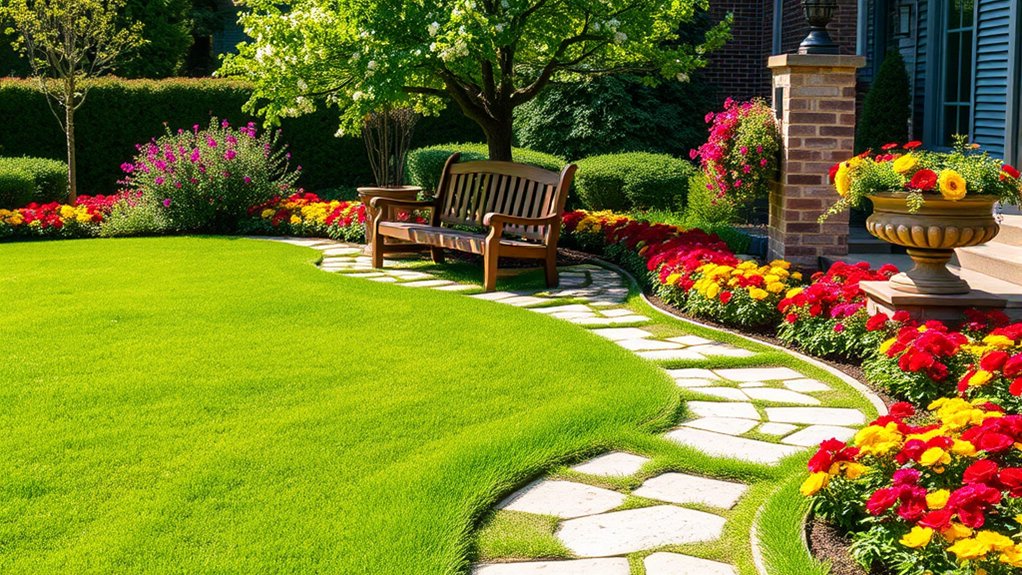
Before choosing decorations, decide how you want your front lawn to look and feel. Picture the mood you’d like to create, such as cheerful, calm, or polished, and choose a style that suits your home. Consider your lawn’s size, sunlight, existing plants, and everyday use so your ideas fit the space rather than crowd it.
Set a planning budget before you shop. Include the cost of decorations, installation supplies, and any upkeep you’ll need. A clear limit helps you prioritize a few meaningful pieces instead of buying items that don’t work together. Measure the areas you plan to decorate, then note where each item could go.
Think about seasonal maintenance, too. Choose materials that can handle your local weather, and decide whether you’re willing to store, clean, or replace decorations throughout the year. Keep your plan flexible: start with a small number of accents, see how they look outdoors, and adjust as your tastes or needs change.
Create a Welcoming Path to Your Front Door
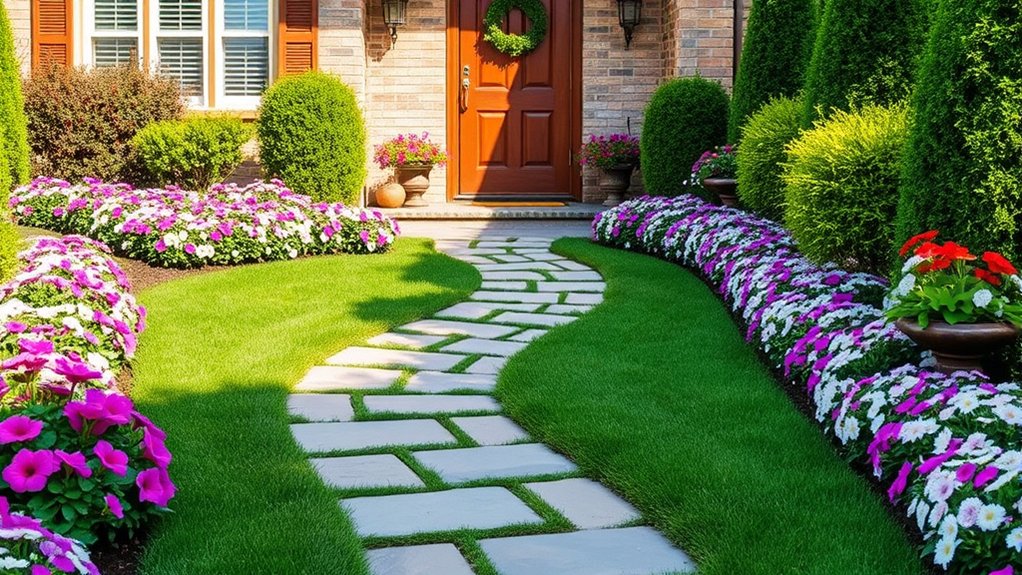
A clear, inviting path guides guests to your front door and makes your lawn feel more welcoming. Choose a route that feels natural from the sidewalk or driveway, then keep it wide enough for two people to walk comfortably. Curves can soften a formal yard, while straight lines suit a clean, modern look.
| Path choice | Best for | Care tip |
|---|---|---|
| Pavers | Defined routes | Reset loose stones |
| Gravel | Casual yards | Rake uneven spots |
| Brick | Classic homes | Sweep debris |
| Concrete | Simple upkeep | Clear cracks |
Use edging to keep materials in place, and add low lighting so visitors can see each step after dark. Consider color psychology when selecting paving tones: warm shades feel friendly, while cooler neutrals create a calm welcome.
Plan seasonal maintenance, too. Remove leaves, control weeds, and check for slippery surfaces as weather changes. Keep the approach uncluttered so your doorway remains the clear destination.
Add Color With Flower Beds and Planters

Choose colorful blooms that complement your home and brighten your front lawn. For added depth and visual interest, layer flowers of different heights in your beds. Then, place planters near your entryway or along the path to create a welcoming display.
Choose Colorful Blooms
Want to brighten your front lawn? Choose colorful blooms that make your flower beds and planters feel welcoming and reflect your personal style.
Use color psychology to guide your palette: warm reds, oranges, and yellows create an energetic look, while blues, purples, and whites offer a calmer mood. You can combine complementary shades for contrast or repeat one favorite color for a cohesive effect.
Consider seasonal themes, too. Plant spring tulips, summer zinnias, autumn mums, or flowers that keep your display lively across changing weather.
Check each bloom’s sunlight and watering needs before you buy, then select varieties suited to your local climate. Add a few dependable perennials for lasting color, and refresh planters with annuals whenever you want a quick, affordable update.
Choose blooms you’ll enjoy seeing daily.
Layer Flower Bed Heights
Layering flowers at different heights gives your flower bed depth and makes each bloom easier to see. Place tall varieties at the back of a bed, medium-height flowers in the middle, and low-growing blooms along the front edge.
This stepped arrangement lets you enjoy every plant without hiding smaller blossoms behind taller stems. Check each variety’s mature height and spread before planting, so you can leave enough room for healthy growth.
Consider soil depth, too: deeper-rooted plants need adequate space, while shallow-rooted flowers can thrive closer to the surface. You can also create interest by layering hues, pairing contrasting colors or repeating shades throughout the bed.
Keep the tallest flowers from blocking windows or views, and trim spent blooms to maintain a neat, colorful display across your front lawn.
Arrange Planters Strategically
Planters add flexible bursts of color beyond flower beds, framing your entry, lining steps, or brightening a porch. Choose pots that suit your home’s style, then group them in odd numbers for a balanced look.
Vary their heights with stands or by placing smaller containers on sturdy steps. Keep walkways clear, and position planters where you can water them easily.
Match plants to each spot’s sunlight and select colors that complement nearby blooms. If you’re working with a planning budget, start with a few durable containers and add more over time.
Check drainage before planting, and use potting mix suited to your flowers. Plan for seasonal maintenance by trimming spent blooms, refreshing soil, and moving frost-sensitive plants indoors.
Rotate displays through the year to keep your entrance lively without overcrowding your lawn.
Use Trees and Shrubs to Add Structure
Trees and shrubs give your front lawn structure, framing the house and adding height, shape, and year-round interest. Choose plants that suit your home’s scale and your yard’s conditions.
Choose trees and shrubs that suit your home and yard, adding structure, height, and year-round interest.
A small ornamental tree can anchor a corner, while a taller specimen can balance a broad facade. Consider mature size before planting so branches won’t crowd windows, walkways, or utility lines.
Use tree structure to create a clear focal point, then repeat its shape or foliage elsewhere for a cohesive look. Pair the tree with shrubs of varied heights to define the lawn’s edges and soften the foundation.
Check each shrub’s mature width, and leave enough room for growth and airflow. A compact evergreen can provide winter color, while flowering varieties bring seasonal interest.
Keep shrub form tidy with selective pruning, but avoid cutting every plant into identical shapes. Your mix of natural silhouettes will add depth and character without making the front yard feel crowded.
Choose low-maintenance species if you’d rather spend less time trimming.
Light the Path to Your Front Door
Choose pathway lights that complement your front lawn and guide guests to your door. You can also use them to highlight standout features, such as trees or garden beds. Just make sure each light is secure and out of the way so it won’t obstruct the path or create a tripping hazard.
Choose Pathway Lights
As dusk settles, pathway lights guide guests safely to your front door and add a welcoming glow to your lawn. Choose fixtures that suit your home’s style and provide enough illumination without overwhelming the walkway.
Solar lights offer an easy, energy-saving option, while low-voltage models give you consistent brightness and control. For effective garden lighting, space fixtures evenly along both sides or alternate them from side to side.
Keep beams low and directed toward the ground so visitors can see each step without facing glare. Consider weather-resistant materials that can handle rain, wind, and seasonal changes.
Before installing, walk the route after dark to spot dim areas and adjust placement. Thoughtful choices improve pathway safety and make arriving at your home feel comfortable and inviting.
Highlight Key Features
Once pathway lights guide visitors safely to your door, use accent lighting to draw attention to standout features along the way. Aim a soft spotlight at a favorite tree, sculptural planter, or textured garden wall.
You’ll add depth to your front lawn lighting while giving guests a welcoming view as they approach. Choose warm white bulbs to flatter greenery and stone, or add a restrained wash of curb appeal color to highlight a flowering bed.
Keep the effect balanced: pick one or two focal points rather than illuminating every feature. You can also use a narrow beam to reveal an attractive house number or architectural detail near the entry.
At dusk, step back and check how the lights work together. Adjust their direction or brightness until each feature stands out without competing with the path.
Ensure Safe Placement
Place path lights where they’ll guide each step to your front door without creating glare or dark gaps. For safe placement, set fixtures beside the walkway, not where you’ll trip over them or catch them with a mower.
Keep cords off paths, and choose low-voltage or solar lights designed for outdoor use. Before installing anything, do a hazard assessment: check for roots, uneven paving, sprinklers, and areas where water collects.
Position lights away from branches and other flammable materials, and make sure fixtures won’t block gates, drains, or the mailbox. Aim beams downward so they illuminate the ground without shining into neighbors’ windows or drivers’ eyes.
Secure each fixture firmly, then walk the route after dark. Adjust spacing or direction wherever you spot a shadow, glare, or obstacle.
Choose Lawn Decor That Fits Your Style
Your front lawn decor should reflect the style of your home and the people who live there. Start by noticing your home’s colors, architecture, and mood. Then choose a few pieces that complement those features instead of competing with them. Style consistency helps your lawn feel intentional, whether you prefer classic, rustic, modern, or playful accents.
| Home style | Decor choices | Materials |
|---|---|---|
| Classic | Urns, birdbath | Stone, iron |
| Rustic | Wooden signs, wagon | Reclaimed wood |
| Modern | Geometric sculpture | Steel, concrete |
| Cottage | Painted planters | Ceramic, wood |
Use this guide as inspiration, not a strict formula. You can mix styles when colors or shapes connect the pieces. Consider material durability, too: choose finishes that suit your climate and won’t quickly fade, rust, or crack.
A small selection of well-chosen accents often says more about your taste than a crowded collection. Pick decor you genuinely enjoy seeing from your windows and welcoming guests beside your entry.
Keep Your Front Lawn Neat and Inviting
How can you keep lawn decor charming rather than cluttered? Give each piece room to stand out, and choose a few accents that complement your home. A clear path to your entrance helps visitors feel welcome and keeps your display from looking crowded. Group smaller items together instead of scattering them across the yard.
Regular care makes your decorations look their best. Mow the grass, trim edges, pull weeds, and sweep walkways so your lawn stays tidy. These simple maintenance tips also protect curb appeal by keeping attention on your home and its most attractive features. Prune plants that hide ornaments, and remove faded flowers or damaged decor before they become distractions.
Check your display as the seasons change. Store pieces that don’t suit the weather, and clean the ones you keep outside. You’ll create a neat, inviting front lawn when you balance decoration with open space and care for the details consistently.
Frequently Asked Questions
How Can I Decorate a Small Front Lawn Without Making It Feel Crowded?
Keep your small front lawn open by choosing a few purposeful features instead of filling every corner. For a tiny frontyard, add one compact focal point, such as a sculptural planter or small ornamental tree, and leave clear space around it. Use scale balance: pair low plants with one taller accent, and repeat a simple color palette. Define edges neatly, keep pathways unobstructed, and choose containers that suit your lawn’s proportions. You’ll create charm without clutter.
What Front Lawn Decorations Are Safe for Pets and Children?
Like a well-guarded garden in a fairy tale, your lawn should welcome play without hidden hazards. Choose pet safe decor, such as sturdy, non-toxic planters, smooth stones, and solar lights with enclosed wiring.
For child friendly décor, use lightweight ornaments, rounded edges, and securely anchored pieces that won’t tip over. Avoid sharp metal stakes, glass, toxic plants, and small objects pets or children could swallow. Check decorations regularly for damage and loose parts.
How Can I Decorate My Front Lawn on a Tight Budget?
You can decorate your front lawn cheaply by reusing what you already own. Paint old pots, arrange stones into a simple border, or make planters from buckets and crates.
Try budget friendly decor ideas like growing flowers from seeds, swapping cuttings with neighbors, and creating a welcome sign from reclaimed wood. For small space lawn tips, choose a few colorful accents instead of clutter. Check thrift stores and community groups for affordable finds.
Which Lawn Decorations Can Withstand Harsh Weather?
Choose weatherproof décor made from resin, powder-coated metal, stone, or sealed concrete to withstand rain, snow, and intense sun. For wind-resistant accents, select low-profile pieces with broad, heavy bases, such as stone planters, sturdy sculptures, or securely anchored garden stakes.
Avoid lightweight plastic, delicate glass, and fabric that can fade or tear. You’ll extend each decoration’s life by securing movable items and storing seasonal pieces during severe storms.
Do I Need Permission to Add a Fence or Other Structures to My Front Lawn?
You may need permission before adding a fence or other structures to your front lawn. A low picket fence, a garden arch, or a sturdy shed can each trigger different permitting requirements.
Check your city or county rules before you buy materials, and review fence installation guidelines for height, placement, visibility, and property-line limits. You’ll also want to check your homeowners’ association rules and call utility services before digging. Don’t assume approval is automatic.
Conclusion
Your front lawn doesn’t need to impress the whole neighborhood; it just needs to make coming home feel good. Plan your layout, welcome guests with a clear path, add flowers, and use trees, shrubs, and lighting to give the space shape and warmth.
Choose decor that feels like you, then keep everything tidy. Ironically, the more inviting your front lawn looks, the less it seems to ask for attention. That’s the charm: thoughtful choices make welcome feel effortless.