How Do You Plan a Garden in 3 Simple Steps
Planning a garden can feel overwhelming when you’re unsure what to plant, where it will grow best, or how to get started. You’re not alone—many people struggle to turn a patch of yard or a few containers into a thriving garden. These three simple steps can help you plan a garden with confidence.
First, choose a few crops you enjoy and will use often, matching them to your experience and available space. Next, track sunlight, sketch sunny and shaded areas, and place plants where they’ll thrive, leaving paths for easy access.
Finally, test and prepare your soil, remove weeds and stones, and mix in compost as needed. Follow seed or plant spacing and care instructions, then adjust your plan as the seasons change for steady harvests.
Key Takeaways
- Choose a few foods you enjoy and use often, starting with dependable crops suited to your experience.
- Select crops that fit your space, check planting times, and stagger sowings for longer harvests.
- Track sunlight, group plants by light needs, and sketch an accessible layout with room for growth.
- Test and prepare the soil by removing weeds, loosening it, and adding compost as needed.
- Plant at the recommended depth and spacing, then mulch, rotate crops, and keep garden records.
Choose What to Grow in Your Garden
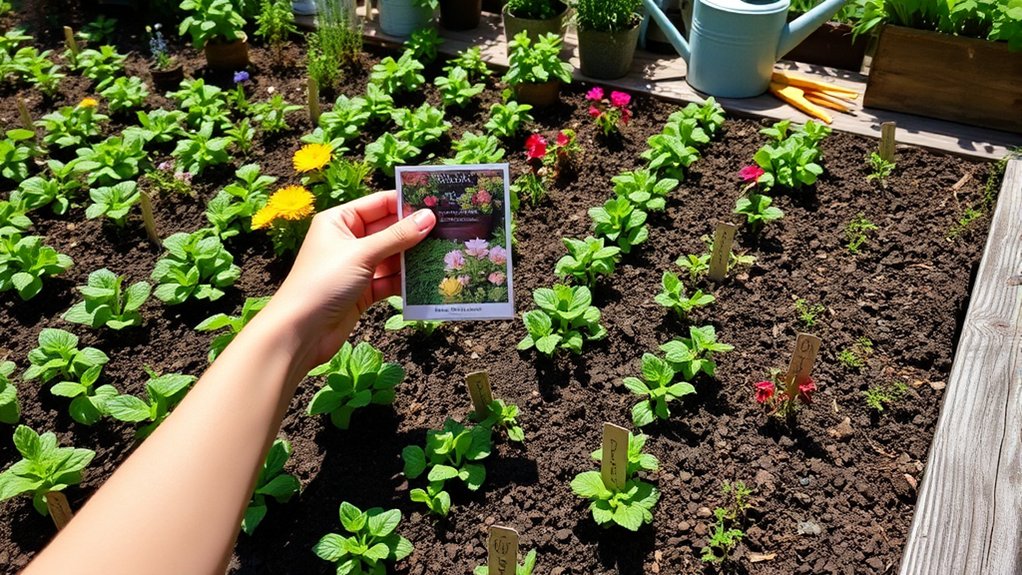
What do you want to harvest from your garden? Start with foods you enjoy eating, then consider how often you’ll use them. If you cook with fresh herbs, grow basil or parsley. If you love salads, choose lettuce, radishes, and tomatoes. Your garden should suit your tastes, not someone else’s list.
Next, choose crops that match your experience and available space. Compact varieties work well in containers, while sprawling plants need room to spread. Check each crop’s planting timing so you can sow seeds or set out seedlings during the right season. A simple calendar helps you stagger plantings and enjoy harvests over a longer period.
Review seed packets or plant labels for sunlight needs, watering, and care. Pick a few dependable crops before adding unfamiliar ones; starting small makes it easier to keep up. You can also ask local gardeners which varieties thrive in your area. Make a short list, then buy only what you’ll realistically grow and eat.
Assess Sunlight and Plan Your Garden Layout

Before choosing a spot, track how sunlight moves across your yard. Check several times throughout the day, noting where shadows fall and how long each area stays bright. This sunlight assessment helps you match your chosen plants with a suitable location. Most vegetables need at least six hours of direct sun, while leafy greens can tolerate some shade.
Track sunlight throughout the day to find suitable garden spots; most vegetables need six hours of direct sun, while leafy greens tolerate some shade.
Use your observations to guide garden layout planning. Group plants with similar light needs, and leave room to reach every area without stepping on growing space. Consider nearby trees, fences, buildings, and paths; their shade or access needs can affect your design.
- Mark sunny and shaded areas on a simple yard sketch.
- Note which spots receive morning or afternoon light.
- Place taller plants where they won’t block shorter ones.
- Keep the layout convenient to view and access.
Your plan doesn’t need to be perfect. Start with a flexible sketch, then adjust it as you learn how sunlight shifts through the seasons.
Prepare Garden Soil and Plant Your Crops
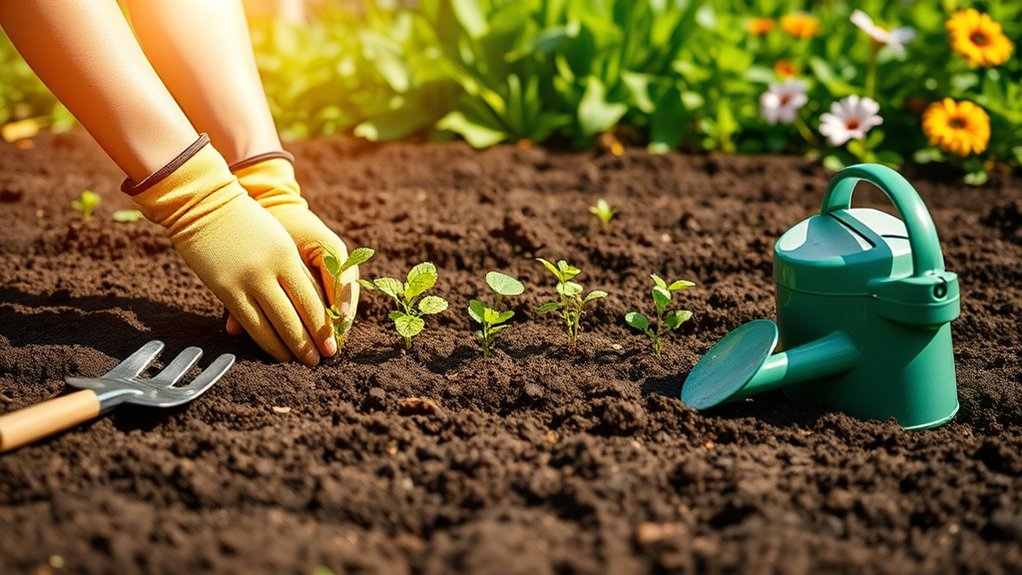
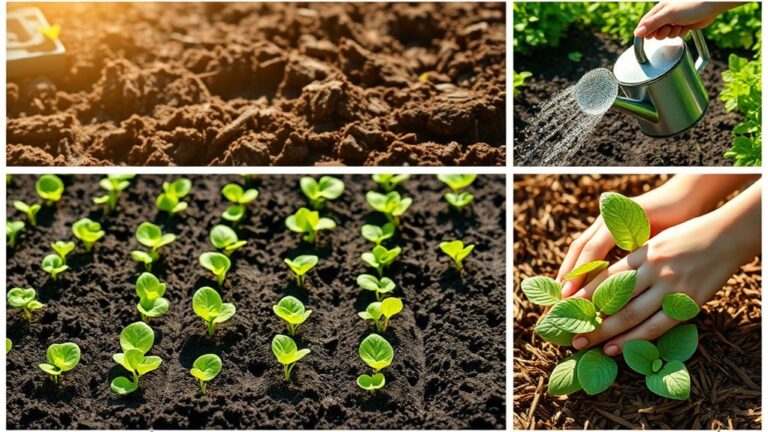
Once you’ve mapped your garden’s sunny spots, prepare the soil so your crops can thrive. Start with soil testing to learn whether your garden needs adjustments. Remove weeds and stones, then loosen the top several inches with a fork. Mix in compost to improve texture and add nutrients, following test results rather than guessing.
| Garden task | What you’ll do |
|---|---|
| Test soil | Check pH and nutrients |
| Add compost | Blend it into loosened soil |
| Plan planting | Match crops to space |
Choose crops suited to your climate and available room. Check seed packets or plant labels for spacing, depth, and watering directions. Sow seeds or set seedlings carefully, leaving enough room for airflow and growth. Water gently after planting so roots settle without washing seeds away.
Keep a simple garden record, and practice crop rotation by moving plant families to different beds each season. This helps reduce recurring pests and diseases while supporting healthier soil. Add mulch to conserve moisture, suppress weeds, and protect the ground as your garden grows.
Frequently Asked Questions
What Is the Best Time of Year to Start a Garden?
The best time to start a garden depends on what you want to grow and your local climate. For many vegetables, spring is the best planting season because warming days support growth, but you can plant cool-weather crops earlier.
Check seasonal soil readiness: the ground should be workable, not soggy, and warm enough for your seeds or seedlings. You’ll also want to consider frost dates and choose plants suited to your region.
How Much Does It Cost to Start a Garden?
Starting a garden can cost $50 to $500 or more, depending on its size, location, and supplies. You can spend less by growing from seed, using containers you already own, and making compost.
For budget planning, list essentials such as soil, seeds, tools, and water, then compare local prices. Decide how much to invest based on your goals, and add a small cushion for unexpected costs.
Begin with a few plants and expand gradually.
What Tools Do Beginner Gardeners Need?
Start with a trowel, gloves, hand pruners, and a watering can—your garden’s small but mighty toolkit. Choose beginner friendly tools and budget friendly gear; you don’t need a shed full of gadgets.
Add a sturdy spade for soil preparation, seed trays for seed starting, and labels to track what you sow. A notebook helps with planting calendars and garden planning. With these basics, you’ll dig in confidently and grow more with less.
How Can I Protect My Garden From Pests?
Protect your garden from pests by combining barriers, healthy habits, and regular checks. Use row covers or fine mesh to keep insects away, and install fencing to deter rabbits and other animals.
For effective Pest prevention, remove weeds, clear fallen leaves, and rotate crops each season. Encourage helpful insects by planting flowers such as marigolds.
Inspect leaves often, handpick pests, and use targeted, garden-safe treatments only when needed. Protecting crops works best with consistent attention.
How Often Should I Water My Garden?
Water your garden when the top inch of soil feels dry, usually once or twice a week. Your watering frequency depends on weather, soil type, plant needs, and container size.
Check soil moisture before watering instead of following a rigid schedule; hot, windy days may dry beds quickly, while rain can delay watering. Water deeply at the base in the morning so roots absorb moisture and leaves dry before evening, helping reduce disease.
Conclusion
Your garden starts with three simple choices: pick crops you love, map where the sunlight falls, and prepare healthy soil. Think of each step as laying a brick in a path toward fresh, homegrown food.
You don’t need a perfect plan—just a little curiosity and care. Plant your first seeds, watch them reach for the sun, and let your garden grow one small success at a time.
Soon, you’ll harvest the rewards of your planning. With these three simple steps, you’ll know how to plan a garden that grows well and brings fresh food to your table.