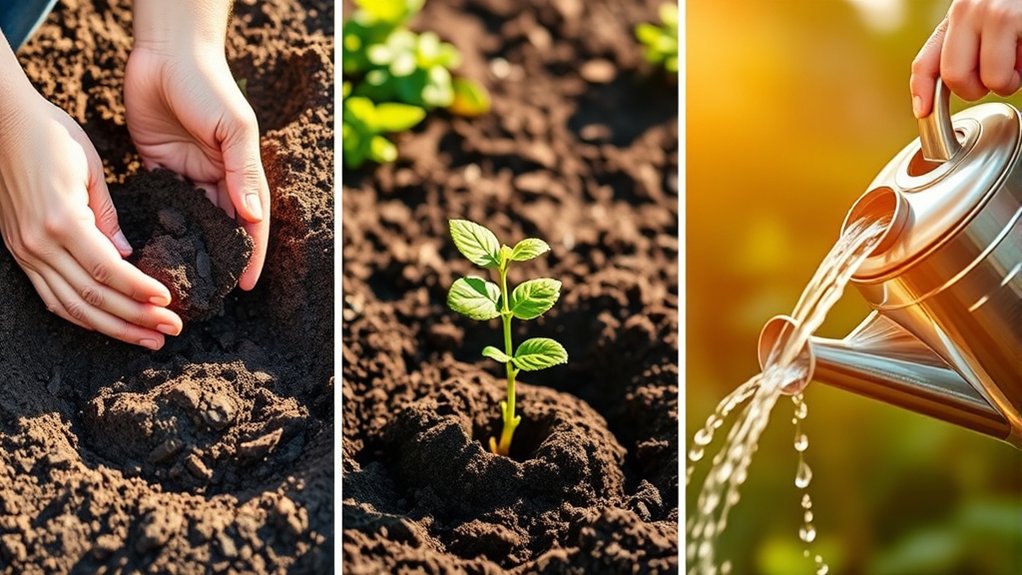
How to Plant in 3 Simple Steps
Starting a garden can feel overwhelming when you’re unsure what to plant or how to help it thrive. You’re not alone—many people struggle to get the basics right. These simple planting steps can help you get started with confidence.
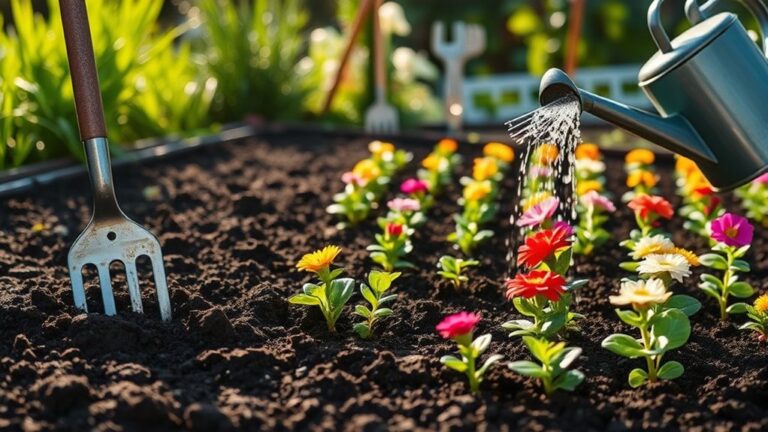
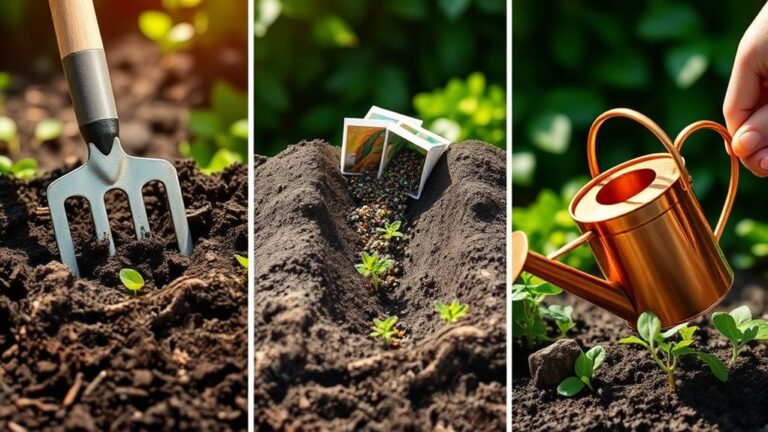
To plant in three simple steps, first clear weeds and debris, loosen dry soil, and mix in finished compost. Choose seeds or sturdy seedlings suited to your climate, sunlight, and available time.
Next, follow packet directions for planting depth and spacing; set seedlings at root-ball depth and leave room for mature growth.
Finally, water gently to settle the soil, then keep it evenly moist while roots establish. A few practical tips can help you avoid common planting mistakes.
Key Takeaways
- Clear weeds and debris, loosen dry soil, and mix in finished compost before planting.
- Choose seeds or seedlings suited to your climate, sunlight, and available care time.
- Check labels for planting depth and spacing; set seedlings at root-ball depth.
- Plant seeds or seedlings carefully, then water gently to settle the soil.
- Keep soil evenly moist while plants establish, and watch for wilting or standing water.
Prepare the Soil and Choose Seeds or Seedlings

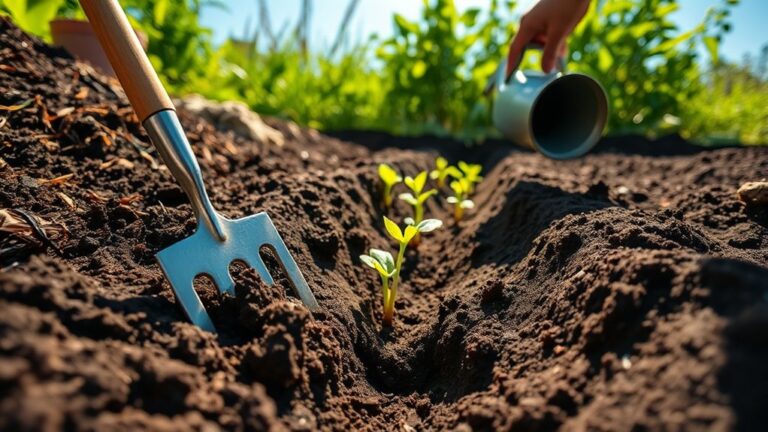
Before you plant, prepare the soil and choose what to grow. Start by clearing away weeds, rocks, and leftover plant debris. Loosen compacted ground with a garden fork, but avoid working soil when it’s wet; handling it then can damage its structure.
Prepare your garden by clearing debris and loosening compacted soil, but wait until the ground is dry.
Add finished compost to improve texture and provide nutrients. If you’re unsure what your garden needs, arrange soil testing. The results can guide you on pH and nutrient levels, helping you choose suitable amendments instead of guessing.
Next, decide whether to grow from seeds or seedlings. Match your choices to your climate, available sunlight, and the time you can give them.
Check seed packets for growing conditions and dates, and inspect stored seeds for age or damage. A simple germination test can help you assess seed viability before you rely on a batch.
If you choose seedlings, look for sturdy stems, healthy leaves, and roots that aren’t crowded or discolored. Select varieties you’ll enjoy caring for and harvesting.
Plant Seeds or Seedlings at the Right Depth and Spacing

Plant each seed or seedling at the depth and spacing its variety requires. Check the seed packet or plant label before you begin; seed picking and bed preparation help you choose suitable plants and create room for their mature growth. Use a ruler or marked dibber to keep planting consistent.
| Planting type | Depth guide | Spacing guide |
|---|---|---|
| Tiny seeds | Surface or barely covered | Thin to packet spacing |
| Medium seeds | About twice seed width | Follow packet spacing |
| Seedlings | Match root-ball depth | Allow mature spread |
Sow tiny seeds near the surface, since a thick covering can block their emergence. Make a shallow furrow for larger seeds, then cover them gently with soil.
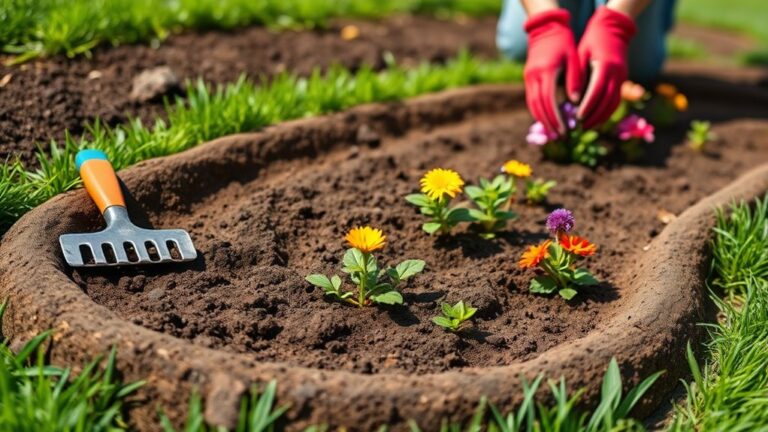
For seedlings, dig a hole as deep as the root ball and wide enough to fit roots without bending them. Set each plant upright, keeping its stem base level with the surrounding soil.
Measure between seeds, rows, or planting holes so you won’t crowd plants later. Check labels for variety-specific directions, because recommended depths and spacing differ.
Water Your New Plant and Give It Early Care
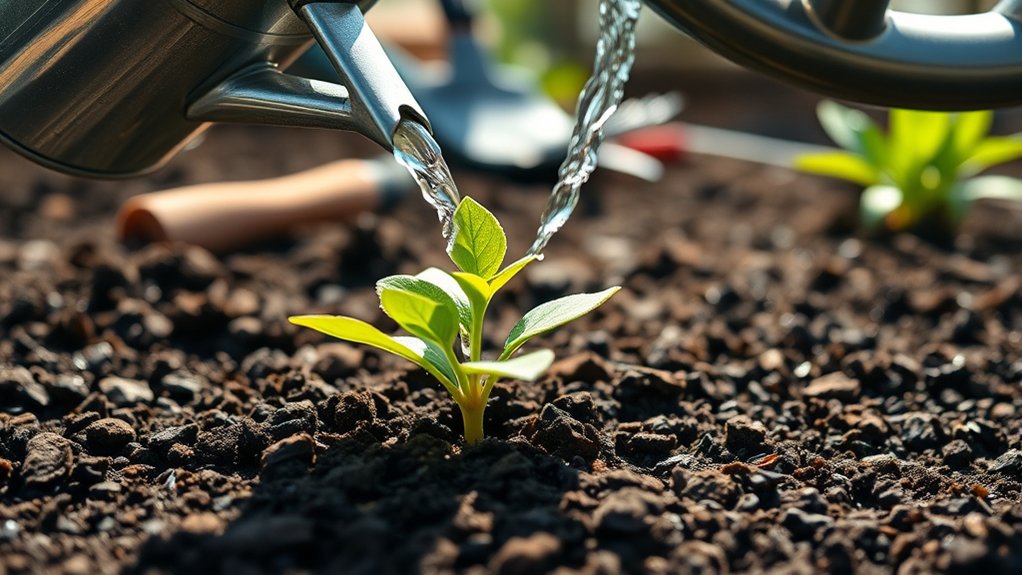
Once seeds or seedlings are in place, water the soil gently to settle it around them without washing seeds away or exposing roots. Keep the soil evenly moist while seeds germinate and young roots establish, but don’t let it become soggy.
Check moisture with your finger; if the top inch feels dry, water slowly near the plant’s base.
Use these care tips to help your new planting thrive:
- Set a watering schedule based on weather, soil, and plant needs. Check often at first, then adjust as roots grow. Water in the morning when possible, so leaves dry before night.
- Add a thin layer of mulch to conserve moisture, keeping it away from stems to prevent rot.
- Watch for wilting, yellow leaves, or standing water. Wilting can signal dryness, while yellowing or soggy soil may indicate overwatering. Correct the cause, and protect tender plants from harsh sun, wind, or cold as they settle in.
Remove weeds early, since they compete for water and nutrients.
Frequently Asked Questions
When Is the Best Season to Plant?
The best season to plant depends on what you’re growing and where you live. In many regions, you’ll get the best results by planting cool-season crops in early spring or fall, and warm-season crops after the last spring frost.
Consider seasonal timing and climate considerations, including local temperatures, rainfall, and frost dates. Check your plant’s growing needs and local gardening calendar so you can choose a suitable planting window and give it time to establish.
How Much Sunlight Does My Plant Need?
Your plant needs anywhere from a few hours of sunlight to a full day—because, apparently, “sun-loving” doesn’t mean every plant wants a sunburn. Check its label or look up its species to find the right sunlight duration and light intensity.
Most flowering vegetables thrive with six to eight hours of direct sun, while leafy greens and many houseplants prefer partial shade or bright, indirect light. Watch your plant’s leaves for clues.
Which Plants Grow Well in Containers?
You can grow many plants in containers, including herbs, vegetables, flowers, and compact shrubs. Choose container friendly herbs like basil, parsley, mint, and thyme; they thrive in pots and give you fresh flavors.
For harvests, try balcony friendly vegetables such as cherry tomatoes, lettuce, peppers, radishes, and bush beans. Match each plant’s pot size and sunlight needs, and make sure your containers have drainage holes so roots stay healthy and don’t sit in water.
How Can I Protect Plants From Pests?
You can protect plants from pests by checking leaves often, removing insects by hand, and using barriers like row covers. Imagine you spot aphids on your peppers early; a quick rinse with water can stop them spreading.
Choose pest resistant varieties suited to your area, and try companion planting, such as basil near tomatoes. Keep beds tidy, avoid overwatering, and encourage helpful insects like ladybugs. Use pesticides only when necessary, following label directions carefully.
When Should I Harvest My Plants?
When to harvest depends on the plant, so check its seed packet or variety guide for maturity dates. For vegetables, look for the size, color, and firmness described for that variety; taste-testing can help you judge readiness.
Peak harvest timing often comes just before produce becomes overripe. Pick leafy greens while they’re tender, and harvest fruits when they’re fully colored and fragrant.
Use clean tools, and handle each plant gently to avoid damage.
Conclusion
You’ve prepared the soil, chosen your seeds or seedlings, planted them at the right depth, and given them water and early care. Now keep an eye on your garden and follow each plant’s needs as it grows.
A little patience can turn your small planting into a spectacular burst of green, so lush you’ll think it’s trying to take over the entire neighborhood! Keep caring for it, and you’ll soon enjoy the rewards of your effort. With these simple steps, you’re well on your way to learning how to plant.