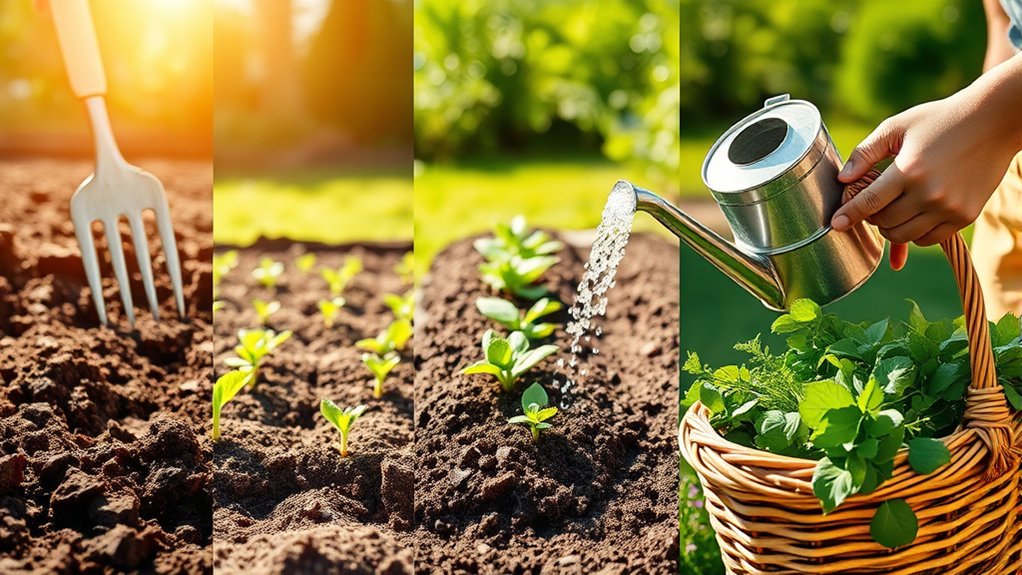
5 Steps to Start a Garden From Scratch
Starting a garden from scratch can feel overwhelming, especially when you’re unsure what to plant or where to begin. You’re not alone—many new gardeners struggle to turn a blank space into a thriving garden. These helpful picks can make planning and planting easier.
Start a garden from scratch in five steps. First, choose a sunny, accessible spot and decide whether raised beds, containers, or in-ground planting suits your space. Next, select plants that fit your sunlight, climate, and available room. Prepare garden soil with finished compost, or fill containers with lightweight potting mix and drainage holes. Plant seeds or seedlings according to local frost dates and package instructions. Finally, water consistently, weed, and check plants weekly. Keep going to discover helpful tips for each step.
Key Takeaways
- Choose what to grow, select a garden style, and find an accessible spot with enough space and sunlight.
- Match plants to your local climate, sun exposure, and available space, checking mature size and growing requirements.
- Prepare garden soil by removing weeds and debris, loosening it, and mixing in finished compost; use potting mix for containers.
- Plan planting around local frost dates, follow seed-packet instructions, and record sowing dates.
- Water consistently, weed regularly, monitor for pests, and maintain plants as they grow.
Choose a Garden Type and Spot
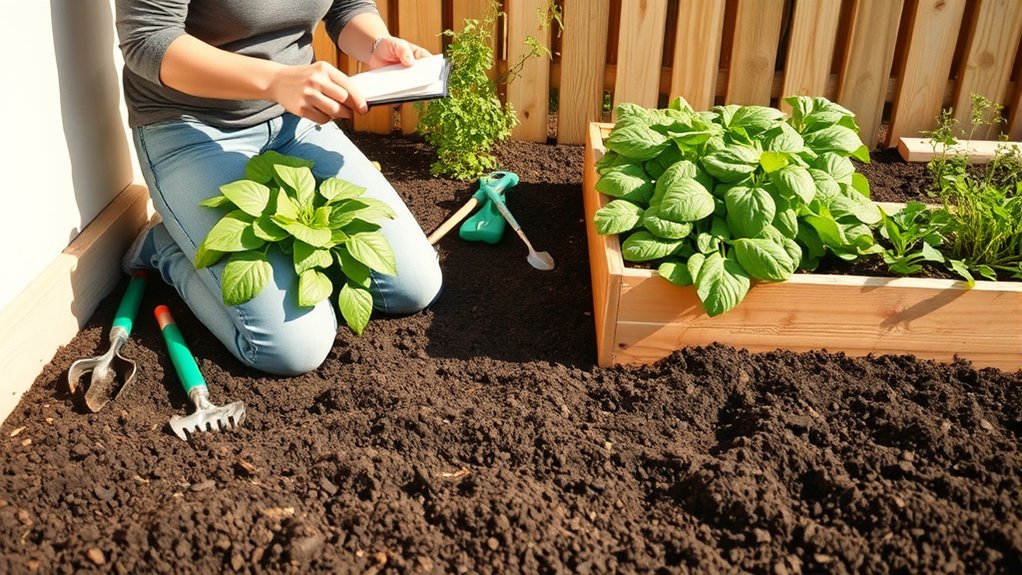
First, decide what you want to grow and how much space you can give it. Choose a garden type that fits your home and routine. A small raised bed works well if you want a defined plot, while containers suit a patio, balcony, or limited yard. If you have room, an in-ground bed can give you more flexibility.
Choose a garden style that fits your space and routine, from a compact raised bed to patio containers or an in-ground plot.
Consider container selection carefully: match each pot’s size to the space available, and make sure it has drainage holes.
Next, look for a spot you can reach easily for watering and upkeep. Check sun exposure throughout the day, noting which areas stay bright and which fall into shade. You’ll use this information when choosing plants later.
Think about garden zoning, too: keep the growing area clear of foot traffic, and place tools or a water source nearby. Before you build a bed or fill pots, conduct soil testing if you plan to use existing ground. The results can show whether you need to improve the soil first.
Choose Plants for Your Sunlight and Climate
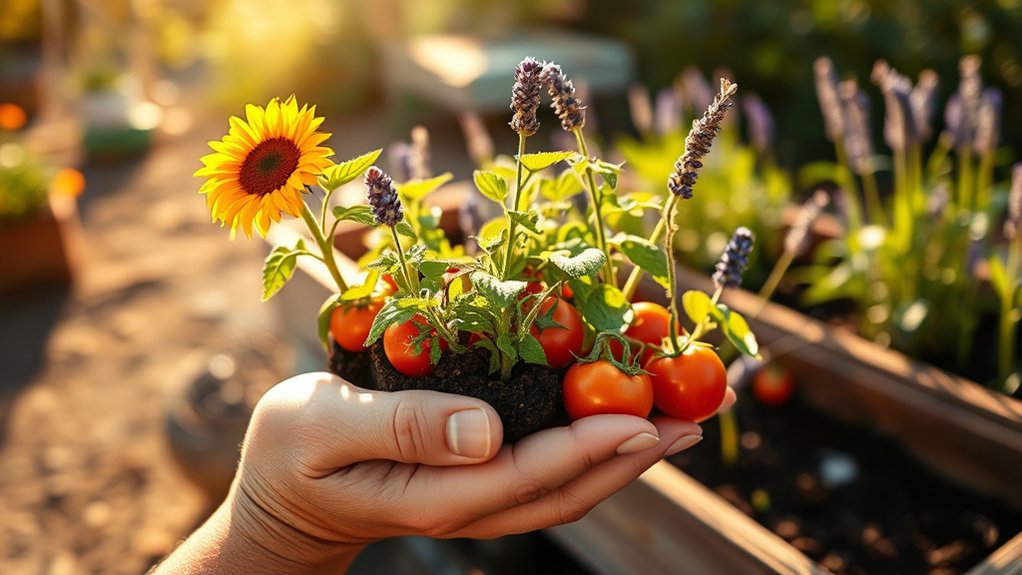
Choose plants that match the sunlight you observed and the climate where you live. Check each plant’s sunlight requirements, then compare them with your garden’s daily sun exposure. Some thrive in full sun; others need shade to stay healthy. Your choices will reward you with a garden that feels alive and welcoming.
Consider climate compatibility before you buy. Local nurseries can recommend varieties suited to your region, while plant labels explain drought tolerance and cold hardiness. Match these traits to your typical summers and winters, not just today’s weather.
- Picture bright blooms lifting your spirits on a sunny morning.
- Give pollinators a reason to visit with nectar-rich flowers.
- Choose resilient plants that can handle dry spells or chilly nights.
Check mature plant height so taller varieties won’t shade smaller ones. Think about bloom times, colors, and harvest dates, too. A thoughtful mix helps your garden offer beauty and food across the season, while giving each plant the conditions it needs to flourish. Start with a few reliable favorites, then add new varieties as your confidence grows.
Prepare Your Soil or Growing Containers
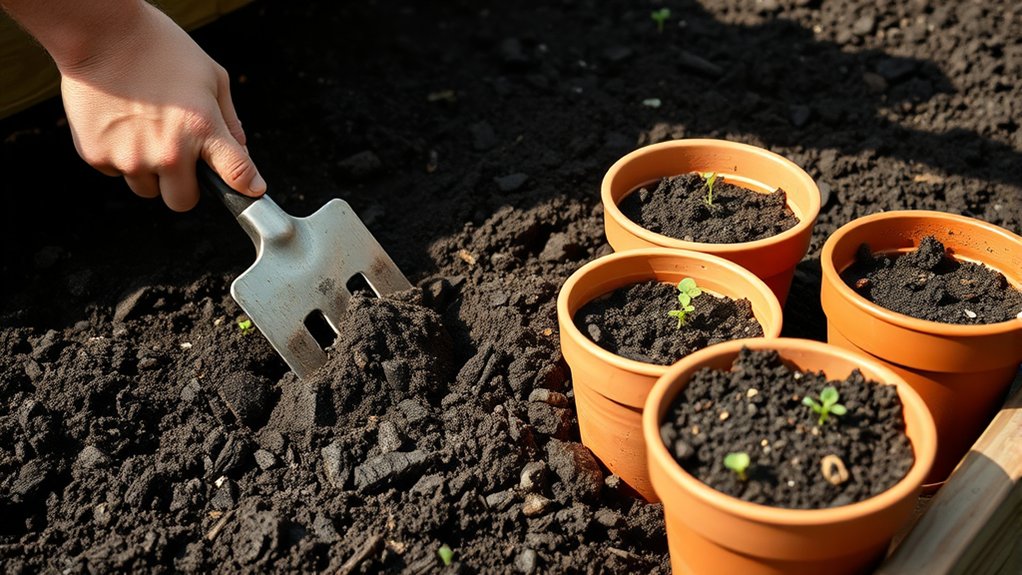
Before planting, prepare a healthy growing space by loosening the garden soil and removing weeds, rocks, and debris. Break up compacted clumps so roots can spread, then mix in finished compost to improve soil structure and add nutrients.
If you’re new to composting basics, use mature, earthy-smelling compost; unfinished scraps can attract pests or harm plants. Avoid working wet soil, which can become packed and difficult to manage.
For raised beds or patios, focus on container selection and choose pots with drainage holes. Match each container’s size to the plants you’ve chosen, since roots need room to grow.
Use a lightweight potting mix made for containers rather than dense garden soil, which can hold too much water in a pot. Fill containers without packing the mix tightly, and leave a little space at the top for watering.
Check that your garden bed or pots sit where you can reach them easily and maintain them comfortably. Good preparation gives your plants a supportive place to grow.
Plant Seeds or Seedlings at the Right Time
When should you plant? Match each crop to your local climate, not a date on a generic packet. Check your area’s frost dates, then build a planting calendar that shows when to sow indoors, transplant, or direct-sow outdoors.
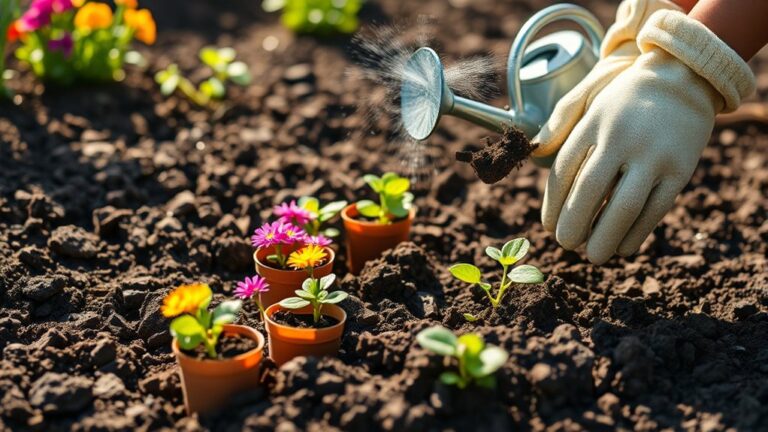
Your seedling timing matters: move young plants outside only when conditions suit them and they’ve adjusted to outdoor temperatures.
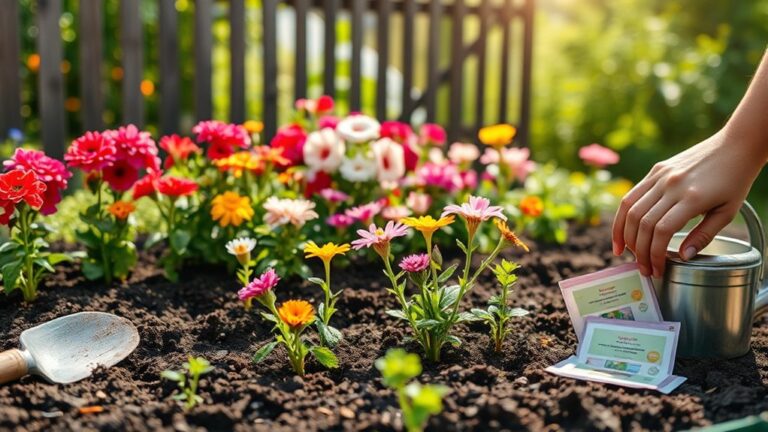
Read each seed packet for germination cues, including soil temperature, light needs, and days to sprout. Cool-season crops, such as peas and spinach, can often go in early; heat-loving tomatoes and peppers need warmer soil and frost-free nights.
If you’re unsure, ask a local garden center or extension office.
- Imagine the first green shoots appearing after your careful planning.
- Protect tender seedlings from a late frost with a simple cover.
- Celebrate each crop you plant in its ideal season.
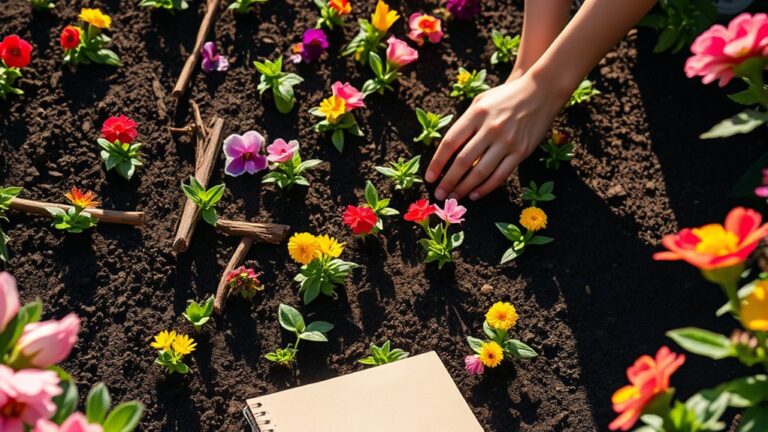
Sow a few extra seeds in case some don’t sprout. Record your dates, and adjust next year’s schedule based on what thrived in your garden.
Water, Weed, and Maintain Your Garden
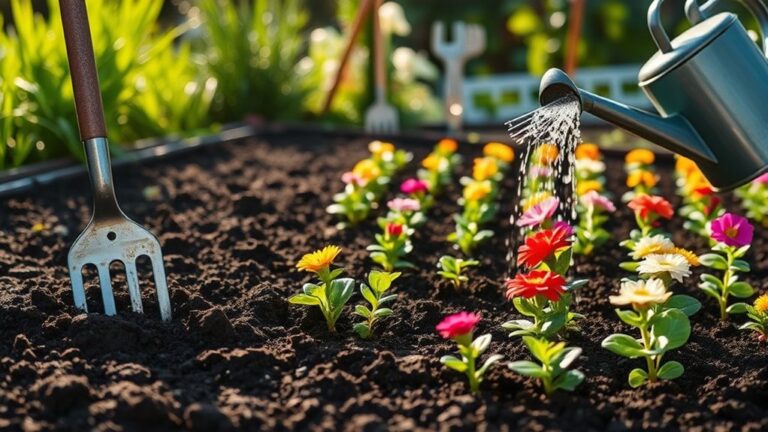
Water your garden deeply and consistently, adjusting for rainfall, soil, and each plant’s needs. Check moisture by touching the soil; if the top inch feels dry, water slowly at the base. Your water planning should account for hot spells, containers, and young plants, which dry out faster. Water in the morning to reduce evaporation and help leaves dry before evening.
| Garden task | What to do | When |
|---|---|---|
| Water | Soak soil near roots | When soil feels dry |
| Weed | Pull weeds by hand | After rain |
| Inspect | Check leaves and stems | Weekly |
Remove unwanted growth while it’s small, before it sets seed. Loosen soil carefully so you don’t disturb roots, and add mulch to suppress new weeds and retain moisture.
Each week, inspect plants for pests, disease, and damaged growth. Prune dead leaves with clean tools, support tall stems, and harvest ripe produce promptly. Keep notes on what thrives, then adjust your routine as the garden changes. You’ll catch problems early and keep plants productive.
Frequently Asked Questions
How Much Does It Cost to Start a Garden?
You can start a garden for about $50 to $500, depending on its size, location, and supplies. A small container garden may need just $50–$150, while raised beds, tools, and irrigation can push spending higher.
Good budget planning helps you choose containers, seeds, and affordable soil amendments. Set aside money for soil fertility and pest prevention, too.
Reusing containers and borrowing tools can lower your initial costs considerably.
What Gardening Tools Should Beginners Buy First?
First, buy a trowel, hand pruners, gardening gloves, a watering can or hose, and a sturdy digging fork or spade. Think of this starter kit as your garden’s trusty Excalibur, minus the medieval price tag.
These basic tools cover planting, pruning, watering, and loosening soil, so you won’t need a crowded shed. Choose comfortable handles and durable materials; you’ll use them often. Add a hoe later if weeds become a recurring challenge.
How Can I Keep Pests Out of My Garden?
Keep pests out by checking your plants often and acting early. Remove damaged leaves, handpick larger insects, and cover vulnerable crops with lightweight row covers. Encourage beneficial insects by planting pest resistant companions, such as marigolds or herbs, near vegetables.
Use organic pest control methods, including insecticidal soap, only when needed, and follow label directions. Clear weeds and fallen plant debris, rotate crops each season, and water at the soil level to discourage disease.
Is Gardening Safe for Pets and Children?
Yes, gardening can be safe for pets and children when you plan thoughtfully. Think of your garden as a shared playground, not a hazard zone. Choose pet-friendly plants, and check every plant for toxicity before bringing it home.
Store fertilizers, pesticides, tools, and seeds securely, and avoid chemical treatments when possible. Supervise children and pets, provide handwashing, and keep paths clear. Teach kids not to taste plants or soil.
How Do I Preserve Vegetables After Harvesting?
Preserve vegetables by matching each crop to the right method. For short-term post harvest storage, keep leafy greens cool and humid, while onions and garlic need a dry, airy spot. Refrigerate tender vegetables promptly, but don’t wash them until you’re ready to use them.
For longer keeping, you can freeze, can, pickle, or dry vegetables, following tested food-safety instructions. Check stored produce regularly, and remove anything spoiled so it won’t affect the rest.
Conclusion
You’ve turned an empty patch into a living garden, one thoughtful step at a time. Your chosen spot now welcomes plants suited to its sunlight and climate; prepared soil gives their roots room to spread.
Plant at the right time, then water, weed, and tend each new shoot. Before long, green leaves will catch the morning light, and your garden will grow into a colorful, thriving corner you can enjoy season after season.
Keep learning as you go, and let each harvest inspire your next planting. With these five steps to start a garden from scratch, you’ll be ready to keep your garden growing.