How to Plan a Flower Bed Layout in 5 Easy Steps
Planning a flower bed layout can feel overwhelming when you’re trying to choose the right spot, plants, and arrangement. You’re not alone—many people struggle to turn their ideas into a garden that looks beautiful and is easy to care for. These five simple steps can help you get started.
To plan a flower bed in five easy steps, choose a visible spot that won’t block paths, doors, or play areas, then mark its outline with a hose or string. Check sunlight, soil, and drainage before choosing flowers suited to those conditions and your available care time. Arrange plants by mature height, placing taller varieties at the back or center. Group colors, allow room for growth, and space plants according to their needs. Prepare the bed, and you’ll find more helpful details below.
Key Takeaways
- Choose a visible, accessible spot that won’t block paths, doors, windows, or play areas.
- Mark the bed’s outline with a hose or string, then check access, sightlines, and mowing space.
- Observe sunlight, soil texture, pH, and drainage to understand the bed’s growing conditions.
- Select flowers suited to those conditions, considering mature size, maintenance needs, and bloom times.
- Sketch the layout by height and color, spacing plants according to their mature size.
Choose the Best Spot for Your Flower Bed
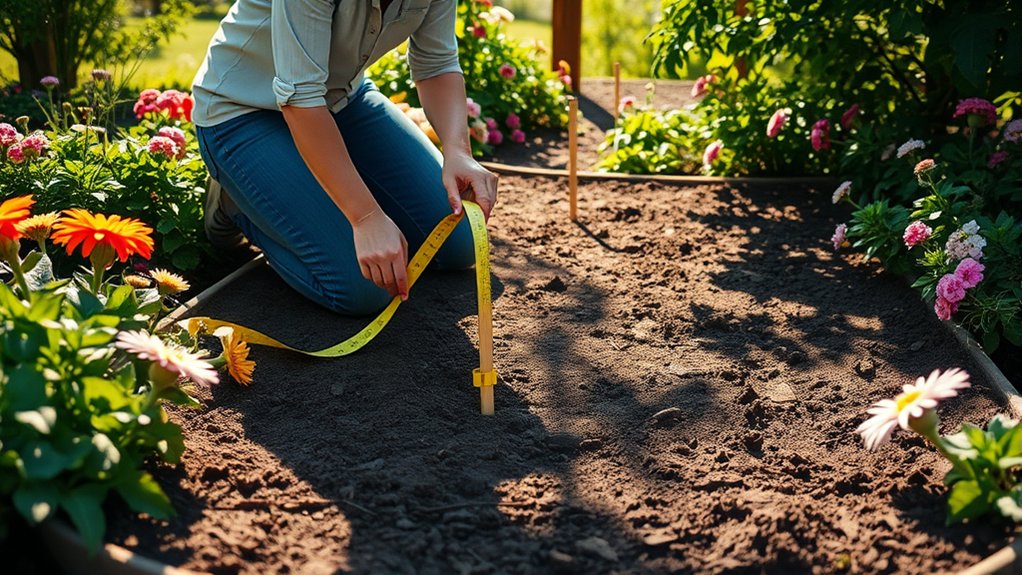
Start by choosing a spot that suits both your flowers and your yard. Look at how you use your outdoor space, then pick a location that won’t block paths, doors, windows, or play areas.
Choose a spot that suits your flowers and yard, keeping paths, doors, windows, and play areas clear.
A bed near your entry can welcome guests, while one along a fence can soften a plain boundary. Place flower beds where you’ll see and enjoy them, such as from a porch, kitchen window, or favorite seating area.
Think about how the bed will look from the street, too; a well-placed display can boost curb appeal and make your home feel more inviting.
Next, mark the proposed outline with a garden hose or string. Walk around it from different angles, and check that you can reach every part without stepping on plants.
Keep the shape simple enough to mow around and maintain. If you’re planning several beds, arrange them to complement your home and each other.
Leave room for future growth, outdoor furniture, and routine yard tasks. A thoughtful location helps your layout feel natural and keeps the garden practical.
Check Sunlight, Soil, and Drainage

Before choosing plants, check how much sun the spot gets, whether the soil suits your plans, and how well water drains. These conditions shape your layout and help you avoid costly changes later.
- Track sunlight testing over a full day. Note when direct light reaches the bed and when nearby trees or buildings cast shade. Repeat on another day if conditions vary.
- Examine the soil’s texture and structure. Squeeze a moist handful: sandy soil feels gritty, while clay soil holds together tightly. Check its pH with a home test kit, and add a small amount of compost if the soil needs improvement.
- Perform a drainage check after rain or by pouring water into a shallow hole. If water remains for hours, the site may drain poorly. If it disappears quickly, the soil may dry out fast.
Record your observations before drawing the bed’s shape. You’ll have a clearer picture of the site’s limits and can plan a layout that works with its conditions.
Choose Flowers That Suit Your Garden
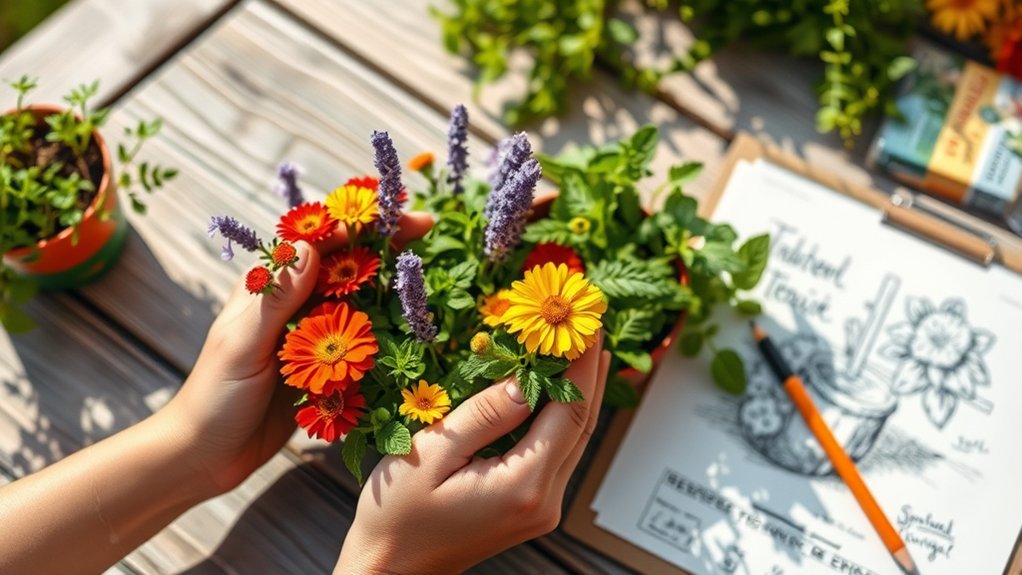
Use your sunlight, soil, and drainage notes to choose flowers that can thrive in the bed. Match each plant’s needs to the conditions you recorded, rather than trying to make unsuitable varieties work. Check plant tags or reliable guides for preferred light, soil type, moisture, and hardiness zone.
If your bed stays dry, consider drought-tolerant flowers. For consistently damp soil, select varieties that tolerate moisture.
Think about how much care you can provide, too. Choose low-maintenance plants if you have limited time, and include flowers with different bloom periods to enjoy color over more of the season.
For a wildlife-friendly bed, look for nectar-rich blooms that attract pollinators. Your flower choices should also reflect what you enjoy seeing and smelling.
Before buying, confirm each plant’s mature size and any special care requirements. Consider color harmony by choosing blooms and foliage that complement your home and garden surroundings.
A short plant list can help you stay within budget and avoid overcrowding.
Plan Your Flower Bed Layout by Height and Color
How should you arrange your flowers? Start by considering how tall each plant will grow, then map the bed from front to back. This simple plan helps every bloom earn a place in the display and keeps shorter varieties from disappearing behind taller ones.
- Place plants by height. Set low-growing flowers along the front edge, medium-height varieties in the middle, and the tallest blooms at the back. For a bed viewed from all sides, put the tallest plants near the center. This creates height contrast without blocking key views.
- Choose a color story. Group related shades for color harmony, or pair complementary colors for a livelier look. Repeat a few colors across the bed so the design feels connected.
- Check the view. Picture the layout from your usual viewing spot. Notice gaps in height or strong color patches, then shift plants on paper until the arrangement feels balanced.
Use a quick sketch to test combinations before planting. Your chosen flowers can create a clear, attractive composition that suits your garden and personal style.
Set Plant Spacing and Prepare the Bed
Once your layout feels balanced, check each flower’s mature width and space plants accordingly to prevent crowding and improve airflow. Read plant tags for recommended distances, then measure between centers rather than edges. Account for spacing considerations such as growth habit, sunlight, and moisture; plants that spread quickly need more room, while compact varieties can sit closer together. Leave access paths where you’ll need to weed, prune, or water.
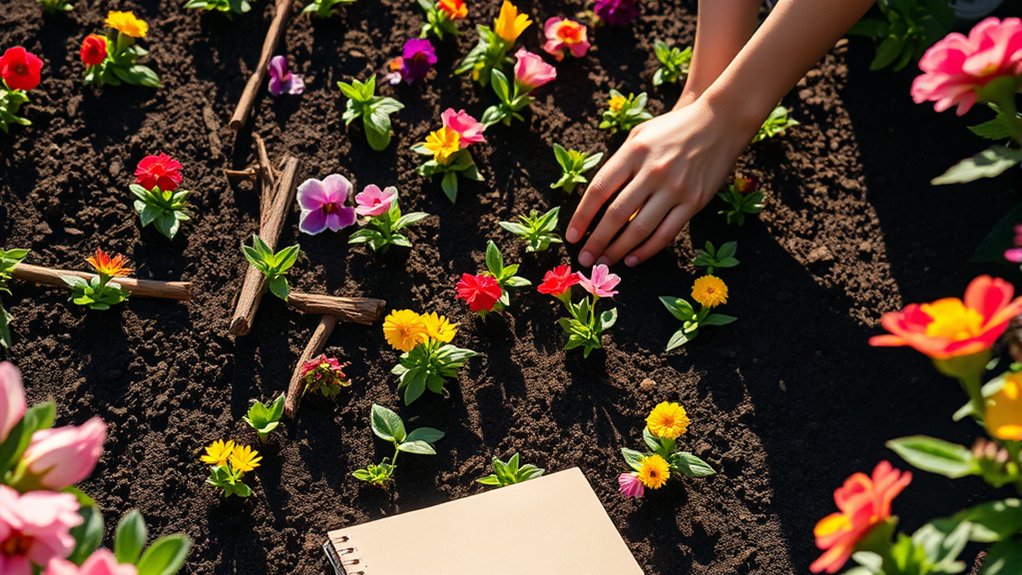
Next, focus on bed preparation. Remove grass, weeds, rocks, and old roots so they won’t compete with new flowers. Loosen the soil to a depth of about 12 inches, breaking up clumps without working it when wet. Mix in compost to improve structure and fertility, then rake the surface level. Check drainage by watering the bed; if water pools, amend the soil or choose plants suited to those conditions. Before planting, arrange pots on the soil according to your plan. Adjust gaps and curves now, while moving plants remains easy.
Frequently Asked Questions
What Tools Do I Need to Create a Flower Bed?
To create a flower bed, gather a spade or shovel, garden fork, rake, hand trowel, gloves, and a garden hose or watering can. Use a tape measure and stakes with string to mark the bed’s shape.
A wheelbarrow makes moving soil and compost easier. Add a soil testing kit to check pH and nutrients before planting. Keep pruning shears handy for Garden pruning and trimming plants as they grow.
When Is the Best Time of Year to Plant a Flower Bed?
You’ll usually get the best results by planting your flower bed in spring or fall, when mild temperatures help plants establish roots. In many regions, fall-planted perennials can grow roots for several weeks before winter dormancy.
Your best planting season depends on your climate and flower types, so check local frost dates and plant labels. Create a monthly maintenance schedule to track watering, weeding, and deadheading, especially during your first growing season.
How Much Does It Cost to Install a Flower Bed?
You’ll typically pay $500–$3,000 to install a flower bed, though a small DIY bed may cost just $100–$500. Your total depends on bed size, soil preparation, edging, plant choices, and labor rates.
For accurate cost estimates, measure your space and request itemized quotes from local landscapers. You can lower expenses by handling planting yourself, choosing affordable perennials, and using design inspiration to create a polished look without costly features.
How Can I Keep Weeds Out of My Flower Bed?
An ounce of prevention is worth a pound of cure: keep weeds out by removing existing weeds, then cover bare soil with two to three inches of mulch, leaving space around plant stems.
For lasting weed control, pull young weeds promptly and avoid disturbing the soil more than necessary. Add soil conditioning with compost to help flowers thrive and fill gaps.
Water your plants consistently; healthy, dense growth leaves weeds fewer places to take hold.
How Often Should I Fertilize Flowers in a Flower Bed?
Fertilize most flower beds once in early spring, then every six to eight weeks during active growth if your plants need it. Your fertilizer frequency depends on the product, flower varieties, and soil nutrient balance, so follow the label and avoid overfeeding.
Use a slow-release fertilizer for steady nourishment, or apply a diluted liquid feed as directed. If blooms fade or leaves yellow, check soil conditions before adding more fertilizer; excess nutrients can harm plants.
Conclusion
A flower bed proves a simple theory: the right plan lets beauty grow with less guesswork. Choose a sunny or shady spot that suits your flowers, check the soil and drainage, then arrange plants from tallest to shortest.
Repeat colors and leave room for each bloom to spread. As you prepare the bed and set your spacing, picture the seasons unfolding: buds opening, colors mingling, and pollinators arriving.
Your thoughtful layout won’t guarantee perfection, but it gives your garden a strong start. With these steps, you’ll know how to plan a flower bed layout that suits your space and helps your flowers thrive.