How Does Growing a Garden Work in 10 Simple Steps
Starting a garden can feel overwhelming when you’re unsure what to plant, where to begin, or how to keep everything alive. You’re not alone—many new gardeners struggle to turn a patch of soil or a few containers into a thriving garden. These practical tips and product picks can help make growing a garden easier.
Growing a garden in 10 simple steps starts with choosing plants that suit your climate, space, and tastes. Find a sunny spot, plan accessible beds, clear and improve the soil, and check local frost dates. Gather seeds or healthy seedlings, then plant them at the right time, depth, and spacing.
Water deeply, mulch, pull weeds, and watch for problems. Harvest crops when ripe, care for flowers, and adjust as conditions change. A few practical tips can help you grow with confidence.
Key Takeaways
- Choose crops suited to your climate, available space, sunlight, and growing season.
- Pick a sunny, accessible garden location, then plan bed size, spacing, drainage, and water access.
- Check local frost dates and planting calendars; prepare soil by removing weeds, loosening it, and adding finished compost.
- Gather seeds or healthy seedlings, then plant at the recommended time, depth, and spacing, labeling each row or pot.
- Water according to soil moisture and weather, mulch and weed regularly, inspect plants, and harvest crops when ripe.
Choose What to Grow in Your Garden
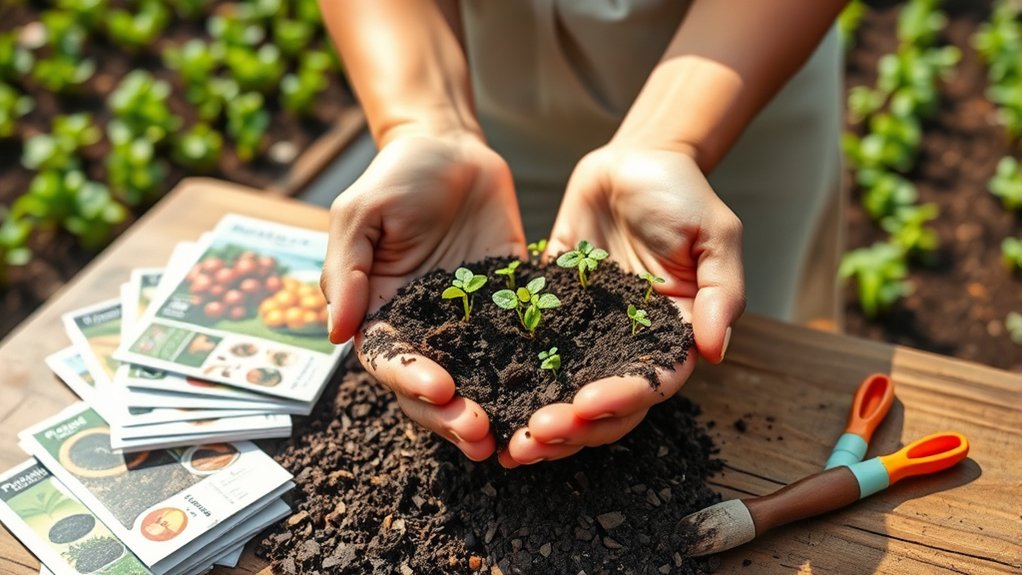
Start by choosing plants that suit your climate, available space, and the time you can give them. Consider what you enjoy eating, cooking with, or seeing in your garden. If you’re new to gardening, choose a few reliable crops, such as lettuce, radishes, or herbs, rather than planting too many varieties at once.
Check each plant’s growing season and expected size before you buy seeds or seedlings. This helps you avoid overcrowding and choose varieties you can care for throughout the season. For seed selection, compare days to maturity, flavor, and disease resistance on the packet. Choose crops with similar care needs to make watering and feeding easier.
Think about how much attention each plant requires, too. Some crops need frequent harvesting, while others grow with little intervention. Include plants that match your routine, and learn about common pests before deciding. Planning for pest management can help you choose resilient varieties and protect your harvest without unnecessary effort. Don’t plant more than you can maintain.
Pick a Sunny Spot for Your Garden
Choose a spot that gets plenty of sunlight each day. Check how the light shifts from morning to evening, too. Keep your garden away from trees, buildings, and other obstacles that cast shade. Most vegetables grow best with at least six hours of direct sunlight a day.
Check Daily Sunlight
Before planting, check how much direct sunlight your garden spot receives each day. Track sunlit hours from morning to evening, noting when the sun reaches the area and when it moves away.
You can observe the spot at several times or use a sunlight-tracking app to record exposure. Count only direct light, not bright daylight filtered through clouds or windows.
Most vegetables and flowering plants need at least six hours of direct sun, while leafy greens and some herbs can grow with less. Compare your notes with the needs of the plants you want to grow, then choose varieties that suit the light available.
This simple check helps you plan realistic planting choices and supports healthy growth. Keep a brief record over a few clear days so you can judge typical daily exposure accurately.
Avoid Shade and Obstacles
Look for nearby trees, fences, buildings, and other obstacles that could shade your garden or block airflow. To avoid shade, observe how shadows move across your chosen spot throughout the day. A sunny area in the morning might sit in darkness by afternoon. You’ll also want enough open space for plants to grow without competition.
| Obstacle | Possible effect | What you can do |
|---|---|---|
| Trees | Shade and root competition | Choose a clear area |
| Fences | Long afternoon shadows | Check sun exposure |
| Buildings | Blocked light and airflow | Plant farther away |
When you avoid obstacles, you give plants room to spread and improve air circulation, which can help reduce disease. If you can’t move a barrier, place your garden where it casts the least shade. Recheck the spot as seasons change, since the sun’s path shifts and nearby trees may grow.
Plan Your Garden Beds and Spacing
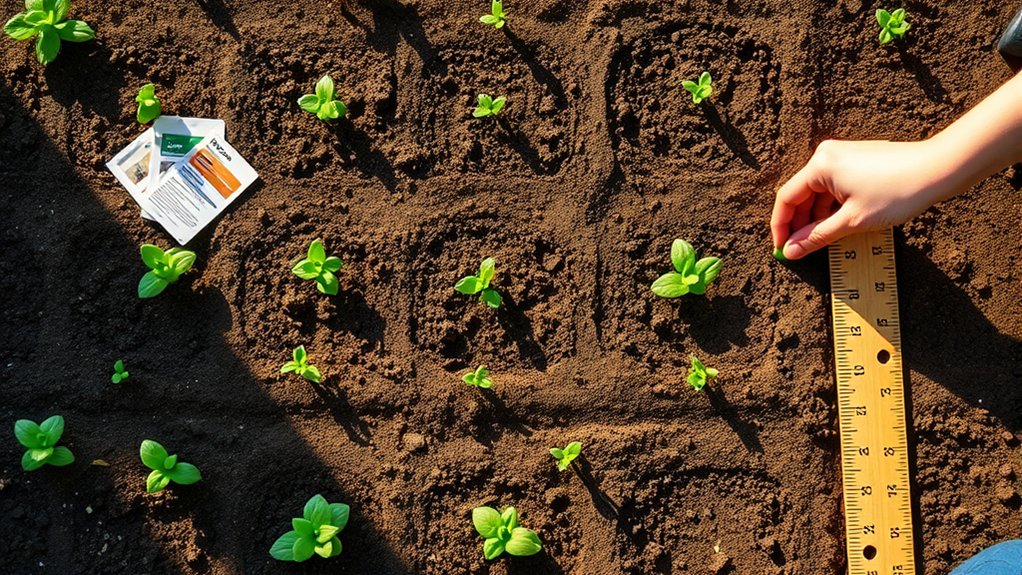
Choose bed locations that get the sun your plants need and are easy for you to reach. Then, set dimensions that fit your space and let you tend every plant comfortably. Finally, plan spacing based on each plant’s mature size so your crops have room to grow.
Choose Bed Locations
Place your garden beds where plants will get the right amount of sunlight and you can reach them easily. Watch the area throughout the day to see how trees, fences, and buildings affect light.
Choose a spot near a water source so you won’t have to carry heavy cans far. Check that rain drains away instead of collecting around plants, and avoid low areas that stay soggy.
Keep beds clear of paths, utility lines, and places where people or pets often pass. Consider landscape aesthetics, too: a well-placed bed can complement your yard without blocking views or access.
For pest management, avoid locations beside dense shrubs or plants that harbor pests. Make sure you can approach each bed from a convenient direction, and leave room to move around it as you tend your garden.
Set Bed Dimensions
Once you’ve picked a location, set bed dimensions to suit your space and reach. Keep each bed narrow enough that you can tend its center from either side without stepping on the soil. A width of about three to four feet works for many gardeners, while a shorter width may fit a tight space. Choose a length that matches your yard and leaves room to move around the bed.
Your bed design should also account for access paths, nearby structures, and the tools you’ll use. Leave enough clearance to carry supplies and work comfortably. Before building, consider soil composition and drainage; raised beds can help if your native soil is poor or compacted.
Mark the outline with stakes or a hose, then check that you can reach every edge. Adjust the dimensions before you build.
Plan Plant Spacing
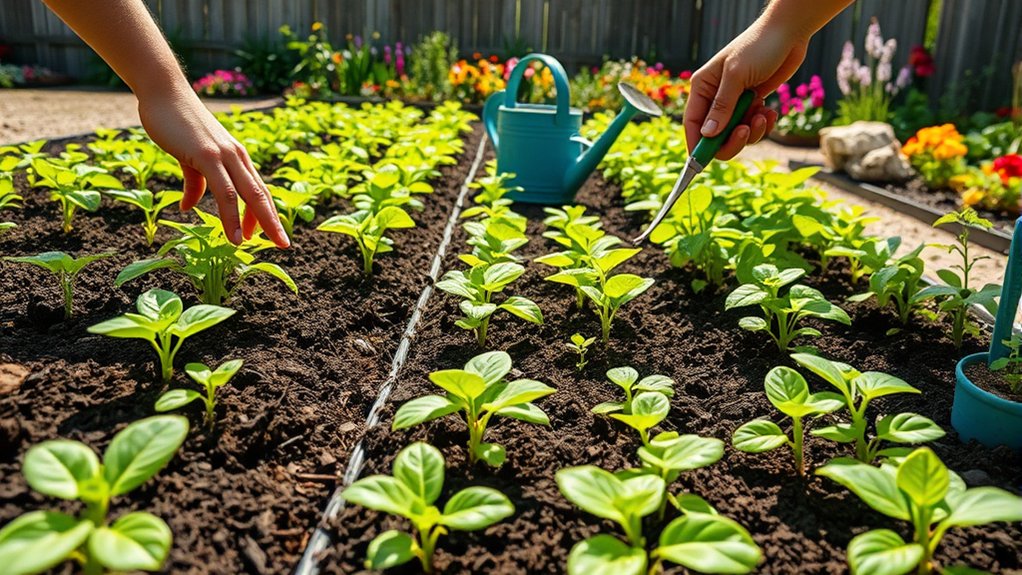
With your bed dimensions set, plan where each crop will go and how much room it needs. Check seed packets or plant labels for mature width and recommended spacing.
Give each plant enough room for airflow, sunlight, and root growth. Crowding can invite disease and reduce harvests.
Use a simple sketch to map rows or blocks, and mark paths so you can reach every plant without stepping on the soil. When planning spacing, account for crops that spread, climb, or grow tall, placing taller plants where they won’t shade shorter ones.
You can also use companion planting to group compatible crops, such as basil near tomatoes, while keeping plants with conflicting needs apart. Leave a little extra space for harvesting and maintenance, then adjust your layout before planting.
Prepare Your Garden Soil
Healthy soil gives your garden a strong start. Before you plant, clear away weeds, rocks, and leftover roots. Loosen the top several inches with a garden fork, taking care not to work wet soil; it can compact and form clumps.
A simple soil testing kit can reveal whether your soil needs adjustments. Your chosen seed variety may also influence the soil conditions you’ll want to provide.
| Check | What you can do |
|---|---|
| Texture | Mix in compost if soil feels heavy or sandy. |
| Drainage | Water the bed and watch how quickly moisture sinks in. |
| Nutrients | Follow test results before adding fertilizer. |
Spread a layer of finished compost over the bed, then blend it gently into the loosened soil. Remove any remaining debris and rake the surface smooth.
Don’t add amendments blindly: too much fertilizer can harm plants, and fresh manure may damage roots. Keep the bed slightly moist, not soggy, until you’re ready to plant. These steps create a workable, nourishing foundation for your garden.
Check When to Plant in Your Area
Find your hardiness zone and check your local frost dates to choose the right planting time. Then, use a planting calendar for each crop you plan to grow. These guides can help you decide when to sow seeds and transplant seedlings in your area.
Find Your Hardiness Zone
Before planting, find your USDA hardiness zone to see which perennials can survive winter in your area. Enter your ZIP code on the USDA Plant Hardiness Zone Map, or locate your region by state. The map assigns zones based on average annual extreme minimum winter temperatures, helping you choose plants suited to local cold conditions.
Use your zone as a starting point, not a guarantee. Shade, wind, elevation, and nearby buildings can create small differences in your garden.
- Check the map’s legend and identify your zone number and letter.
- Compare plant labels or catalogs with your zone.
- Choose perennials rated for your zone or colder.
- Consider microclimates around your yard.
- Treat seed viability and soil texture as separate planting considerations.
This step helps you narrow plant choices. It doesn’t determine when to sow seeds.
Check Local Frost Dates
Your hardiness zone helps you choose plants that can survive winter, but local frost dates help you decide when to plant them. Find your area’s average last spring frost and first fall frost through a local weather service, cooperative extension, or gardening resource. These dates aren’t guarantees; an unexpected cold snap can still damage tender plants. Use them as a starting point for frost planning, then watch forecasts as planting time approaches.
Pay attention to microclimate awareness: a sunny, sheltered spot may warm sooner than a low, exposed area where cold air settles. Your yard’s conditions can shift safe planting times by days or even weeks. Keep notes on how temperatures affect your garden each season. This local record can help you make better decisions and protect young plants from late or early frosts.
Follow Crop Planting Calendars
Once you know your local frost dates, check a planting calendar for guidance on when to sow each crop in your area. Choose a calendar tailored to your region, since temperature, daylight, and growing-season length affect planting times.
Use it to plan both indoor starts and direct sowing, then adjust for current weather and your garden’s conditions.
- Note recommended planting windows for each crop.
- Start seedlings indoors when the calendar suggests.
- Sow outdoors after soil warms to the crop’s needs.
- Space repeat plantings to extend your harvest.
- Discuss crop rotation and analyze soil texture as you plan beds.
Keep your calendar handy, and record actual sowing dates and results. If spring runs unusually cold or warm, shift dates accordingly. Local extension services often provide reliable, area-specific schedules.
Use those recommendations as a guide, not a rigid rule, and watch your plants for cues.
Gather Seeds, Seedlings, and Tools
Gather seeds, seedlings, and tools suited to your garden’s space, climate, and growing season. Use your planting calendar to decide which varieties you’ll need and when to have them ready.
For seed selection, compare each plant’s sunlight, water, and space needs with the conditions in your garden. Choose varieties that mature within your local growing season, and check seed packets for dates, quantities, and storage guidance. Buy from reputable suppliers, and pick only the amount you’re likely to use.
If you prefer seedlings, choose healthy plants with sturdy stems, evenly colored leaves, and no visible pests or damage. Confirm that each variety fits your garden plan before you bring it home.
Gather basic tools such as a hand trowel, pruners, gloves, watering can, and labels. Add equipment only when your garden requires it. Check handles and blades, clean off dirt, and sharpen cutting edges as needed. Regular tool maintenance helps your gear work safely and last longer.
Keep seeds, seedlings, and tools organized and accessible for upcoming garden tasks.
Plant Seeds and Seedlings the Right Way
Plant seeds and seedlings at the right time and depth to help them establish well. Check each plant’s label for its preferred season, spacing, and planting depth. Your local climate and the last frost date can guide your timing.
Choose a spot that matches the plant’s needs for sunlight and soil, and prepare the bed by removing weeds and loosening compacted earth.
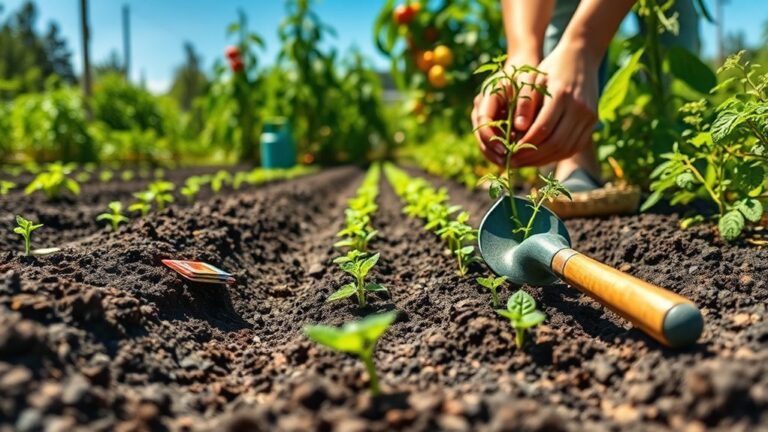
Use these steps to place each plant carefully:
- Sow tiny seeds on the surface; cover larger seeds with soil to the depth listed on the packet.
- Space seeds and seedlings according to mature plant size so they won’t compete for room.
- Handle seedlings by their leaves or root ball, not by their delicate stems.
- Set each seedling at the same soil level it had in its container.
- Label rows or pots with plant names and planting dates to track seed propagation.
Mix flowering plants among vegetables for pollinator attraction. Firm soil gently around roots and seeds, then keep labels visible as your garden takes shape.
Water Your Garden for Healthy Growth
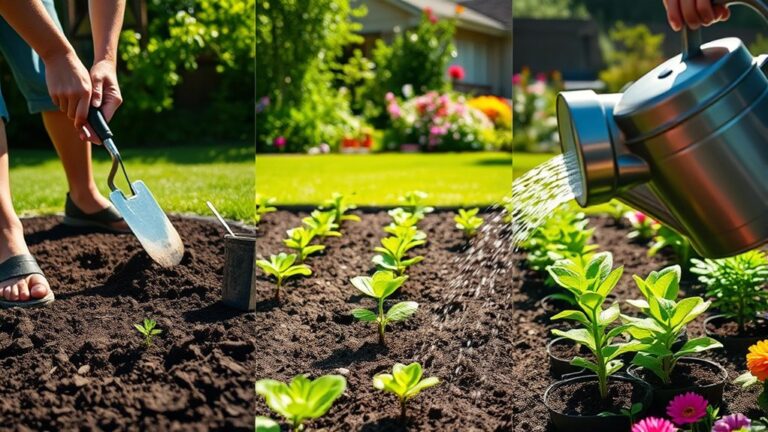
Water your garden deeply enough to reach the roots, then let the soil begin to dry before watering again. This encourages strong root growth and helps plants handle brief dry spells. Check moisture by pressing a finger an inch into the soil; if it feels dry, water slowly until the ground is moist several inches down.
Water deeply to encourage strong roots, then let the soil begin to dry before watering again.
Water near the base of each plant rather than over its leaves. A soaker hose or watering can helps direct water where roots need it and limits waste. If you use a sprinkler, water early in the day so foliage can dry before evening.
Adjust your routine for rainfall, temperature, and soil type: sandy soil dries quickly, while clay holds moisture longer. Watch your plants for signs of too little or too much water. Wilting, yellowing leaves, or soggy ground can signal trouble.
Consistent watering supports healthy growth, soil fertility, and pest management by helping plants stay vigorous without creating persistently wet conditions.
Mulch, Weed, and Check for Plant Problems
A layer of mulch helps your garden retain moisture, suppress weeds, and keep soil temperatures steady. Spread two or three inches of organic mulch around plants, but leave a little space around each stem to prevent rot. These mulch benefits support healthy soil as the material breaks down.
For effective weed control, check your beds regularly and remove weeds while they’re small. Pull them by hand or loosen their roots with a garden tool, taking care not to disturb nearby plants. After weeding, refresh thin mulch so it continues to block sunlight from reaching new weed seeds.
Inspect your garden often for signs of plant problems. Look beneath leaves and along stems for pests, spots, discoloration, or unusual growth. If you find an issue, identify it before choosing a response, and remove badly affected leaves when appropriate. A quick routine makes it easier to spot changes early and protect your plants.
- Keep mulch away from stems.
- Pull weeds before they spread.
- Check leaf undersides for insects.
- Watch for spots or yellowing.
- Note changes as you inspect.
Harvest Vegetables and Care for Flowers
When vegetables are ripe, harvest them promptly to encourage continued production and enjoy their best flavor. Check seed packets or plant labels for signs of readiness, such as full color, firm texture, or easy separation from the stem.
Use clean scissors or a sharp knife to avoid damaging plants, and pick gently so you don’t break nearby stems. Harvest leafy greens from the outside, letting the center keep growing. Store each crop as recommended to preserve freshness.
Care for flowers by removing faded blooms, watering at the base, and checking leaves for pests or disease. Deadheading often encourages new flowers, while steady moisture helps plants thrive.
Avoid overwatering, which can harm roots and disturb soil microbes. Leave some blooms for bees and butterflies; this supports pollinator attraction and helps your garden produce.
Trim damaged growth with clean tools, and give tall flowers support before they bend. Keep paths clear, and gather flowers in the morning for longer-lasting bouquets. Your regular care keeps beds productive and colorful.
Frequently Asked Questions
How Can I Garden Successfully in a Small Apartment?
You can garden successfully in a small apartment by choosing plants that fit your light, space, and routine. Place sun-loving herbs near a bright window, and try balcony herb cultivation if you have outdoor space. Use space saving vertical planters, hanging baskets, or shelves to grow upward instead of outward. Pick compact varieties, use pots with drainage holes, and water when the soil feels dry. Check plants regularly for pests, and rotate containers for even light.
Can I Grow a Garden Without Using Chemical Pesticides?
Yes—you can grow a garden without chemical pesticides, letting your plants become a small, thriving sanctuary. Start with healthy soil and choose pest-resistant varieties suited to your space.
To grow organic pest control, invite helpful insects with flowers, inspect leaves regularly, and remove pests by hand or use gentle soap sprays. Try composting with leftovers to nourish your soil, but avoid adding diseased plants.
With steady care, you’ll protect your garden naturally and enjoy its harvest.
How Do I Attract Bees and Butterflies to My Garden?
You can attract bees and butterflies by planting a variety of native, pesticide-free blooms that flower from spring through fall. Choose bees friendly flowers such as lavender, coneflower, and sunflowers, and include butterfly nectar sources like milkweed, zinnias, and asters.
Group each flower type together so pollinators can find them easily. Add shallow water with stones for safe landing, leave a few sheltered spots, and avoid spraying chemicals that could harm these helpful visitors.
What Should I Do With Garden Waste and Fallen Leaves?
Turn healthy garden waste and fallen leaves into useful soil food. For composting garden scraps, combine leaves, grass clippings, and non-diseased plant trimmings with kitchen vegetable scraps. Keep the pile slightly moist, mix it regularly, and avoid meat, dairy, and weeds with seeds.
Try leaf mulching by shredding fallen leaves and spreading a thin layer around plants or across beds. Remove diseased material, and check your local rules for disposal options.
How Can I Protect My Garden From Pets?
Protect your garden by installing sturdy garden fencing around vulnerable beds and choosing pet safe deterrents, such as motion-activated sprinklers or harmless scent repellents. Secure gaps beneath gates, and cover young plants with mesh or cloches.
Keep tempting tools, fertilizers, and toxic plants out of pets’ reach. You can also create a designated play area with toys to redirect their attention. Reward pets when they stay away from planted areas.
Conclusion
Growing a garden doesn’t require a green thumb—just a little patience and care. Choose plants you love, give them sunlight, prepare the soil, and keep up with watering and weeding.
As the weeks pass, you’ll see tiny seeds turn into a living patch of color and flavor. Pay attention, adjust as you go, and enjoy each harvest or bloom.
Your garden is a small promise you nurture, one day at a time, until it blossoms. Growing a garden is a rewarding way to bring that promise to life.