7 Steps to Landscape the Front of the House
Planning a front yard that looks polished without becoming difficult to maintain can feel overwhelming. You’re not alone—many homeowners struggle to balance curb appeal, budget, and everyday practicality. These seven steps to landscape the front of the house can help you create a welcoming entrance that works for your home and lifestyle.
Start by setting goals for how you want your yard to look and function. Measure the space and note sunlight, soil, drainage, and existing features. Then set a budget with a little extra for unexpected costs.
Choose plants suited to your climate and design clear paths, balanced garden beds, and a welcoming focal point. Prepare the soil, install irrigation, and plant larger features before smaller ones.
Finish with a seasonal maintenance plan. The steps below will help you shape a practical, attractive entrance.
Key Takeaways
- Define your goals, users, budget, and preferred style before choosing features or plants.
- Measure and sketch the yard, noting paths, structures, drainage, sunlight, soil, slopes, and existing plants.
- Choose a focal point, then plan clear paths, balanced beds, and open space in proportion to the house.
- Prepare the soil and irrigation, then plant climate- and sunlight-suited trees and shrubs before smaller plants.
- Water and mulch correctly, then follow a seasonal maintenance routine and reserve 10–20% for unexpected costs.
Plan Your Front Yard Landscaping Goals
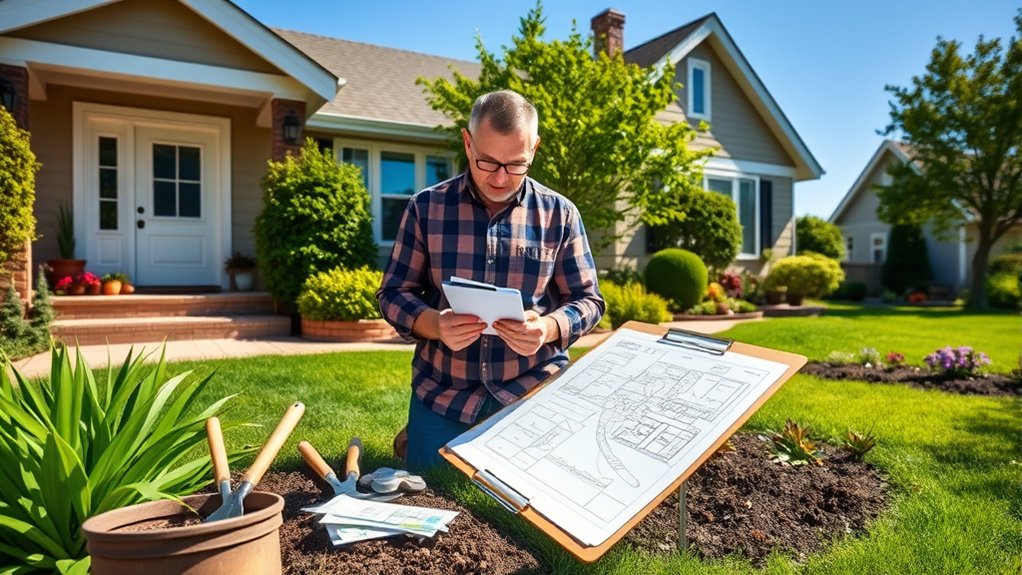
Before choosing plants or materials, decide what you want your front yard to do. Clear planning goals will guide each choice and help you avoid spending money on features that don’t serve your needs. Think about how you use the space now and what you’d like to improve.
You might want a welcoming entry, more privacy, a place to sit, or a tidy view from the street. Choose the priorities that matter most, and consider who needs to use the yard, including children, visitors, or anyone with mobility needs. If your goals compete, rank them so you can make practical trade-offs.
Next, investigate design concepts that support those priorities. A simple path can make the entrance easier to find, while layered plantings can soften the home’s appearance. You could also emphasize symmetry, create a relaxed cottage feel, or keep the look clean and minimal. Gather a few reference images, note what appeals to you, and shape a consistent direction before you begin.
Measure Your Yard and Check Its Conditions
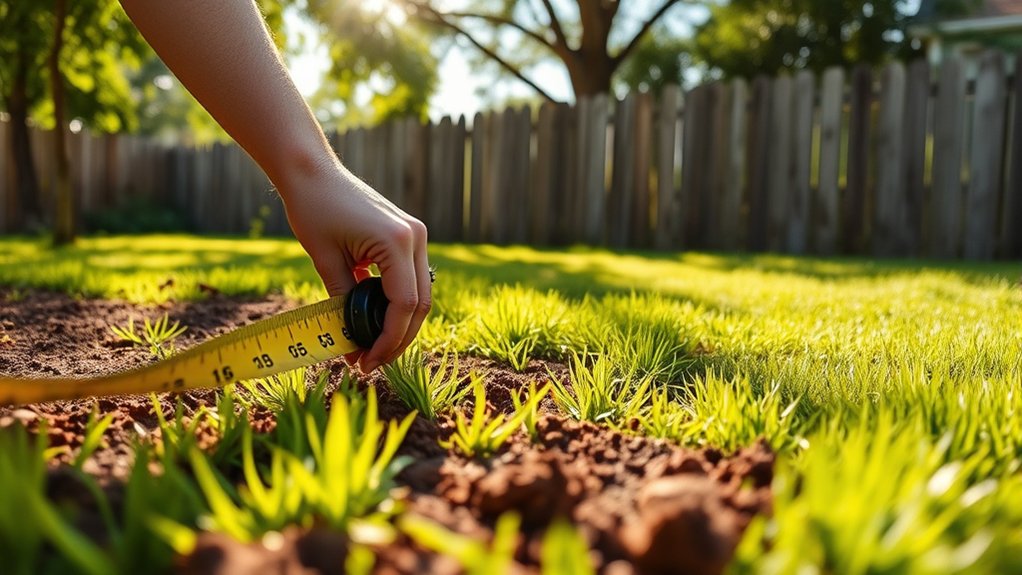
Measure your front yard’s length and width, and note where you have room for planting, paths, and other features. Then check how sunlight, drainage, soil, and slopes vary across the yard. These details will help you choose plants and designs that suit your yard’s conditions.
Measure the Yard
How much space do you have to work with? Before choosing plants or features, measure your yard so your front landscape fits the space. Sketch the area, noting the house, driveway, walkways, property lines, and existing structures.
Use a tape measure for straight sections, and record each dimension on your drawing. For curved edges, mark several points and estimate the curve between them. Measure the distance from the house to the sidewalk and from the front door to the street.
These details help you plan beds, paths, and planting areas without blocking access or crowding entrances. Check drainage by observing where water flows after rain and noting low spots. Add those locations to your sketch, too.
Keep your measurements handy as you compare layout options and estimate materials. Don’t rely on memory alone.
Assess Site Conditions
Start by measuring the yard and noting its key features, such as the house, driveway, paths, property lines, and existing structures. Then assess site conditions that will shape your planting and design choices.
Track how sunlight moves across the front yard, and note areas that stay shaded or receive intense afternoon sun. Check the soil’s texture and drainage by observing how quickly water soaks in after rain.
Look for slopes, low spots, and places where runoff collects. Notice wind exposure, nearby trees, and roots that may compete with new plants.
Record existing plants you want to keep, as well as signs of pests or disease. This landscape assessment helps you choose suitable materials and plants, plan practical improvements, and avoid costly mistakes before you begin landscaping.
Set a Budget for Your Front Yard Project
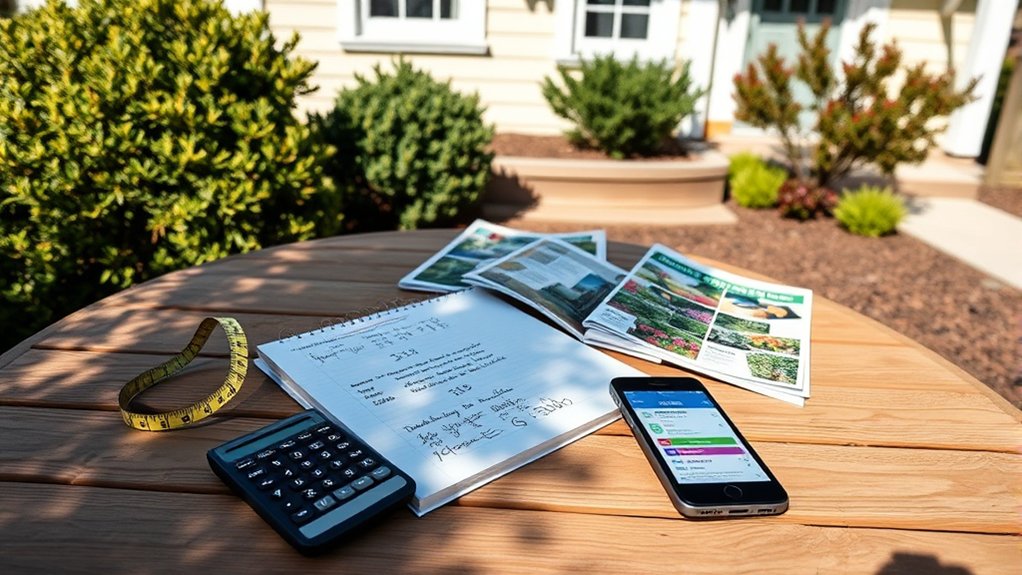
Estimate the total cost of your project, including plants, materials, and labor. Then prioritize the essential upgrades to make sure your budget covers what matters most. Finally, set aside some money for unexpected expenses.
Estimate Total Project Costs
Before choosing plants, paving, or lighting, decide what you can comfortably spend on your front yard. For accurate Outdoor budgeting, list each part of the project and estimate its cost. Include plants, soil, mulch, edging, walkways, lighting, irrigation, delivery, equipment rental, and labor.
Check local prices, compare supplier quotes, and measure the areas you plan to update so your quantities aren’t guesses. If you’ll hire a landscaper, request an itemized estimate that separates materials from labor.
Add a contingency of about 10 to 20 percent for price changes or unexpected site work, such as poor drainage or buried debris. Consider ongoing expenses, too: water, replacement plants, and drought tolerant pruning can affect maintenance costs.
Total the estimates, then adjust quantities or materials until the full project fits your budget.
Prioritize Essential Upgrades
Prioritize upgrades that improve safety, access, drainage, or curb appeal, and postpone decorative features if your budget is tight. Rank your planning priorities by how each improvement protects your home, solves a daily problem, or strengthens the front yard’s appearance. For example, repair uneven walkways before adding a decorative fountain, and correct poor drainage before planting new beds.
Next, compare each project’s cost with the amount you’ve set aside. Choose upgrades that deliver lasting value and fit your budget without forcing you to sacrifice essential work. Consider upkeep, too: a low-cost planting scheme may require frequent watering, pruning, or seasonal maintenance.
Select durable materials and plants suited to your climate so you can manage ongoing care. If you can’t afford every priority now, complete the most important improvements first and schedule less urgent enhancements for later.
Reserve a Contingency Fund
Set aside a contingency fund to cover surprises such as hidden drainage problems, damaged soil, or material price changes. When you set your front yard budget, reserve contingency money before you buy plants, paving, or lighting. A practical cushion of 10 to 20 percent of your total project cost can help you handle unexpected expenses without abandoning essential upgrades.
Estimate costs carefully, then keep this fund separate from your planned spending. You’ll know how much you can use for design choices and how much must stay available for problems. If you don’t need the full reserve, you can add a finishing touch or save the money. This fund safety gives you flexibility, protects your priorities, and helps you avoid costly delays when your landscape project uncovers an issue you couldn’t see at first.
Choose Plants for Your Climate and Sunlight
Your front yard’s sunlight, soil, and climate determine which plants will thrive. Check your region’s hardiness zone, then seek climate compatibility before buying.
Observe sun exposure throughout the day: a spot may shift from morning shade to hot afternoon sun. Match each plant to those conditions, and you’ll spend less time replacing stressed greenery.
| Yard condition | What to check | Planting tip |
|---|---|---|
| Full sun | Six or more sunny hours | Choose sun-loving varieties |
| Partial shade | Three to six sunny hours | Try adaptable perennials |
| Deep shade | Little direct sunlight | Select shade-tolerant plants |
| Dry soil | How quickly ground drains | Favor drought-tolerant choices |
Test your soil’s drainage and note whether it’s sandy, clay-heavy, or rich in organic matter. Choose plants suited to its moisture and texture, or amend the soil according to reliable local guidance.
Native species often handle regional weather and support local pollinators. Read mature size and care requirements on plant labels, too. When you group plants with similar needs, watering and upkeep become easier. Ask a local nursery or extension service about varieties that perform well in your area.
Design Front Yard Paths, Beds, and Focal Points
A clear layout makes your front yard easier to navigate and more inviting. Before choosing materials or plants, map how you’ll move from the sidewalk to your door, driveway, and outdoor spaces. Thoughtful design front yard paths, beds, and focal points as connected elements, not separate features.
Let your plant selection for climate guide the shapes and scale of each bed, while keeping sightlines open and maintenance manageable.
- Trace natural routes. Align paths with the way you already approach the house, and make turns comfortable and direct.
- Shape welcoming beds. Use broad, flowing edges to frame the entry and soften hard corners without blocking windows.
- Choose a focal point. Highlight your doorway, a distinctive tree, or a simple feature that draws attention toward the home.
- Balance the composition. Repeat forms or colors across the yard, vary plant heights, and leave breathing room around key features.
Step back from the street to check proportions. Adjust the layout until paths feel clear, beds look balanced, and the focal point stands out.
Prepare the Soil and Install Your Landscape
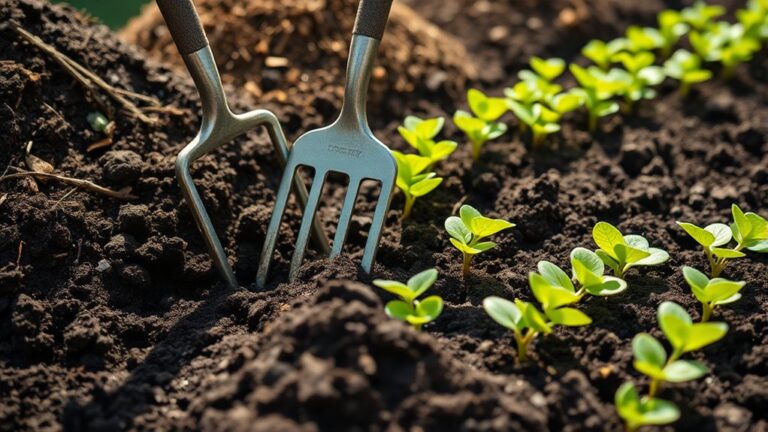
Once your layout is set, prepare the soil before planting so roots can establish and water can drain properly. Remove weeds, rocks, and construction debris, then loosen compacted ground.
For effective soil preparation, mix in compost based on your soil test. Avoid over-amending, which can harm plants. Check that beds slope gently away from your home.
| Task | What to do |
|---|---|
| Test soil | Check pH and texture |
| Clear beds | Remove weeds and debris |
| Improve soil | Blend in suitable compost |
| Set irrigation | Plan lines near root zones |
Before planting, plan your irrigation. Position hoses or drip lines so they reach each bed without crossing paths. Group plants with similar water needs, and confirm the system won’t spray siding or walkways.
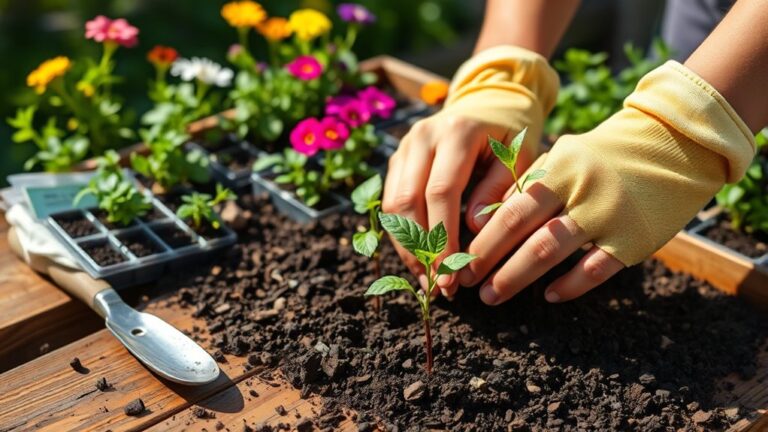
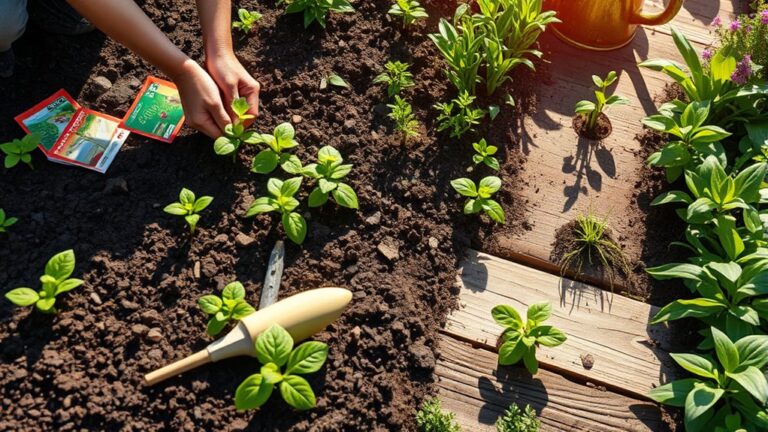
Install larger shrubs and trees first, following nursery depth guidance. Keep root flares visible. Add smaller plants next, spacing them for mature size and airflow.
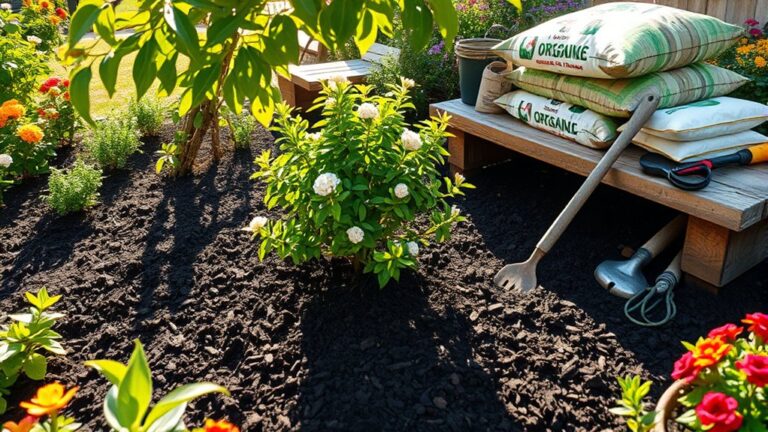
Backfill gently, firm soil around roots, and water thoroughly to settle the planting area. Finish with a light mulch layer, keeping it clear of stems and trunks.
Maintain Your Front Yard Landscaping Year-Round
After planting, keep your front yard healthy with regular care that changes with the seasons. Build maintenance routines around your plants’ needs, local weather, and available time. A few consistent tasks can protect your investment, keep paths clear, and make your home welcoming throughout the year.
Consistent, season-aware care keeps your front yard healthy, your paths clear, and your home welcoming year-round.
- Spring: Remove winter debris, prune damaged growth, refresh mulch, and check irrigation. Add compost where soil needs a boost, and watch for emerging weeds before they spread.
- Summer: Water deeply during dry spells, preferably in the morning. Deadhead flowers, mow at the right height, and inspect leaves for pests or disease.
- Fall: Rake leaves, trim perennials, and plant bulbs or hardy shrubs. Use seasonal color planning to choose blooms and foliage that carry interest into cooler months.
- Winter: Protect vulnerable plants with mulch or breathable covers. Clear snow from walkways carefully, avoid piling it on shrubs, and note areas that need improvement.
Adjust each task to your climate, and don’t overwater or prune blindly. Regular observation helps you catch small problems early and keep your landscape balanced.
Frequently Asked Questions
Do I Need a Permit for Front Yard Landscaping?
You might need a permit for front yard landscaping, depending on your local rules and the work you plan. You usually won’t need one for planting flowers, shrubs, or grass, but grading, retaining walls, fences, irrigation, and changes near sidewalks or utilities may require approval.
Check permit considerations and zoning compliance with your city or county before starting. Contact your local planning or building department to confirm requirements and avoid fines or costly changes.
How Can I Find Underground Utility Lines Before Digging?
Before you dig, call 811 to find utilities; in the U.S., that free service coordinates utility marking in every state. Give at least two or three business days’ notice, or follow your state’s deadline, and wait for lines to be marked before breaking ground.
Check whether your project also needs dig permits from your local government. Treat markings as approximate, hand-dig carefully near them, and contact utility owners if anything seems unclear or unmarked.
What Landscaping Changes Can Improve My Home’s Curb Appeal?
You can boost your home’s curb appeal with tidy edges, fresh mulch, colorful flowers, and a welcoming walkway. Try curb appeal ideas like repainting your front door, adding attractive lighting, and placing matching planters near the entrance.
Use planting strategies that suit your climate and sunlight, and layer shrubs, perennials, and seasonal blooms for year-round interest. Keep plants trimmed, clear clutter, and choose improvements that complement your home’s style and won’t overwhelm its facade.
How Can I Landscape a Front Yard on a Slope?
You can landscape a sloped front yard by controlling erosion, guiding water, and creating usable planting areas, because gravity already has enough hobbies. Start with landscape drainage: direct runoff away from your home using a swale, drain, or gravel channel.
Add slope terracing with retaining walls to form level beds, then plant deep-rooted ground covers, shrubs, or native grasses to stabilize soil. Choose sturdy, low-maintenance plants, and use steps or paths for safe access.
Should I Hire a Professional Landscaper or Do the Work Myself?
Choose professional vs. DIY based on your project’s complexity, budget, and available time. You can handle simple planting, mulching, and edging yourself, but hire a professional for steep slopes, drainage problems, retaining walls, or major grading.
Compare cost vs. value: professional help costs more upfront, yet can prevent expensive mistakes and improve safety. If you’re unsure, ask a landscaper for an estimate, then decide which tasks you can confidently complete yourself.
Conclusion
With a clear plan, careful measurements, and a sensible budget, you’re ready to shape a welcoming front yard. Choose climate-friendly plants, then arrange paths, beds, and focal points to create a polished, personal look.
Prepare the soil, plant with care, and keep up with seasonal maintenance. As your garden grows, you’ll enjoy a vibrant view, a graceful welcome, and a front yard that feels like home. Follow these 7 steps to landscape the front of the house, one thoughtful step at a time.