How to Turn Lawn Into Garden in 3 Easy Steps
Starting a garden can feel overwhelming when you’re not sure where to begin, and you’re not alone—many people struggle to turn a patch of lawn into a thriving space. The right tools and supplies can make the process easier. Here’s how to turn lawn into garden in three easy steps.
First, choose a sunny, accessible spot, check how light changes during the day, and sketch and mark a layout with clear paths.
Next, remove the grass or smother it with cardboard and mulch, then loosen the top few inches of soil. Use a soil test to guide compost and other amendments.
Finally, plant suitable varieties, water them well, and mulch to conserve moisture. You’ll find helpful details for each step below.
Key Takeaways
- Choose a sunny, accessible site, observe its light throughout the day, and sketch a garden layout with clear paths.
- Mark the bed, then remove the sod or cover grass with cardboard and mulch for several weeks.
- Test the soil, mix in finished compost as needed, check drainage, and plan irrigation before planting.
- Select plants suited to your climate, sunlight, and soil; group them by similar care needs.
- Plant at recommended depths and spacing, then water consistently and mulch to conserve moisture and suppress weeds.
Plan Your Lawn-to-Garden Site
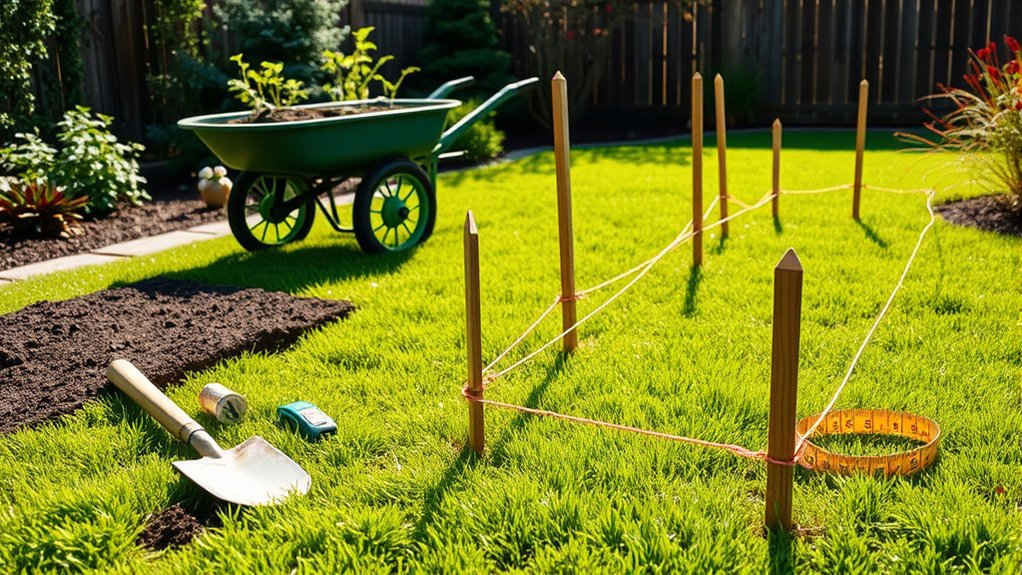
Choose a sunny, accessible spot for your garden, and sketch your layout before you start digging.
Before you dig, decide what you want to grow and where it’ll thrive. Think about how you’ll use the garden: fresh vegetables, fragrant herbs, colorful flowers, or a mix. Your goal will guide the size, shape, and location of the new beds.
Watch the lawn at different times of day. Note where sunlight falls, how long each area stays bright, and where shade gathers. Check nearby trees, fences, and buildings, since they can affect light and airflow. Choose a spot that suits the plants you want, rather than forcing plants into a poor location.
Consider access, too. Place the garden where you can reach it easily with a hose, tools, and a harvest basket. Keep paths and gates clear, and leave enough room to move between beds. If you’re weighing idea one against idea two, sketch both layouts and compare their light, convenience, and available space. Mark your preferred outline before you begin the next step.
Remove the Grass and Prepare the Soil

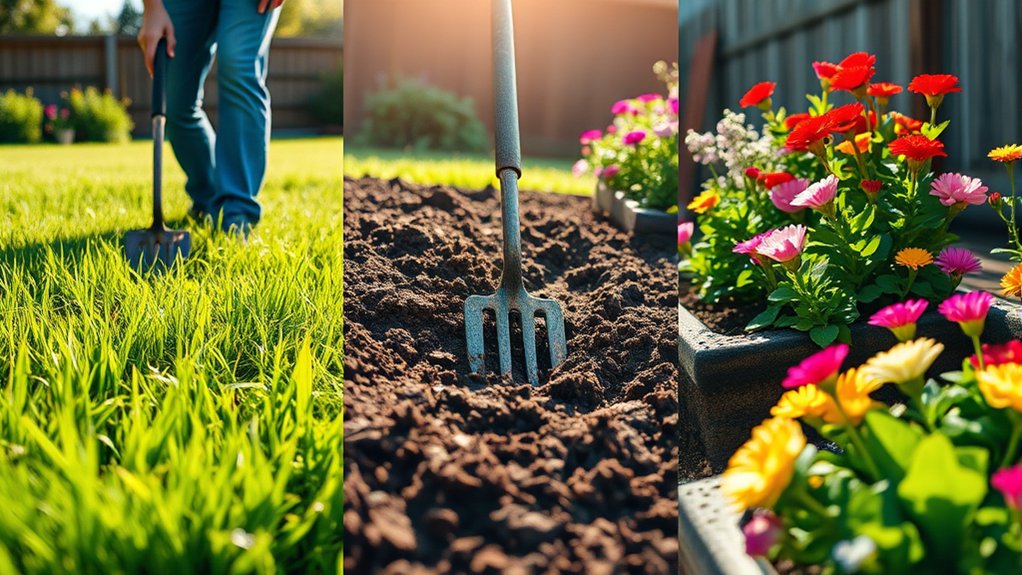
Once you’ve marked the garden’s outline, remove the grass so your new beds have room to grow. Cut sod into strips with a spade, then lift it away. For a larger area, smother grass with cardboard and a layer of mulch; allow several weeks for it to break down. Either method supports weed control without relying on chemicals.
| Task | What to do |
|---|---|
| Clear grass | Lift sod or smother it |
| Test soil | Check pH and nutrients |
| Build soil | Add compost |
After clearing, loosen the top few inches without turning over deep soil layers. Arrange soil testing through a local extension service, then use the results to guide amendments.
Mix in finished compost to improve structure and fertility. Keep mulching in mind as a way to protect bare soil, but don’t cover it before you finish preparing the bed.
Check drainage and plan your irrigation setup around the site. Your plant selection can wait until the soil is ready.
Plant Your Garden and Care for It
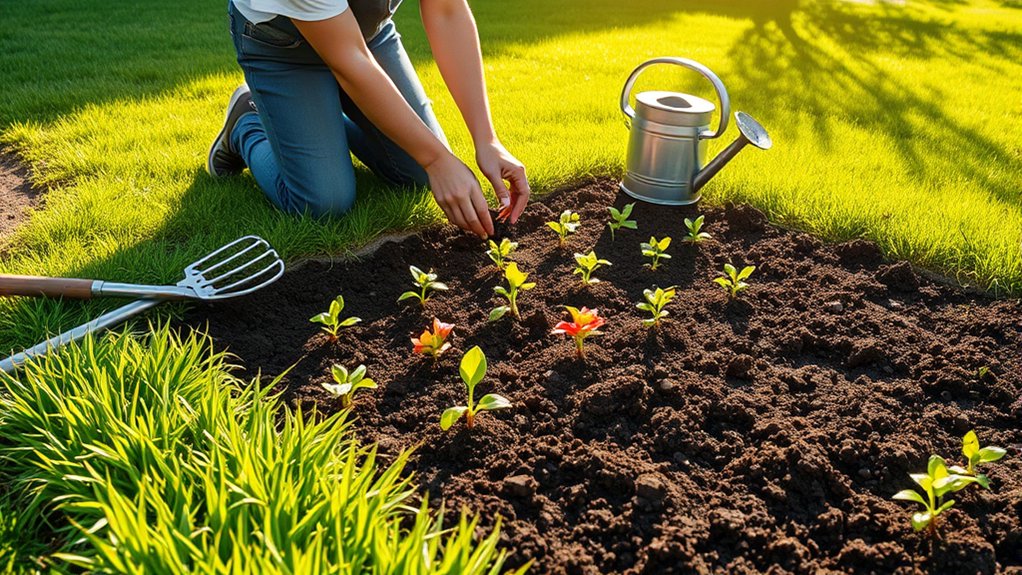
With the bed ready, choose plants suited to your climate, sunlight, and soil, then space and plant them according to their labels. Consider mature size, bloom time, and color when planning your layout; these design considerations help you create a garden that looks balanced and gives each plant room to thrive.
Group plants with similar water and light needs to simplify care.
Good soil preparation gives roots a strong start, but handle seedlings gently. Water them before planting, loosen crowded roots, and set each plant at the depth recommended on its label.
Firm soil around the roots, then water thoroughly to settle the bed.
Keep the soil consistently moist while plants establish, checking it often during hot or dry weather. Add mulch to conserve moisture, suppress weeds, and moderate soil temperature, keeping it away from stems.
Remove weeds promptly, inspect leaves for pests or disease, and prune or stake plants as needed. As your garden grows, adjust watering to rainfall and plant needs.
Frequently Asked Questions
Can I Turn a Lawn Into a Garden Without Digging?
Yes, you can turn a lawn into a garden without digging. Try no dig methods: mow the grass short, cover it with overlapping cardboard, then add compost and mulch on top. The layers block light and gradually smother the turf, creating a planting area.
For faster results, investigate raised bed ideas and place beds over cardboard-covered grass. Keep the soil moist, and wait several weeks before planting so the grass beneath breaks down.
Do I Need Permission to Replace My Lawn With a Garden?
You usually don’t need permission to replace your lawn with a garden, but check local rules first, like checking the weather before a journey. Your homeowners’ association, lease, or city may restrict plant height, water use, landscaping, or changes near sidewalks.
If you’re planning fence installation, confirm property lines and permit requirements. Don’t let a noisy neighbor’s complaint be your only guide. Ask your local planning office or HOA before you start, and keep any approvals in writing.
Will Removing My Lawn Affect My Home’s Resale Value?
Removing lawn can have a positive or negative resale impact, depending on your local market and how you design the space. You may attract buyers with a tidy, low-maintenance garden, but an overgrown or highly personalized yard could deter them.
Before converting, check conversion costs and rebate eligibility, then choose attractive, practical plants and clear paths. Keep the garden well maintained, and consider preserving some lawn if buyers in your area expect traditional grass.
How Can I Keep Pets From Damaging a New Garden?
Protect your new garden with pet safe fencing that blocks access without creating hazards. Choose sturdy, secure panels, and check for gaps your pets could squeeze through.
You can also use cat deterrents, such as motion-activated sprinklers or textured mulch, to discourage digging and lounging. Give pets a designated play area, and train them to stay out of planted beds.
Avoid toxic plants and chemicals, and supervise pets until they learn the garden’s boundaries.
Are Lawn-To-Garden Conversion Costs Eligible for Rebates?
Yes, your lawn conversion costs may qualify for rebates, but eligibility depends on your location and the program’s rules. Many local water agencies offer incentives for replacing thirsty turf with drought-tolerant plants or other water-saving landscaping.
Check your utility, city, or regional water district’s website before starting. You may need to apply in advance, meet design requirements, use approved plants, and submit photos or receipts to receive payment.
Conclusion
You’ve planned your site, cleared the grass, and prepared the soil—now it’s time to plant. Choose plants suited to your sunlight and climate, water them regularly, and add mulch to help retain moisture.
Keep an eye out for weeds as your garden grows, and adjust your care as needed. You don’t need a perfect plot to begin; you just need a little patience.
Soon, your lawn will bloom like a medieval tapestry, one thriving plant at a time. With these simple steps, you’ll know how to turn lawn into garden and enjoy the results.