How to Graden in 5 Easy Steps for Beginners
Starting a garden can feel overwhelming when you’re unsure what to plant or how to get started. You’re not alone—many beginners struggle to turn a small space into a thriving garden. This guide to how to garden in 5 easy steps for beginners will help you get growing with confidence.
Start by choosing beginner-friendly herbs, flowers, or vegetables that fit your space and schedule, then pick a convenient spot. Check how much sun it gets and test the soil so you can match plants to conditions. Clear weeds and debris, loosen the soil, or fill clean containers with fresh potting mix. Sow seeds at the packet’s recommended depth and spacing. Water gently, pull weeds, and check plants regularly; the steps below will help you grow with confidence.
Key Takeaways
- Choose beginner-friendly plants suited to your space, schedule, and garden spot.
- Check sunlight and soil conditions, then select plants that match them.
- Clear and loosen a garden bed, or prepare containers with drainage holes and fresh potting mix.
- Plant seeds at the depth and spacing listed on their packets, then label them.
- Water gently, pull weeds, and check plants regularly for pests or other problems.
Choose Plants and a Garden Spot
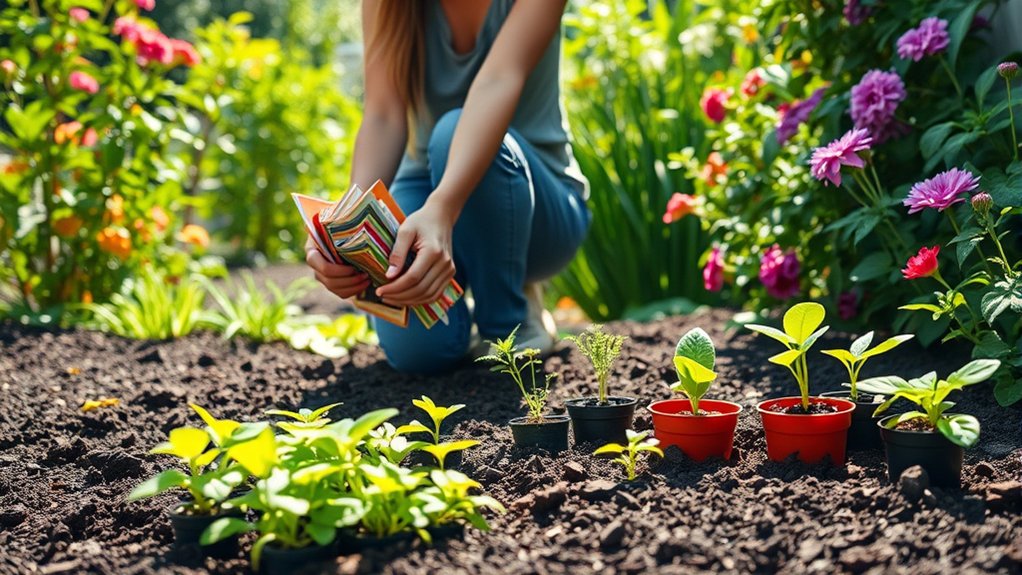
The right plants and location make gardening easier from the start. Begin by choosing what you’d enjoy growing, such as herbs for cooking, flowers for color, or vegetables for fresh meals. Pick beginner-friendly varieties that suit your schedule; compact plants and dependable growers can make your first season less demanding.
Check each plant’s mature size, too, so you can give it room without crowding nearby paths or containers.
Next, choose a spot that’s convenient to reach and easy to maintain. You’re more likely to water, harvest, and notice problems when your garden sits near a doorway or along a route you use often.
Consider plant companions that grow well together or attract helpful pollinators. Also think about scent considerations: fragrant herbs or flowers can make a sitting area pleasant, while strong aromas may not suit every location.
Keep your garden close enough to enjoy, but leave space to move around and tend each plant comfortably. Don’t overfill your first garden; you can add more next season.
Check Sunlight and Soil for Your Plants
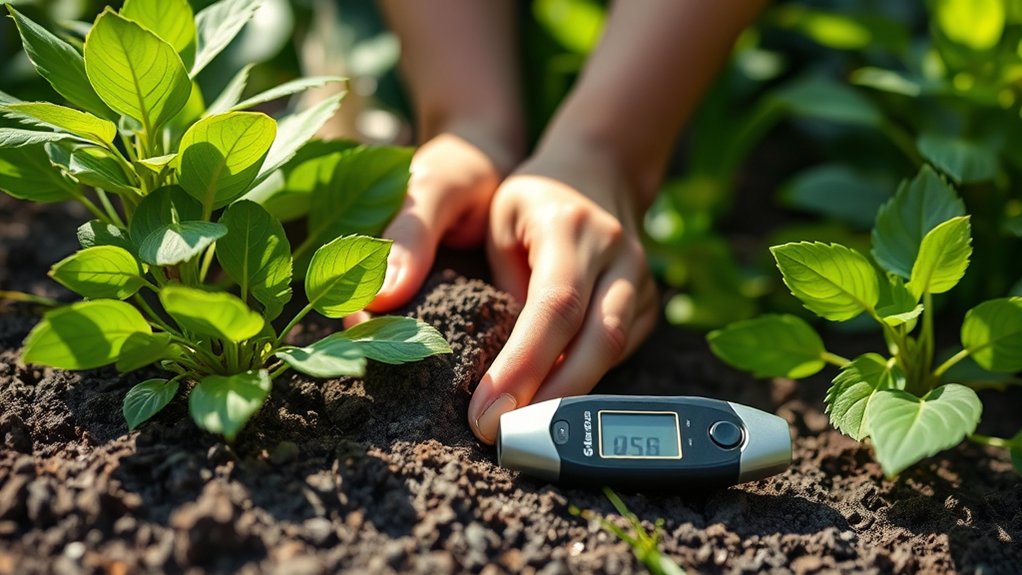
Before planting, check how much sunlight your chosen spot gets and what kind your plants need. Watch the area at different times of day, since buildings and trees can cast changing shadows. Most vegetables and many flowers thrive with six or more hours of direct sun, while leafy greens and some ornamentals tolerate partial shade. These sunlight considerations help you match each plant to a suitable location.
Next, learn what soil your plants prefer. Check the package or a reliable gardening guide for preferred drainage, texture, and pH. You can assess soil testing options through a local extension service or use a home kit to measure pH and key nutrients.
Follow the test instructions carefully, then compare the results with your plants’ needs. Soil that drains poorly or has an unsuitable pH can limit growth, even when light is right. Note any concerns so you can choose plants that suit your conditions or address them later. Don’t guess when a simple test can guide you.
Prepare a Garden Bed or Containers
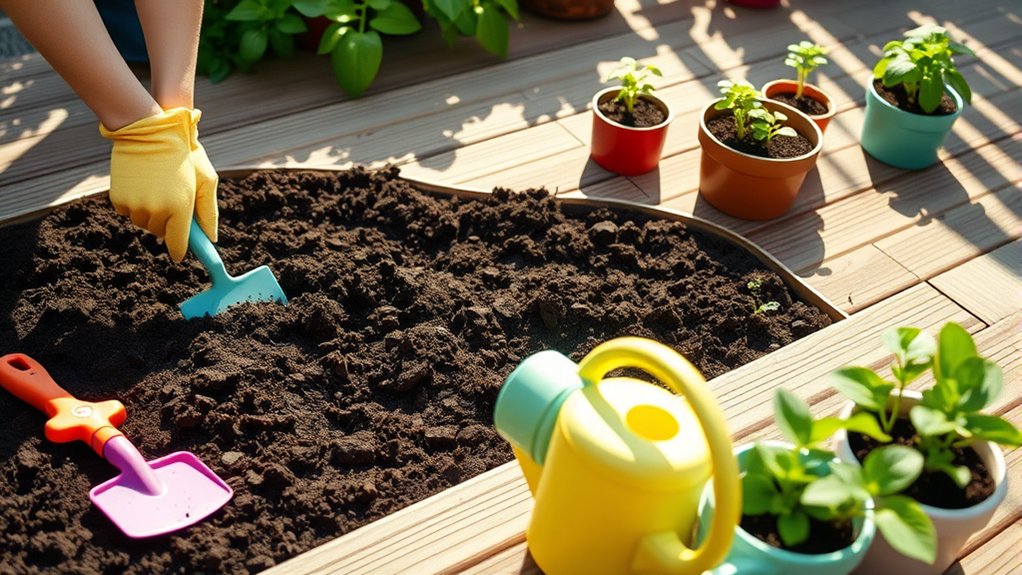
Once you’ve chosen a spot, prepare a garden bed or containers to give your plants room to grow. Clear weeds, stones, and debris from the area, then loosen the top several inches of soil with a garden fork.
If you’re unsure what your soil needs, use a soil testing kit to check its pH and nutrient levels. Add compost or other amendments based on the results, and rake the surface smooth.
For containers, choose sturdy pots with drainage holes. Consider container sizing carefully: larger pots hold moisture longer and give roots more space, while smaller ones suit compact plants.
Clean reused containers before filling them with fresh potting mix.
Use this quick checklist:
- Remove weeds and debris from the bed.
- Improve garden soil with compost as needed.
- Select clean containers with drainage holes and enough room for your plants.
Set up your prepared space where you can reach it easily for watering and routine care.
Plant Seeds at the Right Depth
How deep should you plant each seed? Check the packet first: it usually lists the ideal seed depth and spacing for that variety. As a simple guide, plant a seed about twice as deep as its width. Tiny seeds often need light to germinate, so press them onto the soil surface instead of covering them. Larger seeds generally need a deeper pocket.
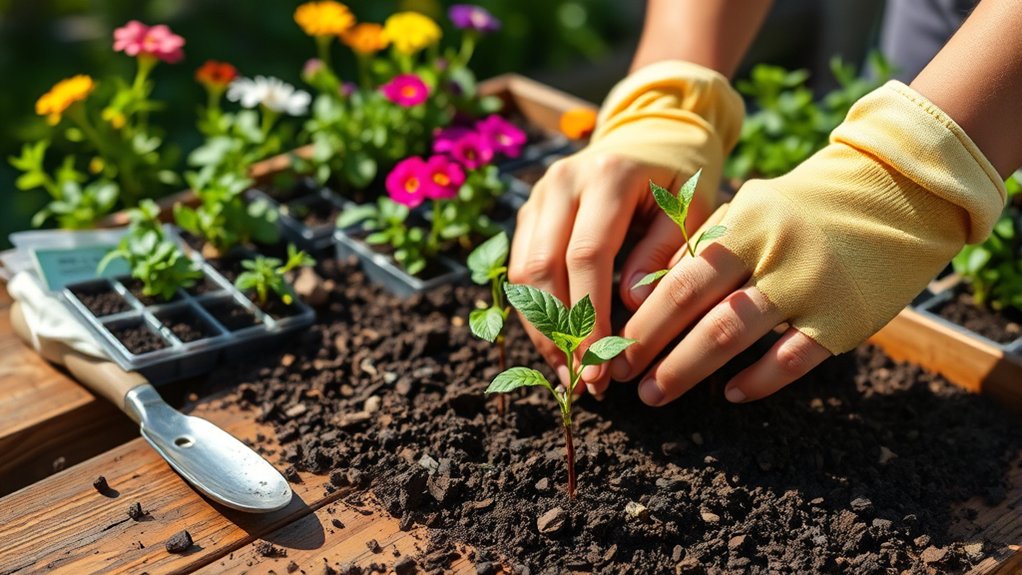
Use your finger, a pencil, or a dibber to make evenly sized holes. Drop in the recommended number of seeds, then cover them gently with loose soil. Don’t press hard; compacted soil can make it difficult for young shoots to emerge. If you’re planting several kinds, label each row or container so you can identify what you’ve sown.
Follow the packet’s germination timing to estimate when seedlings should appear. Mark the planting date on your calendar, and don’t assume a seed has failed before its expected emergence window has passed.
Water, Weed, and Care for Your Garden
As seedlings emerge, keep the soil evenly moist but not waterlogged. Check the soil with your finger; if the top inch feels dry, water slowly at the base of each plant. Early morning watering reduces evaporation and gives leaves time to dry, helping prevent disease. Good water management also means adjusting for rainfall, heat, and your soil type.
- Water deeply: Encourage strong roots by soaking the soil rather than sprinkling it lightly. Use a watering can or hose with a gentle flow to avoid washing seeds or soil away.
- Control weeds: Pull weeds while they’re small, loosening roots carefully so you don’t disturb nearby seedlings. A thin layer of mulch can suppress new growth and conserve moisture.
- Check plants: Look for drooping leaves, discoloration, pests, or damage every few days. Remove unhealthy growth with clean tools, support tall stems, and harvest ripe produce promptly. Consistent attention helps you spot problems early and keeps your garden productive throughout the growing season.
Frequently Asked Questions
When Is the Best Time of Year to Start a Garden?
The best time to start a garden is usually after your area’s last spring frost, when the soil has warmed. Check local seasonal climate cues, since your best planting window depends on what you’re growing and where you live.
Begin soil preparation a few weeks early by clearing debris and adding compost. For cool-season crops, you can plant sooner; for warm-season plants, wait for a frost free start and reliably mild nights.
What Gardening Tools Should Beginners Buy First?
Start with gardening tool basics: buy a sturdy hand trowel, pruning shears, gardening gloves, a watering can or hose, and a hand fork. These essentials help you plant, trim, protect your hands, water, and loosen soil without cluttering your shed.
Choose comfortable, durable tools that fit your hands, and look for budget friendly purchases at local garden centers or secondhand shops. You can add a spade, rake, or wheelbarrow later, as your garden grows.
How Much Does It Typically Cost to Start a Garden?
You can start a small garden for about $50–$150, like assembling a simple picnic rather than planning a feast. Your cost breakdown may include $10–$30 for seeds, $20–$60 for soil and compost, and $20–$60 for basic tools or containers.
Reuse pots and borrow tools to spend less. Consider seed purchase timing: buy seeds early in the season for the best selection, or choose discounted packets if you’re flexible about varieties.
How Can I Keep Pests Away Without Using Harsh Chemicals?
You can keep pests away by making your garden less inviting and encouraging helpful insects. Choose pest-resistant plants suited to your climate, rotate crops, and remove damaged leaves or ripe produce promptly.
Use natural deterrents such as handpicking, floating row covers, and barriers around vulnerable seedlings. Plant herbs like basil or rosemary near susceptible crops, and attract ladybugs with flowering plants.
Check leaves regularly so you can spot problems early and respond before pests spread.
What Should I Do With My Garden at the End of the Growing Season?
At the end of the growing season, harvest remaining crops, pull spent annuals, and remove diseased plants so pests and pathogens don’t overwinter. Add healthy plant debris to your compost, but discard anything infected.
For effective fall cleanup, clear weeds and fallen fruit, then mulch bare beds with leaves or straw. Protect perennials as needed, and test your soil before adding compost or amendments. These steps support soil health and prepare your garden for spring.
Conclusion
Gardening doesn’t have to feel complicated. Choose plants you love, find a sunny spot, prepare the soil, and plant each seed at the right depth.
Then water regularly, pull weeds, and watch your garden grow. You won’t see results overnight, but small, steady efforts make a big difference.
Start with one bed or a few containers, and learn as you go. You don’t need a perfect garden to enjoy the rewards. Just begin, and you’ll discover how to garden in 5 easy steps for beginners.