How to Stake a Hydrangea in 3 Easy Steps
Drooping hydrangea stems can spoil the look of your garden, and it’s frustrating when your blooms won’t stay upright. You’re not alone—many gardeners struggle to support their plants without damaging them. The right hydrangea stakes can make the job easier.
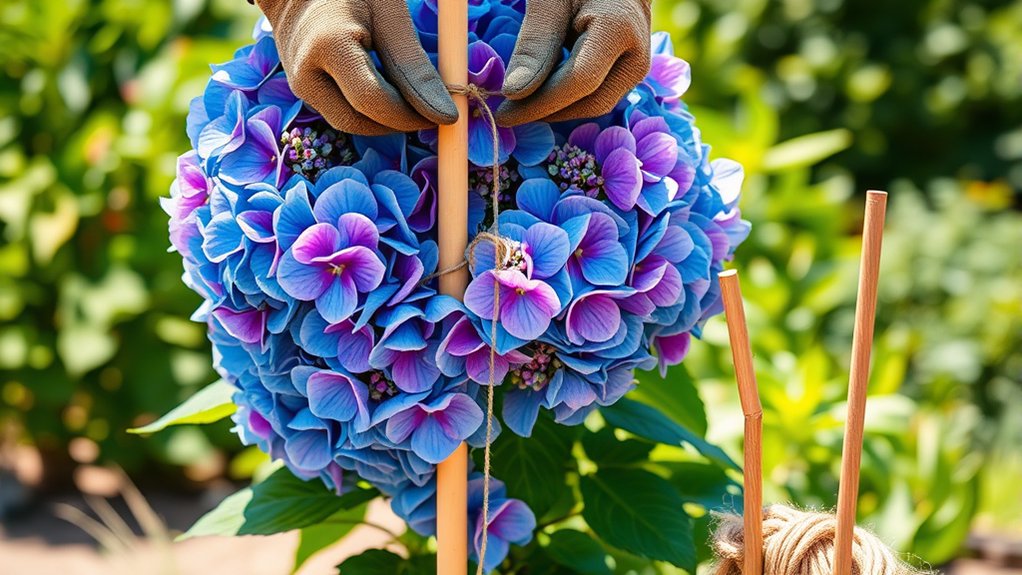
To stake a hydrangea in three easy steps, first choose sturdy, slim bamboo, metal, or rot-resistant wooden stakes. Place them upright in firm soil just outside the root zone, spaced around the plant near leaning stems.
Next, loosely tie each drooping stem to its nearest stake with soft ties, using a figure eight that leaves room to move. Finally, check ties weekly or biweekly, loosening or repositioning them as stems grow. A few details can help your hydrangea stay supported.
Key Takeaways
- Choose stakes: Select slim, sturdy bamboo, metal, or rot-resistant wood stakes suited to the plant’s size and garden conditions.
- Position them: Identify leaning or bloom-heavy stems, then place stakes around the plant, just outside the root zone.
- Install securely: Push stakes into firm soil without crowding roots or damaging stems, and check that each stands upright.
- Tie drooping stems: Use soft ties in a loose figure eight, fastening below a leaf joint; add a higher tie for heavy flower heads.
- Check and adjust: Inspect ties weekly or biweekly during fast growth, loosening or repositioning them as stems grow or conditions change.
Choose Stakes and Place Them Around Your Hydrangea
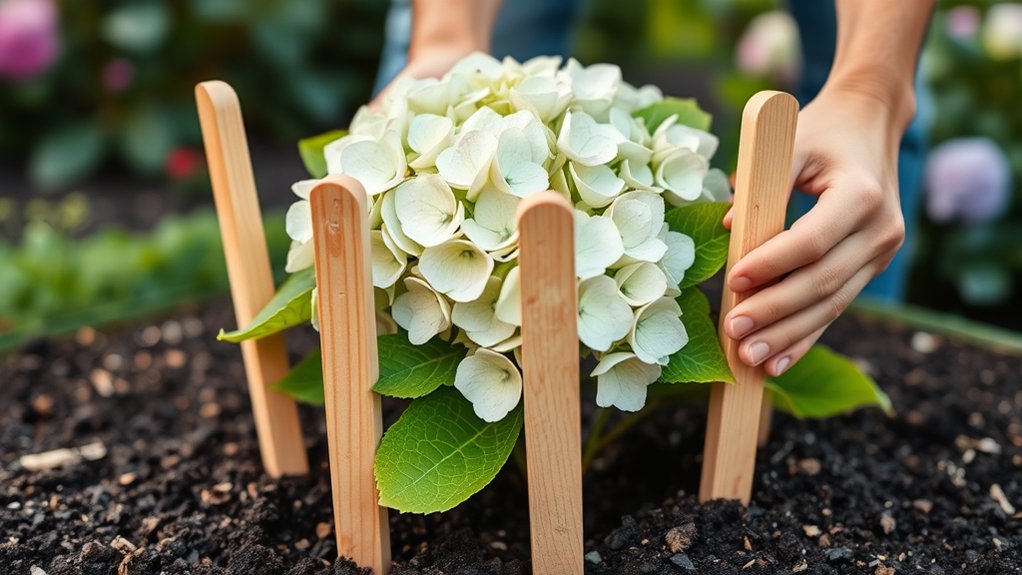
Choose stakes that are sturdy enough to support your hydrangea but slim enough to blend into the plant. Select stake materials suited to your garden and the plant’s size. Bamboo stakes are lightweight and discreet, while metal stakes offer lasting strength. Wooden stakes can work well, too, but choose rot-resistant wood if you expect to leave them in place. Make sure each stake reaches far enough into the soil to stay steady without crowding the roots.
Use a placement strategy that supports the plant evenly and keeps stakes out of sight. Walk around your hydrangea and identify the stems that lean most or carry the heaviest blooms. Position stakes just outside the root zone, spacing them around the plant rather than clustering them on one side. For a small shrub, three or four stakes may be enough; a larger hydrangea might need more. Push each stake into firm soil, taking care not to damage roots or nearby stems. Check that the stakes stand upright and leave room for growth.
Tie Drooping Hydrangea Stems Loosely to the Stakes
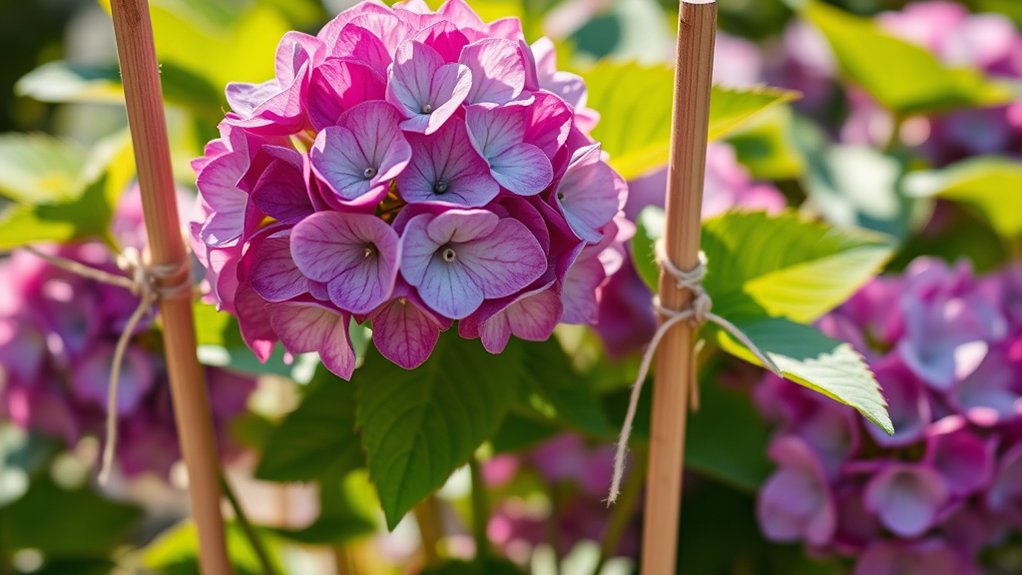
Once the stakes are in place, tie each drooping stem to its nearest stake with soft garden twine, plant ties, or strips of fabric. Make a loose loop around the stem, then secure the other end to the stake. Leave enough room for the stem to move gently in the breeze; a tight knot can pinch the plant, damage its bark, or restrict growth.
Position each tie beneath a leaf joint or sturdy cluster, where it won’t slide down the stem. If a flower head weighs down a branch, add a second loose tie higher up to share the load. Keep the stems’ support gentle and distributed rather than pulling every branch upright at once. Your hydrangea should look naturally supported, not rigid or strained.
Choose soft, weather-resistant material, and avoid thin wire or string that could cut into stems. For helpful watering tips, water at the base to keep foliage dry and prevent wet ties from rubbing against tender growth.
Check Ties and Adjust as Stems Grow
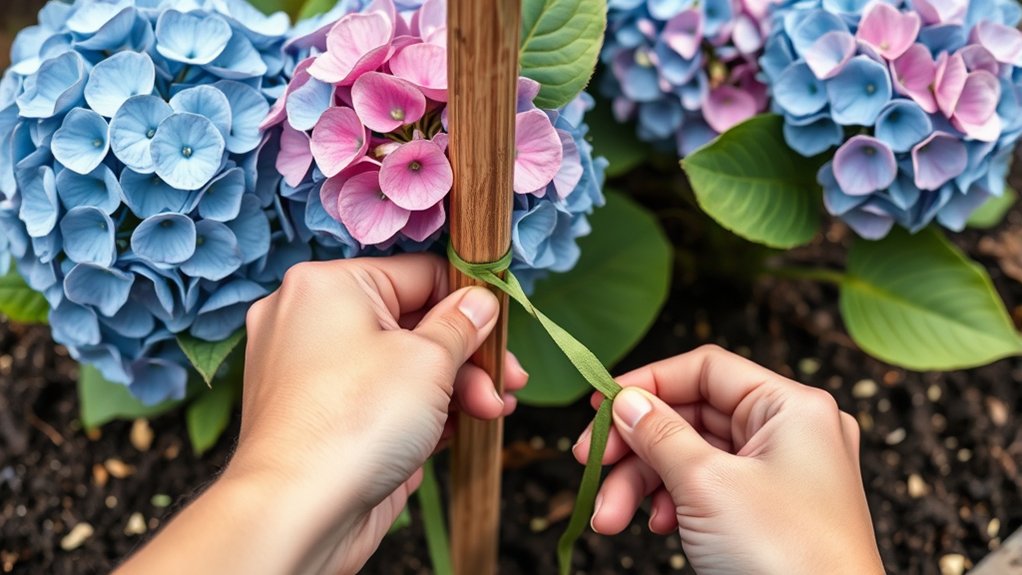
Check the ties every week or two, especially during periods of fast growth. Look for stems pressing against the ties, rubbing on stakes, or leaning despite their support. Hydrangeas can thicken quickly, so a tie that fit last week may now pinch. Loosen it or move it higher, leaving enough room for the stem to expand without slipping free.
Use soft, flexible ties, and fasten them in a figure eight: one loop around the stake and one around the stem. This keeps the plant from scraping against the support. Add another tie if a tall stem still sways, but don’t pull it into an unnatural position. Your goal is gentle support, not a rigid shape.
As blooms fade, remove discarded flowers if you prefer a tidier display. Check ties again after pruning or heavy rain, and adjust the stakes if needed. With regular attention, your hydrangea stays upright and adds healthy color to your garden decor.
Frequently Asked Questions
When Is the Best Time of Year to Stake a Hydrangea?
The best time to stake a hydrangea is early spring, just as new growth begins, before heavy blooms make branches droop. You’ll also get good results staking timing-wise in late winter, while the shrub is dormant and you can see its structure clearly. If your plant starts leaning later, stake it then rather than waiting. Check ties regularly, and loosen or remove them as stems strengthen to prevent damage and support healthy growth.
Which Hydrangea Varieties Are Most Likely to Need Staking?
Big blooms, bending branches: you’ll most often need to stake hydrangeas with large, heavy flower heads, especially ‘Annabelle’ smooth hydrangeas and ‘Incrediball’ cultivars. Their blossoms can weigh down slender stems, particularly after rain.
Peegee and other panicle hydrangeas may also need support when their flower clusters grow oversized or plants face wind. Check your shrub’s staking needs as buds develop, and add discreet bloom support before stems begin to flop.
Can Pruning Prevent Hydrangeas From Flopping?
Yes, thoughtful pruning can reduce flopping, but it won’t prevent it in every hydrangea. You’ll get sturdier growth by removing weak, crowded stems and avoiding excessive cuts that encourage soft, tall shoots.
Know your variety: bigleaf and oakleaf hydrangeas bloom on old wood, while panicle and smooth types bloom on new wood. Don’t fall for pruning myths or staking myths; pruning helps, but heavy blooms, rain, and wind may still require support.
How Can I Strengthen Hydrangea Stems Naturally?
Feed your hydrangea gently, not heavily; water it deeply, not constantly. To encourage stronger stems naturally, give the plant morning sun and afternoon shade, and keep soil evenly moist with compost or mulch. Avoid excess nitrogen, which can spur soft, floppy growth.
These strengthening techniques work best alongside thoughtful pruning after flowering. If heavy blooms still bend stems, use supporting stakes discreetly, tying stems loosely so they stay upright without restricting growth or damaging bark.
What Should I Do if a Hydrangea Stem Has Already Broken?
If a hydrangea stem has broken, trim it cleanly just below the damaged area with sanitized pruners. You can place a healthy flowering section in water, but don’t try to reattach the stem; it won’t heal.
Check nearby stems for damage and adjust supports if staking failure caused the break. For ongoing stem care, water consistently, avoid excess fertilizer, and tie remaining stems loosely to sturdy stakes. Watch for fresh growth and remove dead material.
Conclusion
With the right stakes in place, your hydrangea can stand tall without losing its natural shape. Tie drooping stems loosely, check the ties often, and adjust them as new growth appears.
You’ll give your plant the support it needs while leaving room to move, bloom, and thrive. Keep an eye on its progress, loosen anything that feels tight, and enjoy a fuller, healthier-looking hydrangea, one simple step at a time. Staking a hydrangea helps it stay supported as it grows.