5 Tips to Get Butterflies to Grow in Your Garden
Attracting butterflies can be harder than it looks—especially when your garden has plenty of flowers but few visitors. You’re not alone; many gardeners struggle to create a space that supports butterflies through every stage of their life cycle. These five tips to get butterflies to grow in your garden can help you make it a more welcoming place.
To get more butterflies in your garden, plant native nectar flowers that suit your region and bloom from spring through fall. Add host plants for local caterpillars, including native milkweed if you want to support monarchs.
Avoid pesticides, and manage pests by hand when practical. Give flowers several hours of sunlight, plus a shallow dish with damp sand for sipping.
Use plants or a fence to create wind-sheltered spots. Keep these tips in mind as you shape a butterfly-friendly garden.
Key Takeaways
- Plant native nectar flowers that bloom from spring through fall, grouping each variety in visible patches.
- Choose diverse flower shapes and colors, then observe which blooms attract the most butterflies.
- Grow native host plants, such as region-appropriate milkweed for monarchs, where caterpillars can feed.
- Avoid pesticides; handpick pests when practical and remove only heavily infested plant parts.
- Provide sunny, sheltered areas and shallow water with damp sand, refreshing it regularly.
Plant Native Nectar Flowers for Butterflies
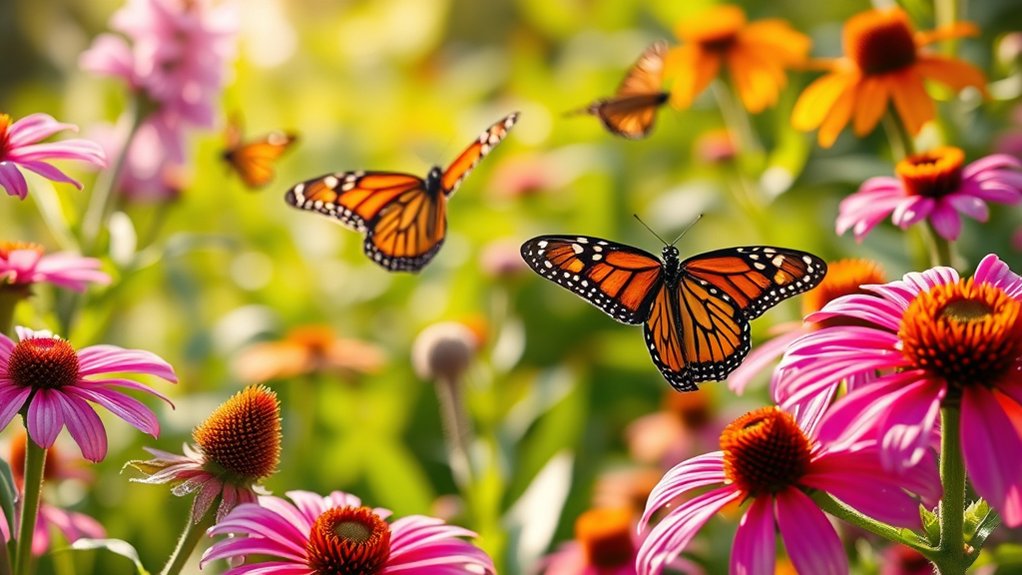
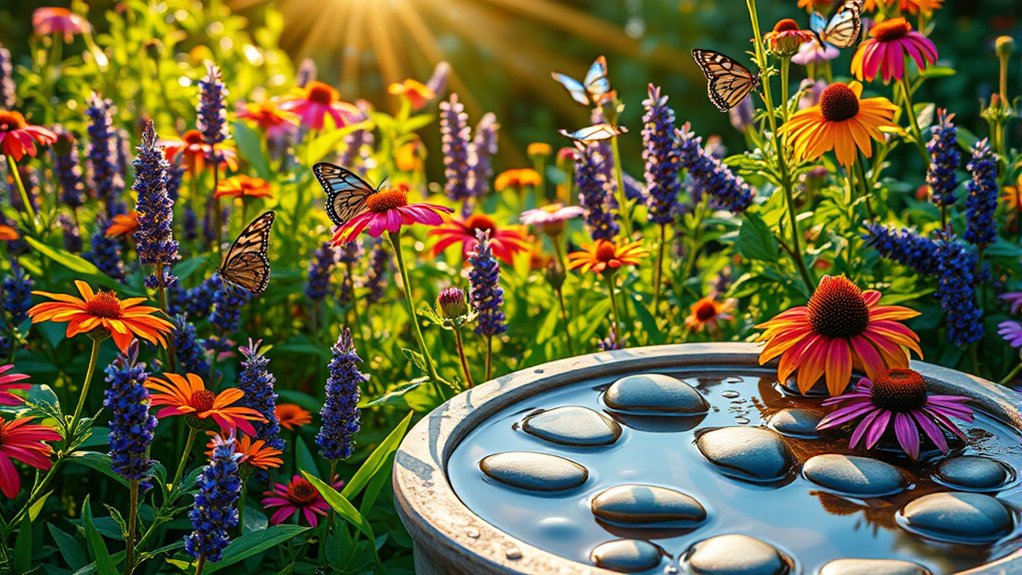
Want more butterflies in your garden? Plant native nectar flowers that give adult butterflies an easy, reliable food source. Choose blooms suited to your region, soil, and sunlight so they’ll thrive with less fuss.
Local native plants often attract butterflies familiar with your area, while also supporting other pollinators.
Plan for flowers to bloom from spring through fall. A mix of early, midsummer, and late-season varieties keeps nectar available across the growing season.
Choose flowers with different shapes and colors, and group each variety in generous patches. Larger displays help butterflies spot food as they fly through your yard.
Skip pesticides, which can harm butterflies and other beneficial insects. Check plant labels and ask a local nursery or native-plant society for recommendations.
With thoughtful choices, you can create Butterfly gardens that offer plenty of Native nectar and bring more colorful visitors to your outdoor space. Observe which blooms draw the most activity, then add similar native flowers next season.
Add Host Plants for Butterfly Caterpillars
To help butterflies complete their life cycle, add host plants where they can lay eggs and caterpillars can feed. Choose plants that suit local butterfly species, then group them in sunny, sheltered spots.
These caterpillar friendly habitats give young larvae reliable food and places to develop. Check which species visit your area before planting; each butterfly often relies on particular host plants.
| Butterfly | Host plant |
|---|---|
| Monarch | Milkweed |
| Black swallowtail | Parsley or dill |
For monarch host plants, grow native milkweed suited to your region, since monarch caterpillars depend on it. Plant a few varieties if you have room, and let them grow through the season.
For other species, try violets, fennel, or native grasses, depending on your local butterflies. Keep host plants near nectar flowers so adults can feed while they search for egg-laying sites.
Leave enough space for plants to spread, and observe leaves for eggs or caterpillars. A diverse planting can support more butterfly species throughout their life cycles.
Avoid Pesticides to Protect Butterflies
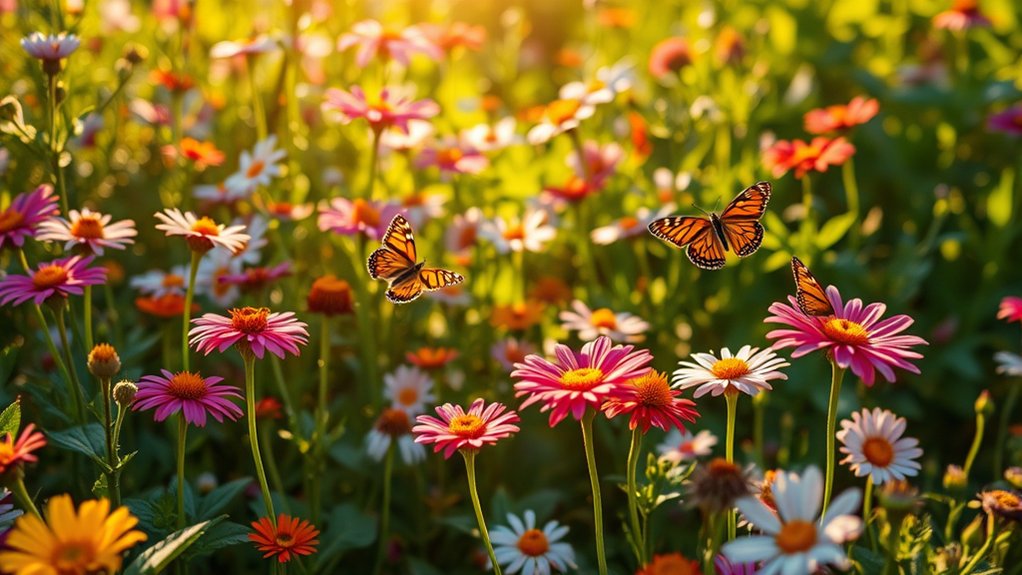
Protect butterflies at every life stage by avoiding pesticides, which can harm adults, eggs, and caterpillars. Even products labeled natural can affect beneficial insects, so don’t spray broadly or treat plants while butterflies visit.
Instead, prevent pest problems with simple, targeted steps:
- Handpick caterpillars or pests when practical, and check leaves regularly.
- Remove heavily infested plant parts rather than spraying the whole garden.
- Encourage birds and other natural predators by keeping your garden diverse.
- Improve soil health with compost and mulch to help plants thrive without chemical treatments.
- Join citizen science projects to track butterflies and learn which species need protection.
If you must address a serious pest issue, identify it first and choose the least harmful method. Follow label directions exactly, avoid treating flowering plants, and keep chemicals away from host plants.
Ask a local extension service for safer options suited to your area. By choosing prevention over pesticides, you’ll create a healthier habitat where butterflies can feed, reproduce, and flourish.
Give Butterflies Sun and Shallow Water
Butterflies need sunny spots to warm their bodies and shallow water to drink. Choose an open area that gets several hours of direct sunlight each day, and place nectar-rich flowers there. These sunlit oases help butterflies raise their body temperature before they fly and feed.
Group flowers in sunny patches so you can watch visitors easily, and keep blooms available through the growing season.
Add shallow water stations where butterflies can sip safely. Fill a saucer or shallow dish with damp sand, then add just enough water to keep it moist without covering the sand. Butterflies can take in water and minerals from the wet surface.
Refresh the dish regularly, especially during hot, dry weather, and rinse it to prevent algae or debris from building up. Set a few stations near flowers, but leave room for butterflies to land and move around. Check the water level often; a thin layer of moisture works better than a deep pool.
With sunlight and safe sips, your garden offers essential resources.
Create Wind-Sheltered Spots for Butterflies
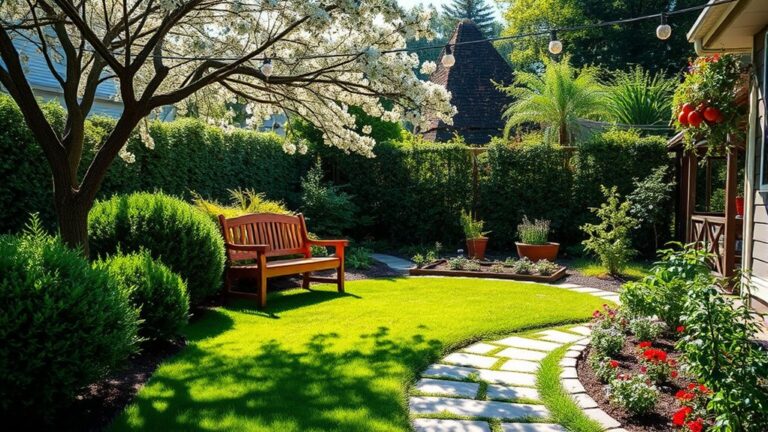
Sun and shallow water give butterflies places to warm up and drink, while sheltered corners help them feed and rest when the breeze picks up. You can create wind sheltered spots with plants, fences, or garden structures that block strong gusts without cutting off sunlight. These protected areas help butterflies conserve energy and stay near nectar sources.
Sheltered, sunny corners help butterflies warm up, drink, feed, and rest while conserving energy when breezes pick up.
- Plant shrubs or tall flowers along the garden’s windy edge.
- Group pots together to form a small, movable windbreak.
- Add a trellis or low, open fence near flowering plants.
- Keep sheltered spots sunny, since butterflies need warmth to fly.
- Place nectar-rich blooms and host plants behind the barrier.
Choose sturdy native plants that suit your climate, and leave gaps so butterflies can move freely. Avoid enclosing the area completely; gentle airflow helps plants stay healthy. With a few thoughtful barriers, you’ll make your garden a more welcoming butterfly habitat where visitors can feed, rest, and shelter from gusty weather.
Frequently Asked Questions
When Is the Best Time of Year to Start a Butterfly Garden?
Start your butterfly garden in spring, after your area’s last frost, when warming soil helps plants establish before summer. Your best planting window depends on local climate: in mild regions, you can also plant in early fall, giving roots time to settle before winter.
Check seasonal bloom timing so flowers provide nectar from spring through fall. Choose native plants suited to your conditions, and plant host species too, so caterpillars have food as well.
How Can I Identify the Butterfly Species Visiting My Garden?
Look closely, and your garden’s visitors become a living field guide. For identifying butterfly markings, note each butterfly’s size, wing shape, colors, spots, bands, and distinctive patterns; use a field guide or trusted identification app to compare them. Photograph visitors from several angles when possible, without disturbing them.
Record the date, location, and flowers they visit, cataloging seasonal visitors in a notebook. Over time, you’ll recognize familiar species and notice when new ones arrive.
Do Butterfly Gardens Require Special Soil Preparation?
No, you don’t need special soil preparation for a butterfly garden. Most nectar plants thrive in ordinary, well-drained soil, so you can improve poor ground with compost before planting.
Check each plant’s soil pH requirements, since some species prefer acidic or alkaline conditions. Avoid excessive fertilizer, which can encourage leafy growth over flowers.
Add mulch to conserve moisture and suppress weeds, but keep mulch depth around two to three inches and leave stems uncovered.
How Long Does It Take for a Butterfly Garden to Attract Visitors?
You may attract your first butterflies within days, but a steady stream often takes one to two growing seasons. Plant, wait, welcome: that’s the rhythm of butterfly garden timing.
Your results depend on local species, weather, blooms, and host plant selection. Choose native nectar flowers and caterpillar host plants, then keep them healthy through the season.
If butterflies don’t arrive right away, don’t worry; your garden may need time to become a reliable stop for feeding and breeding.
Can I Create a Butterfly Garden in a Small Balcony Space?
Yes, you can create a butterfly garden on a small balcony. Choose sunny spots and use pots or railing planters for compact, container friendly nectar flowers, such as lantana, verbena, or zinnias. Add balcony micro plants, including herbs like parsley or dill, to give caterpillars food.
Group several containers together, keep soil moist, and skip pesticides. A shallow dish with pebbles and water can also give visiting butterflies a safe place to drink.
Conclusion
By planting native nectar flowers, adding host plants, avoiding pesticides, and offering sunny, sheltered spots with shallow water, you can make your garden more welcoming to butterflies. These small changes support butterflies through every life stage, from caterpillar to adult.
For perspective, monarch populations in the eastern United States have declined by about 80% since the 1990s, underscoring the value of habitat. Start with one improvement today, then watch your garden become a livelier refuge for these pollinators. Use these tips to get butterflies to grow in your garden.