How to Grow a Veggie Garden in 3 Simple Steps
Starting a veggie garden can feel overwhelming when you’re unsure where to plant, what to grow, or how to keep everything healthy. You’re not alone—many new gardeners struggle to get started. The good news is that learning how to grow a veggie garden takes just three simple steps.
To grow a veggie garden in three simple steps, first choose a level spot with at least six hours of daily sunlight, easy water access, and enough room for the crops you want. Next, loosen the soil, mix in compost, and plant climate-appropriate vegetables according to seed-packet spacing and depth. Finally, water when the soil begins to dry, pull weeds while they’re small, check leaves for pests, and harvest vegetables when they’re ready. A few practical tips can help each step go smoothly.
Key Takeaways
- Choose a level, accessible spot with at least six hours of direct sunlight and nearby water.
- Measure the space, sketch a simple layout, and select vegetables suited to your climate and available room.
- Prepare soil by loosening it, removing stones, and mixing in compost.
- Plant seeds or seedlings at the recommended depth and spacing, grouping crops with similar needs.
- Water as soil dries, pull weeds, check for pests, and harvest vegetables when ripe.
Choose a Sunny Spot and Plan Your Garden
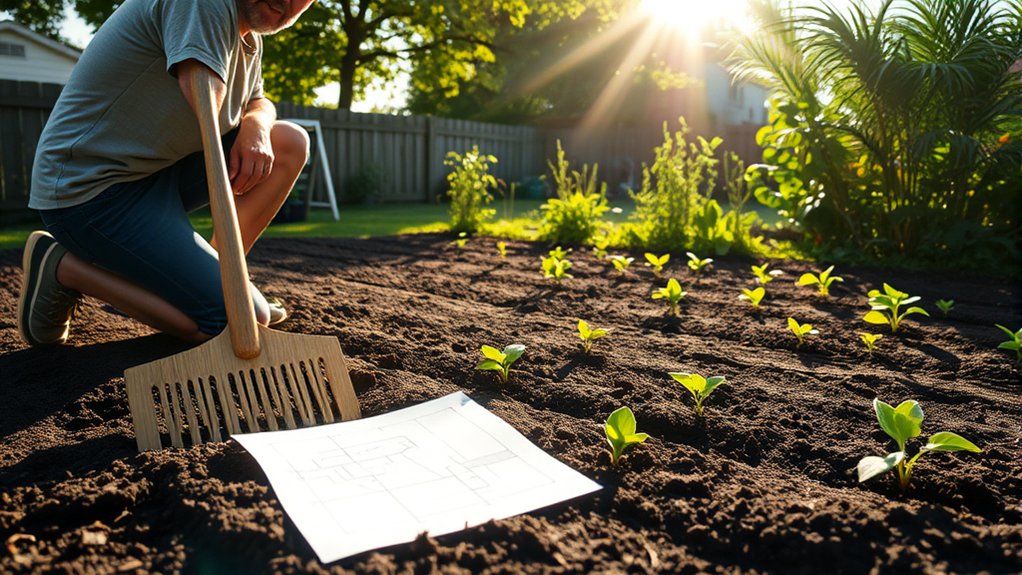
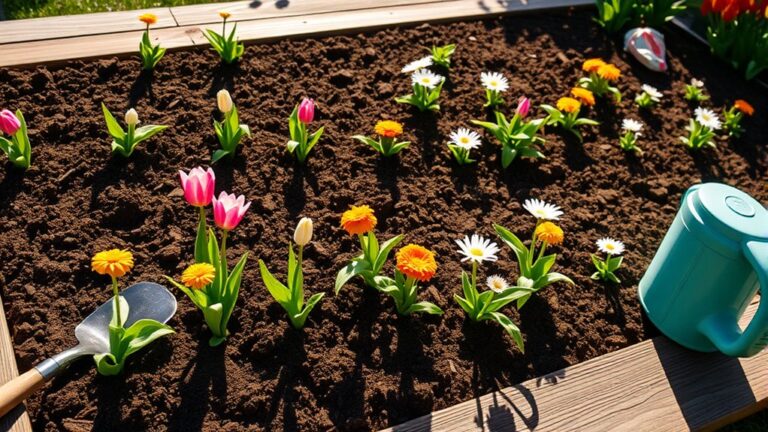
Start by choosing a spot that gets at least six hours of direct sunlight each day, since most vegetables need plenty of light to thrive. Watch your yard throughout the day to see where shadows fall, and pick a sunny spot that’s easy to reach from your home and a water source. A level area can make your garden easier to organize and maintain.
Choose a sunny, accessible spot with at least six hours of direct light, and watch how shadows move across your yard.
Next, think about how much space you can comfortably manage. Measure the area, then sketch a simple layout before you buy seeds or plants. Good garden planning helps you use available room wisely and leave enough space to move between rows or containers.
Consider what you like to eat, how many people you’re feeding, and which crops suit your region and growing season. Check plant labels or local gardening resources to estimate how much room each crop needs.
If you’re short on yard space, look for a patio, balcony, or sunny windowsill. Choose a garden size that fits your schedule, too.
Prepare Soil and Plant Easy Vegetables
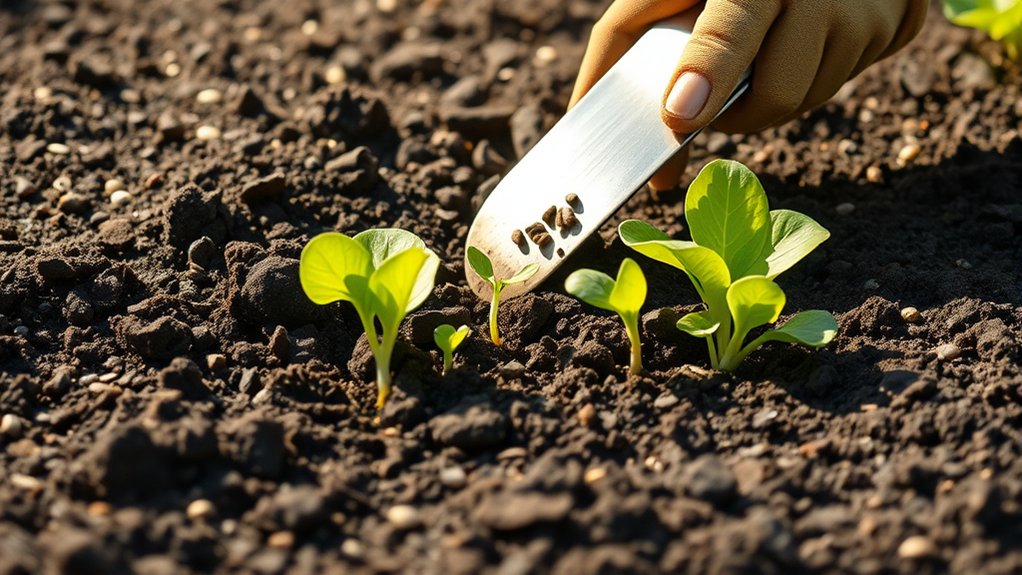
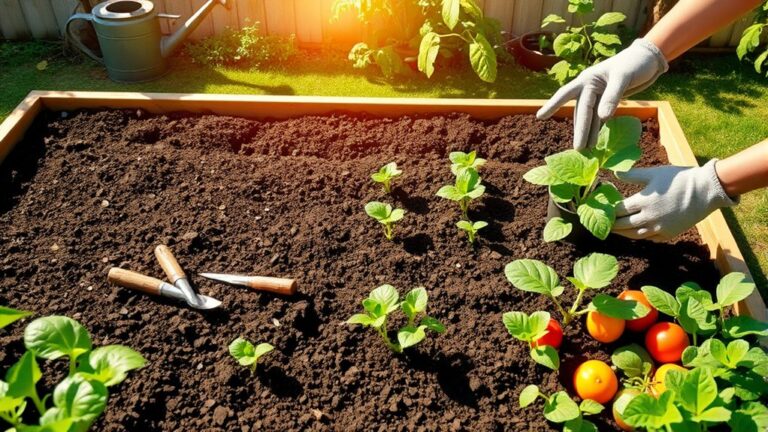
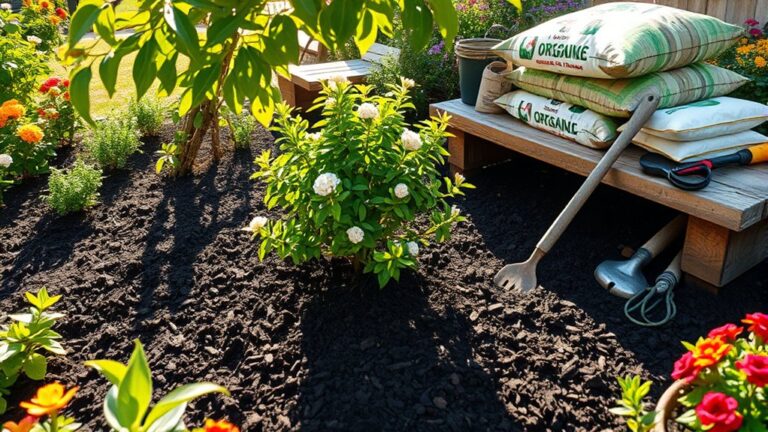
Prepare the soil by loosening it and mixing in compost to improve its texture and nutrients. Remove stones and break up large clumps so roots can spread easily. Check the soil health by feeling its texture: it should crumble gently, not stay soggy or dusty.
If you’re unsure what to plant, choose vegetables that grow well in your climate and fit your available space.
| Vegetable | Planting tip |
|---|---|
| Lettuce | Sow shallowly in rows |
| Radishes | Space seeds as directed |
| Tomatoes | Set easy seedlings deeply |
Follow the seed packet or plant label for spacing and depth, since each crop has different needs. Press soil lightly around seeds or roots to hold plants upright without packing it tightly.
Group vegetables with similar growing needs together, and leave paths between rows so you can reach each plant. Add a simple label beside each row to remember what you planted. Starting with a few reliable crops helps you learn what thrives in your garden and makes planting manageable.
Water, Weed, Check for Pests, and Harvest
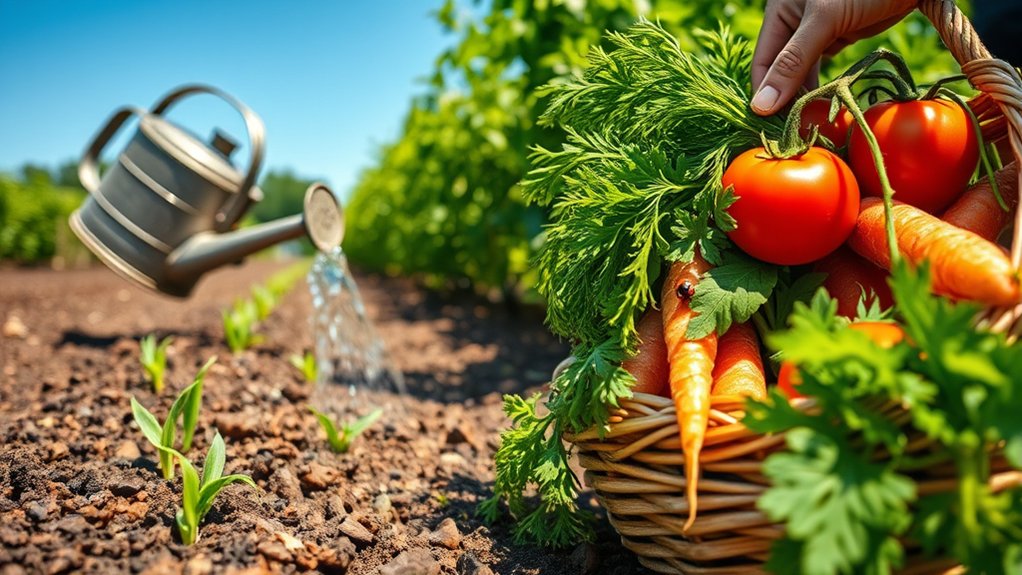
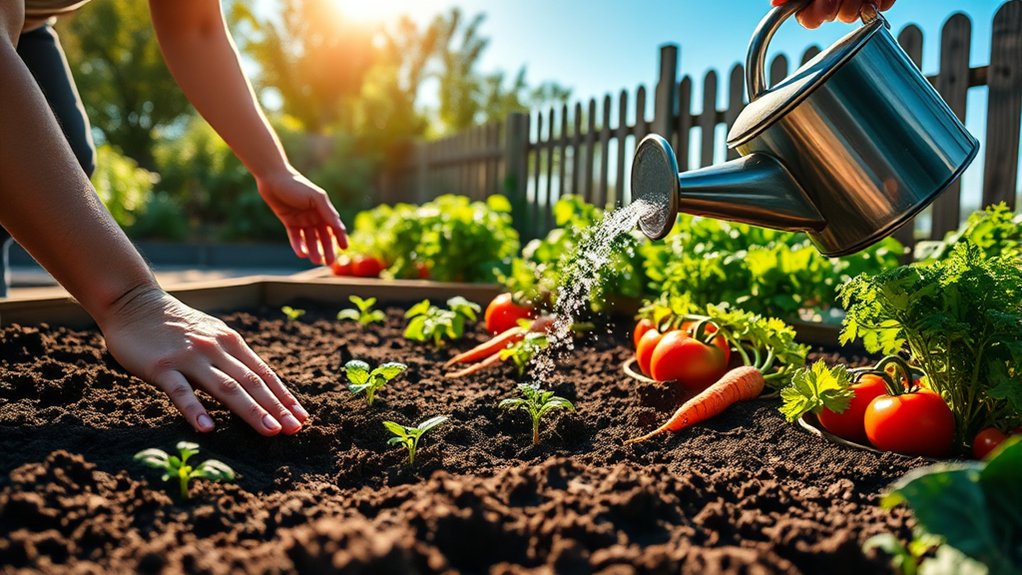
Keep your garden healthy with steady care: water when the soil begins to dry, pull weeds before they spread, and check leaves regularly for pests. Good water management helps roots grow deep without leaving soil soggy. Water at the base in the morning so leaves dry quickly and plants face less disease.
- Water: Press a finger an inch into the soil. If it feels dry, soak the bed until moisture reaches the roots. A layer of mulch can slow evaporation.
- Weed and inspect: Use weed control by pulling invaders while they’re small, loosening roots gently to protect vegetables. Turn over leaves and look for holes, eggs, or insects; remove pests by hand or use a suitable treatment.
- Harvest: Pick vegetables when they reach their expected size and color. Use clean scissors for tender stems, and harvest often to encourage more growth.
Keep notes on watering, weeds, and pests. You’ll spot patterns sooner and adjust care before small problems threaten your crop.
Frequently Asked Questions
What Tools Do I Need to Start a Vegetable Garden?
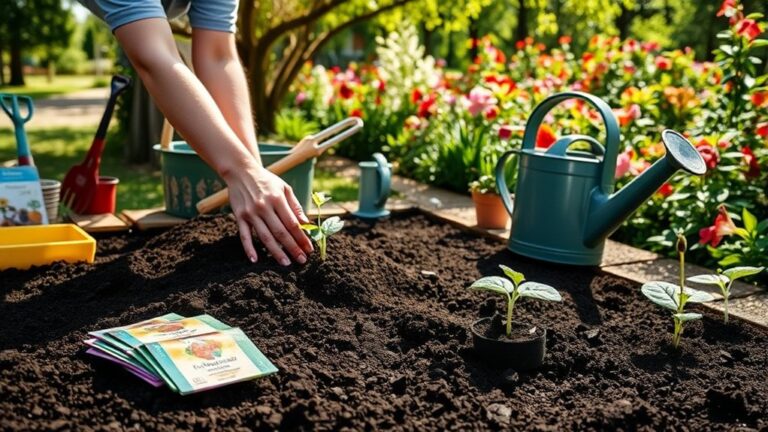
You’ll need a hand trowel, gloves, watering can or hose, pruners, and a shovel for most vegetable gardens. For garden bed setup, add a rake and measuring tape; basic soil amendments may include compost and a soil test kit.
Choose pots suited to your plants with careful container sizing. Check balcony lighting, or buy indoor grow lights.
Seed starting supplies include trays, labels, and seed mix. Keep clean baskets and containers handy for harvest storage methods.
Can I Grow Vegetables in Containers on a Balcony?
Yes, you can grow vegetables in containers on your balcony—where there’s a will, there’s a way. Choose a sunny spot that gets at least six hours of light, then try compact crops like lettuce, herbs, cherry tomatoes, or peppers.
In container gardening, use pots with drainage holes and quality potting mix. Water regularly, since containers dry quickly; simple balcony irrigation, such as drip lines or self-watering planters, can make care easier.
How Much Does It Cost to Start a Veggie Garden?
You can start a veggie garden for about $25–$100, depending on its size and what you already own. Your startup budget may cover seeds or seedlings, soil, containers or garden beds, and basic tools. Expect lower initial costs if you reuse pots, borrow tools, and grow from seed.
A balcony setup might cost $40–$150, especially if you need several large containers. You can spread purchases over time and add supplies as your garden grows.
Can I Grow Vegetables Indoors During Winter?
Yes, you can grow vegetables indoors during winter. The idea that cold weather makes fresh produce impossible is mistaken: you can harvest greens and herbs inside with the right setup.
Give plants strong indoor winter lighting, ideally a grow light for 12–16 hours daily, and keep them away from cold drafts. Choose compact crops like lettuce, spinach, and basil.
You can grow them in potting mix or try soil less hydroponics, which uses nutrient-rich water instead.
How Do I Preserve Vegetables After Harvesting?
Preserve vegetables soon after harvesting by choosing preservation methods that suit each crop. You can refrigerate leafy greens and tender vegetables, freeze blanched produce, can suitable vegetables using tested recipes, or dry herbs and sliced produce. For proper storage, remove damaged pieces, keep vegetables clean and dry when appropriate, and use breathable containers for crops that need airflow. Store potatoes and onions in cool, dark, dry places, and check stored produce regularly for spoilage.
Conclusion
Growing a veggie garden doesn’t have to be complicated. Choose a sunny spot, prepare healthy soil, and start with easy vegetables suited to your space and season. Then keep up with watering, weeding, and quick pest checks as your plants grow.
Harvest vegetables when they’re ready, and enjoy the fresh rewards of your effort. Remember, “the best time to plant a tree was 20 years ago; the second-best time is now.” Start small, learn as you go, and let your veggie garden flourish.