7 Steps to Make a Flower Garden
Starting a flower garden can feel overwhelming when you’re unsure what to plant or how to keep it thriving. You’re not alone—many people struggle to get started. These seven simple steps can help you create a flower garden with confidence.
To make a flower garden, choose a spot with at least six hours of daily sun and convenient water access. Test your soil, then mix in compost if needed. Select flowers suited to your climate and light. Map the bed, allowing space for mature growth and paths. Remove weeds, loosen soil, and plant at the recommended depth. Water thoroughly, then mulch around plants. Check moisture, pull weeds, and remove faded blooms to encourage more flowers. These steps give you a strong start.
Key Takeaways
- Choose a site with at least six hours of direct sunlight, convenient water access, good drainage, and room to reach plants.
- Track sun and shade throughout the day, then match flowers to the site’s light, climate, and hardiness zone.
- Test soil pH and texture. Mix in finished compost to improve the soil, and avoid fertilizer or lime unless needed.
- Sketch a layout based on plant height, mature spread, and care needs. Leave paths and enough space for airflow.
- Clear weeds and rocks, then loosen the soil about 12 inches deep. Arrange plants, plant them at container depth, water lightly, and label the varieties.
Choose a Sunny Spot for Your Flower Garden

Choose a spot that gets at least six hours of direct sunlight each day. Most flowering plants need steady light to produce abundant blooms, so watch your yard throughout the day before choosing a location. Notice where trees, fences, buildings, or shrubs cast shadows, and consider how those shadows shift as the sun moves.
Your garden orientation affects how much light your flowers receive. A south-facing area often gets strong sun, while east-facing beds receive gentler morning light. West-facing spots can bring intense afternoon heat, so choose heat-tolerant flowers there. Check the site in different seasons, too, since deciduous trees may shade it in summer.
Look for a sunny spot with convenient access to water and room to reach every plant. Observe soil drainage after rain; avoid areas where water pools or flows across the bed. Think about nearby plant companions, including trees and shrubs, that may compete for sunlight or crowd your flowers as they grow. Aim for a location you can enjoy from indoors and outdoors.
Test Your Soil and Improve Your Flower Bed
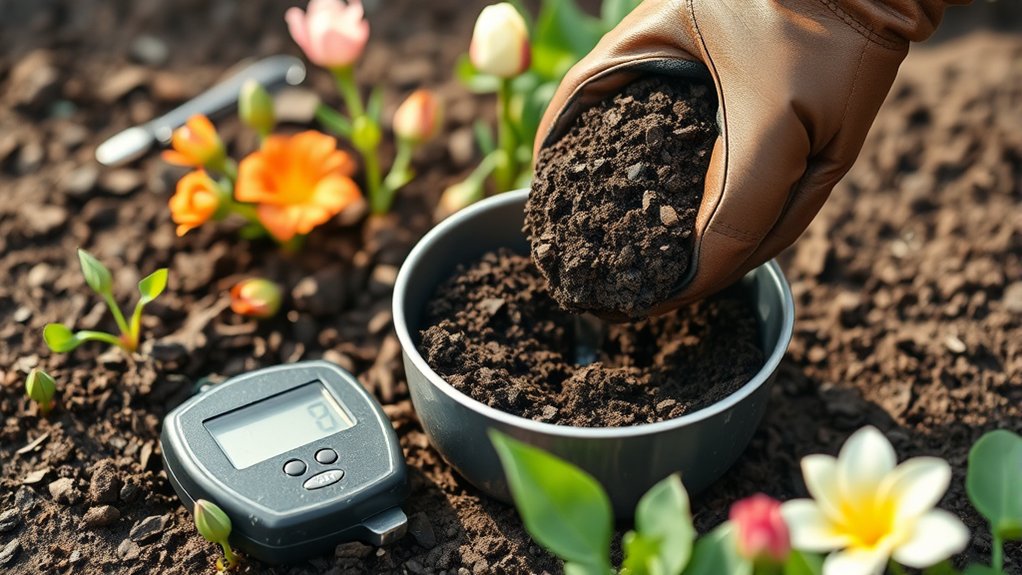
Before planting, test your soil’s pH to make sure it’s a good fit for your flowers. If it isn’t, you can adjust it with the right soil amendments. Adding compost can also improve soil quality and help your flower bed thrive.
Test Soil pH
A simple soil pH test can reveal whether your flower bed is too acidic or alkaline for the plants you want to grow. Check the preferred pH range for your chosen flowers before you begin. You can use a home test kit, a digital meter, or send a soil sample to a local extension service for analysis.
To collect a useful sample, remove surface debris and take small amounts of soil from several spots in the bed. Mix them in a clean container, then follow your kit’s instructions. Testing at different locations can help you spot uneven conditions.
Compare your result with your flowers’ needs. If the pH suits them, amendments are not required. If it doesn’t, note the result and research suitable adjustments before planting. Soil pH testing helps you make informed choices for a thriving flower garden.
Improve Soil Quality
Once you’ve tested your soil, improve its structure and fertility to support healthy flowers. Use your results to choose soil amendments that address specific needs.
If your bed contains heavy clay, mix in compost or aged bark to loosen it and improve drainage. For sandy soil, add compost to help it retain moisture and nutrients.
Compost also encourages helpful soil organisms and supplies nutrients slowly. Spread a two- to three-inch layer of finished compost over the bed, then work it into the top six to eight inches.
Avoid adding fertilizer or lime without a clear need, since too much can harm plants. Remove stones and weeds as you loosen the soil.
Finish by raking the surface smooth, then water lightly before planting your flowers.
Choose Flowers for Your Climate and Sunlight

To choose flowers that thrive, match their growing needs to your local climate and the amount of sunlight your garden receives. Check plant labels for hardiness zones, heat tolerance, and light requirements.
For reliable flower selection, prioritize climate compatibility and choose varieties suited to your region’s typical conditions.
| Sunlight | Suitable flowers | Climate notes |
|---|---|---|
| Full sun | Zinnias, marigolds | Handle heat well |
| Partial sun | Coneflowers, daylilies | Adapt to varied regions |
| Shade | Impatiens, begonias | Prefer cooler conditions |
Observe your garden throughout the day before deciding: buildings and trees can create changing shade. If your summers run hot, select heat-tolerant flowers; in cold areas, favor hardy perennials or annuals that finish blooming before frost.
Consider rainfall, too. Drought-tolerant choices suit dry climates, while moisture-loving flowers need consistently damp soil. When you’re unsure, ask a local nursery or consult a regional gardening guide.
Choose a few dependable varieties first, then add others once you know how they respond to your conditions. This approach helps you enjoy healthy blooms without fighting your weather.
Plan Your Flower Garden Layout and Spacing
Map out your garden zones to group flowers with similar needs. Notice how sunlight moves across each area throughout the day, then space your plants so they have room to grow and plenty of airflow.
Map Garden Zones
A simple garden map helps you place each flower where it can thrive. Sketch your garden’s outline, then divide it into map zones based on plant height, spread, and purpose.
Put tall flowers at the back or center, and keep shorter blooms near edges so you can see and reach them. Group plants with similar space needs to prevent crowding.
Include paths and access points, leaving room to weed, water, and gather bouquets. Choose native species suited to your region, and note their mature widths before assigning spots.
| Zone | Planting plan |
|---|---|
| Back | Tall flowers |
| Middle | Medium blooms |
| Front | Low-growing flowers |
Label each zone on your sketch, then mark plant locations and spacing. Keep the map handy as you plant, and adjust it when needed.
Check Sunlight Patterns
Track how sunlight moves across your garden before deciding where flowers will go. Observe each garden zone at several times throughout the day, noting when direct light begins, how long it lasts, and where shadows fall. Repeat your checks on clear days, since clouds can distort the pattern.
For more accurate sunlight mapping, mark sunny and shaded areas on a simple sketch, then compare your notes across the morning, midday, and afternoon.
Check the light requirements of flowers you’re considering, and match them to the conditions you’ve recorded. Full-sun varieties need several hours of direct light, while others thrive in partial shade or filtered light.
Consider shade tolerance when choosing flowers for areas beneath trees, near fences, or beside buildings. If light changes seasonally, account for that shift before finalizing your garden layout.
Space Plants Properly
Once you’ve matched flowers to the available sunlight, plan how much room each needs to grow. Check seed packets or plant labels for mature height and width, then use those measurements to guide your space planning.
Place tall varieties toward the back of a border or the center of an island bed, so they won’t shade shorter blooms. Group flowers with similar water and soil needs, and leave enough room between plants for airflow and easy care.
Don’t crowd seedlings to make the garden look full; they’ll spread as they mature. If your yard has limited space, consider container options such as pots, window boxes, or hanging baskets. Arrange containers where you can reach them to water and deadhead flowers.
Sketch your layout before planting, and adjust spacing to suit your garden’s shape.
Prepare the Bed and Plant Your Flowers
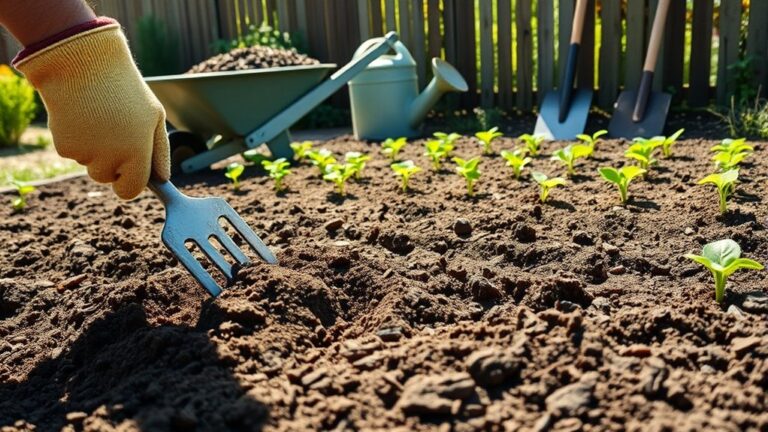
With your site selected and garden plan in hand, prepare the soil before planting. Remove weeds, rocks, and leftover roots, then loosen the bed to a depth of about 12 inches. Good soil preparation gives roots room to spread and helps flowers establish.
Prepare your garden bed by clearing debris and loosening the soil to give flower roots room to spread and thrive.
Mix in a layer of finished compost to improve texture and add organic matter. Choose composting methods that suit your materials, such as a backyard pile or a ready-made bin.
Before planting, check each flower’s label for mature size and recommended spacing. Arrange the pots on the bed first, adjusting their positions until the layout looks balanced. Then plant each flower at the same depth it grew in its container.
- Dig a hole slightly wider than each root ball.
- Gently loosen crowded roots before setting the plant in place.
- Backfill with soil and press lightly to remove large air pockets.
Finish by adding plant labels so you can identify each variety as your garden grows.
Water and Care for Your Flower Garden
How often should you water your flower garden? Check the soil rather than relying on a fixed routine. Push a finger about an inch into the ground; if it feels dry, water your plants. Give them a thorough drink at soil level, so moisture reaches the roots and leaves stay dry.
Water early in the morning to limit evaporation and reduce the risk of fungal problems. Adjust your watering schedule for rainfall, heat, and soil type, checking containers more often because they dry quickly.
Keep the bed healthy with simple, consistent care. Pull weeds while they’re small, before they compete with your flowers for water and nutrients. Spread a two- to three-inch layer of organic mulch around plants, leaving space around each stem.
These mulching techniques help retain moisture, moderate soil temperature, and suppress weeds. Inspect plants regularly for signs of stress, pests, or disease, and address problems promptly. Add compost as needed to support healthy growth, and avoid overwatering, which can leave roots short of oxygen.
Deadhead Flowers and Keep Blooms Coming
Regular deadheading can keep many flowers blooming longer. When you remove faded blossoms, you stop plants from spending energy on seed production and encourage them to form new buds. Check your garden every few days, especially during peak flowering, and use clean, sharp snips or pinch off spent blooms with your fingers.
- Cut each fading flower just above a healthy leaf or a new bud.
- Remove damaged stems and yellowing foliage as you work.
- Leave seed heads on plants you want to reseed or feed birds.
Your approach depends on the plant. Some flowers, such as zinnias and cosmos, reward frequent deadhead maintenance with fresh blooms. Others, including many ornamental grasses and coneflowers, offer attractive seed heads and don’t need trimming right away.
Learn each plant’s needs, and avoid cutting off unopened buds. Pair regular deadheading with consistent watering and suitable feeding to support continuous blooming. Keep a small bucket nearby, and discard diseased material rather than composting it. A few minutes of care can keep your flower beds tidy and colorful.
Frequently Asked Questions
When Is the Best Time of Year to Start a Flower Garden?
The best time to start a flower garden is spring, after your area’s last frost, when the soil is workable and temperatures are warming. You can also plant hardy flowers in fall, giving roots time to settle before winter.
For the best results, check your local frost dates and choose flowers suited to your climate. Consider ways to start, such as sowing seeds or planting seedlings, and plan choosing garden beds where sunlight meets each flower’s needs.
How Much Does It Cost to Create a Flower Garden?
You can create a small flower garden for about $50–$200, while larger or professionally designed gardens may cost $500 or more. Your cost breakdown depends on garden size, plants, soil, and supplies.
For garden budget planning, compare essential gardening tools and soil preparation techniques, then consider design and layout ideas. Seasonal planting timing, pollinator friendly flower choices, and pet safe plant selection affect prices. Include watering and maintenance tips to manage ongoing costs.
Which Flowers Are Safe for Pets?
Better safe than sorry: choose pet safe bloomers such as roses, snapdragons, sunflowers, zinnias, and African violets. These flowers are generally considered non-toxic to cats and dogs, so you can enjoy their color with less worry.
Still, your pet might get an upset stomach from eating any plant, so discourage chewing and check each variety with your veterinarian or the ASPCA’s toxic plant database. Add calming pet friendly landscaping with clear paths and secure planting beds.
How Can I Attract Butterflies and Bees to My Garden?
Attract butterflies and bees by planting diverse, pesticide-free flowers that bloom from spring through fall. Choose butterfly host plants, such as milkweed for monarch caterpillars, alongside bee friendly nectar sources like lavender, coneflowers, and native wildflowers.
Group flowers in sunny, sheltered spots so pollinators can find them easily. Add shallow water with stones for safe landing, and leave some bare soil and undisturbed stems for nesting. Avoid pesticides, which can harm pollinators and caterpillars alike.
What Tools Do I Need to Start a Flower Garden?
You don’t need Excalibur to begin—just a few dependable tools. For garden design, grab a tape measure, stakes, and string to map your beds. For soil preparation, use a spade or shovel, garden fork, rake, and sturdy gloves.
Add a hand trowel and pruning shears for planting and trimming, plus a watering can or hose. Wondering, “which tools do I need to start a flower garden?” Start with these essentials; you can add more later.
Conclusion
Your flower garden may begin with one sunny patch, but it can soon become the place you return to after every busy day. As you test the soil, choose suitable blooms, plan their spacing, and care for each plant, you’ll uncover that small steps add up to a lively garden. Keep watering and deadheading, and you may find that the flowers you planted for color also bring you a little calm, just when you need it most. A flower garden can be a beautiful place to unwind.