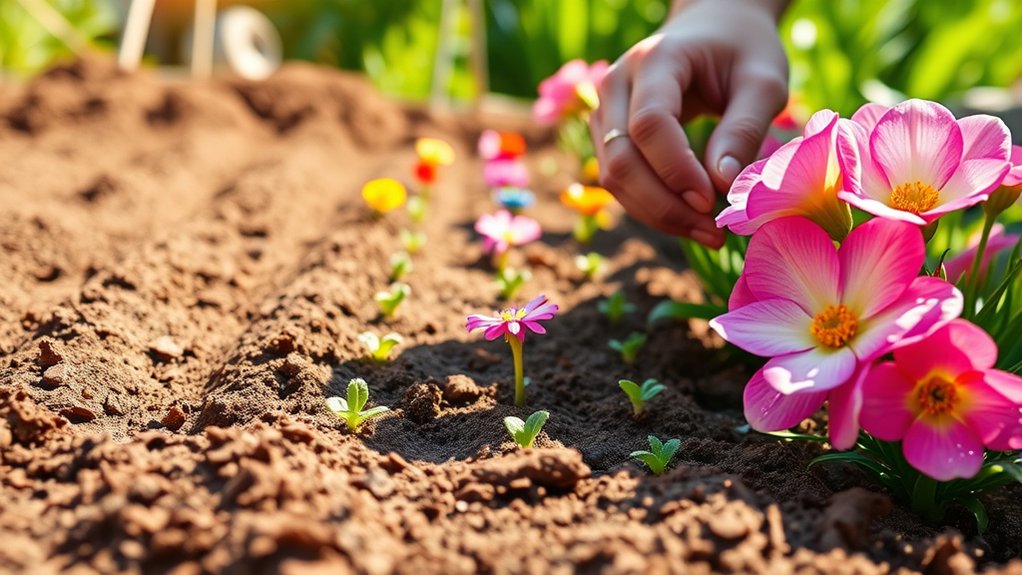
3 Steps to Arrange Flowers in a Flower Bed
Planning a flower bed that looks balanced and blooms for months can feel tricky, especially when you’re unsure which plants belong where. You’re not alone—many gardeners struggle to combine colors, heights, and growing needs.
To arrange flowers in a flower bed, first check how much sun the area gets and whether its soil drains well; choose plants that suit those conditions. Next, place tall flowers at the back or center, medium plants around them, and low growers along the edge. Repeat a few colors and mix early, midseason, and late bloomers for lasting interest.
Finally, space plants for their mature size, grouping those with similar water needs. A few simple checks can help your plan flourish.
Key Takeaways
- Assess sunlight, soil texture, drainage, and pH, then choose flowers suited to the bed’s conditions.
- Arrange tall flowers at the back or center, medium-height plants around them, and low growers along the edges.
- Choose a cohesive color palette and combine early, midseason, and late bloomers for color throughout the growing season.
- Space plants according to their mature width, root depth, and water needs to support healthy growth and airflow.
- Leave room for perennials to mature, and plan to adjust the arrangement as plants grow.
Choose Flower-Bed Plants for Sun and Soil

Start by checking how much sunlight your flower bed gets and whether its soil drains well. Track the light throughout the day, since nearby trees, fences, and buildings can cast changing shadows. Note whether the bed receives full sun, partial shade, or mostly shade, then choose plants suited to those conditions. Sun loving flowers need several hours of direct light to thrive, while shade-tolerant varieties perform better with less.
Next, assess your soil before buying plants. Check whether it feels sandy, clay-heavy, or loamy, and see how quickly water drains after rain. You can improve some conditions with compost, but don’t assume every plant will adapt. Look up each flower’s preferred soil texture, moisture level, and pH to confirm soil compatibility with your bed.
If your soil stays soggy, select plants that tolerate wet conditions or improve drainage first. Matching flowers to the light and soil you already have helps them establish strong roots and bloom reliably with less maintenance.
Arrange Flowers by Height, Color, and Bloom Time

Once you’ve chosen flowers suited to your bed, arrange them by height, color, and bloom time. Start by sketching a simple plan, then place tall varieties at the back of a bed viewed from one side or in the center of an island bed.
Set medium-height flowers around them and low growers along the front edge. These tips on height emphasis help every plant stay visible and give your display a balanced outline.
Next, choose a palette that suits your taste. Repeat two or three colors for a calm, unified look, or pair contrasting hues for stronger impact.
Add white or green foliage to connect bold shades; these color harmony tips keep the arrangement cohesive.
Finally, check each plant’s flowering season. Combine early, midseason, and late bloomers so color continues across the growing season.
Note bloom dates on your plan, and group plants with overlapping flowers for a fuller display. This bloom time variety keeps your bed lively from spring through fall.
Plant Flowers With Room to Reach Their Mature Size

After arranging flowers by height, color, and bloom time, give each plant enough space to reach its mature size. Check the plant tag or seed packet for its expected width, then use those measurements to plan plant spacing.
Check each plant’s expected width on its tag or seed packet to plan spacing for mature growth.
Leave enough room between flowers for mature foliage to spread without crowding nearby plants. Proper spacing improves airflow, helps prevent disease, and makes it easier for you to weed, water, and deadhead.
Consider each flower’s root depth, too. Deep-rooted varieties may compete with shallow-rooted neighbors for moisture and nutrients, so place them where their roots can grow freely.
Match flowers to your soil drainage: plants that prefer dry conditions won’t thrive beside varieties that need consistently moist soil. Group flowers with similar water needs so you can water efficiently without overwatering some or leaving others thirsty.
If your bed looks sparse at first, resist filling every gap. Annuals may fill in quickly, while perennials need time to mature. Your thoughtful spacing will keep the bed healthy and balanced.
Frequently Asked Questions
How Often Should I Water a Newly Planted Flower Bed?
Water your newly planted flower bed daily for the first week, then every two or three days for the next few weeks, adjusting for rain, heat, and soil type. Your watering schedule for new plantings should keep roots evenly moist, not soggy.
Use soil moisture checks before watering. Add mulch depth and timing carefully: apply two inches after planting. Combine weed suppression strategies with appropriate fertilizer timing and regular pest and disease prevention checks.
What Mulch Works Best for Flower Beds?
Shredded bark or wood chips work best for most flower beds because they suppress weeds, protect soil, and break down gradually. For smart mulch selection, choose untreated organic material suited to your plants; compost or leaf mold also enriches soil.
Spread a 2–3-inch layer, keeping it a few inches away from stems and trunks. This depth supports moisture retention without encouraging rot. Refresh the mulch as it decomposes, and avoid piling it too deeply.
How Can I Prevent Weeds From Taking Over My Flower Bed?
Like a knight with a smartphone, you can stop weeds before they conquer your flower bed. Spread two to three inches of mulch, keeping it away from plant stems, to block sunlight and support weed suppression.
Pull young weeds after rain, when roots release easily, and remove them before they set seed. Plant flowers close enough to shade bare soil, but leave room for airflow.
Add compost yearly for soil improvement and healthier, more competitive plants.
When Should I Fertilize Flowers in a Flower Bed?
Fertilize your flower bed in early spring, just as new growth appears, then follow each plant’s specific nutrient needs. For many flowers, one application at planting and another during active growth is enough; too much fertilizer can produce leafy plants with fewer blooms.
Check the product label for dosage and repeat intervals. Water after applying granular fertilizer, and avoid feeding during extreme heat or when plants look stressed. Adjust fertilizing timing to your flowers’ growth cycles.
How Do I Protect Flower Beds From Pests and Diseases?
Protect your flower beds by checking plants often, removing diseased leaves, and clearing fallen debris. Water at soil level in the morning to keep foliage dry, and give plants enough space for airflow.
Use protective insectnetting to block pests, and handpick insects when you spot them. Encourage beneficial fungi and other helpful organisms with healthy soil and compost.
Choose disease-resistant varieties, rotate plantings, and avoid overwatering or excessive fertilizer to reduce problems naturally throughout the growing season.
Conclusion
Arranging a flower bed isn’t just about choosing pretty blooms. It’s about matching plants to your conditions, layering them thoughtfully, and giving each room to grow. A well-planned bed can look beautiful all season when you combine flowers with different bloom times and heights.
Before you plant, check your sun and soil, then picture how everything will mature. You’ll create a balanced, vibrant flower bed that looks beautiful as the months pass.