How Do You Plan a Flower Garden in 10 Easy Steps?
Plan a flower garden can feel overwhelming when you’re unsure what to plant, where to put it, or how to keep it thriving. You’re not alone—many people struggle to turn a patch of ground into a garden that looks beautiful through the seasons. These 10 easy steps will help you plan a flower garden with confidence.
Plan a flower garden in 10 easy steps: choose a spot with suitable sunlight, measure and sketch the space, and test and improve the soil.
Select flowers suited to your climate, then combine annuals and perennials for lasting structure and seasonal color.
Arrange plants by mature height and spacing, clear and prepare the bed, and plant at the right time for your local frost dates.
Water deeply and add mulch. A few practical details can help you make each step count.
Key Takeaways
- Observe sunlight throughout the day, noting shade from trees and structures, then match each flower to its light needs.
- Measure and sketch the garden, marking its shape, sunny and shaded areas, paths, fences, and other fixed features.
- Test and prepare the soil by clearing weeds, loosening it, and mixing in compost or recommended amendments.
- Choose climate-suited flowers with varied bloom times, combining perennials for structure with annuals for seasonal variety.
- Arrange plants by mature height and spacing, then plant around local frost dates and water deeply.
Choose a Spot With the Right Sunlight
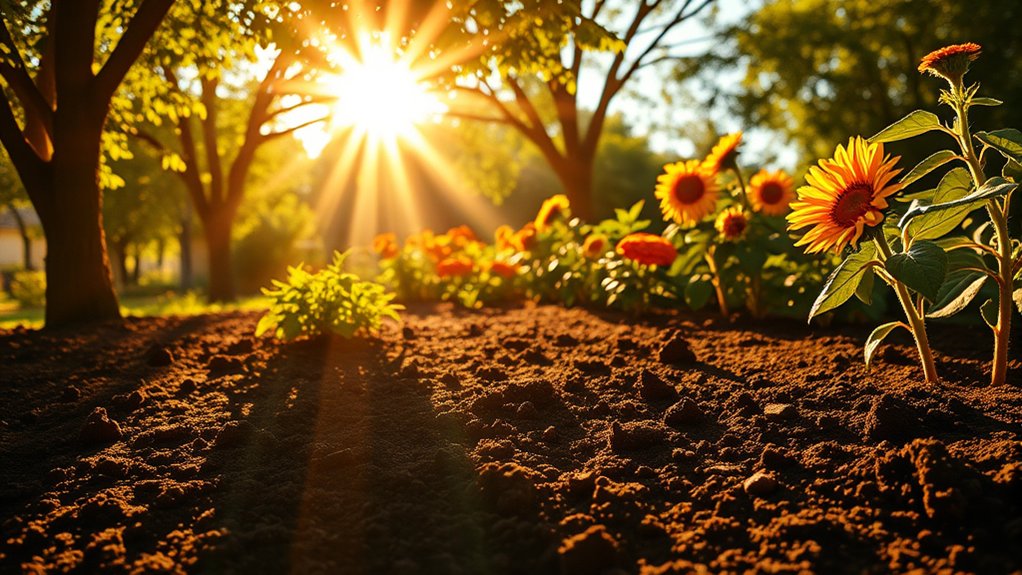
Before choosing flowers, check how much sunlight each part of your yard receives. Watch your yard at different times of day, since nearby trees, fences, and buildings can cast changing shadows. Note which spots get full sun, partial sun, or shade, and use those sunlight patterns to guide your planning layout.
Most flowering plants need at least six hours of direct sunlight, but some thrive with less. Read plant labels or descriptions before deciding where to place each variety. Put sun-loving flowers in bright areas, and reserve shadier spots for plants that tolerate low light. If you’re unsure, observe the area on a clear day and track when sunlight reaches it.
Choosing a suitable spot helps flowers grow well and reduces the need for extra care. It also keeps you from planting varieties where they’ll struggle. Consider how the light changes across seasons, especially if deciduous trees shade the yard in summer. Match each flower’s needs to the conditions you’ve observed.
Measure Your Flower Garden Space
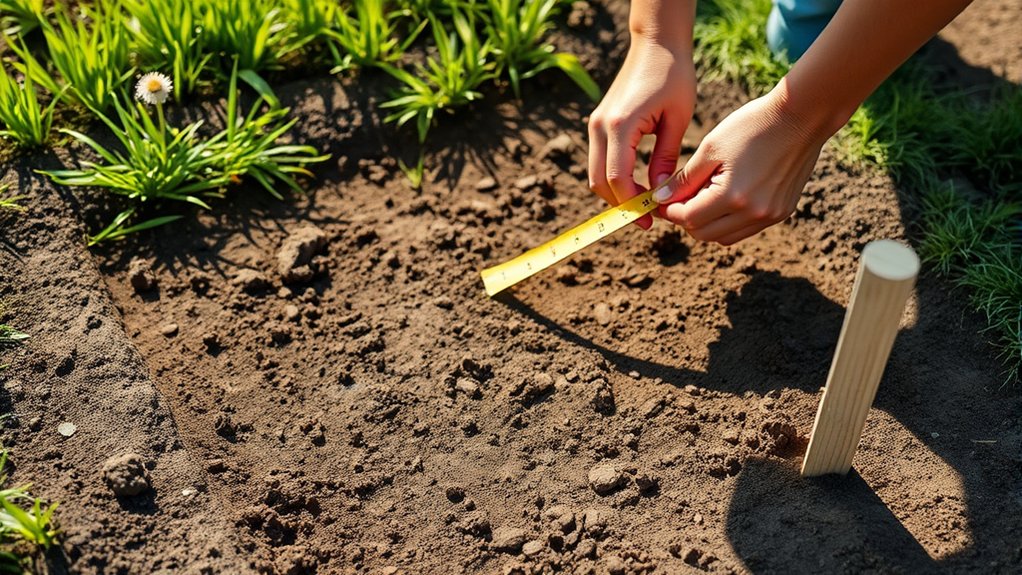
Measure the length and width of your garden to find out how much space you have for planting. Sketch its dimensions, then plan where each flower will go. As you do, mark the sunny and shaded areas so you can choose the right spot for each plant.
Measure Garden Dimensions
How large is your flower garden, and what shape does it take? Measure its boundaries before you choose plants or sketch a layout. Use a tape measure, stakes, and string to capture the space accurately. Record each measurement in a notebook so you can plan with confidence.
- Rectangle: Measure length and width; multiply them to find area.
- Square: Measure one side, then multiply it by itself.
- Circle: Measure across the center for its diameter.
- Triangle: Measure the base and height; multiply, then divide by two.
- Irregular shape: Split it into simple sections and total their areas.
Mark fixed features, such as paths, fences, and existing beds, on your sketch. Note measurements in feet or meters, and stick to one unit. Accurate dimensions help you estimate plant quantities and leave enough room for growth and access. Later, use color theory and soil texture to guide plant choices.
Map Sunlight and Shade
Track how sunlight moves across your garden to find each spot’s light conditions. Check the space every two hours from morning to late afternoon, noting where direct rays fall and where buildings or trees cast shadows. Use your garden measurements to sketch these patterns; this helps you map sunlight before choosing flowers.
Repeat observations on a clear day, since clouds can distort results. Record your findings in a simple shade mapping chart:
| Daily light | What you observe |
|---|---|
| Morning | Gentle sun or lingering shade |
| Midday | Strong, direct sunlight |
| Afternoon | Heat, filtered light, or shade |
Compare each area’s hours of direct sun with plant labels: full-sun flowers usually need six or more hours, while partial-shade varieties need less. Mark changing shadows too, especially beneath deciduous trees. Your map will guide plant placement and help prevent flowers from struggling in unsuitable light.
Recheck it seasonally as the sun’s angle changes.
Test Your Soil and Improve It
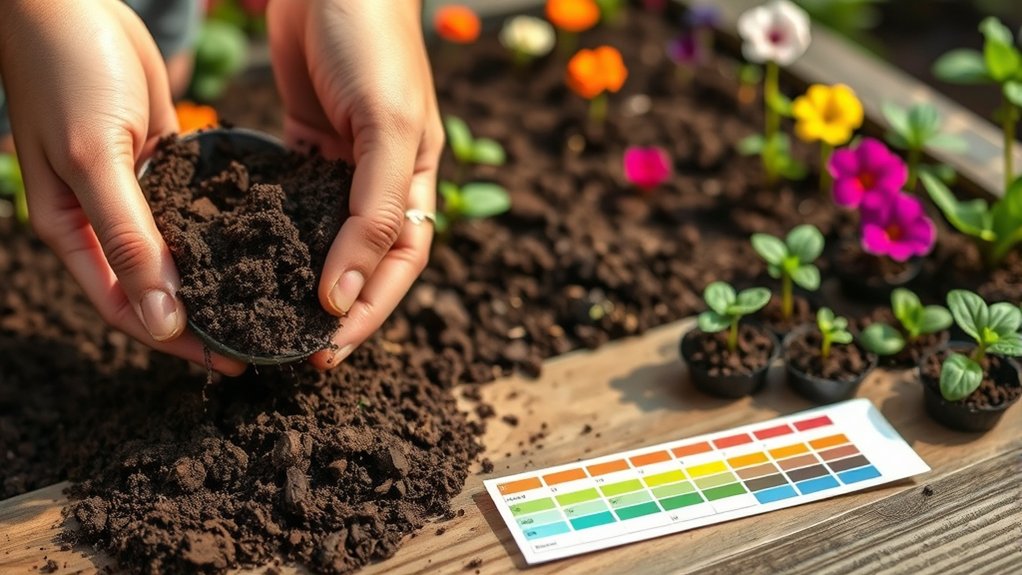
Before choosing flowers, test your soil to learn its pH and nutrient levels. Soil testing helps you identify problems before you plant. Collect samples from several spots in your garden, mix them in a clean container, and follow a home kit’s instructions or send the sample to a local lab. Check the results for pH, nutrient levels, and recommendations.
Use the findings to improve your garden bed:
- Add compost if the soil lacks organic matter; composting benefits include better structure and moisture retention.
- Mix in the recommended nutrients, avoiding extra fertilizer.
- Adjust pH gradually with amendments suggested by your test results.
- Loosen compacted soil with a garden fork, taking care not to work it when wet.
- Retest after amendments to confirm your changes helped.
Build improvements into the existing soil rather than filling the bed with a different mix. Healthy, well-prepared soil supports strong roots and steadier growth. Keep a record of test results and amendments so you can refine your approach next season.
Choose Flowers for Your Climate
Check your hardiness zone to find flowers that can thrive where you live. Native varieties are often a great choice because they suit local conditions and support wildlife. Also, think about your seasons—temperature, rainfall, and frost dates can all help you choose the right blooms.
Know Your Hardiness Zone
Your hardiness zone tells you which flowers are most likely to thrive in your climate. Find your zone using the USDA Plant Hardiness Zone Map, which groups areas by average annual extreme minimum winter temperatures. Then check each flower’s label or catalog listing for its recommended zones.
Zone compatibility helps you choose plants that can survive your winters, but it doesn’t guarantee success. Sunlight, soil, and moisture matter, too.
Use these hardiness tips as you plan:
- Look up your ZIP code on the latest zone map.
- Compare each flower’s listed zones with yours.
- Choose plants rated for your zone or colder.
- Account for exposed, windy spots that may feel colder.
- Check local garden guidance if your yard has microclimates.
Keep plant tags handy, and revisit your choices before buying.
Choose Native Flowers
Native flowers are adapted to your region’s climate, soils, and wildlife, so they can be easier to grow than plants from elsewhere. Choose species that naturally thrive near your home, and you’ll spend less time correcting problems caused by mismatched growing conditions.
Local garden centers, native plant societies, and university extension services can help you identify suitable options.
Consider what you want from your garden, too. Flowers that attract native pollinators support bees, butterflies, and other beneficial visitors. If your area often experiences dry spells, look for plants with strong drought tolerance once established.
Check each plant’s mature size and growth habit so you can give it enough room without crowding neighboring flowers. Select a mix of colors, heights, and forms to create a pleasing display while supporting local wildlife.
Start with a few reliable species, then expand as you learn what grows well.
Match Seasonal Conditions
Match your flower choices to your region’s seasons, including its heat, cold, rainfall, and frost dates. Check local planting calendars and seed packets to see when flowers thrive and how long they bloom.
These seasonal considerations help you choose plants that suit your garden and avoid losses from unexpected weather. For climate variability, favor adaptable flowers and stagger planting so a late frost or heat wave won’t wipe out every bloom.
- Choose heat-tolerant varieties for hot, sunny summers.
- Select cold-hardy flowers where winters arrive early.
- Match water needs to your area’s typical rainfall.
- Note your last spring and first fall frost dates.
- Mix early-, mid-, and late-season bloomers for color.
Watch how sunlight and soil moisture shift through the year. Adjust your choices as local conditions change, and protect vulnerable plants when forecasts call for extremes.
Pick Annuals, Perennials, or Both
Choosing annuals, perennials, or a mix depends on how much time and variety you want from your flower garden. When weighing annuals vs perennials, consider how long you want each plant to remain in your garden.
Annuals complete their life cycle in one growing season, so you’ll replant them each year. They’re a flexible choice if you enjoy changing your garden or trying new varieties.
Perennials return for several years, often needing less replanting once established. You’ll still need to care for them and may need to divide or replace them over time.
A mix can give you both dependable structure and room to experiment. Choose perennials as a lasting foundation, then add annuals where you want seasonal variety.
Consider your available time, budget, and willingness to maintain plants before deciding. You can also think about color coordination as you select varieties, without committing to a detailed palette yet.
Start with a manageable number of plants, then adjust your choices as you learn what thrives in your garden.
Plan Your Flower Garden’s Colors and Bloom Times
Plan your colors and bloom times together to keep your flower garden vibrant across the growing season. Start by choosing a palette that suits your taste and setting. You might prefer calm pastels, bold contrasts, or a simple mix of complementary shades. Consider how each flower’s color will look beside others, and aim for color harmony without limiting yourself to one narrow scheme.
Next, check plant labels or reliable guides to learn when each variety blooms. Thoughtful bloom timing helps you enjoy color from spring through fall, rather than facing one brief burst followed by a quiet garden. Use these ideas to build a seasonal plan:
- Choose a few favorite colors to anchor your palette.
- Add contrasting shades for lively accents.
- Include early bloomers for spring color.
- Select summer flowers to sustain the display.
- Add late bloomers for autumn interest.
Note each plant’s expected flowering period, then look for gaps. Choose varieties whose bloom periods overlap slightly, so fading flowers don’t leave your garden without color.
Arrange Flowers by Height and Spacing
Once you’ve planned colors and bloom times, arrange flowers by height and spacing to give each plant room to grow and every bloom a clear view. Place tall varieties at the back of a border or in its center if you’ll view it from all sides.
Set medium flowers in the middle, then position short varieties along the front edge. Check mature plant labels before you decide where each flower belongs.
| Flower height | Placement | Spacing guide |
|---|---|---|
| Tall | Back or center | Follow label |
| Medium | Middle layer | Follow label |
| Short | Front edge | Follow label |
Use spacing considerations to prevent crowding and allow airflow. Measure the distance between plants by their expected mature width, not the size of their nursery pots.
If you’re unsure, leave a little extra room; you can fill gaps with annuals. Sketch your layout, mark each plant’s position, and adjust the design until you can see every bloom without hiding shorter flowers. Then you’ll know where to plant.
Prepare Your Garden Bed for Planting
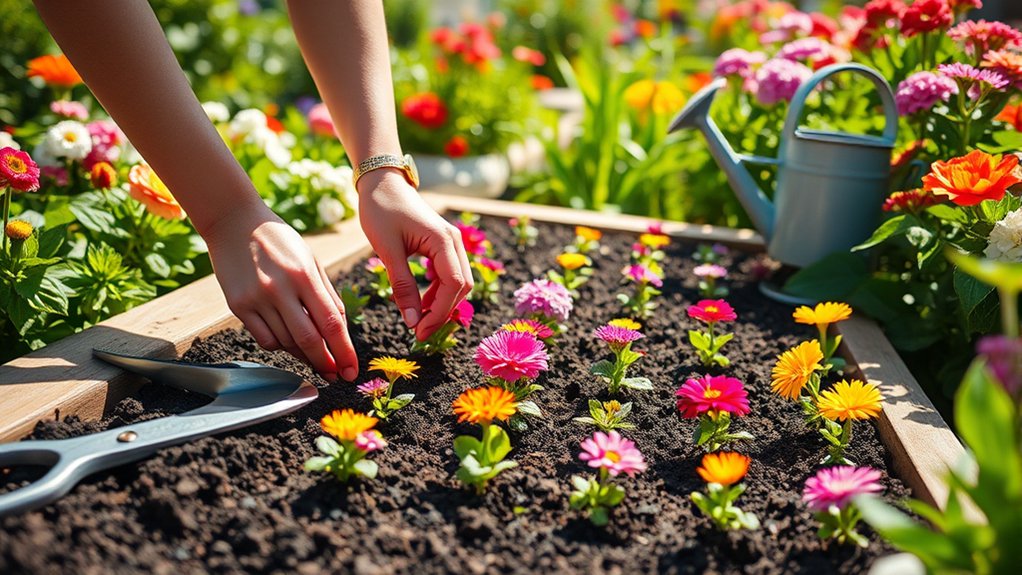
Before planting, prepare the bed so roots can grow into loose, well-drained soil. Clear weeds, grass, stones, and leftover roots from the area. Then loosen the ground with a garden fork, working about 8 to 12 inches deep without turning wet soil, which can compact it. Check your soil texture: sandy soil drains quickly, while clay holds water and may need organic matter.
- Spread 2 to 3 inches of compost over the bed.
- Mix it into the loosened soil to improve structure and drainage.
- Break up large clumps, but don’t pulverize the soil.
- Remove any remaining weeds and debris by hand.
- Rake the surface level, keeping the bed slightly raised if drainage is poor.
If you’re planning seed starting directly in the garden, create a fine, even surface where small seeds can make good contact with the soil. Water the prepared bed lightly if it’s dry, then let excess moisture drain. A clean, enriched bed gives your flowers room to establish strong roots.
Plant Flowers at the Right Time
When should you plant? Check your local frost dates before choosing a planting day. Cool-season flowers, such as pansies and snapdragons, can handle chilly weather, so you can plant them in early spring. Wait until frost danger passes before setting out warm-season flowers, including zinnias and marigolds. Your climate and the variety’s growing instructions will help you choose the right window.
If you’re starting flowers from seed, read the packet for timing and sowing directions. Some seeds need light, warmth, or a period of cold to encourage seed germination. Start them indoors when the packet recommends, then move seedlings outside after they’ve adjusted to outdoor conditions. You can also sow hardy varieties directly in the garden when the soil is workable.
Check each flower’s mature size and root depth before planting. Set seedlings at the depth they grew in their pots, and follow spacing guidance so roots and foliage have room to develop. Plant on a calm, mild day to reduce stress.
Water and Mulch Your New Flower Garden
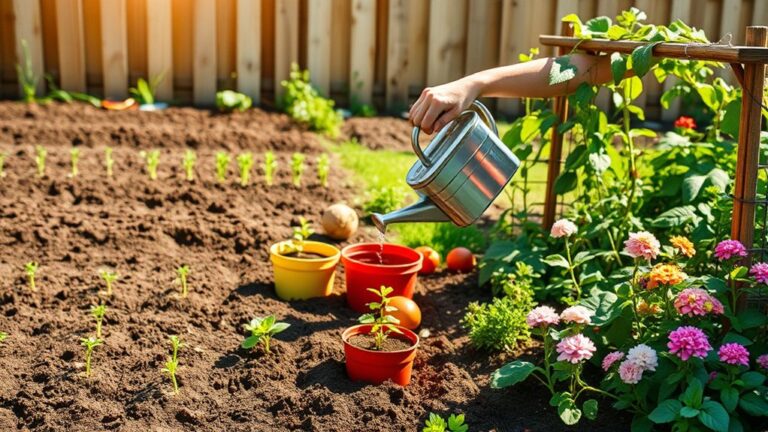
Water your new flowers deeply after planting to help settle the soil around their roots. Aim the water at the base of each plant, keeping foliage dry to reduce disease risk.
Check the soil regularly during the first few weeks, and water whenever the top inch feels dry. Your garden may need more frequent watering in hot, windy weather.
Use these simple steps to keep moisture steady:
- Water slowly so moisture reaches the root zone rather than running off.
- Check soil before watering; don’t follow a rigid schedule.
- Add a two- to three-inch layer of organic mulch around plants.
- Keep mulch a few inches away from stems to prevent rot.
- Replenish mulch as it breaks down, maintaining even coverage.
Thoughtful mulch layering supports water retention, limits weeds, and moderates soil temperature. Choose shredded bark, compost, or leaf mold, and spread it evenly without burying young plants.
After rain, check moisture beneath the mulch; water only when the soil needs it.
Frequently Asked Questions
What Tools Are Useful for Maintaining a Flower Garden?
You’ll need a few reliable tools to keep your flower garden thriving: hand pruners for trimming stems, a trowel for planting, a weeder for removing unwanted growth, and a watering can or hose for hydration. Add gloves to protect your hands and a rake to clear leaves.
Choose comfortable, lightweight designs to support garden ergonomics, and practice tool maintenance by cleaning, drying, and sharpening tools regularly. That keeps them safe, effective, and ready for every task.
How Can I Prevent Pests From Damaging My Flowers?
You can protect your flowers from pests before a tiny nibble becomes a garden-wide feast. Inspect leaves regularly, remove pests by hand, and trim damaged growth.
Use pest deterrent strategies such as row covers, companion planting, and insecticidal soap when needed. Encourage beneficial insects by planting diverse blooms, and avoid broad-spectrum pesticides.
Strong plants resist damage, so follow soil health basics: add compost, water consistently, and match flowers to their growing conditions.
Should I Deadhead Flowers, and How Often?
Yes, you should deadhead many flowers to encourage more blooms and keep plants tidy. Snip each faded flower just above a healthy leaf or bud, using clean scissors or your fingers.
Your deadheading frequency depends on the plant: check flowering plants every few days during peak bloom, or weekly when blooms are sparse. Some flowers, such as those grown for seed or wildlife, should remain on the plant. Regular care supports bloom retention throughout the season.
How Can I Attract Pollinators to My Flower Garden?
You can attract pollinators by turning your garden into a welcoming inn, where bees and butterflies find food, shelter, and safe places to rest. Plant vibrant nectar sources that bloom across the seasons, and group flowers so visitors can spot them easily.
Your garden design should include native plants, shallow water, and sunny, wind-protected spots. Skip pesticides when possible; pest prevention through healthy soil and diverse planting keeps your guests safe and encourages repeat visits.
When Should I Prune Flowering Plants?
Prune flowering plants according to when they bloom. For spring-flowering shrubs, wait until their flowers fade, since they often set next year’s buds soon afterward.
Prune summer bloomers in late winter or early spring before new growth begins. Your preference for pruning may depend on the plant’s shape, health, and size, but timing matters most.
Check each plant’s needs, avoid pruning during frost or heat stress, and remove dead or damaged growth whenever you spot it.
Conclusion
With your spot chosen, soil improved, and flowers arranged for your climate and space, you’re ready to bring your garden to life. Plant at the right time, water deeply, and add mulch to help your blooms thrive.
Keep an eye on sunlight, moisture, and spacing as the seasons change, and adjust your care when needed. You don’t have to get everything perfect on day one.
With a little patience, you’ll watch your flower garden blossom into a colorful retreat right in your own backyard. Planning a flower garden is a rewarding way to create a space you’ll love.