How Do I Make a Garden in 3 Simple Steps
Starting a garden can feel overwhelming when you’re unsure where to begin or worried your plants won’t thrive. You’re not alone—many people struggle to turn a patch of soil into a flourishing garden. The good news is that learning how to make a garden can be simple when you follow a few practical steps.
Make a garden in three simple steps: choose a sunny, accessible spot with well-drained soil and at least six hours of daily light, then pick plants suited to your space and local growing season.
Next, clear weeds and stones, loosen the soil, and mix compost into the top few inches.
Finally, plant seeds or seedlings at the recommended depth and spacing, water gently, and add mulch.
Keep soil moist, weed regularly, and uncover tips for making your garden thrive below.
Key Takeaways
- Choose a sunny, accessible spot with well-drained soil, nearby water, and at least six hours of daily sunlight.
- Plan your garden’s size and layout around available space, suitable crops, mature plant size, and clear paths.
- Prepare the soil by removing weeds and stones, loosening it, and mixing compost into the top few inches.
- Plant seeds or seedlings at the recommended depth and spacing, then gently firm the soil around them.
- Water deeply at the base, check soil moisture regularly, and mulch around plants while keeping stems clear.
Choose a Garden Spot and What to Grow

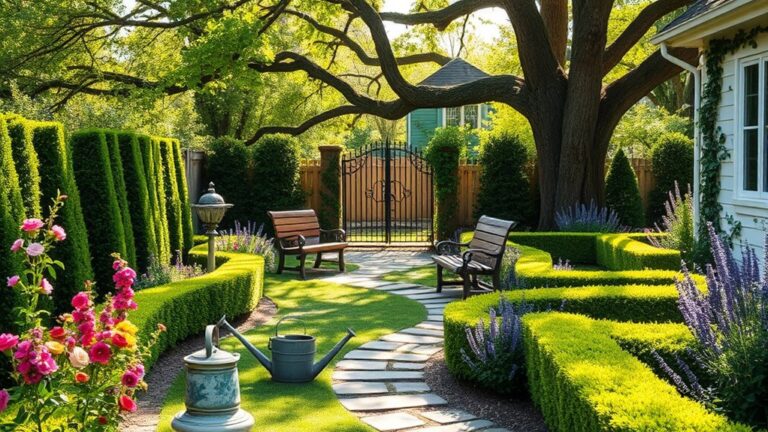
Start by choosing a sunny, accessible spot with well-drained soil, then pick plants that suit your climate, space, and cooking habits. Aim for at least six hours of sunlight daily for most vegetables and herbs. Check how water reaches the area, and place your garden near a convenient outdoor tap to make regular care easier. Avoid low spots where rainwater collects, and consider nearby trees that may cast shade or compete for moisture.
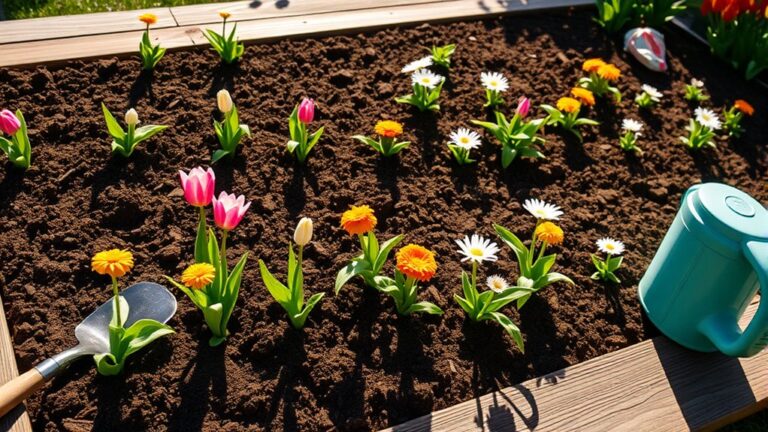
Your design considerations should reflect the space you have and how you’ll use it. A small patio can support containers, while a larger yard can accommodate rows or raised beds. Choose crops you enjoy eating, and check their mature size before deciding how many to grow. Match plants to your local growing season, too.
For garden aesthetics, arrange plants by height, color, or texture, and leave clear paths for access. You’ll create an attractive, practical layout that fits your routine and makes every planting choice purposeful.
Prepare the Soil and Plant Your Garden
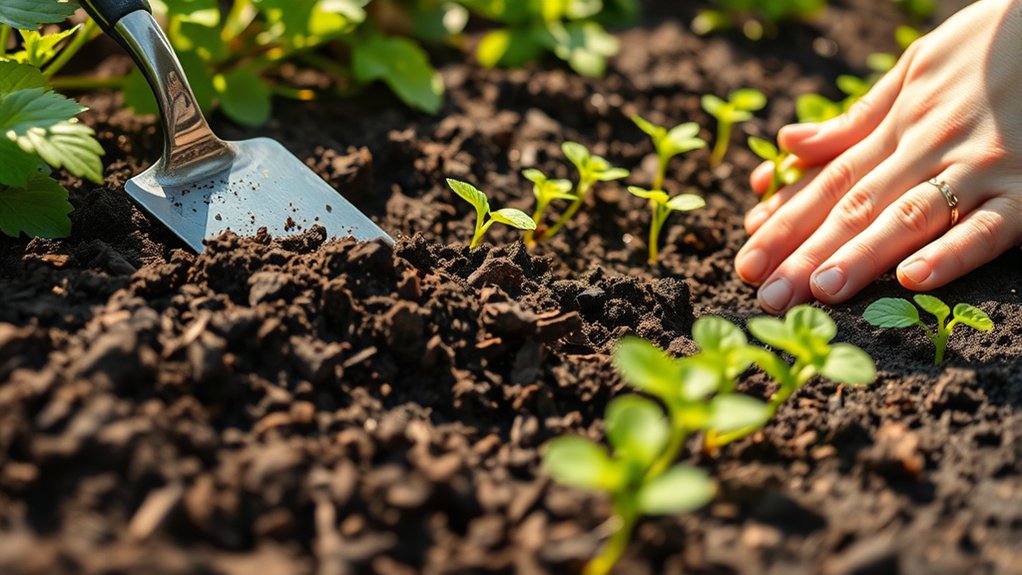
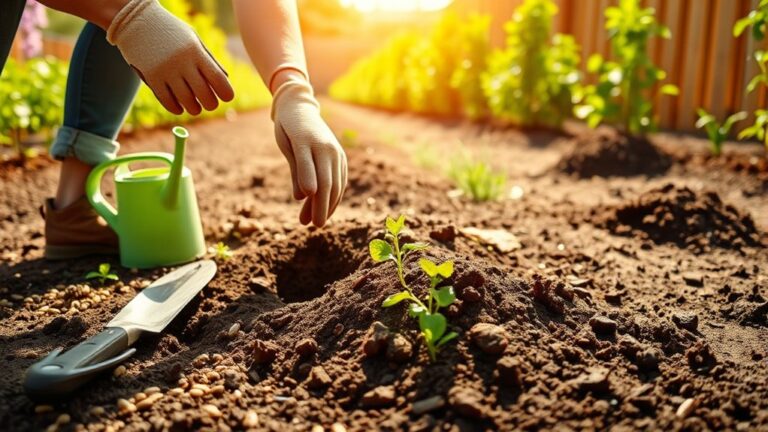
Prepare the soil by removing weeds and stones, then loosen it with a garden fork or shovel. Break up large clumps so roots can spread easily. Add a layer of compost and mix it into the top few inches to improve texture and provide nutrients.
Remove weeds and stones, loosen the soil, break up clumps, and mix in compost to improve texture and add nutrients.
If you’re unsure what your soil needs, consider soil testing through a local extension service. The results can guide you on whether to adjust its pH or add specific nutrients.
Before planting, check the seed packets or plant labels for spacing and depth instructions. Make shallow holes or furrows, place seeds at the recommended depth, and cover them gently with soil.
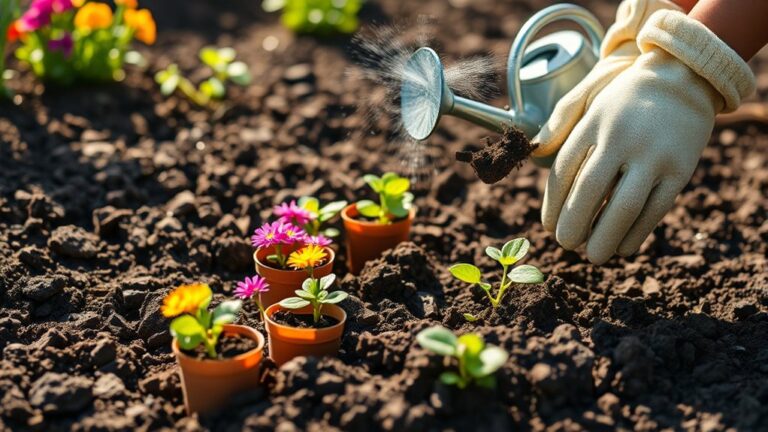
For seedlings, dig holes wide enough to hold their roots without bending them. Set each plant at the same depth it grew in its container, then firm the soil around its base. Leave enough space between plants for mature growth.
If you’re seeking discussion ideas, compare planting layouts with a gardening group or experienced neighbor.
Water and Care for Your New Plants

Water your new plants gently and deeply after planting to help settle the soil around their roots. Check moisture by pressing a finger into the soil; water when the top inch feels dry. Aim water at the base, not the leaves, to reduce disease. A drip irrigation system delivers steady moisture while saving time.
| Plant sign | What you should do | How often |
|---|---|---|
| Dry soil | Water slowly | As needed |
| Drooping leaves | Check soil moisture | Immediately |
| Yellow leaves | Reduce watering | Recheck in days |
| New growth | Keep care steady | Weekly |
Spread organic mulch around plants, leaving space around each stem. Mulch helps soil retain moisture and suppresses weeds. Pull weeds before they compete for water and nutrients.
Inspect leaves regularly for pests or damage, and remove affected growth with clean tools. Follow seed-packet spacing and care guidance, since each plant has different needs.
As roots establish, adjust watering to rainfall and weather. During hot, windy days, check soil more often; after rain, avoid watering until the soil begins to dry. You’ll help your garden thrive with consistent, attentive care.
Frequently Asked Questions
What Gardening Tools Should Beginners Buy First?
Start with beginner tool basics: buy a hand trowel, pruning shears, garden gloves, and a watering can or hose with a gentle nozzle. These essential starter gear items cover planting, trimming, protecting your hands, and watering. Add a sturdy hand fork if you’ll loosen soil or remove weeds. Choose comfortable, durable tools that fit your hands, and skip specialized equipment until you know what your garden needs.
How Can I Keep Pests Away Without Using Harsh Chemicals?
You can keep pests away with gentle, chemical-free methods—no need to summon a medieval knight! Start by checking leaves often, then handpick larger pests and remove damaged foliage. Cover young plants with lightweight row covers, and invite helpful insects by growing flowers such as marigolds.
Rotate crops, clear weeds, and avoid overwatering to make your garden less inviting. For targeted pest control, use insecticidal soap only when needed, following the label carefully.
When Is the Best Time of Year to Start a Garden?
The best season to start your garden depends on what you want to grow and your local climate. For most vegetables, begin in spring after the last frost, when the soil has warmed.
Your start timing may differ for cool-weather crops, which you can plant earlier, or fall crops, which you can sow in late summer. Check local frost dates, plan soil preparation, and use seed starting indoors to get a head start.
How Can I Garden Successfully in a Small Space?
Small space, big harvest: you can garden successfully by choosing compact plants, using containers, and making every inch count. Grow herbs, lettuce, cherry tomatoes, or dwarf varieties in pots that fit your light and watering needs.
Try vertical growing with wall planters, shelves, or trellises to lift crops off the floor. On a compact balcony, group containers for easy care, check drainage, and water regularly. Harvest often to encourage fresh growth throughout the season.
What Are the Benefits of Growing Native Plants?
Growing native plants helps you create a healthier, easier-to-maintain garden. You’ll provide food and shelter for native pollinators, including bees, butterflies, and birds, while supporting local biodiversity.
Because these plants suit your region’s climate and soil, they often need less watering, fertilizer, and pest control than nonnative varieties. Their natural drought tolerance can also help your garden thrive during dry spells.
Conclusion
You’ve chosen a spot, prepared the soil, and planted your garden—now give it steady care. Water your plants as needed, watch for weeds, and notice how they respond to sunlight. Don’t worry if everything doesn’t flourish right away; gardening is a learning process, and each season teaches you something new. With patience and a little attention, your small patch can bloom into a rewarding retreat.
Start with these simple steps to make a garden, and let it grow alongside you.