How to Plant Flowers in a Flower Bed in 3 Simple Steps
Choosing flowers for a bed can feel overwhelming when you’re not sure what will thrive in your space. You’re not alone—many gardeners struggle to find the right flowers and give them a strong start. This guide to how to plant flowers in a flower bed breaks the process into three simple steps.
Plant flowers in a flower bed in three simple steps: prepare the soil, choose suitable flowers, and plant them with room to grow. First, clear weeds and debris, loosen the soil 8 to 12 inches deep, mix in compost, and smooth the surface. Next, match flowers to the bed’s sunlight, soil, and season. Finally, arrange plants, follow spacing guidance, set each root ball in a roomy hole, and water slowly. These tips will help your flowers thrive.
Key Takeaways
- Choose a level bed with convenient water access, then remove weeds, grass, rocks, and old plant debris.
- Loosen soil 8–12 inches deep, test it, mix in finished compost, and rake the surface smooth.
- Check sunlight, soil, and season, then select flowers suited to the bed’s conditions.
- Arrange flowers in their pots, grouping by height and color while allowing room for mature growth.
- Dig holes as deep as the root balls and twice as wide, plant gently, and water slowly.
Prepare Your Flower Bed and Soil
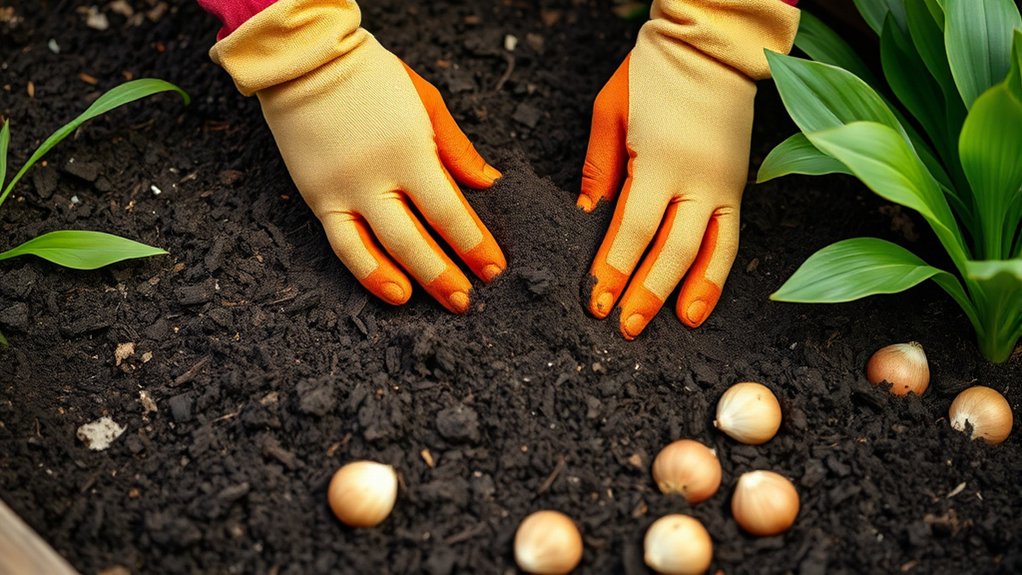
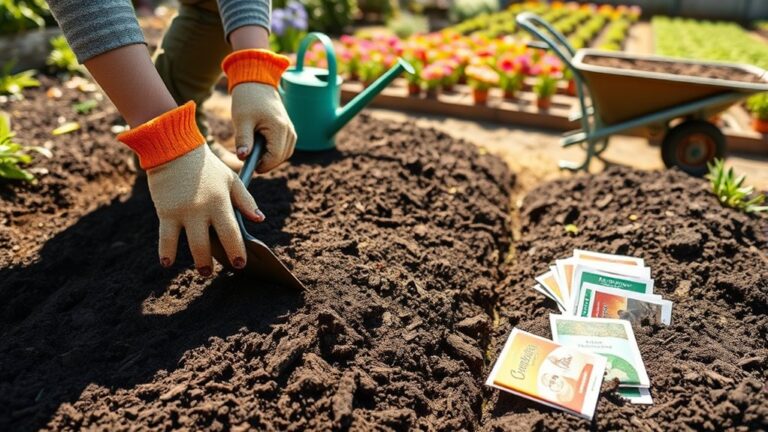
Before you plant, prepare the bed to give your flowers a healthy start. Choose a level spot with convenient access to water, then clear away weeds, grass, rocks, and old plant debris. Remove roots so unwanted growth won’t compete with your flowers.
> Choose a level, water-accessible spot, then clear weeds, rocks, and debris to give flowers a healthy start.
Mark the bed’s shape with a hose or string, and install bed edging to define its boundaries and keep grass from creeping in.
Loosen the soil with a garden fork or spade, working about 8 to 12 inches deep. Break up compacted clumps, but avoid digging when the ground is wet; handling soggy soil can damage its structure.
Use soil testing to learn whether your soil needs adjustments, and follow the test’s recommendations rather than guessing. Mix in finished compost to improve drainage and add organic matter.
Rake the surface smooth, removing remaining stones and clods. Finish by watering lightly to settle the soil. Your bed is now prepared for planting, with a clean, workable surface that supports healthy root growth.
Choose Flowers for Sun, Soil, and Season
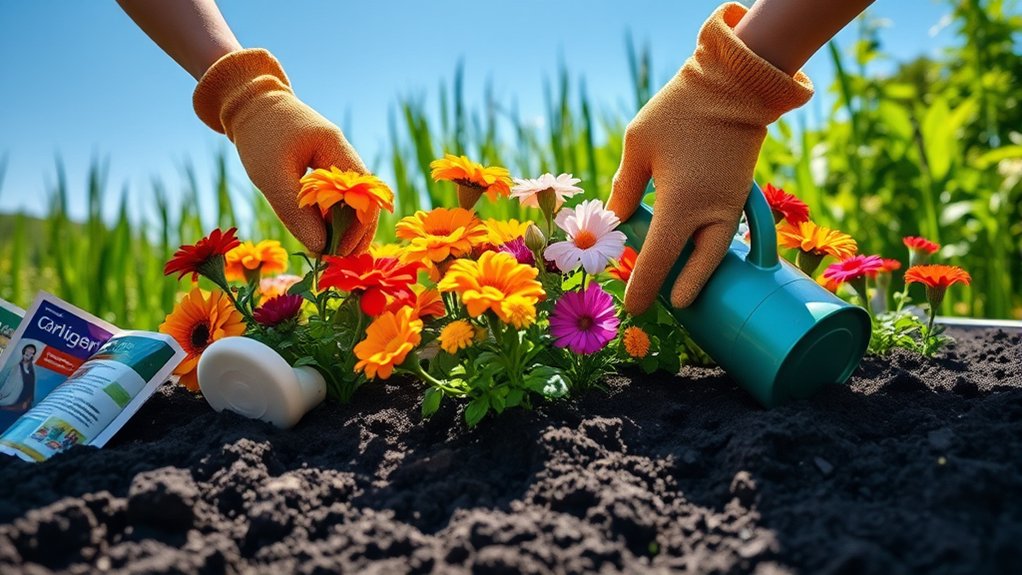
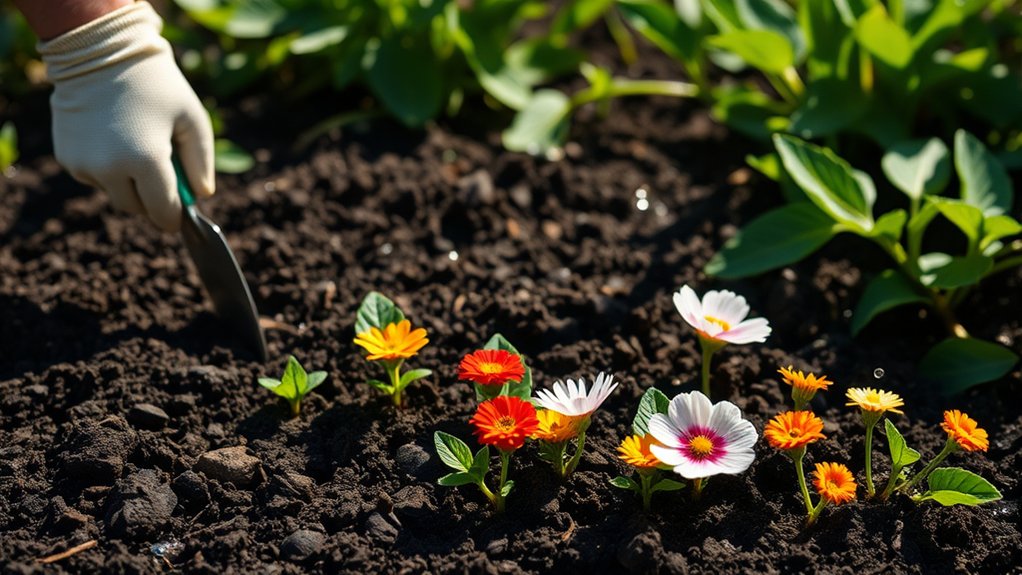
With your bed prepared, choose flowers that match its sunlight, soil, and planting season. Watch the bed throughout the day to see how many hours of direct sun it receives. For bright, exposed spots, select sun-loving varieties such as zinnias, marigolds, or coneflowers. In darker areas, choose shade loving flowers like impatiens, begonias, or hostas.
Next, consider your soil’s texture and drainage. Check plant labels for preferences, and match flowers to the conditions you have rather than forcing a poor fit. If your soil dries quickly, select drought tolerant choices such as lavender or yarrow. For richer, consistently moist soil, look for varieties that thrive in those conditions.
Think about your climate and the season, too. Choose flowers suited to your region’s growing season and last frost date. To enjoy color sooner, select fast blooming annuals. If you want flowers to return in future years, choose perennials that tolerate your local winters. Combine varieties with different bloom times for lasting seasonal color.
Plant Flowers With Proper Spacing and Water
Once you’ve chosen your flowers, arrange them in the bed while they’re still in their pots. Check the layout from several angles, grouping plants by height and color. Leave enough room for each flower to reach its mature width; use the spacing on its plant tag as your guide.
Crowding can limit airflow and encourage disease, while excessive gaps leave the bed looking sparse. If you’re unsure, give spreading varieties extra space.
When the arrangement looks balanced, dig a hole as deep as each root ball and about twice as wide. Gently loosen tangled roots, set each plant at the same soil level it had in its pot, then fill around it and press the soil lightly.
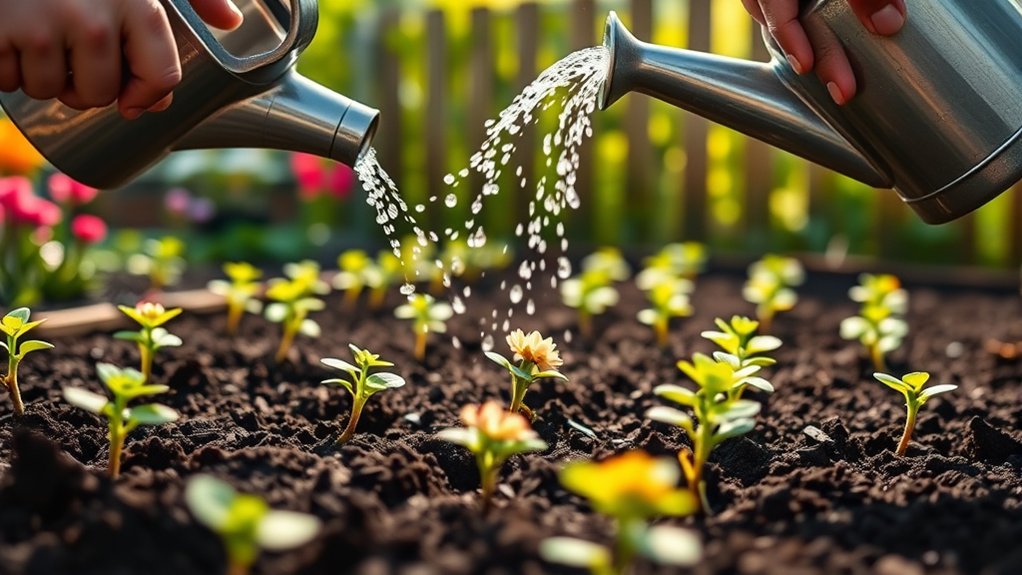
Keep your idea one in mind: water the roots, not the foliage. Soak the bed slowly after planting so moisture reaches the root zone. Your idea two is to check soil regularly; water when the top inch feels dry, adjusting for rain and heat.
Frequently Asked Questions
When Is the Best Time of Day to Plant Flowers?
The best time of day to plant flowers is early morning or late afternoon, when temperatures are cooler and sunlight is less intense. You’ll reduce water loss and help roots settle before heat stresses your plants. Avoid planting at midday, especially during hot, sunny weather.
Check your local planting schedule, too, since ideal timing depends on your flowers and climate. Water thoroughly after planting, and choose a cloudy, calm day when possible.
How Can I Protect Newly Planted Flowers From Pests?
Protecting young blooms starts before dusk, when tiny pests creep toward tender leaves. Cover your flowers with lightweight row fabric or fine mesh, securing the edges so insects can’t slip underneath.
Check leaves daily, and handpick caterpillars or beetles you find. Keep weeds and fallen debris cleared, since they shelter pests.
For gentle pest deterrence, encourage helpful insects and use barriers first; apply a flower-safe treatment only when needed, following its label carefully to protect pollinators.
Should I Remove Faded Blooms From My Flowers?
Yes, you should remove faded blooms from many flowers. This practice, called deadheading, keeps your garden looking tidy and often encourages more blooms by preventing plants from putting energy into seed production.
Those are key deadheading benefits, though some flowers produce attractive seed heads or feed wildlife, so you may want to leave them. For pruning timing, snip spent flowers as soon as they fade, using clean scissors and cutting just above healthy leaves or a bud.
How Can I Keep Weeds From Growing in My Flower Bed?
You can keep weeds from taking over without spending every weekend pulling them. Use effective weeding techniques: remove young weeds by the roots after rain, and don’t let them go to seed.
Add a two- to three-inch layer of mulch to block sunlight and slow new growth, keeping it away from flower stems. For smart mulch selection, choose shredded bark or compost, and replenish thin spots as needed.
Check your bed weekly for emerging weeds.
When Should I Divide or Transplant Established Flowers?
Divide perennials when they’re crowded, bloom less, or develop bare centers—usually every three to five years. For most spring- and summer-blooming plants, divide in early spring or fall, when cooler weather and moist soil help roots recover.
Transplant timing depends on the flower: move spring bloomers after they finish flowering, and move fall bloomers in early spring. Water plants well, lift roots carefully, and replant them promptly at their original depth.
Conclusion
Planting a flower bed starts with prepared soil, flowers suited to your sun and season, and careful spacing and watering. But the real test comes after the last plant goes in. Will you keep the soil moist, watch for stress, and give each bloom room to grow?
Your choices now shape what appears weeks from today. Tend the bed patiently, and you’ll discover that a thriving garden isn’t planted in one afternoon. It’s built with every small act of care you make when you plant flowers in a flower bed.