Beginner’s Guide to Start a Flower Garden in 3 Steps
Starting a flower garden can feel overwhelming when you’re unsure what to plant, where to put it, or how to keep it thriving. You’re not alone—many beginners struggle to get started. This guide to start a flower garden in 3 steps offers a simple plan, and the right gardening products can make each step easier.
Start your flower garden in three steps. First, observe how sunlight moves across your yard, then choose flowers that match each spot: zinnias suit sunny beds, while begonias thrive in shade. Next, test and loosen the soil, remove weeds, and mix in finished compost. Plant after the last expected frost, following each flower’s label for timing, depth, and spacing.
Finally, water when the top inch dries, fertilize as directed, and remove faded blooms. A few practical details can help your garden flourish.
Key Takeaways
- Observe sunlight throughout the day, noting moving shadows and whether each spot receives full sun, partial sun, or shade.
- Choose flowers suited to each location’s light, such as zinnias for sunny beds or begonias for shady corners.
- Test and prepare the soil by removing weeds and stones, loosening it, and mixing in finished compost.
- Plant after the last expected frost, following each flower’s label for planting time, depth, and spacing.
- Water when the top inch of soil dries, fertilize as directed, and remove faded blooms regularly.
Choose Flowers That Fit Your Garden’s Sunlight
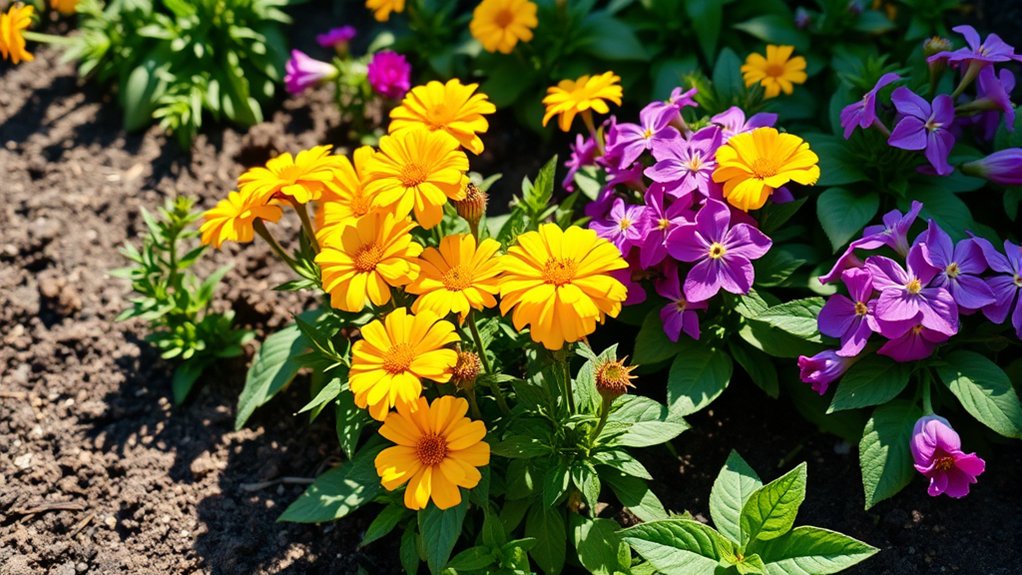
Before choosing flowers, notice how much sunlight your garden gets each day. Watch the area at different times, since buildings, fences, and trees can cast moving shadows. Then match each spot’s light to flowers that will thrive there.
Most flowers labeled full sun need at least six hours of direct sunlight daily. Part-sun varieties generally do well with three to six hours, while shade-loving choices prefer less direct light. Check plant labels or reliable descriptions to confirm each flower’s needs.
This sunlight compatibility helps you avoid varieties that struggle, produce fewer blooms, or grow weakly in the wrong conditions.
If your garden has dim corners, look for flowers with strong shade tolerance, such as begonias or impatiens. For bright, open beds, consider sun-loving options like zinnias or marigolds. You don’t need to fill every space with the same type; choose flowers for each location’s conditions. Keep a simple note of light patterns so you can select suitable varieties.
Prepare the Soil and Plant at the Right Time
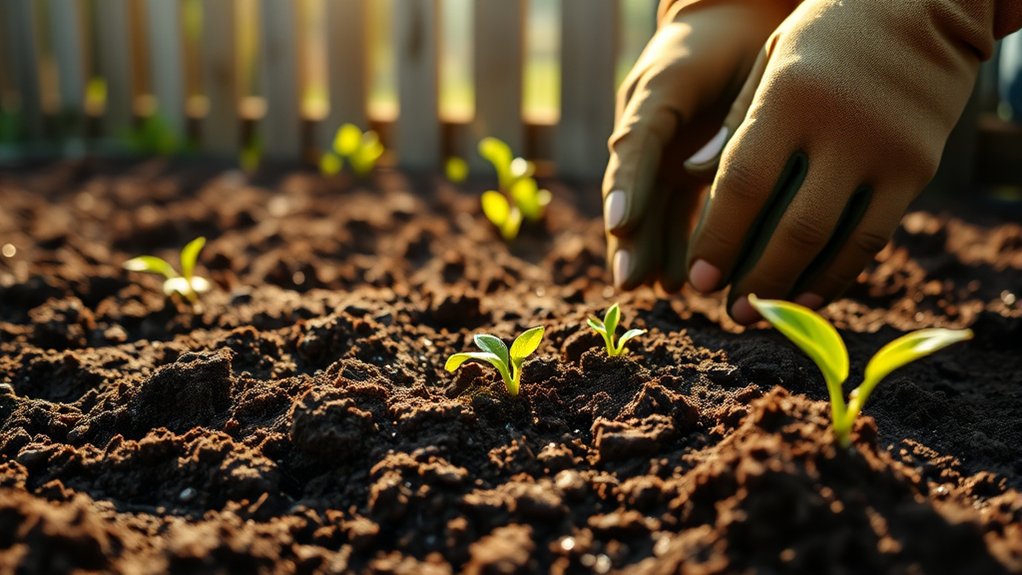
Once you’ve matched flowers to your garden’s sunlight, prepare the soil so their roots can grow well. Start with soil testing to learn whether your bed needs adjustments.
Loosen the ground and remove weeds, stones, and old roots, giving young plants room to settle. Mix in finished compost; leaf mold and aged manure are useful compost options that improve soil structure.
- Picture roots spreading through soft, crumbly earth.
- Choose a planting day after your area’s last expected frost.
- Check each flower’s label for its preferred planting window.
- Use sunlight shading notes to confirm your chosen spot still suits each plant.
Planting at the right time helps flowers establish before summer heat or winter cold arrives. If you’re starting seeds indoors, follow the packet’s timing and harden seedlings outdoors gradually before transplanting.
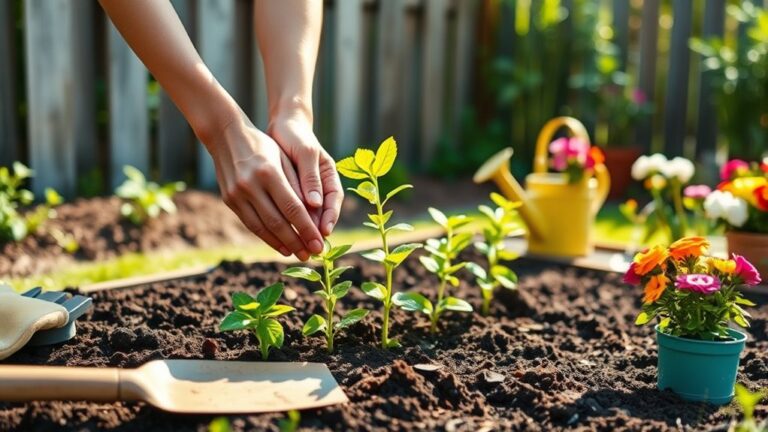
Set each plant at the depth shown on its label, then gently firm soil around its roots. Space flowers according to their mature size, so your garden can grow into a colorful, welcoming display. Don’t rush: a little preparation now gives your blooms a stronger start.
Water, Feed, and Deadhead Your Flower Garden
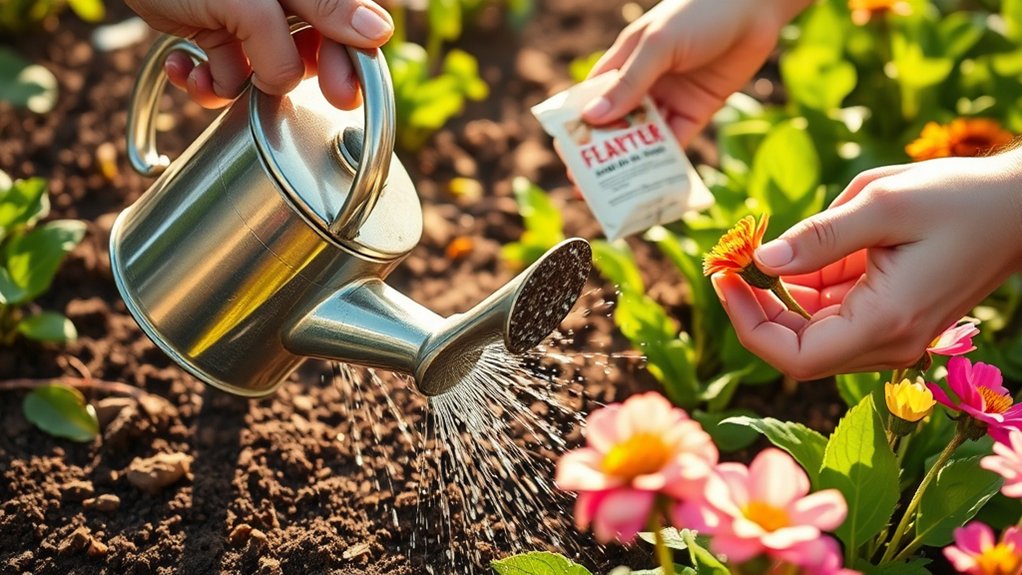
How often should you water? Check the soil first: if the top inch feels dry, water slowly at the base. Your flowers’ water requirements depend on weather, soil compatibility, and plant type. During hot, dry spells, check daily; after rain, wait. Deep, less frequent watering encourages stronger roots.
| Task | What to do | When |
|---|---|---|
| Water | Soak soil near roots | When top inch dries |
| Feed | Apply balanced fertilizer | As label directs |
| Deadhead | Remove faded blooms | Every few days |
| Check | Look for dry soil | More often in heat |
Feed thoughtfully. Too much fertilizer can produce leafy growth instead of flowers, so follow the package directions and avoid feeding stressed plants. Match fertilizer to your flowers’ needs.
Deadhead by pinching or snipping spent blooms just above a healthy leaf or bud. This keeps your garden tidy and often encourages more flowers. Some plants, however, produce attractive seed heads or feed birds; leave those blooms in place. Keep tools clean, and watch plants for wilting, yellow leaves, or pests so you can adjust care promptly.
Frequently Asked Questions
What Tools Do I Need to Start a Flower Garden?
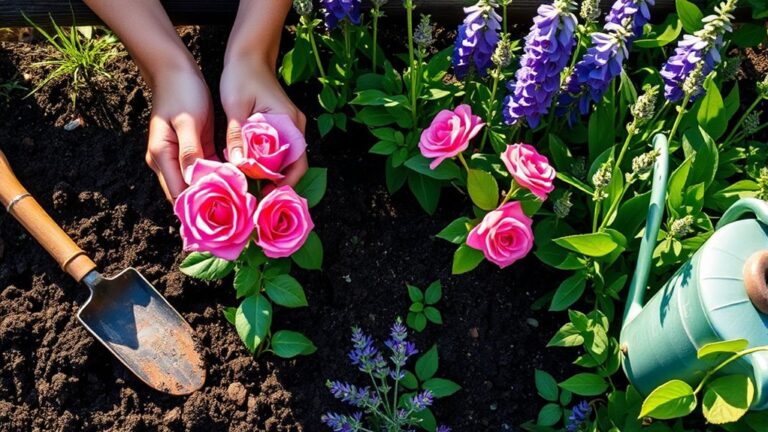
You’ll need a hand trowel, garden fork, pruning shears, watering can or hose, gloves, and a sturdy spade for larger beds. A rake helps you level soil, while a wheelbarrow makes moving compost easier.
Choose tools that fit your hands and feel comfortable. Gardening tool ergonomics can reduce strain during repeated tasks. For Soil testing basics, use a home test kit to check your soil’s pH and nutrients before planting.
How Much Space Do I Need for a Beginner Flower Garden?
You can start a beginner flower garden in just 4 square feet, such as a 2-by-2-foot bed or a few containers. For easier space planning, choose a sunny spot you can reach without stepping on the soil.
If you have room, expand to a 4-by-4-foot plot as your confidence grows. Let beginner priorities guide you: start small, pick a few easy-to-grow flowers, and leave enough space between plants for healthy growth and airflow.
Can I Grow Flowers in Containers or Balcony Planters?
Yes, you can grow flowers in containers or balcony planters, even if you don’t have a yard. Container gardening benefits include flexible placement, easier access, and control over soil and drainage.
Choose pots with drainage holes, then match their size to your flowers’ roots. Pick varieties suited to your sunlight, such as petunias for bright balconies or begonias for shade.
Water regularly, since containers dry out faster than garden beds, and feed blooms as needed.
How Can I Keep Pests Away From My Flowers?
You can deter flower pests by inspecting leaves weekly, removing damaged growth, watering at the soil, and encouraging ladybugs with diverse plantings. One study found that nearly 75% of flowering plants rely on animal pollinators, so choose controls that protect helpful insects, too.
Try beginner friendly methods like handpicking pests or using insecticidal soap as directed. Don’t trust pest control myths, and skip irrelevant topics; identify the pest before taking action.
Which Flowers Are Best for Attracting Butterflies and Bees?
Choose native, single-petal flowers to welcome butterflies and bees. Plant coneflowers, black-eyed Susans, zinnias, and asters for butterfly-friendly nectar, and add lavender, salvia, borage, and bee balm for bee-attracting fragrances.
Include flowers that bloom in different seasons so pollinators can find food from spring through fall. Group each variety in sunny spots, and skip pesticides that could harm visiting insects. You’ll create a colorful garden that supports pollinators throughout the growing season.
Conclusion
With the right flowers, well-prepared soil, and a little care, you’ve got everything you need to turn your garden into a blooming paradise. Match plants to your sunlight, plant at the right time, and keep up with watering, feeding, and deadheading.
Your first garden doesn’t have to be perfect. Flowers are wonderfully forgiving. Before long, you’ll be surrounded by so many bright blooms, the bees may think you’ve opened the world’s tiniest flower festival.
Get growing, and enjoy every petal. This beginner’s guide to starting a flower garden will help you make the most of every bloom!