How to Grow an English Garden in 5 Simple Steps
Creating an English garden that feels lush and charming can be tricky, especially when you’re not sure where to start. You’re not alone—many people struggle to choose the right plants and arrange them beautifully. This roundup will help you find the essentials for growing an English garden in five simple steps.
To grow an English garden in five simple steps, start by choosing a sunny, well-drained spot that gets at least six hours of light daily. Improve the soil with two to three inches of compost, then select flowers suited to your space, such as roses for sun or foxgloves for partial shade.
Arrange plants by height, with taller blooms behind or in the center. Add a path or containers for charm, then water deeply and deadhead regularly. You’ll find more helpful details below.
Key Takeaways
- Choose a bright, well-drained spot with at least six hours of direct sunlight, and test the soil’s texture, pH, and nutrients.
- Improve the bed by mixing two to three inches of compost into the top six to eight inches of soil.
- Select flowers suited to your light, soil, and garden size, checking their mature heights and bloom times.
- Layer tall, medium, and low plants, repeating colors and overlapping bloom times for a cohesive cottage-garden look.
- Water deeply when the top inch of soil is dry, deadhead faded blooms, and keep paths and containers tidy.
Find a Sunny Spot and Improve Your English Garden Soil
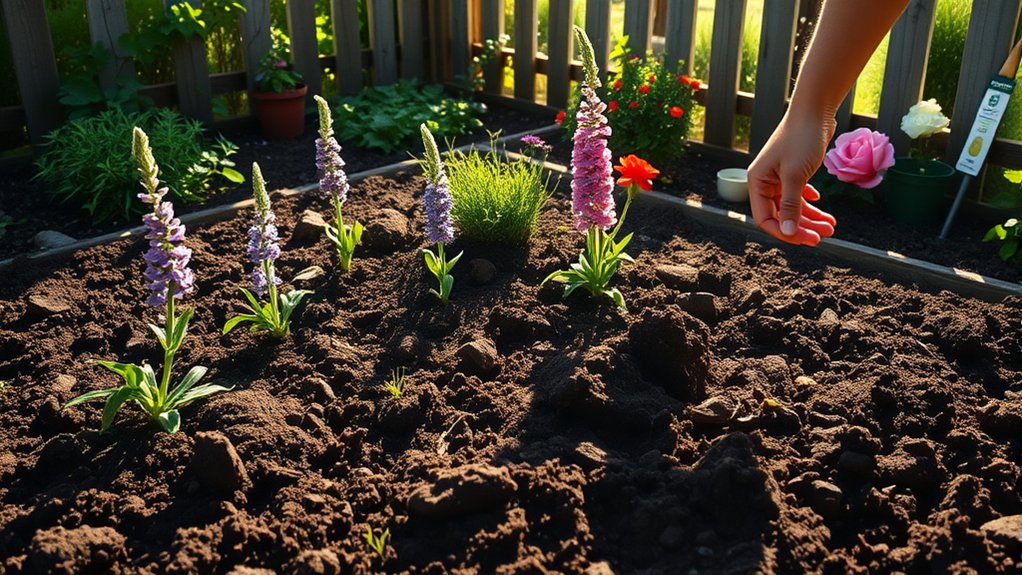
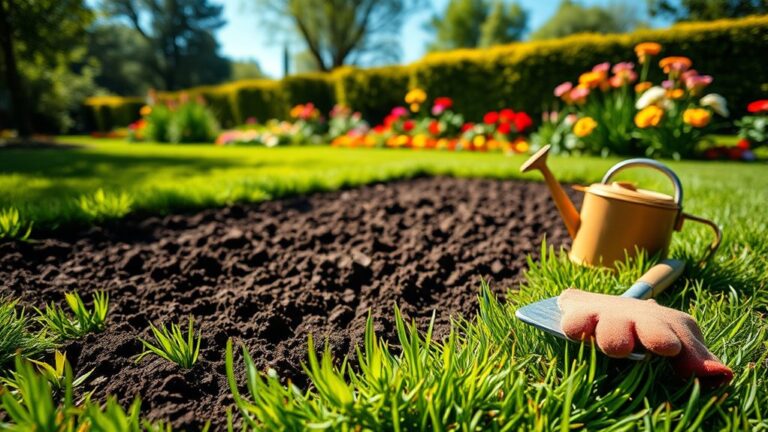
English gardens thrive in a sunny spot that gets at least six hours of direct light each day. Before you settle on a location, watch how sunlight moves across your yard. Note shadows from trees, fences, and buildings, and choose a sunny spot that stays bright for most of the day. Check that the area also drains well; standing water can damage roots and compact the ground.
Next, assess your soil. Grab a handful when it’s slightly damp: healthy soil should crumble rather than form a hard lump or feel gritty. You can also use a soil test to learn its pH and nutrient levels.
For practical soil improvement, spread two to three inches of finished compost over the bed, then mix it into the top six to eight inches. Compost boosts organic matter, improves drainage in heavy clay, and helps sandy soil retain moisture. Remove stones and weeds as you work, and rake the surface smooth before planting.
Choose English Garden Flowers for Your Space
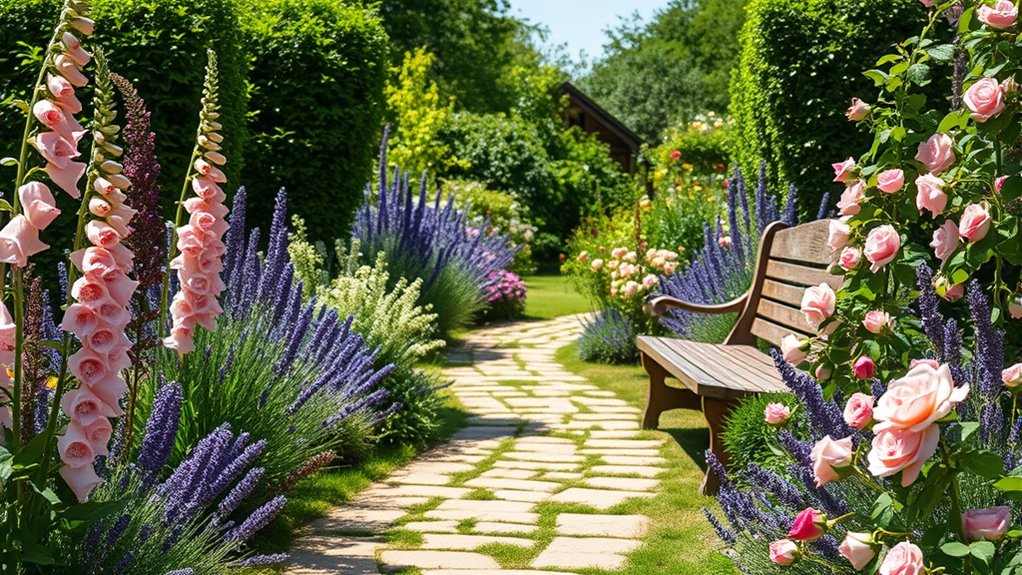
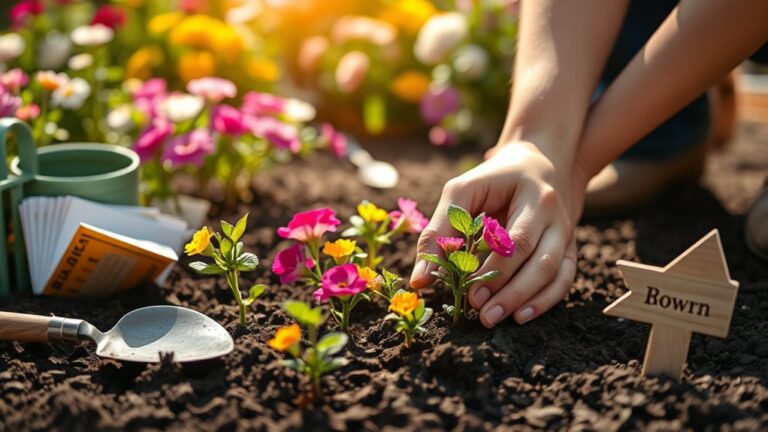
Which flowers suit your space depends on its size, light, and the look you want. Choose flowers that thrive in your garden’s conditions, rather than selecting them by appearance alone. For a sunny spot, consider roses, delphiniums, or hardy geraniums; for partial shade, try foxgloves, primroses, or sweet woodruff.
Check each plant’s mature size and bloom time so your choices fit your garden layout and provide color across the growing season.
Before buying, read plant labels and match each flower’s needs to your soil health, drainage, and available light. Group plants with similar requirements to support plant compatibility and make care simpler.
If your soil is heavy or dry, choose varieties that tolerate those conditions, or amend the ground as needed. Include a mix of familiar cottage-garden favorites and a few flowers you love, but keep your selection manageable.
A thoughtful shortlist helps you create a cohesive English garden without overcrowding your space or taking on more maintenance than you can manage.
Layer Plants for a Lush Cottage-Garden Look
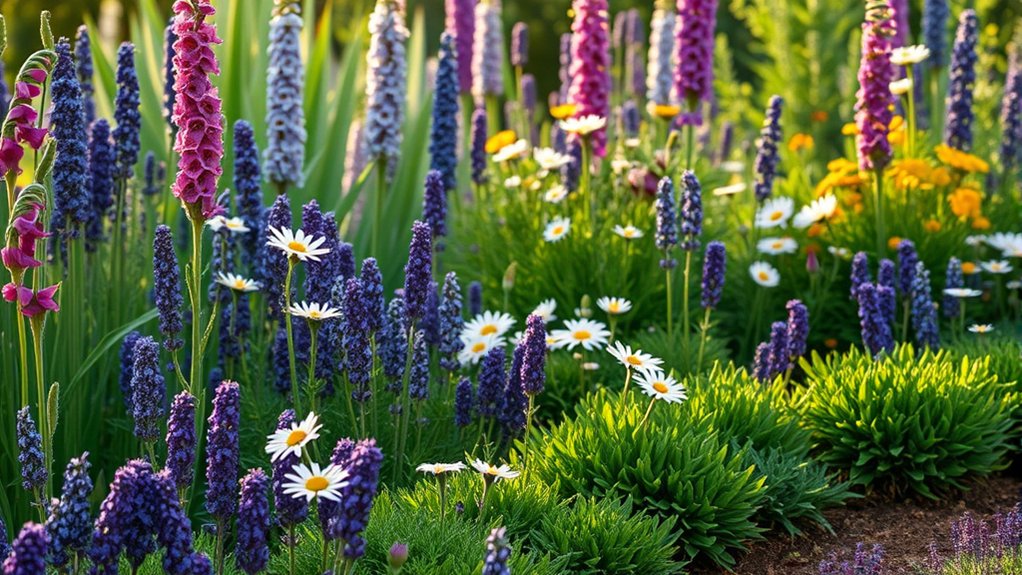
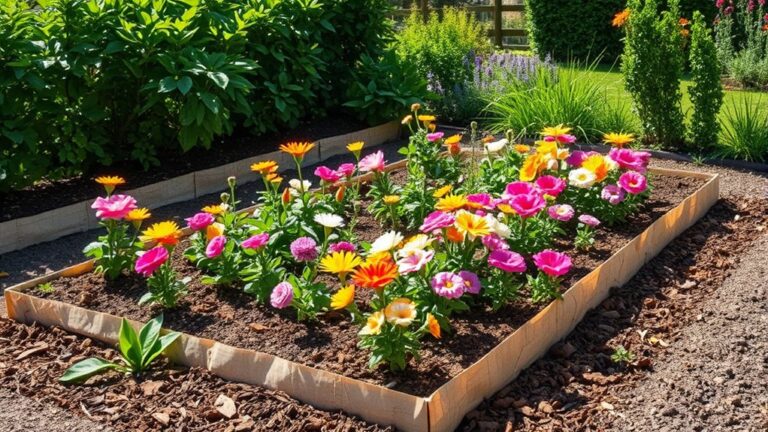
To create a lush cottage-garden look, layer plants by height: place tall flowers at the back or center, medium-sized blooms around them, and low-growing plants along the edges. This arrangement gives each plant room to shine while creating a relaxed, abundant feel.
In a border viewed from one side, keep the tallest varieties behind shorter ones. For an island bed, position the highest flowers in the middle and step down toward every edge.
Think beyond height when layering textures. Pair upright foxgloves with rounded roses, airy cosmos, and soft foliage to add contrast and movement. Choose plants with overlapping bloom times, so your display stays colorful from spring into fall. Repeat a few flower colors throughout the bed to make the mix feel cohesive rather than chaotic.
You can also create scent focused combos near a spot where you often pause. Combine fragrant roses, lavender, and sweet alyssum, checking each plant’s light and water needs before planting. Give mature plants enough space to grow.
Add Containers and Paths to a Small English Garden
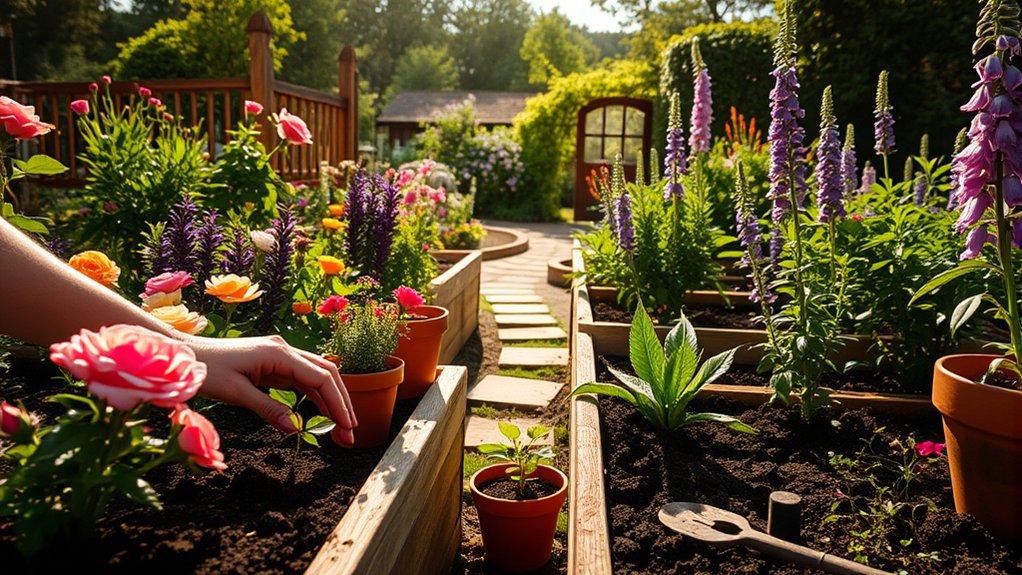
Once your layered beds take shape, add containers and a simple path to make a small English garden feel more inviting. Choose accented containers in varied sizes to bring color and height to a patio, doorway, or empty corner.
Terracotta pots suit a classic cottage style, while painted planters can echo hues from your flowers. Group containers in odd numbers, and leave enough space around each one so your display feels balanced rather than crowded. You can move pots as needed to fit your layout.
For a path, use brick, gravel, stepping stones, or reclaimed pavers that complement your home and garden. Let winding paths curve gently around beds to create a sense of discovery, even in a compact space.
Keep the route wide enough for comfortable walking, and make the surface firm and level. A clear path helps you reach every part of the garden while guiding visitors through its layered planting. Add a simple bench where the path opens onto a quiet view.
Water, Deadhead, and Keep Blooms Coming All Season
With your paths and containers in place, steady care helps the garden keep flowering. Check the soil before watering; when the top inch feels dry, soak the roots deeply. This simple water management routine helps you avoid both thirsty plants and soggy beds. Water early in the day so leaves dry before evening, reducing disease risk.
Remove faded flowers regularly to redirect energy toward fresh buds. Pinch or snip each spent bloom just above a healthy leaf or new side shoot. Set deadheading reminders on your phone, especially during peak summer, when blooms fade quickly. Keep an eye out for drooping stems, yellow leaves, and dry containers; each signals a need to adjust your routine.
| Garden moment | What you’ll feel |
|---|---|
| Fresh buds appear | Hope returns |
| A dry spell passes | Relief settles |
| New blooms open | Joy brightens |
With consistent care, you’ll enjoy a garden that keeps offering color, fragrance, and small moments of delight from spring through fall.
Frequently Asked Questions
How Can I Attract Pollinators to My English Garden?
Attract pollinators by planting a varied mix of pollinator friendly plants that bloom from spring through fall. Choose native nectar sources suited to your region, and include flowers with different shapes and colors to welcome bees, butterflies, and hummingbirds. Let a few herbs and vegetables flower, too. Avoid pesticides, provide shallow water with landing stones, and leave some bare soil or hollow stems for nesting. You’ll create a lively, welcoming garden.
Which Garden Tools Are Essential for Beginners?
Start with a hand trowel, sturdy gloves, a watering can, a digging fork, and Essential pruners; these cover most beginner garden tasks. One teaspoon of healthy soil can contain more microorganisms than there are people on Earth, reminding you to protect soil as you dig.
Add a hoe for weeding and trays for Seed starting when you’re ready. Choose comfortable, durable tools, clean them after use, and store them somewhere dry.
How Do I Protect English Garden Plants From Pests?
Protect your English garden plants by checking leaves and stems often, then removing pests by hand or spraying them off with water. Cover vulnerable plants with protective netting, and encourage beneficial insects with pollinator-friendly flowers.
Clear away damaged leaves and weeds so pests have fewer hiding places. Use seasonal sprays only when needed, choosing products suited to each pest and following label directions. You’ll prevent damage while protecting helpful insects and keeping your garden healthy.
Can I Grow an English Garden in a Cold Climate?
Yes, you can grow an English garden in a cold climate; where there’s a will, there’s a way. Choose hardy perennials, such as lupines, peonies, and delphiniums, suited to your growing zone. Plant them in well-drained soil and add mulch to protect roots through winter.
For a pollinator-friendly garden and wildlife habitat, include native flowers, shrubs, and seed-bearing plants. You’ll enjoy classic cottage charm while supporting local wildlife year-round.
How Can I Make My English Garden More Wildlife-Friendly?
You can make your English garden more wildlife-friendly by adding diverse habitats and avoiding pesticides. Try these wildlife-friendly strategies: leave a small patch of bare soil for ground-nesting bees, keep a shallow water dish topped up, and let some leaves or stems remain over winter.
Choose pollinator-friendly plants, such as lavender, foxgloves, and native flowers, to provide nectar and pollen across the seasons. Add shrubs or a hedge for shelter and nesting.
Conclusion
An English garden pairs careful planning with a delightfully untamed look. Give your flowers sun and healthy soil, then layer blooms and foliage for a lush, welcoming display.
Even a small space can feel expansive with a winding path or a few well-placed containers. As bright petals soften stone edges, your garden will feel both orderly and free.
Keep watering and deadheading, and you’ll trade bare stems for fresh color, season after season, from quiet mornings to lively summer evenings. With a little care, you can grow an English garden that feels welcoming and full of life.