How to Make a Cottage Garden in 5 Simple Steps
Creating a cottage garden can feel overwhelming when you’re not sure what to plant or where to begin. You’re not alone—many gardeners struggle to balance colorful flowers, practical paths, and plants that thrive in their space. This roundup can help you find simple ideas for how to make a cottage garden that feels welcoming and manageable.
To make a cottage garden in five simple steps, first assess your sunlight, soil, drainage, space, and budget. Next, sketch layered beds with taller plants behind, shorter flowers at the edges, and clear paths.
Prepare the soil by removing weeds, adding compost, and choosing flowers suited to your conditions. Add practical paths and well-drained containers.
Finally, combine early, midseason, and late bloomers, water when needed, and deadhead fading flowers. A few thoughtful choices can help you create a garden that thrives.
Key Takeaways
- Assess sunlight, soil, drainage, available space, and maintenance needs before choosing plants or designing beds.
- Sketch a layered layout with tall plants at the back or center, medium plants in front, and low growers along edges.
- Choose a simple palette of complementary colors, repeating plants, shapes, and textures to create a cohesive look.
- Prepare the soil with weeding, loosening, and compost, then select climate-appropriate flowers suited to each spot.
- Add accessible paths and containers, and extend blooms with seasonal planting, regular deadheading, and deep watering.
Assess Your Space for a Cottage Garden
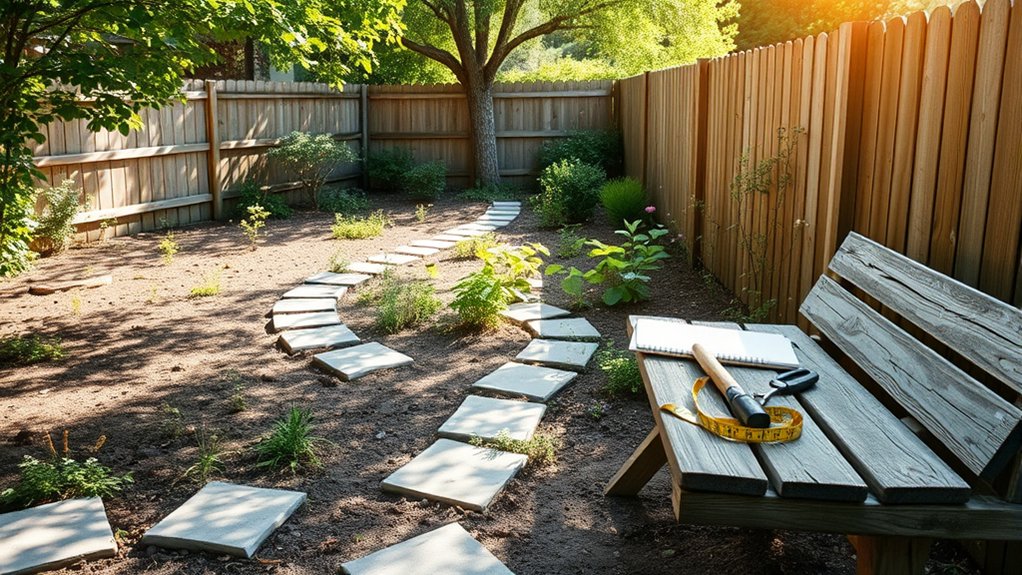
Before you plant, take a close look at the space you have. Note how much sunlight each area receives, and watch where shade falls throughout the day. Most flowering plants need several hours of sun, while some thrive in partial shade.
Check your soil, too: Is it sandy, heavy, or rich and crumbly? A simple soil test can reveal its pH and nutrient levels.
Next, assess drainage by observing the ground after rain. If water pools, you’ll need to address the issue before choosing plants. Measure the available area and note existing features, such as paths, fences, trees, and doors.
Consider how you use the space and how much time you can spend maintaining it. A practical design mindset starts with what your garden can support, not with a wish list.
Include budget considerations early: account for soil improvements, tools, plants, and ongoing care. These observations will help you make suitable choices without costly surprises.
Plan a Layered Cottage Garden Layout
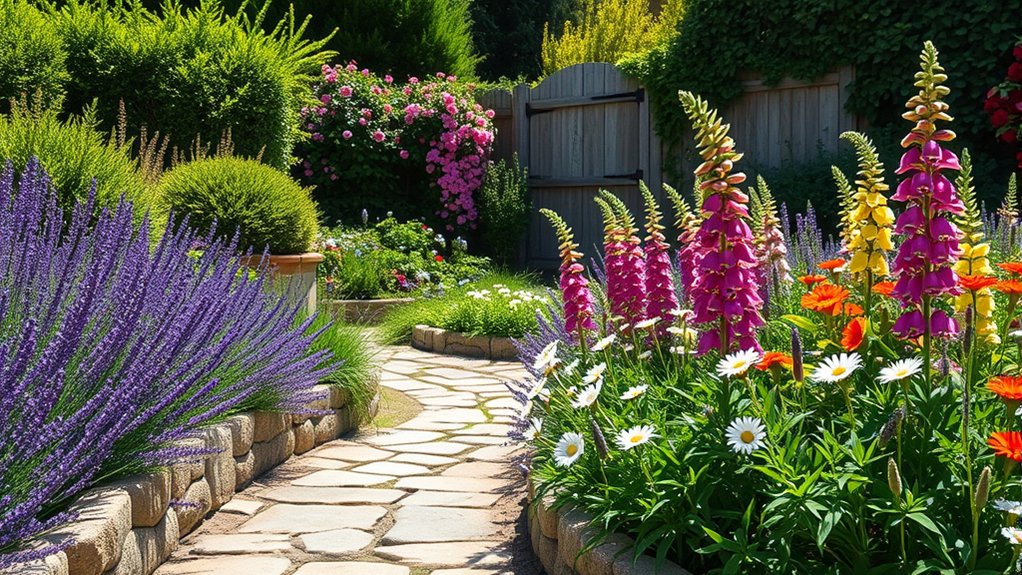
With your site’s light, soil, drainage, and dimensions in mind, sketch a layered layout that gives every plant room to shine. Start with the tallest features at the back of a border or in its center, where you can view them from all sides. Place medium-height plants in front, then reserve the edges for low-growing varieties that soften paths and borders. This tiered arrangement creates depth without hiding shorter plants.
Map paths, seating, gates, and focal points before filling the beds. Keep routes wide enough for comfortable passage, and leave clear sightlines to favorite features. Use curves to create a relaxed, informal feel, but make each turn easy to navigate. Group plants in generous drifts rather than scattering them singly; repeated shapes help the garden feel cohesive.
Build a planning palette around a few complementary hues, then repeat those colors across the space. Thoughtful color coordination ties separate beds together while allowing each layer to stand out. Add a simple key to your sketch.
Prepare the Soil and Choose Your Plants
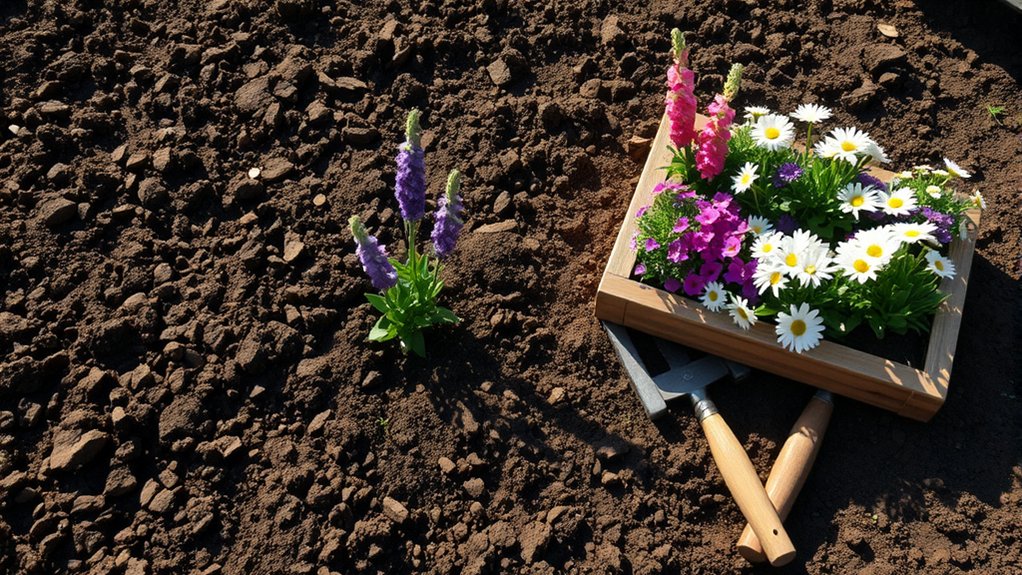
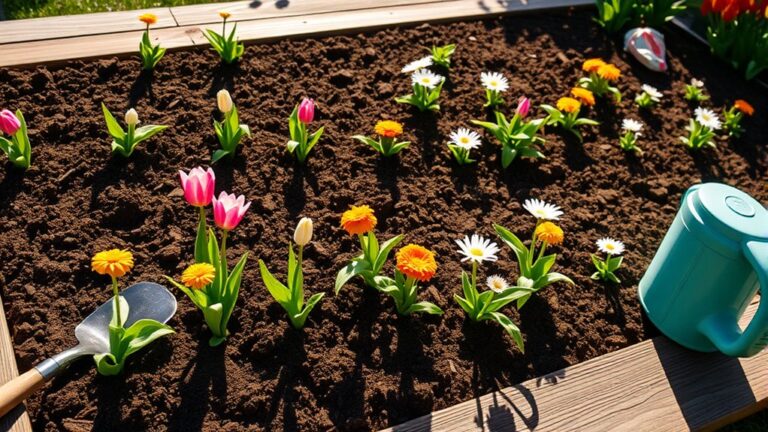
Once your layout is set, prepare the beds by removing weeds and loosening the soil so roots can spread. Mix in compost to improve drainage and add nutrients, then check the soil’s pH and adjust it to suit your chosen flowers.
If you’re unsure what grows well in your area, ask a local nursery or extension service for guidance.
Choose a mix of perennials and annuals to keep your garden lively through the seasons. Include plants with varied heights, bloom times, and textures, while matching each plant’s sunlight and water needs to its spot.
Use color theory to combine complementary hues or create a softer palette with neighboring shades. Your landscape design will feel cohesive when you repeat a few colors and plant varieties throughout the beds.
Add fragrant herbs or self-seeding flowers if you’d like a relaxed, abundant look. Before planting, group pots on the ground to test the arrangement, then follow spacing instructions so mature plants have room to thrive.
Add Paths and Containers to Your Garden
Add winding paths to make your cottage garden easier to wander and care for. Choose gravel, brick, or stepping stones to suit your design aesthetics and budget. Keep paths wide enough for a wheelbarrow, and edge them with bricks or low plants to define the route. For cost considerations, reuse salvaged materials or lay inexpensive gravel over landscape fabric.
| Path material | Look | Upkeep |
|---|---|---|
| Gravel | Informal | Rake smooth |
| Brick | Classic | Reset loose bricks |
| Stepping stones | Natural | Clear gaps |
| Bark mulch | Rustic | Replenish yearly |
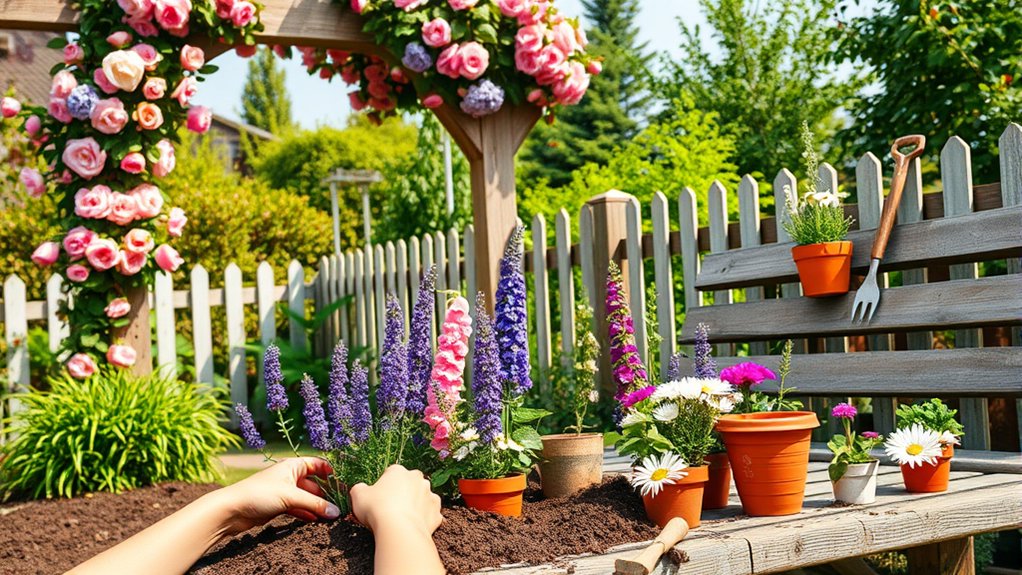
Place containers beside entrances, paths, or seating areas where you’ll notice them. Mix terracotta, wood, and glazed pots for varied texture, but repeat a few colors to keep the display cohesive. Check that each container has drainage holes, then group pots at different heights using sturdy stands or overturned pots.
Choose sizes that fit your space and are easy to move when you need access. A few well-placed containers can add structure without crowding your beds or blocking the path. Keep routes clear so you can reach every corner comfortably.
Keep Your Cottage Garden Blooming Longer
Paths and containers make a cottage garden easier to enjoy; thoughtful plant care keeps it colorful for longer. To keep blooms coming, deadhead fading flowers regularly, removing each spent head just above a healthy leaf or bud. Water deeply when the soil feels dry, and add compost or mulch to support steady growth without overfeeding.
Deadhead spent blooms, water when soil dries, and use compost or mulch to keep cottage garden flowers thriving.
Plan for seasonal succession by pairing early, midseason, and late bloomers. Plant bulbs, perennials, and annuals that flower at different times, so fresh color appears as earlier plants fade.
Choose varieties suited to your climate and growing conditions. Healthy plants resist stress and offer greater plant longevity.
Leave some seed heads for birds, but trim others to encourage another flush of flowers. Group nectar-rich blooms together to attract pollinators throughout the season.
Check plants often for pests or disease, and remove damaged growth promptly. With consistent care and a thoughtful mix of flowering times, you’ll enjoy a lively garden from spring through fall.
Frequently Asked Questions
How Can I Attract Pollinators to My Cottage Garden?
Plant a diverse mix of nectar-rich flowers that bloom from spring through fall, and group each variety so pollinators can find it easily. Choose native plants, including herbs and flowering shrubs, and skip pesticides that can harm bees and butterflies. For Attracting beneficial insects, provide shallow water and undisturbed nesting spots. Soil and mulch choices matter, too: use healthy, compost-enriched soil and light mulch, leaving some bare ground for ground-nesting bees.
Which Cottage Garden Flowers Are Safe for Pets?
Choose pet-safe blooms such as snapdragons, zinnias, sunflowers, asters, and roses for your cottage garden. You can also grow fragrance focused varieties like lavender, but check the specific plant and your pet’s habits first; even generally low-risk flowers may cause stomach upset if eaten.
Avoid toxic favorites such as foxglove, lily of the valley, and delphinium. Keep plants labeled, supervise curious pets, and contact your veterinarian if your pet nibbles an unfamiliar flower.
Can I Grow a Cottage Garden in a Rental Property?
Yes, you can grow a cottage garden in a rental property. Focus on container gardening, which lets you enjoy colorful flowers, herbs, and compact vegetables without changing the landscape. Choose pots with drainage holes, use lightweight containers if you’ll move them, and group plants for a lush look.
Before growing in rentals, check your lease and ask your landlord about restrictions. Protect balconies and floors with saucers, and take your garden with you when you move.
How Do I Protect Cottage Garden Plants From Pests Without Chemicals?
You can guard your plants by turning your garden into a lively, balanced ecosystem. Invite birds and beneficial insects with native flowers, a shallow water dish, and shelter.
Use companion planting: pair crops with herbs or flowers that deter pests, and mix plant varieties to slow infestations. Check leaves often, then handpick pests or rinse them away with water.
Build soil health with compost and mulch, helping plants grow strong enough to withstand damage. Keep barriers handy.
What Cottage Garden Flowers Make Good Cut Flowers?
For good cutflowers, choose cottage varieties such as sweet peas, cosmos, zinnias, dahlias, snapdragons, and delphiniums. These blooms bring color, fragrance, and varied heights to your arrangements.
Pick flowers early in the morning, just as they open, and place stems straight into clean water. Remove leaves below the waterline, then change the water every couple of days.
You’ll enjoy fresh bouquets longer when you harvest regularly and keep plants well watered.
Conclusion
Build your cottage garden one thoughtful step at a time: assess the light, layer flowers, enrich the soil, and weave in winding paths and welcoming containers. Then keep blooms coming with regular deadheading and seasonal planting.
Soon, you’ll have roses climbing, daisies nodding, herbs spilling, and bees drifting through your own little retreat. Don’t worry about perfection; let the garden grow with you.
With patience and care, you’ll create a colorful, fragrant cottage garden that feels charming, abundant, and wonderfully yours.