How Do You Layout a Vegetable Garden in 5 Simple Steps?
Planning a vegetable garden can feel overwhelming when you’re trying to fit everything into the space you have. You’re not alone—many gardeners struggle to choose the right layout. These five simple steps can help you make the most of every bed.
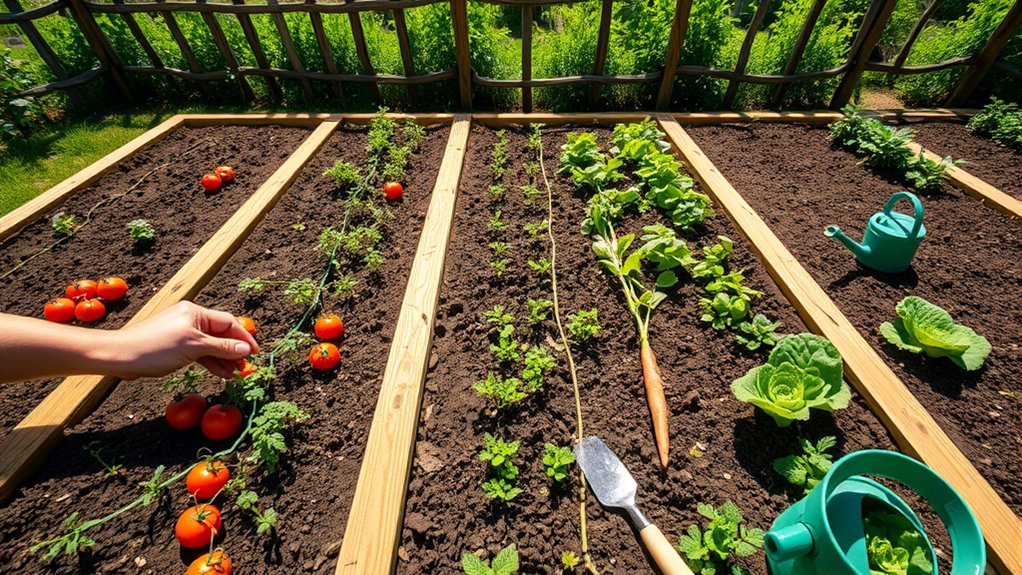
Lay out a vegetable garden in five steps. First, choose a sunny site with at least six to eight hours of direct light and easy access to water and tools. Next, measure the space and sketch beds, leaving room for mature plants. Plan firm paths and convenient irrigation. Arrange tall crops at the back, medium plants in the middle, and low crops in front. Finally, group compatible plants and rotate crop families each year. A few extra planning tips can help you make the most of every bed.
Key Takeaways
- Choose a sunny, accessible spot with six to eight hours of direct sunlight and convenient access to water and tools.
- Measure the space, sketch the garden, mark bed dimensions, and leave room for plants to grow.
- Plan clear paths and irrigation routes so you can reach every bed and move tools easily.
- Arrange vegetables by mature height, placing tall crops at the back or north edge and shorter crops in front.
- Group compatible plants, check their growing needs, and rotate crop families each year.
Choose a Sunny, Accessible Garden Site
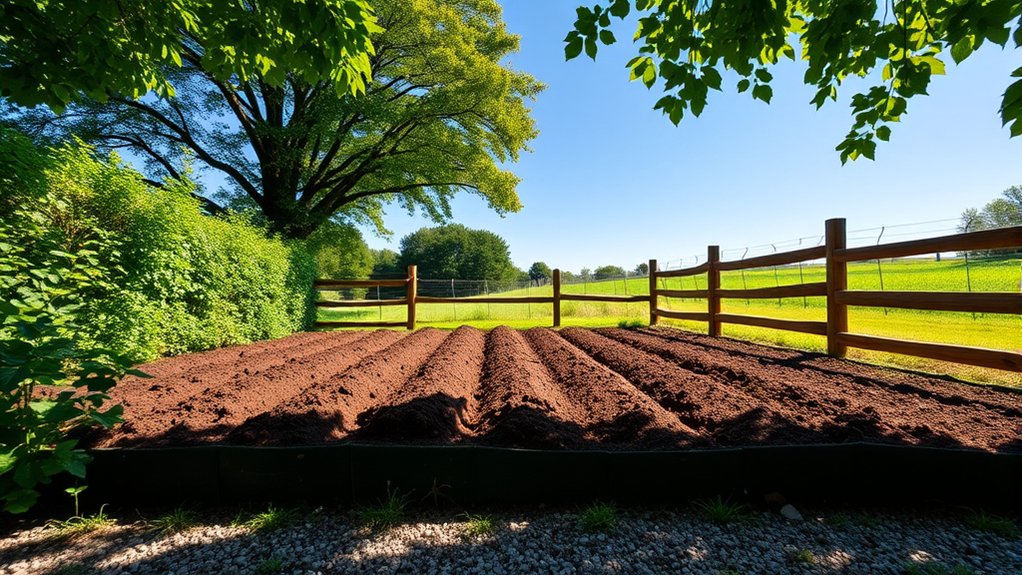
Before sketching your garden, choose a spot that gets at least six to eight hours of direct sunlight each day and is easy to reach with a hose, tools, and a wheelbarrow. Most vegetables thrive in full sun, so watch how light moves across your yard before settling on a location.
Notice shade from trees, fences, buildings, or shrubs, especially during the afternoon. If you’re unsure, check the site at several times throughout the day.
Check your garden site at different times to see how trees, fences, and buildings affect sunlight, especially in the afternoon.
Think about sunny accessibility as part of your garden placement. A nearby water source makes regular watering easier, while a clear path helps you carry supplies and harvest without hassle.
Avoid low spots where rainwater collects, since soggy soil can harm roots. Also consider wind exposure: a sheltered area can protect tender plants, but don’t choose a cramped corner with poor airflow.
Pick a place you’ll pass often, so you can spot pests, weeds, and thirsty plants quickly. Convenient access makes consistent care feel manageable and helps your garden stay productive throughout the growing season.
Measure Your Space and Plan Garden Beds
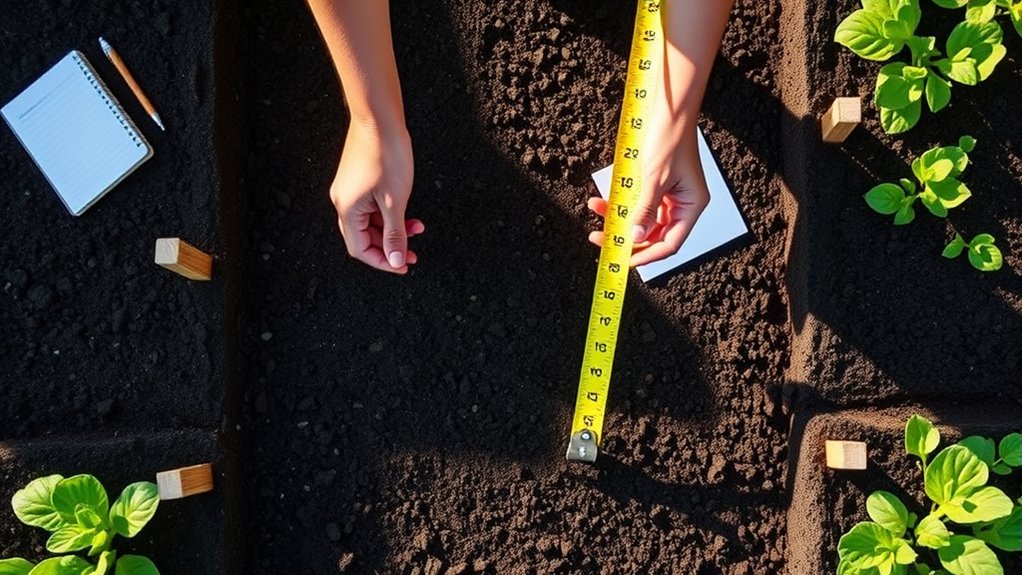
Once you’ve chosen a sunny, accessible spot, measure the available space so you can plan beds that fit comfortably. Sketch the area on paper, noting its length, width, and any fixed features. This simple map helps you compare bed sizes before you build or plant.
- Mark each bed’s dimensions on your sketch, leaving enough room for plants to mature without crowding.
- Consider sunlight accessibility: place tall crops where they won’t shade shorter ones, using crop height grouping to guide placement.
- Group compatible crops with companion planting, and reserve space to rotate crop families in future seasons.
- Note where garden paths and your irrigation layout may go, but focus now on keeping bed shapes and planting zones practical.
Keep beds narrow enough to reach their centers from the edges. If your space is small, choose fewer beds rather than squeezing in too many. A clear plan makes planting easier and helps you use every growing area well. You can adjust the sketch as your crop choices change.
Plan Paths, Water, and Garden Access
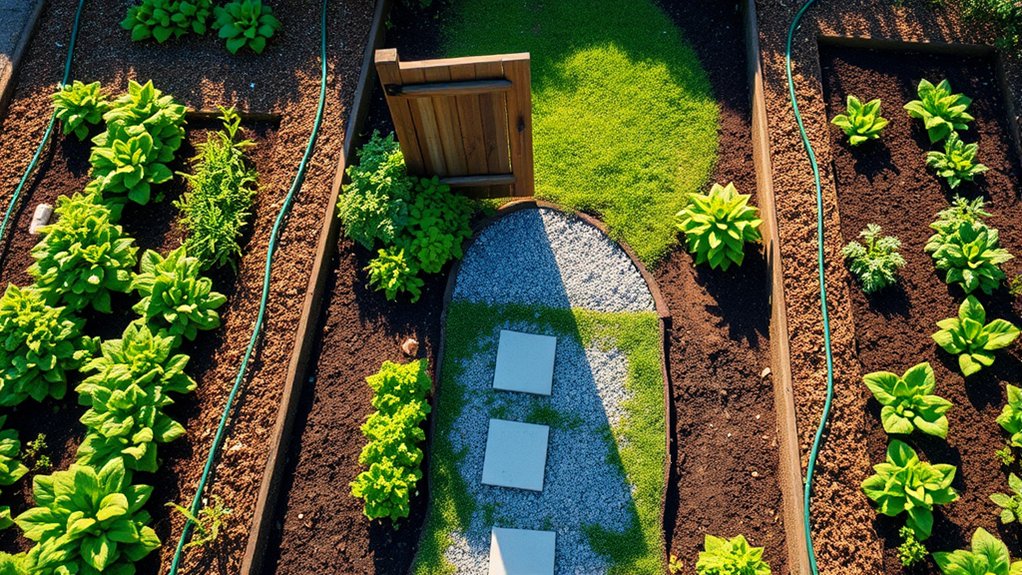
Plan paths wide enough to carry tools and reach every bed without stepping on the soil. A main route should connect the entrance, beds, compost area, and water source. Keep secondary paths clear, firm, and broad enough for a wheelbarrow. Good path accessibility makes routine jobs easier and helps you tend plants without compacting growing areas.
Think about planning irrigation before you settle on planting layouts. Place beds within reach of a hose, or run a drip line along them to deliver water efficiently. Check that you can reach valves and connectors without crossing muddy ground. If you collect rainwater, position barrels where you can fill a watering can easily.
Leave room to turn, kneel, and carry harvests through the garden. Choose durable path materials that drain well, such as gravel, wood chips, or stepping stones. Keep access routes open as companion planting fills beds, and make sure gates and paths stay usable throughout the growing season.
Choose Vegetables and Arrange Them by Height
Choose vegetables that suit your climate, available sunlight, and the space in each bed. Check seed packets or plant labels for mature height and spread, then sketch where each crop will go.
Put tall plants where they won’t shade shorter neighbors, usually along the bed’s north side if your rows run north to south. Keep crops with similar watering and sunlight needs together, so you can care for them efficiently.
- Place corn, pole beans, and tall tomatoes at the back or north edge.
- Set medium-height peppers, bush beans, and broccoli in the middle.
- Grow low lettuce, radishes, and carrots along the front or south edge.
- Leave room between plants for airflow, harvesting, and future growth.
Use companion planting as a planning consideration, but don’t crowd beds to fit every pairing. Note each crop’s location so you can plan crop rotation in a later season.
Adjust your sketch to match your bed’s shape and the sun’s path.
Add Companion Plants and Rotate Your Crops
How can you make your garden layout work harder? Use companion planting to pair vegetables that support each other. For example, plant basil near tomatoes to attract pollinators and add flavor, or grow carrots beside onions to help confuse pests.
Pair leafy greens with taller crops that provide light shade during hot afternoons. Check each plant’s water, sunlight, and spacing needs before grouping them, so helpful neighbors don’t compete for resources. Keep a simple map of your beds to track what grows well together and where you’ve planted each crop.
Pair leafy greens with taller crops for afternoon shade, and check water, sunlight, and spacing needs to keep garden neighbors thriving.
Plan crop rotation before the season begins. Don’t grow the same plant family in the same spot year after year; tomatoes, peppers, and eggplants, for instance, share many pests and diseases.
Move each family to a different bed annually, then return it after several years when possible. Rotate heavy feeders with legumes, which can enrich soil with nitrogen. Your layout will help reduce disease buildup, balance nutrient use, and keep beds productive. Use labels or a garden journal to make next year’s moves easy.
Frequently Asked Questions
What Tools Do I Need to Start a Vegetable Garden?
To start a vegetable garden, you’ll need a hand trowel, garden fork or spade, hoe, pruning shears, watering can or hose, gloves, and a measuring tape. This basic tool list covers planting, weeding, watering, and harvesting.
Add a rake to smooth soil and a wheelbarrow to move compost if you’re working in a larger space. For starter projects, grow easy crops like lettuce, radishes, or herbs in containers or a small raised bed.
How Do I Improve Poor Garden Soil?
Poor soil can become productive when you feed it, not fight it. Start by testing your soil’s pH and nutrient levels, then choose a suitable soil amendment, such as compost, aged manure, or leaf mold. Spread a two- to three-inch layer over the bed and mix it into the top few inches.
Try composting methods like a backyard bin or worm composting to create steady, affordable organic matter. Avoid walking on beds; compacted soil drains poorly.
When Should I Plant Vegetables in My Region?
You should plant vegetables according to your local frost dates and each crop’s needs; regional timing varies by climate. Start cool-season crops, such as peas and spinach, a few weeks before your last spring frost.
Plant warm-season crops, including tomatoes and peppers, after frost danger passes and soil warms. For fall harvests, sow suitable crops before temperatures drop.
Check a local planting calendar for seasonal planting dates, and adjust for your garden’s conditions.
How Often Should I Water a Vegetable Garden?
Water your vegetable garden deeply about once or twice a week, adjusting for heat, rainfall, soil, and plant needs. In a scorching spell, your thirsty crops could drain a swimming pool, so check soil moisture every few days.
Water when the top inch feels dry, and aim for the roots rather than leaves. For dry soil remediation, add compost to improve moisture retention.
Schedule sunny irrigation early in the morning to reduce evaporation and disease risk.
How Can I Protect Vegetables From Pests and Diseases?
You can protect crops by combining prevention, monitoring, and quick action. Choose disease-resistant varieties, rotate plant families, and give each plant enough space for airflow.
Water at the soil level in the morning, and remove diseased leaves promptly. Check plants often for damage, eggs, or unusual growth.
Use row covers to block insects, and trap pests with sticky cards or bait. Encourage beneficial insects, and apply targeted, garden-safe treatments only when necessary.
Conclusion
With a sunny spot, measured beds, clear paths, and a thoughtful planting plan, you can create a garden that’s easy to care for and rewarding to harvest. Start small, then adjust as you learn what grows best in your space.
For example, you might place tall tomatoes on the north side, keep lettuce near a path, and tuck basil beside the tomatoes. Add flowers, rotate crops next season, and enjoy a vegetable garden layout that works for you.