How to Plant Shrubs in Front of Your House in 5 Easy Steps
Choosing the right shrubs for your home can feel overwhelming, especially when you’re trying to balance curb appeal, sunlight, and limited space. You’re not alone—many homeowners struggle to find plants that look great and thrive in their yard. This guide to how to plant shrubs in front of your house will help you get started.
To plant shrubs in front of your house, first check sunlight, shade, and available space. Choose varieties suited to your climate, soil, and the room they’ll need at maturity. Clear weeds and debris, check for buried utilities, and loosen the planting bed.
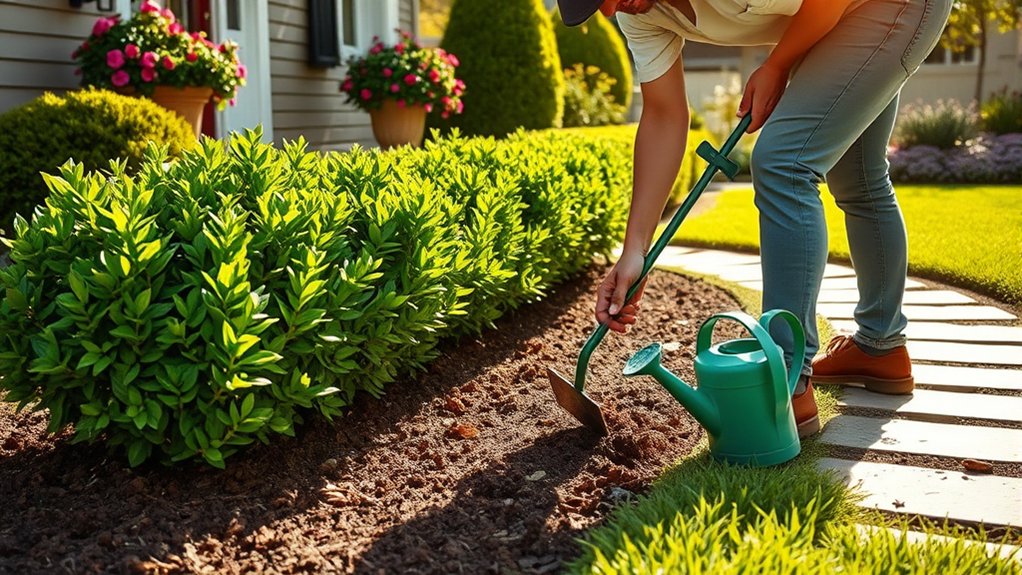
Dig a hole as deep as the root ball and two to three times wider. Set the shrub with its root flare visible, backfill, and water deeply. Add mulch, keeping it clear of stems, and discover how to help shrubs thrive.
Key Takeaways
- Observe sunlight, shade, shadows, and available space at different times of day; mark proposed planting areas to test the layout.
- Choose shrubs suited to your climate, soil, light, and space, allowing room for their mature size and selecting varieties that complement your home.
- Plan a balanced, year-round design with evergreen structure and seasonal flowers or foliage, grouping shrubs with compatible growing needs.
- Check for buried utilities, clear the planting bed, loosen compacted soil, and amend it only as needed based on a soil test.
- Dig a hole as deep as the root ball and two to three times wider; plant with the root flare visible, water deeply, and mulch away from stems.
Check Sunlight and Space in Your Front Yard
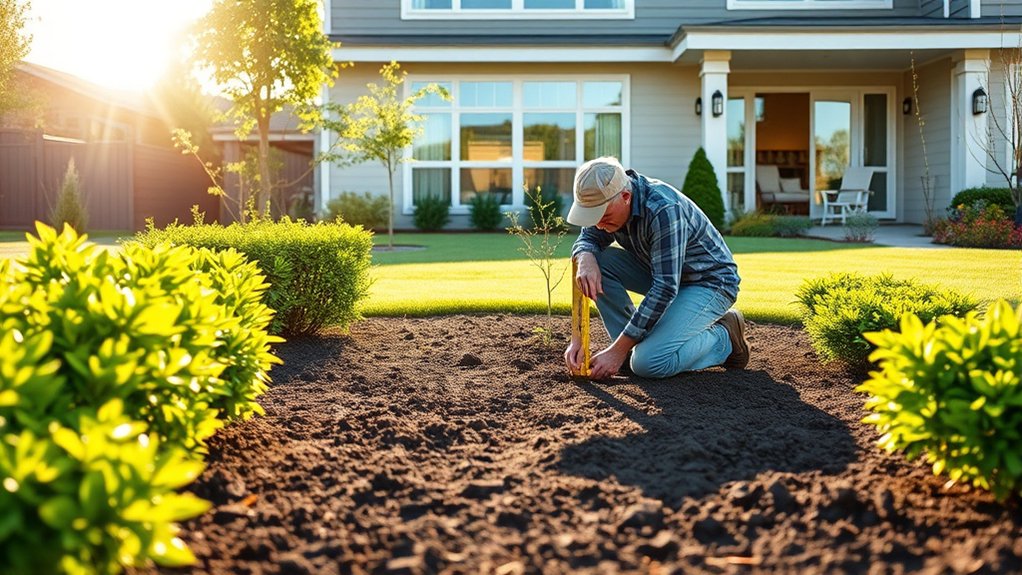
Before choosing shrubs, check how much sunlight your front yard gets and how much room each plant will have. A careful sunlight assessment helps you map bright, shaded, and partly shaded areas. Watch the yard at different times of day, since a spot that looks sunny in the morning may sit in shade by afternoon. Note shadows from your house, trees, fences, and nearby buildings.
Next, measure the planting areas for practical space planning. Check the distance from the house, walkways, driveways, windows, and utility equipment. Leave enough room for shrubs to reach their mature width without crowding paths or blocking views. Consider overhead branches and low eaves, too. Mark each proposed planting spot with stakes or a garden hose, then walk around it to see how the layout feels.
Record your observations before you shop. These simple checks help you choose locations that fit your yard and keep future maintenance manageable. You’ll also avoid costly replanting and crowded beds.
Choose Front-Yard Shrubs for Your Conditions
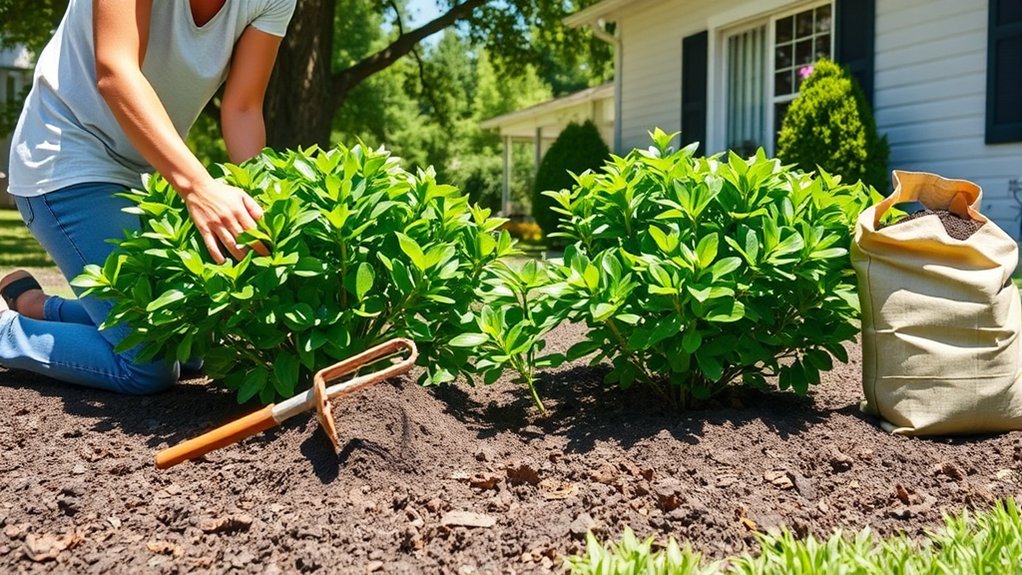
Choose shrubs that match the sunlight, space, soil, and climate in your front yard. Now that you’ve checked light and available room, compare plants’ mature sizes with the space you have. Compact varieties suit narrow beds, while broader shrubs need room to spread without crowding paths, windows, or neighboring plants.
Check your yard conditions before you choose shrubs. Read plant labels for preferred soil type, moisture, and hardiness zone, then consider how much care you can provide. If your soil tends to stay wet or dry quickly, select shrubs that tolerate those conditions rather than relying on frequent adjustments. For a low-maintenance front yard, look for disease-resistant varieties that don’t require regular pruning.
Think about the look you want throughout the year, too. Evergreen shrubs provide lasting structure, while flowering or deciduous types add seasonal color and texture. Choose plants that complement your home and work well together, allowing each shrub enough room to reach its mature form.
Prepare the Soil and Dig the Planting Hole
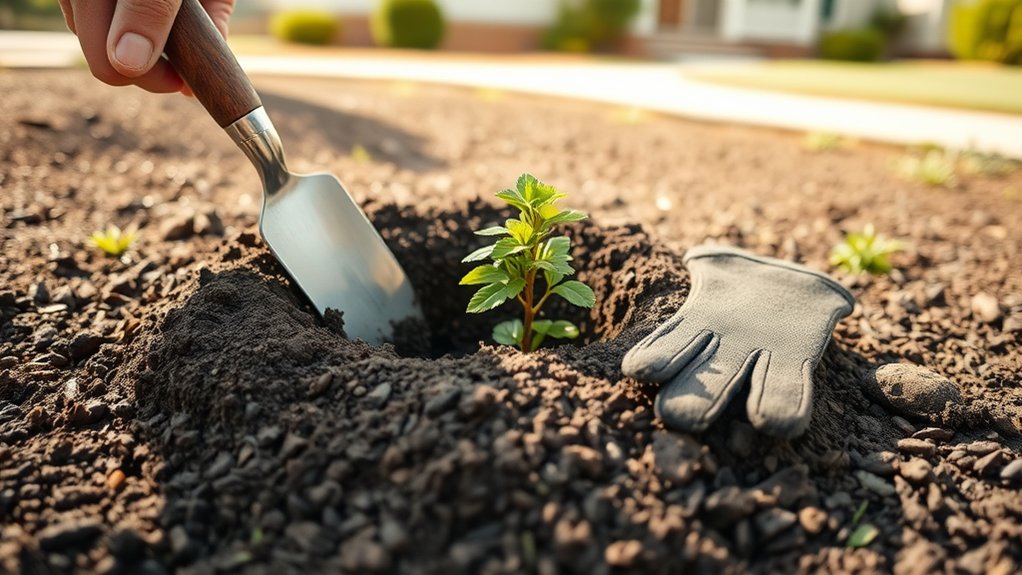
Once you’ve selected a spot, prepare the soil so roots can establish easily. Check the planting area for buried utilities before you dig, and remove weeds, grass, rocks, and debris.
Work across the full bed rather than improving only the small hole; this encourages roots to spread into surrounding soil.
- Use soil pH testing to check whether your soil suits the shrub. Follow the test results and the plant’s needs before adding amendments.
- Loosen compacted soil with a garden fork, breaking up clods without pulverizing it.
- Mix in compost only if the soil needs organic matter; avoid creating a rich pocket that can discourage roots from moving outward.
- Dig a hole as deep as the root ball and about two to three times as wide. Keep the sides gently sloped, and roughen any glazed surfaces. If roots could reach pavement or foundations, consider choosing root limiter barriers before planting. Set excavated soil nearby for backfilling.
Plant Shrubs at the Correct Depth
Set the shrub at the right depth to help its roots establish and keep the stem from rotting. Before you lower it into the hole, check the nursery label for planting instructions.
Most shrubs should sit with the top of the root ball level with, or slightly above, the surrounding soil.
Use this guide to check depth placement:
| Check | What to do |
|---|---|
| Root ball top | Keep it level with the ground |
| Graft or flare | Leave it visible above soil |
| Hole depth | Adjust soil beneath the root ball |
| Root ball orientation | Face the best side toward your house |
Lift the shrub by its root ball, not its stem, and set it upright. Confirm the root ball orientation from the front of your home, then step back to check the plant’s position.
If the hole is too deep, add soil underneath and firm it gently. Don’t bury the stem or cover the root flare.
When the height looks right, backfill around the root ball with the excavated soil.
Water and Mulch New Shrubs as They Establish
After backfilling, water the shrub slowly and thoroughly to settle the soil around its roots. Keep the root ball evenly moist while your shrub establishes, but don’t leave it waterlogged. Check the soil with your finger before watering; if the top inch feels dry, give the plant a deep soak.
Use this simple watering schedule as a starting point, adjusting for rainfall, heat, and soil type:
- Water daily during the first week if conditions are dry.
- Water every two or three days for the next few weeks.
- Gradually reduce watering as new growth appears and roots spread.
- Continue checking soil moisture through the first growing season.
Once the ground is moist, spread organic mulch around the shrub to conserve water and limit weeds. Keep mulch depth around two to three inches, and leave a clear gap around the stems. Don’t pile mulch against the trunk; trapped moisture can encourage rot. Replenish it as it breaks down, and water during prolonged dry spells.
Frequently Asked Questions
When Is the Best Season to Plant Shrubs?
You’ll usually get the best results by planting shrubs in early spring or fall, when mild temperatures and regular moisture help roots establish before summer heat or winter cold. For evergreen shrubs, early fall is often ideal; plant spring-flowering varieties after they bloom if needed.
Your local climate affects seasonal timing, so check regional guidance. Before planting, complete soil preparation by loosening the ground, improving drainage, and adding compost if your soil needs it.
How Far Apart Should Shrubs Be Planted?
Like dancers who need room to move, shrubs need space to reach their mature width. To decide how far apart to plant them, check each plant’s expected spread on its label. A useful rule is to place shrubs about half their mature width apart, measured from center to center. For example, shrubs expected to grow 4 feet wide should sit roughly 2 feet apart. Follow spacing guidelines for your variety and desired fullness.
Should I Prune Shrubs Immediately After Planting?
Usually, you shouldn’t prune shrubs immediately after planting. For good pruning timing, remove only broken, dead, or damaged branches, using clean, sharp tools. Avoid shaping or cutting back healthy growth unless the shrub’s care instructions recommend it; foliage helps your new plant establish roots.
As part of post plant care, water thoroughly, add mulch without piling it against the stems, and monitor moisture. Wait until the shrub is established before routine pruning.
How Can I Protect New Shrubs From Deer?
Protect new shrubs by surrounding them with sturdy cages or fencing before deer start browsing. For effective protective fencing strategies, use mesh at least eight feet tall, or install individual wire cages around vulnerable plants. Apply deer repellents according to label directions, and reapply after rain.
Good deer deterrent timing means protecting shrubs before damage begins, especially in fall and winter when food is scarce. Check barriers regularly, and remove them once shrubs grow beyond deer reach.
When Should I Fertilize Newly Planted Shrubs?
Wait until your newly planted shrubs show healthy new growth before applying fertilizer; you’ll usually skip it during the first growing season. As the saying goes, “Patience is a virtue.” For the best fertilizer timing, follow your soil test and the product label, and fertilize in spring when growth begins. Don’t add fertilizer to the planting hole. Use compost as a soil amendment only if your soil needs it, and water shrubs well.
Conclusion
Planting shrubs in front of your house doesn’t have to be complicated. Check sunlight and space, choose plants suited to your conditions, and prepare the soil before you dig. Set each shrub at the proper depth, then water well and add mulch to help it settle in.
With thoughtful planning and steady care, you’ll create a welcoming, well-balanced front yard that grows more beautiful season after season. Start small, stay patient, and enjoy the fresh curb appeal you’ve created when you plant shrubs in front of your house.