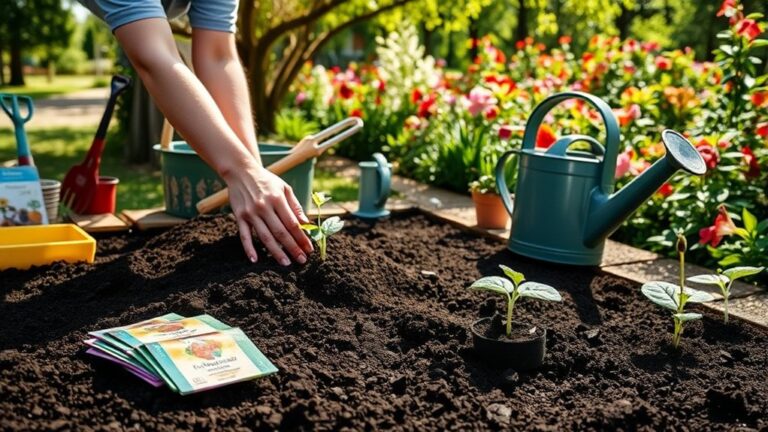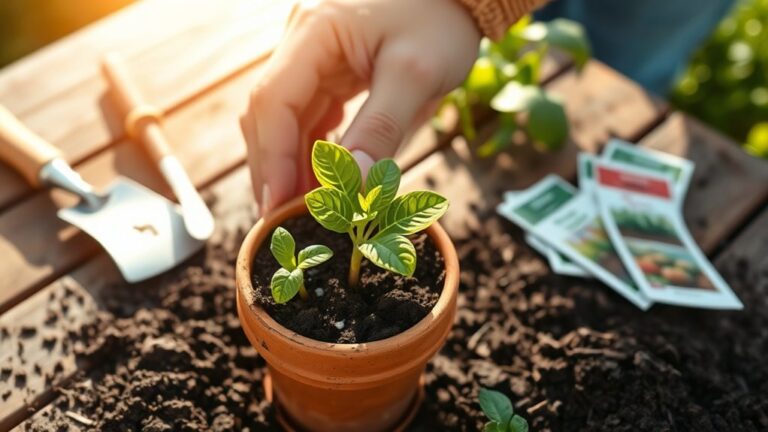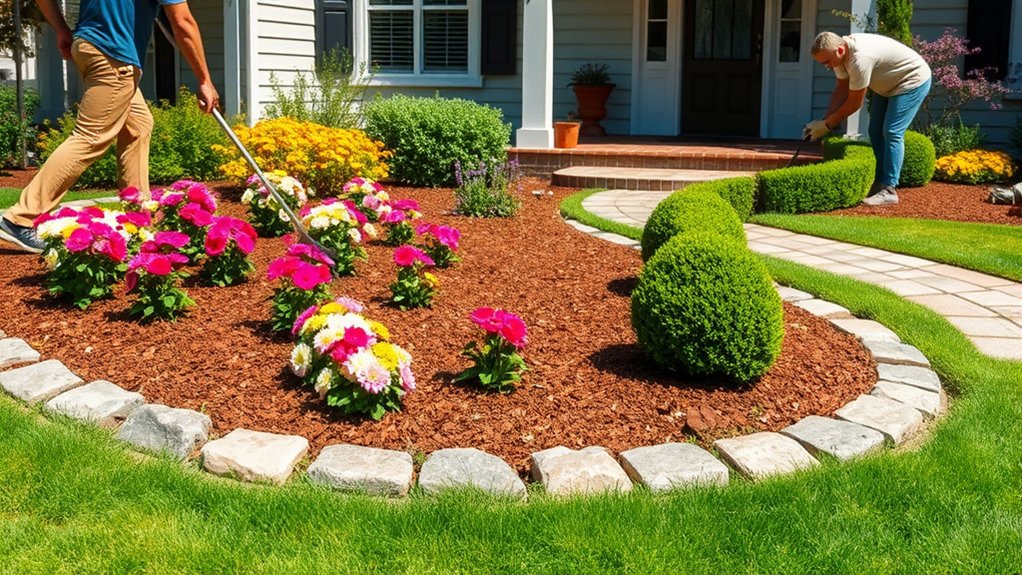
How to Landscape Your Front Yard in 3 Simple Steps
Planning a front yard can feel overwhelming when you’re unsure where to start or how to choose the right plants. You’re not alone—many people struggle to bring their ideas together while staying within budget. These simple front yard landscaping steps can help you create a welcoming space with confidence.
Landscape your front yard in three simple steps. First, sketch your space, mark paths and existing features, then set a budget for materials, labor, and unexpected costs. Next, choose plants that match your sunlight, soil, drainage, and climate; favor suitable native varieties. Finally, install clear, comfortable paths, define beds, and add mulch while keeping it away from stems. Stage work if needed, and you’ll create a practical, welcoming yard with a plan for each step.
Key Takeaways
- Sketch your yard, measure key features, map clear paths, and set a budget for materials, labor, and unexpected costs.
- Choose realistic, appropriately sized plants based on each area’s sunlight, soil, drainage, and local climate.
- Install practical paths from the driveway to the entrance, using materials that suit your home and weather.
- Define planting beds with edging, then spread two to three inches of mulch while keeping it clear of plant stems.
- Add simple finishing touches, such as path lighting or a bench, and complete the project in stages if needed.
Plan Your Front Yard Layout and Budget
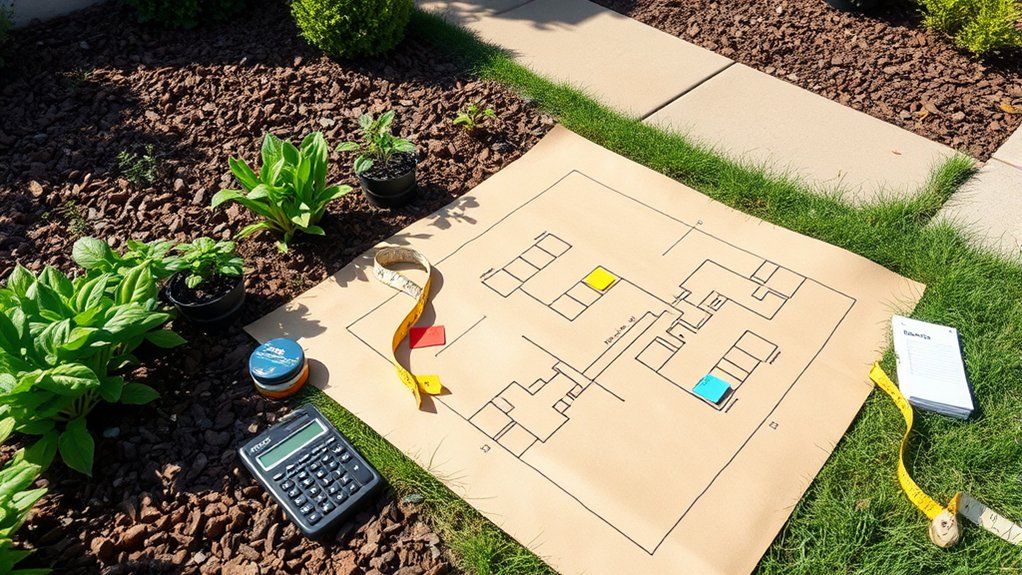
Before you buy plants or materials, sketch your front yard and set a budget. Measure the space, then mark your home, driveway, walkways, doors, and existing features on paper. A simple drawing helps you see how people move through the yard and where you need clear paths. Note the areas you want to improve, such as an empty corner or an awkward entry.
Next, decide how much you can spend overall. Divide your budget among materials, labor, and a small cushion for unexpected costs. If funds are tight, tackle the project in stages instead of buying everything at once. Compare prices, reuse sound materials, and prioritize changes that make the biggest difference. These choices support a budget friendly design without sacrificing function.
Keep your plans realistic for the space. Use scale friendly planting by matching the size and placement of features to your yard, rather than crowding it with oversized elements. Review your sketch before shopping, and adjust the layout until it fits your needs and budget.
Choose Front Yard Plants for Sun, Soil, and Climate
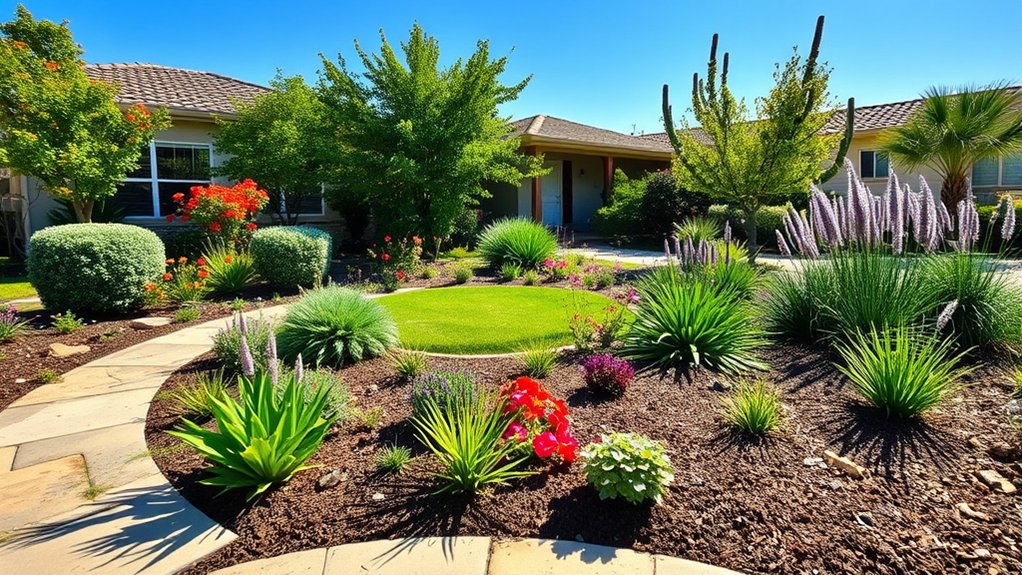
Choose plants that match your yard’s sunlight, soil, and climate to help them thrive with less maintenance. Start by observing how many hours of direct light each area receives. Pick sun loving varieties for bright spots, and choose shade-tolerant plants beneath trees or beside your home.
Match plants to your yard’s sunlight, soil, and climate for healthier growth and less upkeep.
Check your soil’s texture and drainage, too. Sandy soil dries quickly, while clay often holds water; select plants that suit the conditions rather than fighting them.
If your soil has low soil nutrient levels, consider hardy species that naturally grow in lean ground. You can also improve the soil based on a test, but avoid overfertilizing. For dry areas, drought tolerant plants can reduce watering needs once established.
Finally, choose climate appropriate plants suited to your region’s temperatures, rainfall, and seasonal extremes. Local native plants often fit these conditions well and support pollinators. Read plant labels for mature size and care needs, then group selections with similar light and water requirements. This makes upkeep simpler.
Install Paths, Mulch, and Landscape Finishes
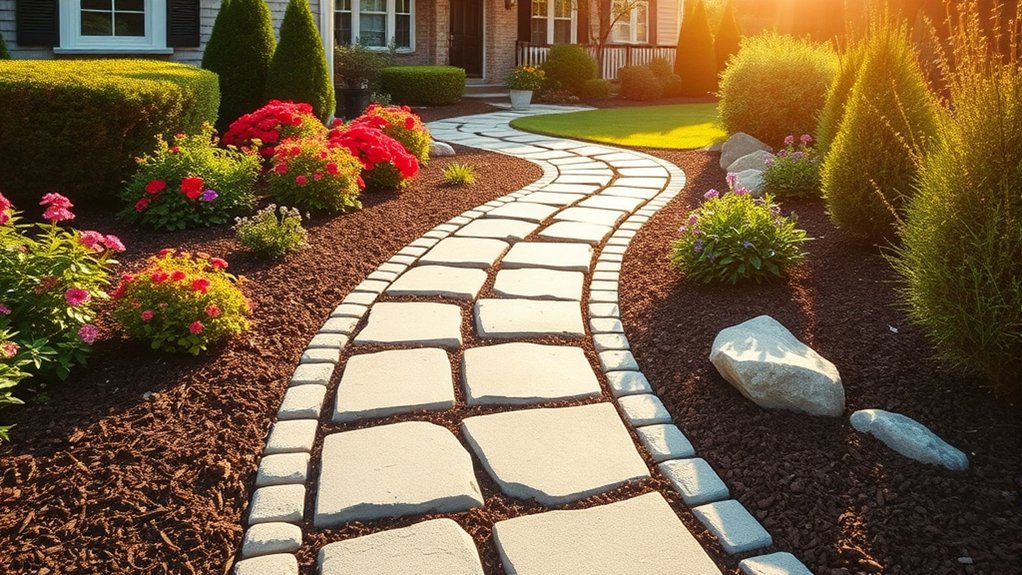
Once you’ve selected plants suited to your yard, install paths and finish the beds to make the layout easy to use and maintain. Plan routes from your driveway to the entrance, keeping them wide enough for comfortable walking and deliveries. Choose materials that complement your home and suit your climate.
- Mark each route with stakes and string, then check that paths connect naturally to doors and gates.
- Excavate the path area, level the base, and compact it to prevent shifting or puddles.
- Add gravel pathways for a permeable, budget-friendly surface, or lay pavers over a stable base. Secure edges to keep materials in place.
- Define planting beds with landscape edging, then spread two to three inches of mulch, leaving space around stems and trunks.
Finish with a few practical touches, such as path lighting, a clean border, or a simple bench. These details can make your front yard safer and more welcoming without adding difficult upkeep. Keep the layout uncluttered so plants and entryways remain easy to see.
Frequently Asked Questions
Do I Need a Permit for Front Yard Landscaping?
You may need a permit for front yard landscaping, depending on your location and the project’s scope. Check local permit requirements, zoning rules, and front yard regulations before you start.
Simple planting or lawn changes often don’t require landscaping permits, but fences, retaining walls, major grading, drainage changes, or work near sidewalks may. Contact your city or county planning department to confirm what applies, and ask about approval timelines before scheduling contractors or buying materials.
How Can I Landscape a Front Yard on a Steep Slope?
Turn your steep slope into a cascading garden by shaping stable terraces. First, assess the grade and soil, then consult a professional if you need retaining walls or major excavation.
Manage steep slope drainage with swales, permeable paths, and plants that hold soil with deep roots. Choose terracing plants suited to your sun and climate, and group them by water needs.
Add steps or a winding path for safe access, and check local rules before building.
What Tools Are Essential for Front Yard Landscaping?
You’ll need a sturdy shovel, spade, rake, hand trowel, pruning shears, wheelbarrow, garden hose, and gloves for most front yard landscaping. Add a tape measure and level to plan beds and check slopes.
Use a soil testing kit to learn what amendments your plants need, and choose species with suitable drought tolerance to reduce watering. A garden fork helps loosen compacted ground, while safety glasses protect you during trimming and digging.
When Is the Best Time of Year to Landscape a Front Yard?
The best time to landscape your front yard is usually spring or fall—but the right choice depends on what you’re planting. In spring, you’ll find warming soil and a long growing season; in fall, cooler weather gives roots time to settle before summer heat.
Your best planting season may vary by climate, so check local frost dates. With thoughtful seasonal plant selection, you’ll help new plants thrive and create a beautiful yard year-round.
How Can I Make My Front Yard More Wildlife-Friendly?
You can make your front yard more wildlife-friendly by planting native flowers, shrubs, and trees that provide food and shelter. Choose wildlife friendly plantings with blooms across the seasons, and create pollinator habitats by grouping nectar-rich flowers together.
Add a shallow water source, leave some leaf litter for insects, and avoid pesticides. Keep a few dense shrubs for nesting and cover, and let seed heads remain through winter to feed birds.
Conclusion
With a clear layout, realistic budget, and plants suited to your sun, soil, and climate, you’re ready to transform your front yard. Add paths to guide visitors, spread mulch to protect the soil, and finish with details that reflect your style.
You don’t need to complete everything at once. Start with one manageable area and build from there. What could make your home feel more welcoming than a front yard landscape you’ve planned and planted yourself?
Enjoy the process, and watch your curb appeal grow.