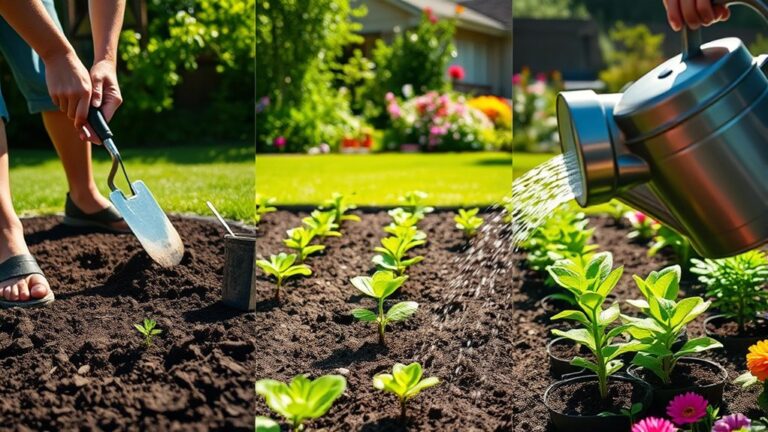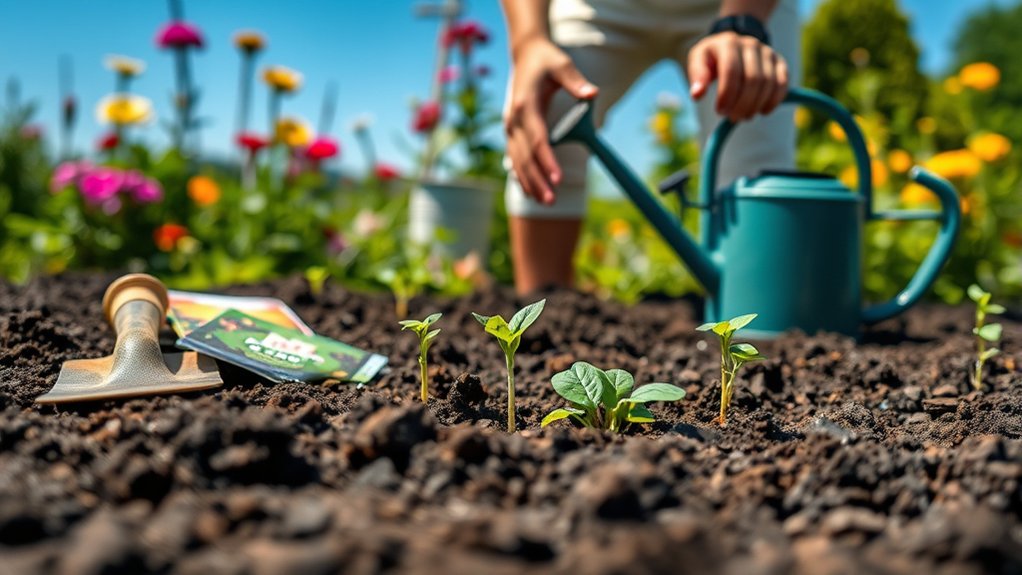
How to Make a Flower Bed in 5 Easy Steps
Starting a flower bed can feel overwhelming when you’re unsure where to begin or which plants will thrive. You’re not alone—many people struggle to turn a patch of yard into a garden they love. These simple steps can help you create a flower bed that suits your space and keeps blooming.
To make a flower bed in five easy steps, choose a visible, accessible spot with suitable sunlight, away from heavy foot traffic and competing roots. Sketch the bed, set your goals, and select flowers that fit the climate, light, and space.
Mark the outline, remove grass, and loosen the soil 8 to 12 inches deep, adding finished compost if needed. Arrange plants by height and care needs, then plant with proper spacing.
Water thoroughly, mulch, and discover simple ways to keep your bed thriving.
Key Takeaways
- Choose a visible, accessible spot with suitable sunlight, away from heavy foot traffic and obstructive roots or branches.
- Plan the bed’s shape and size, then select climate-suitable flowers that match its light and water conditions.
- Mark the outline, remove grass, loosen soil 8–12 inches deep, and mix in finished compost if needed.
- Arrange flowers by height and care needs, check spacing and appearance, then plant them in the prepared soil.
- Water regularly while plants establish, then water deeply as needed and add 2–3 inches of mulch.
Choose a Spot for Your Flower Bed
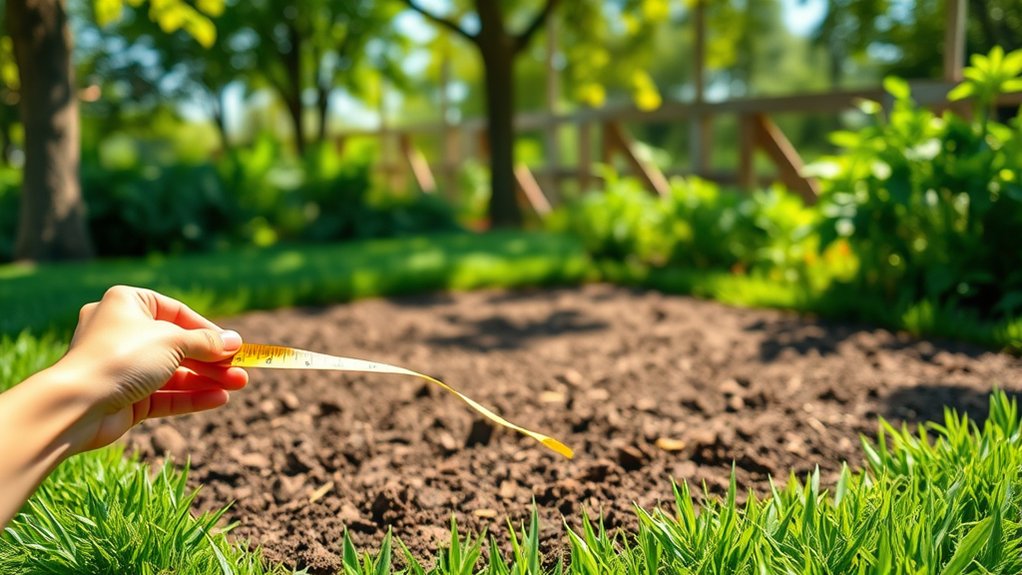
Where you place your flower bed can make all the difference. Start by walking around your yard and looking for a spot you’ll enjoy seeing every day. Consider how the bed will fit with paths, patios, windows, and existing landscaping. Choose a location that’s easy to reach, so you can tend it without trampling other plants or hauling tools across the yard.
Look beyond the ground, too. A balcony sun exposure might affect a bed below, while a nearby wall, fence, or tree can cast shade or block wind. Notice whether the area feels exposed or sheltered, and whether people or pets regularly pass through it.
Avoid spots where foot traffic could damage the bed or where roots and overhanging branches may get in your way. If your yard is small, a shady corner can still serve as a practical, attractive location. Pick a place that suits your space and daily routine, and you’ll find it easier to care for.
Plan Your Bed and Choose Flowers for Its Conditions
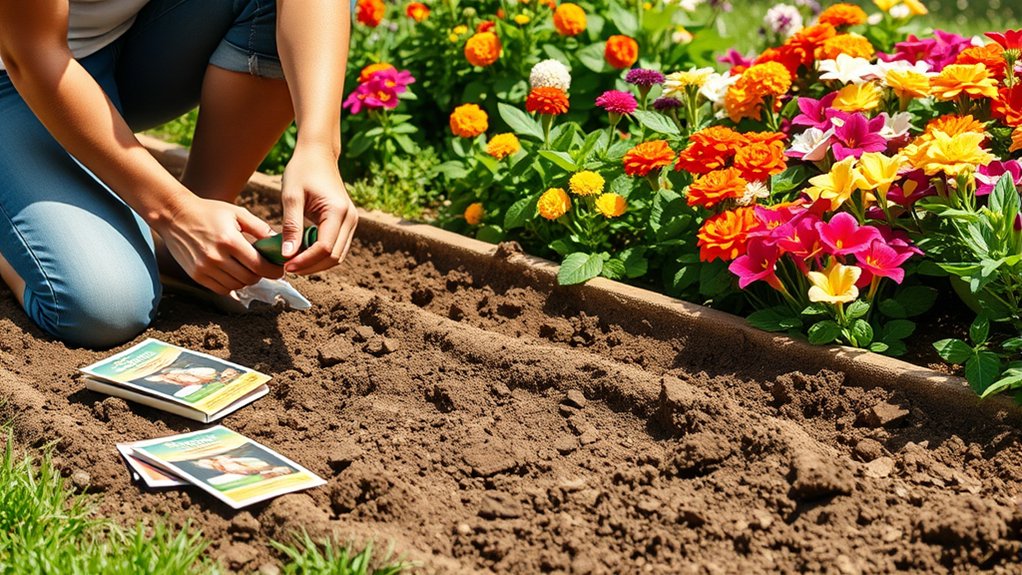
Before choosing flowers, sketch the bed’s shape and estimate its size so you know how many plants you’ll need. Note paths, nearby trees, and views you want to frame. Set planning goals, such as attracting pollinators, adding seasonal color, or creating a low-maintenance display.
These priorities will guide your choices and help you avoid buying plants that don’t fit your space.
Next, assess sun exposure throughout the day. Choose flowers suited to the hours of direct light your bed receives, and check plant labels for specific needs. Consider your region’s climate and select varieties that can handle local temperatures.
Mix plants with different bloom times to keep color going from spring through fall. Combine heights and shapes for a balanced look, placing taller flowers where they won’t block shorter ones. Check each plant’s mature width, too, so you can space your selections appropriately.
Finally, choose colors that complement your home or create the mood you want, and make a list before shopping.
Remove Grass and Prepare the Flower-Bed Soil
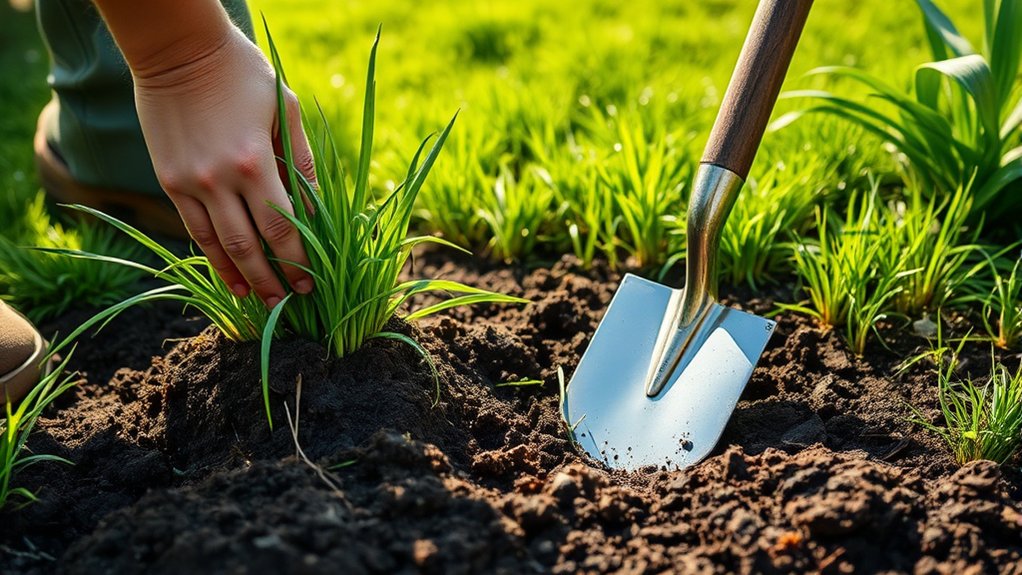
Once you’ve chosen your flowers, mark out the bed and remove the grass so roots won’t compete for water and nutrients. Cut along the outline with a spade, then lift the sod in manageable sections. For a larger area, smother the grass with overlapping cardboard or several layers of newspaper, wetting them to hold them in place. This method takes longer but saves digging.
Loosen the exposed soil with a garden fork, working about 8 to 12 inches deep. Break up compacted clumps, and remove stones, roots, and weeds. Don’t turn the soil when it’s wet; you could damage its structure. Consider soil testing to learn whether you need to adjust the pH or add nutrients. Mix in finished compost to improve texture and support healthy soil. Finish by choosing among mulch options, such as shredded bark or leaf mold, to conserve moisture and limit weeds after planting.
Arrange and Plant Your Flowers
Arrange your flowers while they’re still in their pots, grouping plants with similar light and water needs. Step back and view the layout from several angles before you dig.
Place taller varieties toward the back of a bed viewed from one side, or in the center of an island bed. Set shorter flowers near the edges so you can see each plant.
Use design contrast to make the arrangement lively, pairing different heights, shapes, or textures. Build color harmony by repeating a few shades rather than using every color at once. Leave enough room for each plant to reach its mature width.
- Put tall flowers where they won’t block shorter blooms.
- Repeat colors in several spots to connect the design.
- Mix flower shapes and foliage textures for visual interest.
- Check plant labels for spacing and planting depth.
- Rotate pots until the arrangement looks balanced.
When you’re happy with the pattern, remove each plant from its pot gently. Loosen tangled roots, set it at the label’s recommended depth, and firm soil around it. Don’t bury the crown or leave roots exposed.
Water New Flowers and Keep the Bed Healthy
How often should you water? Check the soil around your new flowers daily, especially during the first few weeks. If the top inch feels dry, water slowly at the base until the soil is moist several inches down.
Don’t rely on a fixed schedule; heat, wind, and rainfall change how quickly your bed dries. For seed watering, use a gentle spray or fine rose attachment so you don’t wash seeds away or disturb seedlings.
Water in the morning when possible. This gives leaves time to dry and helps reduce fungal problems. Once plants establish, water deeply but less often to encourage strong roots. Adjust for your flowers’ needs and local weather.
Spread a two- to three-inch layer of mulch, keeping it clear of stems. Compare mulch options such as shredded bark, compost, or leaf mold to retain moisture and limit weeds.
Remove dead leaves, pull weeds, and check plants regularly for pests or disease. Replenish mulch as it breaks down, and trim spent blooms to keep your bed tidy.
Frequently Asked Questions
What Tools Do I Need to Build a Flower Bed?
You’ll need basic gardening tools: a spade or shovel, garden fork, rake, hand trowel, measuring tape, and gloves. Keep a wheelbarrow handy for moving soil, compost, and plants.
Choose bed materials such as edging boards, bricks, or stones, plus stakes and string to mark the outline. A hose or watering can helps settle the soil and water new plants. For safety, wear sturdy shoes and eye protection.
How Much Does It Cost to Create a Flower Bed?
You can create a flower bed for about $50–$500, depending on its size, materials, plants, and whether you hire help. A small DIY bed may cost $50–$150; larger or professionally installed beds can exceed $1,000.
For useful cost estimates, price soil, edging, mulch, and plants separately. To stay on budget, start small, choose native plants, reuse materials, and buy young plants. Your location and existing soil can also affect your total.
When Is the Best Time of Year to Build a Flower Bed?
You’ll usually get the best results by building a flower bed in early spring or fall, when mild temperatures and regular rainfall help plants establish roots. Your best planting season depends on your climate and the flowers you choose.
In spring, wait until the soil is workable and frost risk has passed for tender plants. In fall, finish planting several weeks before the ground freezes.
Plan soil preparation before planting so you can improve drainage and add compost.
Can I Make a Flower Bed in a Small Space?
Yes, you can create a flower bed in a small space. What if a sunny corner became a colorful little garden? Use small space design to make the most of narrow borders, balconies, or courtyard edges.
Try compact planting ideas, such as dwarf flowers, vertical planters, and containers at different heights. Choose plants with similar sunlight and water needs, and leave room for growth. Even a tiny area can feel lush, welcoming, and beautifully layered.
How Do I Keep Weeds From Spreading Into My Flower Bed?
Keep weeds from spreading into your flower bed by removing existing weeds, roots and all, then covering bare soil with a weed barrier or a thick layer of mulch. Choose a mulch choice such as shredded bark or wood chips, and keep it several inches deep without piling it against plant stems. Edge the bed to block creeping grass, and pull new weeds promptly. Consistent weed control prevents small problems from taking over.
Conclusion
You’ve turned a patch of yard into a flower bed that can brighten your home all season. Keep watering new plants, pull weeds before they spread, and trim spent blooms to encourage fresh growth.
Check your flowers regularly and adjust care as the weather changes. Remember, “good things take time”: with a little attention, your flower bed will settle in and flourish.
Enjoy the color, fragrance, and life you’ve brought to your outdoor space.