10 Essential Steps to Prepare a Veggie Garden
Starting a veggie garden can feel overwhelming when you’re unsure where to begin or what your plants need. You’re not alone—many new gardeners struggle to turn a patch of soil into a healthy, productive space. These essential steps to prepare a veggie garden can help you get started with confidence.
Choose a sunny, accessible spot with six to eight hours of direct light. Test your soil, then add compost or other amendments as needed. Check local frost dates and select crops suited to your climate.
Decide what to grow, map beds and paths, and follow spacing recommendations. Remove weeds and debris, loosen the soil, and gather seeds, seedlings, and tools. Plan morning watering and mulch.
Key Takeaways
- Choose a sunny, accessible site with six to eight hours of direct sunlight, good drainage, and nearby water.
- Test the soil, then use the results to guide pH adjustments, compost, and any needed fertilizer.
- Map beds, paths, and sunny areas; choose beds or containers and leave room for mature plants and access.
- Select climate-appropriate crops and seeds or seedlings, check local planting dates, and follow recommended spacing.
- Remove weeds and debris, loosen moist soil, then plan deep morning watering and apply mulch after the soil warms.
Choose a Sunny Spot for Your Veggie Garden
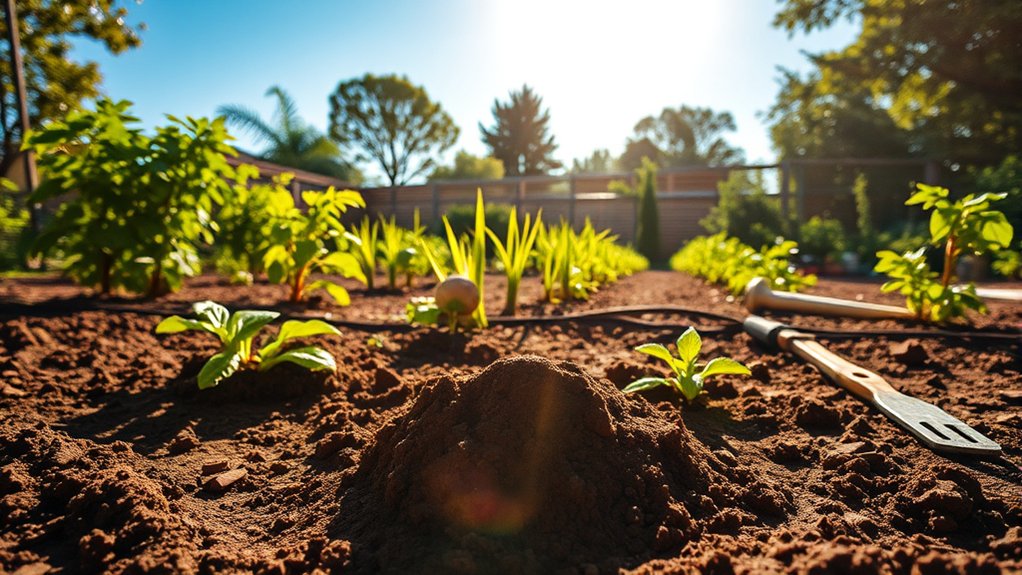
Choose a sunny spot for your veggie garden, where most vegetables can get at least six to eight hours of direct sunlight each day. Before you settle on a location, observe how sunlight moves across your yard. Check the area in the morning, at midday, and in the afternoon to spot shade from trees, fences, buildings, or other obstacles.
Good sunlight exposure planning helps you choose a site that supports healthy growth throughout the season. Remember that a sunny area in spring may become shaded when nearby trees fill out. If you’re considering a spot beside a wall or fence, note whether it blocks light or reflects heat onto your plants.
Other sunny spot considerations include convenience and access. Choose a location near a water source, where you can reach your plants easily for regular care. Avoid low areas where water tends to collect, and leave enough room for paths and mature plants. A well-chosen site makes daily gardening simpler.
Test Your Soil and Improve It
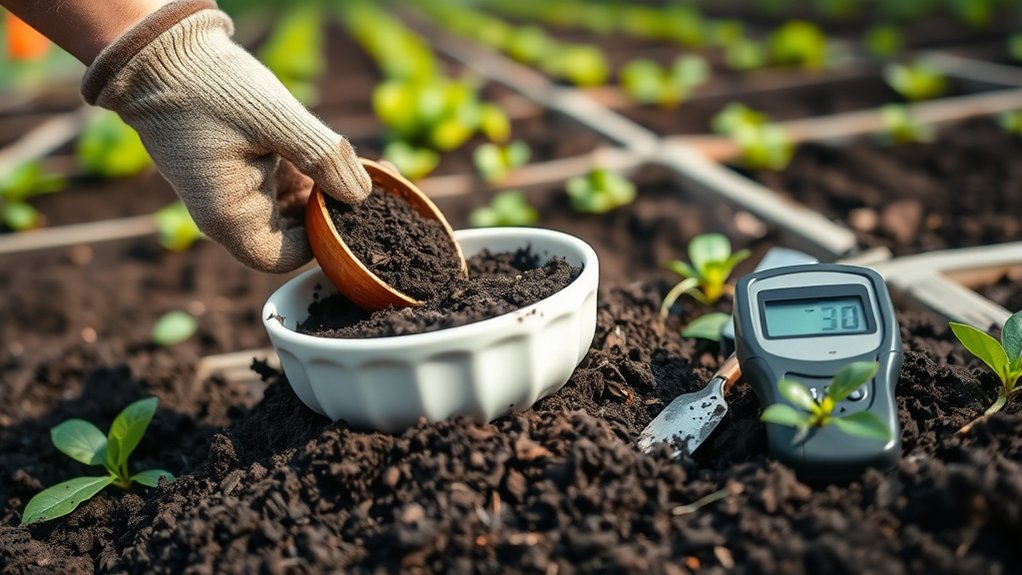
Before planting, test your soil to learn its pH and nutrient levels. A simple soil testing kit can give you a useful starting point, but a laboratory test provides more detailed results, including nutrient levels and recommendations.
Test your soil before planting to understand its pH and nutrients; a lab test offers the most detailed guidance.
Collect samples from several spots in your garden, remove debris, and mix the soil before sending it in. Follow the test instructions so you get an accurate reading.
Use the results to decide what your soil needs. If the pH falls outside the range your vegetables prefer, add the recommended material to adjust it.
Improve poor soil with compost, which adds organic matter and supports healthy structure. Add fertilizers only when the test shows a need; too much can harm plants and wash into waterways.
Pay attention to amendment timing. Some materials, such as lime, work best when you mix them into soil well before planting.
Follow product directions, and retest later if needed. You’ll build a healthier bed with fewer guesswork-based additions.
Check Your Local Planting Dates
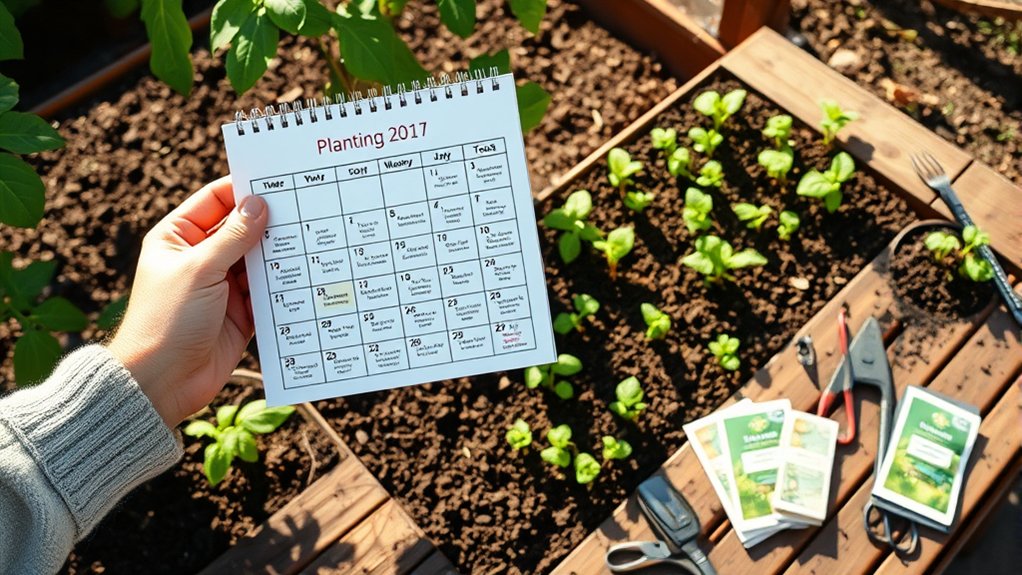
Check your local planting dates to match each vegetable with the conditions it needs to grow. Look up planting calendars from your county extension office, nearby garden centers, or trusted regional sources. These guides show when to sow seeds indoors, transplant seedlings, and plant directly outside. Use them as a starting point, since conditions can vary across your area.
Find your average last spring frost date and first fall frost date. Together, these frost dates help you estimate your growing season and plan when to plant and harvest. Check a local weather service for recent forecasts, too. An unexpected cold snap can damage tender seedlings, even when the calendar says it’s time to plant.
Keep your dates in a garden notebook or calendar. Note what you planted and when, then record how well each timing worked. You’ll build a useful schedule for next year and avoid rushing into the garden before conditions are ready.
Choose Vegetables That Suit Your Climate
Match your vegetable choices to your climate and growing season. Check how much heat, cold, rain, and sunlight your garden typically receives, then compare those conditions with each vegetable’s needs. This helps you choose climate compatibility before you buy seeds or seedlings.
If your summers are short, favor varieties that mature quickly and tolerate cool nights. In hot regions, look for vegetables that handle high temperatures and resist bolting. Where winters stay mild, you may be able to grow cool-season crops for longer, while humid areas often benefit from varieties bred to resist common diseases.
Read seed packets and plant labels for temperature ranges, days to maturity, and regional guidance. Local extension services, nearby nurseries, and experienced gardeners can point you toward regional cultivar options that perform reliably in your area. Favoring adapted varieties can reduce stress on your plants and make routine care easier. Use your local planting dates to time sowing, and account for your garden’s specific conditions.
Decide What to Grow and How Much
Choose crops you’ll enjoy eating and can grow successfully. Then decide how much of each vegetable your household needs, and use those quantities to plan your garden space.
Choose Your Crops
Choose crops you enjoy eating, then estimate how much your household can use before it spoils. Think about your climate, available sunlight, and the time you can spend caring for plants. A thoughtful seed selection helps you find varieties suited to your growing conditions and taste.
- Pick dependable favorites, such as tomatoes, beans, or leafy greens, that your family already enjoys.
- Add one or two unfamiliar crops to explore new flavors without making your garden feel overwhelming.
- Check each plant’s growing season and sunlight needs before choosing varieties for your space.
- Consider crop rotation when selecting crops, so you can move plant families between beds in future seasons and help protect soil health.
Choose a mix that feels rewarding and manageable, not merely impressive on paper.
Plan Garden Quantities
How much should you plant? Start by listing the vegetables you chose and how often you eat them. Planning quantities around your household’s habits helps you avoid growing more than you can use.
Consider how much space each crop needs, how long it takes to mature, and whether you can plant successive rounds.
Check seed packets or reliable garden guides when estimating yields. A single zucchini plant, for example, may produce plenty, while you might need several carrot rows for a steady supply.
Adjust your plan for your garden’s size, sunlight, and growing season. If you’re new to gardening, begin with modest amounts; you can expand next year based on what succeeds.
Include extra plants for losses, but leave room for paths and airflow. Keep a simple record of harvests to refine future plans.
Choose Garden Beds or Containers
Your garden’s size, soil, and sunlight can help you decide between planting directly in garden beds or growing vegetables in containers. To choose beds or containers, consider what your space can support and how much control you want over growing conditions. This beds vs containers comparison can guide your choice:
- Choose beds if you have suitable ground and want room for vegetables that need deeper soil. Raised beds can help when your native soil drains poorly or contains stones.
- Choose containers if you garden on a patio, balcony, or other hard surface. Pots let you grow food without digging into the ground.
- Check sunlight before committing. You’ll need a spot that receives enough direct light for the vegetables you plan to grow.
- Consider upkeep. Containers often dry out faster, so you may need to water them more often. Beds can hold more soil and moisture, but you’ll still need to monitor them.
Either option can work; choose the one that fits your space and routine.
Plan Your Layout and Plant Spacing
Sketch out your garden layout before planting, and note where each vegetable will go. Then check each plant’s spacing needs so it has room to grow and is easy to reach. A clear plan helps you make the most of your space.
Map Your Garden Layout
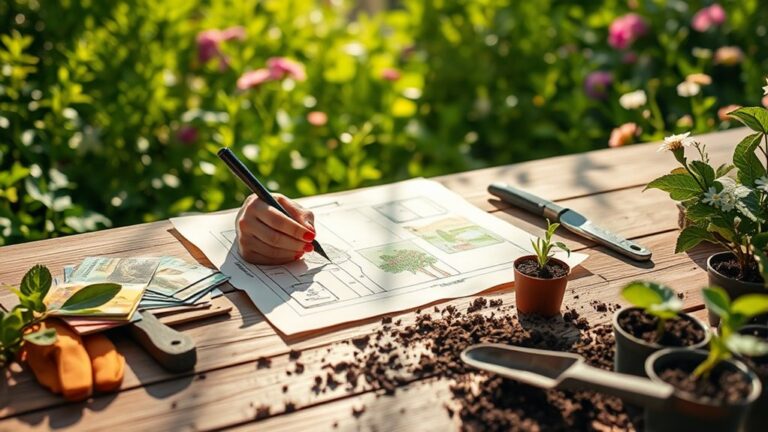
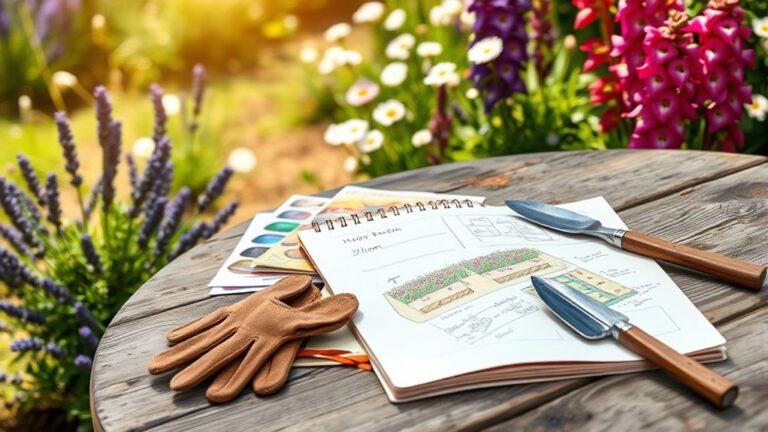
Before you plant, map out where each vegetable will grow and how much room it needs. Sketch your garden’s shape, note fixed features, and use the plan to guide your choices. A clear map helps you organize crops, access paths, and useful features without crowding the design.
- Mark sunny and shaded areas so you can match vegetables to suitable light.
- Note water sources and include space for rainwater harvesting.
- Draw paths, beds, and perennial borders to show how each feature fits.
- Label each bed with the crops you intend to grow, then keep the map handy as you prepare the garden.
Your layout doesn’t need to be perfect. Adjust it as you learn what works in your space, and save each version to track changes from season to season.
Allow Proper Plant Spacing
Once your garden map is in place, check that each crop has enough room to grow. Read seed packets or plant labels for recommended spacing, and mark those distances on your plan before planting.
Give large plants, such as tomatoes and squash, extra room so their leaves don’t shade smaller crops or block pathways. Place compact vegetables closer together only when their spacing needs allow it.
Good spacing supports airflow, helps leaves dry faster, and makes it easier to water, weed, and harvest. It also prevents crowding, reducing competition for sunlight, water, and nutrients.
To make the most of your space, use vertical supports for climbing crops and tuck quick-growing plants between slower ones if their needs match. Recheck mature plant sizes, then adjust your layout to keep every crop accessible and healthy.
Clear Weeds and Prepare the Soil
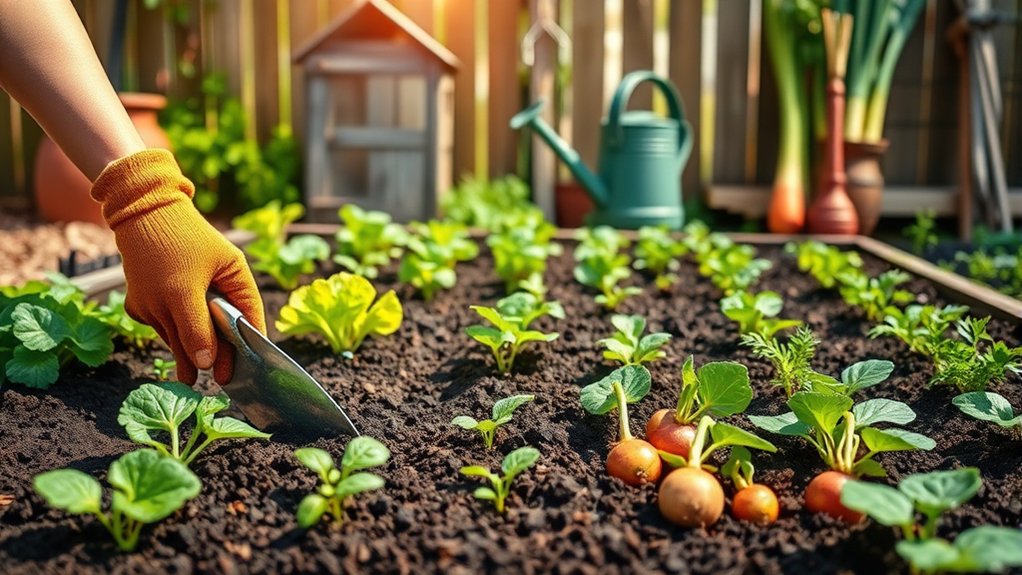
Clear weeds and prepare the soil to give your vegetables room to grow and access to essential nutrients. Start with a clear view of the bed, then remove unwanted plants before they compete with your vegetables.
Effective weed control also helps limit pests and diseases that weeds can harbor.
- Pull weeds by the roots, especially perennial varieties, so they’re less likely to return. Use a hand tool for stubborn roots, and avoid disturbing nearby plants.
- Clear away stones, sticks, and old plant debris. Dispose of diseased material rather than adding it to your compost.
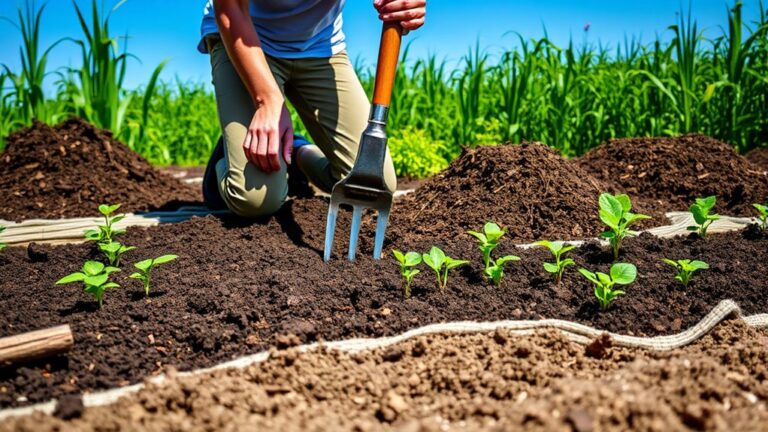
- Loosen the soil with a garden fork, working it only when it’s moist, not soggy. This improves airflow and makes it easier for roots to spread.
- Add a soil amendment, such as finished compost, to improve texture and replenish nutrients. Mix it into the top few inches, then rake the surface level.
Your prepared bed will support healthy growth and make ongoing care easier.
Choose Seeds or Seedlings and Gather Tools
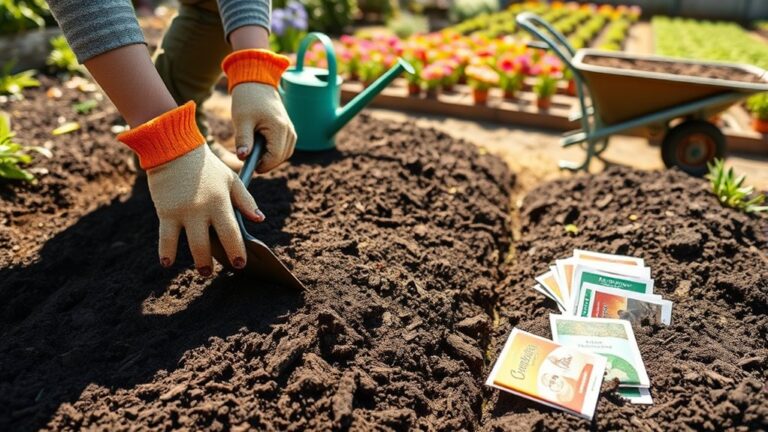
With the bed prepared, choose seeds or seedlings suited to your climate, space, and growing season, then gather the tools you’ll need to plant and care for them. Check seed packets for planting dates and days to maturity.
Choose seedlings when you want a quicker start or have a short season; use seed starting for more variety and lower costs. Match each crop to available space, and buy only what you’ll plant.
| Choice or tool | Best use | Check before buying |
|---|---|---|
| Seeds | Variety and value | Dates, maturity |
| Seedlings | Faster harvests | Healthy leaves, roots |
| Hand trowel | Planting small crops | Comfortable grip |
| Garden fork | Loosening soil | Sturdy handle |
Prioritize tool ergonomics: choose handles that fit your hands and tools you can lift comfortably. Gather gloves, a trowel, a fork, and plant labels.
Clean tools before use, and keep labels ready so you can identify crops as they grow. You’ll work more efficiently with suitable supplies.
Plan Watering and Mulch Your Garden
Plan how you’ll water the garden and where you’ll spread mulch before planting. A simple plan helps you keep vegetables evenly moist, conserve water, and limit weeds.
Check your soil and local weather to set a watering frequency; most gardens need a deep soak when the top inch feels dry. Water near the soil, ideally in the morning, to reduce evaporation and keep leaves dry.
- Choose a reliable source. Place a hose or watering can within easy reach, or install drip lines for steady delivery.
- Group thirsty crops together. You’ll find it easier to adjust watering without overwatering plants with lower needs.
- Pick suitable mulch materials. Straw, shredded leaves, or untreated grass clippings can protect soil and slow moisture loss.
- Apply mulch after the soil warms. Spread a two- to three-inch layer around plants, leaving space around stems to prevent rot.
Check moisture beneath the mulch regularly, and adjust your routine after rain or during hot, windy spells.
Frequently Asked Questions
How Can I Protect My Vegetable Garden From Pests?
Protect your vegetable garden by checking plants often and removing pests by hand before they spread. Cover young crops with lightweight row covers, and install pest proof fencing to keep rabbits and other animals out.
Rotate crops, clear away diseased leaves, and water at the soil level to discourage problems. You can also create beneficial insect habitats with native flowers, giving ladybugs and other helpful predators places to thrive.
What Are the Best Ways to Prevent Plant Diseases?
You can prevent plant diseases by choosing disease resistant varieties and practicing crop rotation, which keeps harmful pathogens from building up in the soil. Water plants at their base in the morning, and give them enough space for airflow.
Remove infected leaves promptly, clean your tools between plants, and avoid working with wet foliage. Keep your garden beds free of plant debris, and check plants regularly so you can spot problems early and act quickly.
How Often Should I Harvest Vegetables?
Harvest vegetables as soon as they reach the size and ripeness you want; timing varies by crop. For How often to harvest, check your plants every day or two during peak season, since beans, zucchini, cucumbers, and tomatoes can mature quickly. Frequent harvest timing encourages many plants to keep producing and helps prevent oversized, tough produce. Pick leafy greens as needed, and use seed-packet guidance to judge when less familiar vegetables are ready.
Can I Compost Kitchen Scraps for My Garden?
Yes, you can compost kitchen scraps for your garden. Composting scraps turns kitchen waste into nutrient-rich material that improves soil and supports healthy plants.
Add fruit and vegetable peels, coffee grounds, tea leaves, and crushed eggshells to your compost bin. Balance these “greens” with dry leaves, shredded cardboard, or other “browns,” and keep the pile slightly moist.
Avoid meat, dairy, oils, and diseased plants to reduce odors and pests. Mix regularly to help everything break down.
How Do I Keep Pets Out of My Vegetable Garden?
Keep pets out by blocking access and making your beds less tempting. Try pet proofing strategies such as supervising outdoor time, redirecting digging, and covering freshly planted soil with mulch or mesh. Install deterrent garden fencing around vulnerable areas; choose a sturdy height and secure the bottom so pets can’t squeeze underneath.
You can also use raised beds, motion-activated sprinklers, or safe scent deterrents. Avoid toxic plants and chemical repellents that could harm your animals.
Conclusion
With a sunny spot, healthy soil, and a plan suited to your climate, you’re ready to grow a thriving veggie garden. Check planting dates, choose crops you’ll enjoy, and give each plant room to flourish.
Clear weeds, gather seeds or seedlings, and set up watering and mulch before planting. Don’t worry if everything isn’t perfect. Your garden won’t need a million fixes to succeed.
Keep learning as you go, and soon you’ll enjoy fresh, homegrown vegetables right outside your door. These essential steps will help you prepare a veggie garden that thrives.