How to Grow a Vegetable Garden in 7 Simple Steps
Starting a vegetable garden can feel overwhelming when you’re unsure what to plant, where to begin, or how to keep your crops thriving. You’re not alone—many people struggle with these questions, but a few simple steps can make growing a vegetable garden much easier.
To grow a vegetable garden in seven simple steps, choose a sunny, accessible spot; select crops suited to your space and climate; plan your layout and planting dates; prepare and enrich the soil; plant at the recommended depth and spacing; water when the top inch feels dry, weed, and protect plants with mulch or row covers; then harvest produce at peak ripeness. Handle vegetables gently to prevent bruising. Keep these tips in mind as you build a garden that thrives.
Key Takeaways
- Choose a sunny, accessible location; most vegetables need at least six hours of direct sunlight daily.
- Select crops suited to your climate and space, checking mature size, growing conditions, and days to maturity.
- Test and prepare the soil, add finished compost as needed, and gather basic tools and watering supplies.
- Plan your layout and planting dates, then sow seeds or transplant seedlings at the recommended depth and spacing.
- Water when the top inch of soil is dry, weed and protect plants, and harvest gently when produce is ripe.
Choose a Garden Spot With Enough Sun
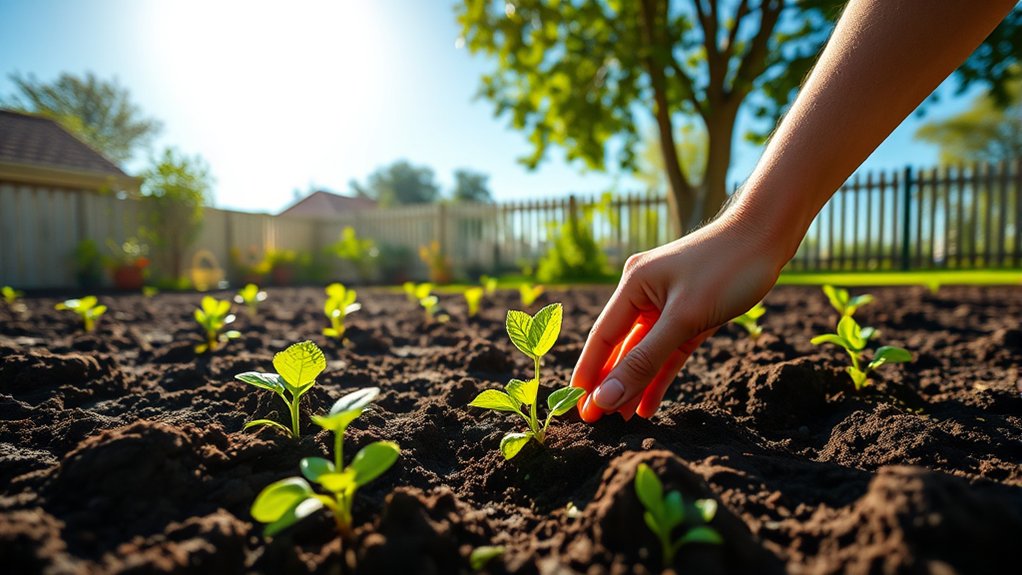
Where should you plant your vegetables? Choose a spot that receives plenty of direct sunlight, since most vegetables need at least six hours of sun each day to grow well.
Before you settle on a location, watch how sunlight moves across your yard. Check the area in the morning, midday, and afternoon, and note where buildings, fences, or trees cast shadows. This simple check helps you judge the site’s actual sun exposure.
Pay attention to shade tolerance, too. Leafy greens and a few other crops can handle partial shade, while fruiting vegetables generally need stronger, more consistent light.
If your yard has limited sunny areas, reserve the brightest spot for plants that depend on full sun. You can use a shadier corner for vegetables that tolerate less light.
Avoid planting beneath large trees, where branches block sunshine and roots compete for water. Pick a level, accessible place so you can reach your plants easily and keep an eye on them throughout the season.
Choose Vegetables That Fit Your Space and Climate
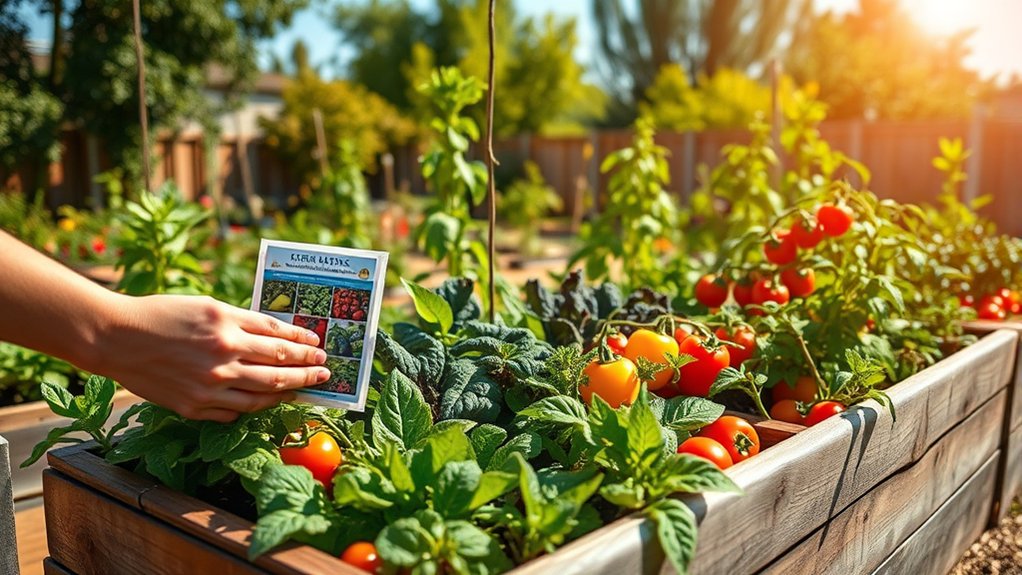
Once you’ve chosen a sunny spot, pick vegetables that suit its size and your local climate. If you’re growing in containers or a small bed, choose compact crops such as lettuce, radishes, or bush beans. With more room, you can try sprawling squash or larger plants like tomatoes. Check each vegetable’s mature size before you buy, so your choices won’t crowd one another.
Next, consider climate compatibility. Your region’s typical temperatures, frost patterns, and growing season affect which crops will thrive. Cool-season vegetables, including peas and spinach, tolerate chilly weather, while peppers and eggplants need warmth. Look up local growing recommendations or ask a nearby garden center for guidance.
When selecting seeds or seedlings, read labels for suitable conditions and days to maturity. A seed variety bred for disease resistance or local conditions may give you a more reliable harvest. Choose a few vegetables you enjoy eating, and match each one to the space and climate you can provide. This helps you start with manageable, healthy crops.
Plan Your Layout and Planting Dates
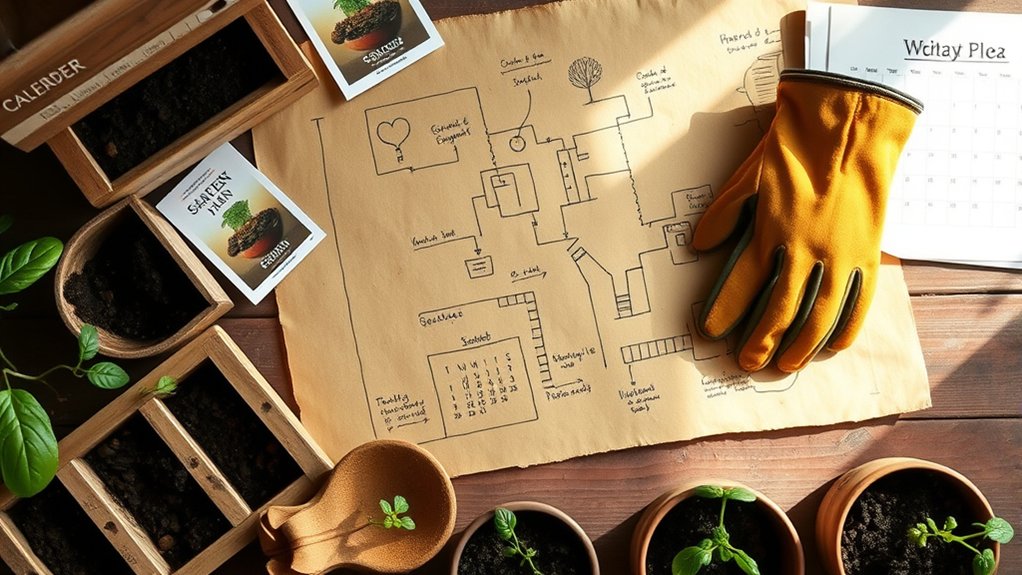
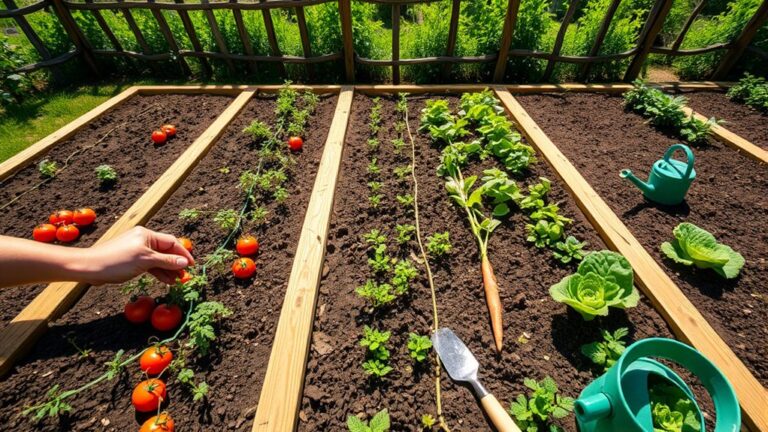
Before planting, sketch your garden layout to give each vegetable enough room to grow. Place taller crops, such as corn or tomatoes, where they won’t shade shorter plants. Check each vegetable’s mature size and spacing needs, then leave paths wide enough for you to reach every bed.
Group plants with similar sunlight and watering needs to simplify care. This planning layout helps you use your space wisely and avoid crowding as your garden grows.
Next, focus on setting planting dates. Find your area’s average last spring frost and first fall frost dates through a local extension service or gardening calendar. Compare those dates with each crop’s recommended planting window.
Sow cool-season vegetables, such as lettuce and peas, when temperatures suit them. Wait until frost danger passes before planting tender crops like beans and peppers. If you want a continuous harvest, stagger quick-growing crops by a week or two.
Mark your dates on a calendar, and adjust them if your local forecast shifts.
Prepare Your Soil and Gather Garden Supplies
With your layout and planting dates set, prepare the soil so roots can grow well. Start with soil testing to learn your soil’s pH and nutrient levels. Follow the results to choose suitable amendments, and loosen compacted ground without turning it into fine dust.
Test your soil, follow the results, and loosen compacted ground to create a healthy foundation for roots.
Remove rocks and persistent weeds, then blend in finished compost to improve texture and fertility. If you’re new to composting basics, use mature, earthy-smelling compost rather than fresh scraps.
Gather sturdy essentials: a hand trowel, shovel, hoe, gloves, watering can or hose, and a measuring tape. Check handles and fasteners, and practice tool sharpening so blades cut cleanly and safely.
Plan your irrigation setup before you need it. Inspect hoses, connectors, and sprinklers for leaks, and choose a watering method that reaches your garden area.
Keep supplies together in a dry, accessible spot. A labeled bin or shelf helps you find what you need quickly and keeps tools protected between gardening sessions.
Plant Your Vegetable Garden Correctly
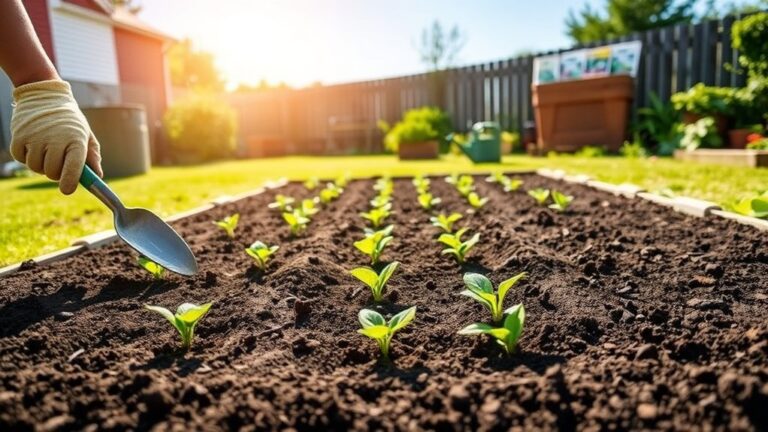
When the soil is ready and the danger of frost has passed, plant each vegetable at the depth and spacing listed on its seed packet or plant label. Check that your chosen spot gets the sunlight each crop needs, and consider soil drainage before you dig.
Group plants with similar light and space requirements so you can use your garden bed efficiently.
As you arrange your vegetables, think about companion planting. Pairing compatible crops can make the most of limited space and create a varied garden. Keep these simple tips in mind:
- Set tall plants, such as corn or trellised peas, where they won’t shade shorter crops.
- Leave enough room for each plant to reach its mature size without crowding.
- Mark rows or add labels so you can identify seedlings as they emerge.
Handle young transplants gently, and firm the soil around their roots to remove large air pockets. Sow seeds evenly, then cover them with the recommended amount of soil. Check each label before planting.
Water, Weed, and Protect Your Plants
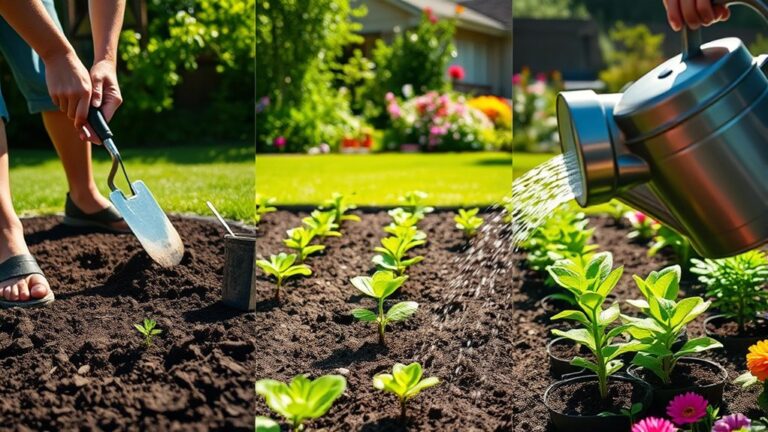
How often should you water your garden? Check the soil before you reach for the hose. If the top inch feels dry, water slowly at the base of each plant until the soil is moist several inches deep.
Check the top inch of soil before watering, and soak the roots slowly when it feels dry.
Your garden may need more frequent watering during hot, dry weather and less after rain. Water in the morning to limit evaporation and help leaves dry before nightfall. A soaker hose or drip system supports water conservation by delivering moisture directly to roots.
Pull weeds while they’re small, loosening their roots without disturbing nearby vegetables. Add a layer of clean straw or shredded leaves around plants for weed suppression and to help soil retain moisture. Keep mulch a few inches from stems to prevent rot.
Protect your plants by checking them regularly for chewed leaves, spots, or pests. Remove damaged foliage, handpick insects, and use row covers when needed. Secure supports, and shield tender plants from harsh weather so they can grow steadily.
Harvest Your Vegetables at Peak Ripeness
Check each vegetable’s color, size, and firmness to see if it’s ready to harvest. Pick your crops at peak ripeness for the best flavor, and handle them gently to avoid bruising or damage.
Check Harvest Indicators
Your vegetables taste best when you harvest them at peak ripeness. Check each crop’s ripe indicators instead of relying on guesswork. Color, size, firmness, and aroma can reveal harvest readiness, but the signs vary by vegetable.
Compare what you see with the seed packet or a trusted growing guide, and inspect plants regularly as they mature.
- Look for full color and the expected size on tomatoes, peppers, and eggplants.
- Check beans and peas while pods feel plump but still tender.
- Test root crops by gently uncovering a small area to judge their size.
Use your senses, since ripe produce often smells fresh and feels firm without being hard. Keep notes about what you observe; they’ll help you recognize reliable signs in future plantings.
When indicators are unclear, check a few specimens before harvesting the crop.
Pick At The Right Time
Once you’ve spotted the signs of ripeness, harvest each vegetable at the time of day and stage that best preserves its flavor and texture. Your timing considerations will vary by crop.
Pick leafy greens in the cool morning, when their leaves hold moisture and taste crisp. Harvest tomatoes after they’ve fully colored and softened slightly, while cucumbers taste best before their seeds grow large.
Check harvest readiness often; warm weather can move vegetables from ripe to overripe in just a day or two. Pick beans while their pods remain firm and tender, and cut summer squash when they’re still small.
For root vegetables, loosen the soil and sample one before gathering the rest. Harvest only what you can use soon, and leave immature produce on the plant to develop further.
Handle Produce Gently
How you handle vegetables after picking can preserve—or damage—their flavor and texture. Use gentle handling from garden to kitchen, and aim for minimal bruising by avoiding drops, squeezes, and crowded baskets. A delicate harvest matters most for tender crops such as tomatoes, berries, and leafy greens.
- Lift tomatoes by the stem; don’t pull or press their soft skins.
- Slide greens into a shallow basket instead of stuffing them into a bag.
- Keep cucumbers and peppers separate from heavy squash to prevent dents.
Use clean hands or snips, and place each vegetable gently in a shaded container. Don’t wash produce until you’re ready to use it; excess moisture can speed spoilage. Although transplant care helps plants grow strong, careful postharvest handling protects the vegetables you’ve worked hard to raise.
Sort damaged pieces promptly, and enjoy ripe produce while its flavor and texture shine.
Frequently Asked Questions
How Much Does It Cost to Start a Vegetable Garden?
You can start a vegetable garden for about $25–$100, depending on your space and setup. Your cost breakdown might include $10–$30 for seeds, $10–$25 for soil and compost, and $5–$45 for starter supplies like containers or basic tools. Outdoor raised beds can add $50–$200 or more.
Indoor winter viability may require grow lights. Choose beginner friendly veggies for cooking, such as lettuce and herbs, and follow pet safety precautions when selecting plants and fertilizers.
Can I Grow Vegetables Indoors During Winter?
Yes—you can grow vegetables indoors during winter, turning a sunny corner into a small, thriving oasis. Choose compact crops like lettuce, spinach, herbs, and microgreens, and use containers with drainage holes and quality potting mix.
Provide strong indoor winter lighting, such as a grow light for 12–16 hours daily, and keep plants away from cold drafts. Maintain steady indoor space heating, but avoid placing pots near hot vents. Water when the soil feels dry.
Are Raised Beds Better Than In-Ground Gardens?
Raised beds aren’t always better; your best choice depends on your soil, space, budget, and needs. In a raised bed, you’ll control soil quality, improve drainage, and reach plants more easily, but you’ll pay for materials and water more often.
An in-ground garden costs less and needs less frequent watering, though you may face poor soil, weeds, or compaction. Choose raised beds for convenience; plant in the ground when your soil’s healthy and space allows.
How Can I Garden Safely With Pets Nearby?
You can garden safely with pets nearby by choosing pet-safe plants and keeping tools, fertilizers, and treated areas out of reach. Install pet safe fencing around beds to discourage digging and nibbling.
Use non toxic pesticides only when needed, and follow label directions; even safer products can harm pets if swallowed. Store chemicals securely, remove fallen fruit, and provide a separate play area.
Check with your veterinarian about plants or products that may pose risks.
Which Vegetables Are Easiest for Beginners to Cook?
Want dinner on the table without fuss? Start with vegetables that are easy to cook and beginner friendly: zucchini, green beans, spinach, carrots, and tomatoes.
You can sauté zucchini and spinach in minutes, steam green beans, roast carrots, or toss tomatoes into pasta.
If you grow your own, choose easy to grow varieties that suit your space. Wash everything well, use a sharp knife carefully, and season simply with oil, salt, and pepper.
Conclusion
You’ve chosen a sunny spot, matched vegetables to your space and climate, planned your layout, prepared the soil, and planted with care. Now keep your garden on course: water consistently, pull weeds, protect tender growth, and harvest each crop at peak ripeness.
Think of your vegetable garden as a living recipe. Your steady attention brings each ingredient to its best. Start small, learn as you go, and enjoy the fresh rewards you’ve grown with your own hands.