How to Prepare Land for Planting Vegetables in 3 Simple Steps
Getting a vegetable garden started can feel overwhelming, especially when weeds, compacted soil, and uneven beds stand in your way. You’re not alone—many gardeners struggle to prepare an planting area. These three simple steps for preparing land for planting vegetables can help you get started.
Prepare land for planting vegetables in three simple steps. First, clear weeds, grass, stones, and debris, pulling roots or using a hoe for stubborn growth. Next, test your soil and add finished compost or other amendments based on the results; don’t guess or use fresh manure. Finally, break up clods, remove remaining roots, and rake the bed level so water spreads evenly. Check the grade with a straight board, then mark rows and shallow furrows. A few practical details can make each step easier.
Key Takeaways
- Clear weeds, grass, rocks, and debris, removing roots and diseased plant material; cover extensive weeds with cardboard or a tarp.
- Rake the cleared area, remove missed debris, and level low spots and mounds with soil and a straight board.
- Test soil pH and nutrients through a local extension service before choosing amendments.
- Mix recommended amendments and finished compost into the upper soil; avoid fresh manure and excess fertilizer.
- Break up clods, rake the surface smooth, then mark rows and shallow furrows with stakes and string.
Clear Weeds, Grass, and Debris
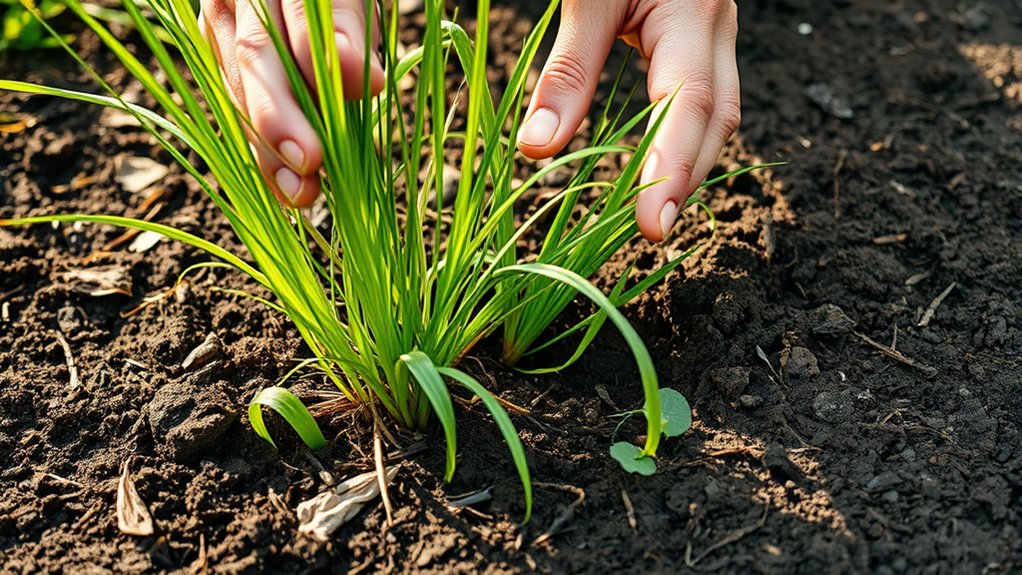
Start by removing weeds, grass, rocks, and other debris from the planting area. Pull weeds by the roots so they’re less likely to return, and use a hoe or garden fork to loosen stubborn growth.
For extensive weed removal, cut vegetation low, then cover the area with cardboard or a tarp to block sunlight before planting.
Next, handle debris cleanup. Pick up stones, sticks, dead leaves, and litter, and dispose of diseased plant material separately.
Remove turf with a spade if you’re converting lawn into a garden bed; shake loose soil from the roots and compost healthy grass.
Rake the cleared ground to expose anything you missed. Avoid digging deeply while clearing, since you’ll address soil improvement in the next step.
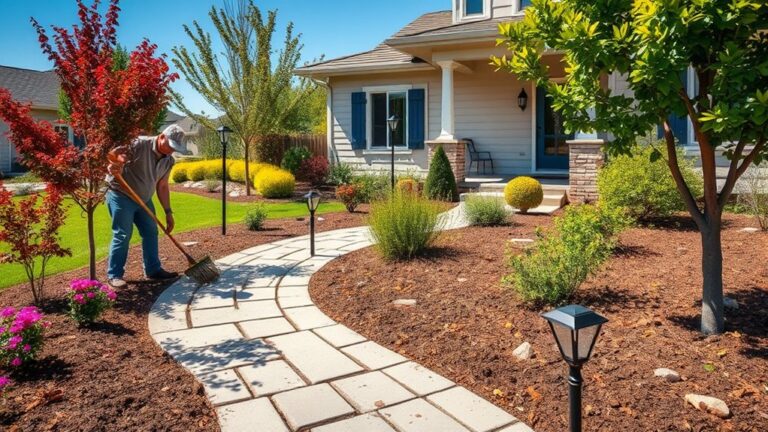
Finish with bed leveling: rake the surface until it’s even, filling low spots and smoothing mounds. A level bed helps water spread more consistently and gives you a clear, workable area for planting vegetables.
Improve Soil for Vegetable Planting
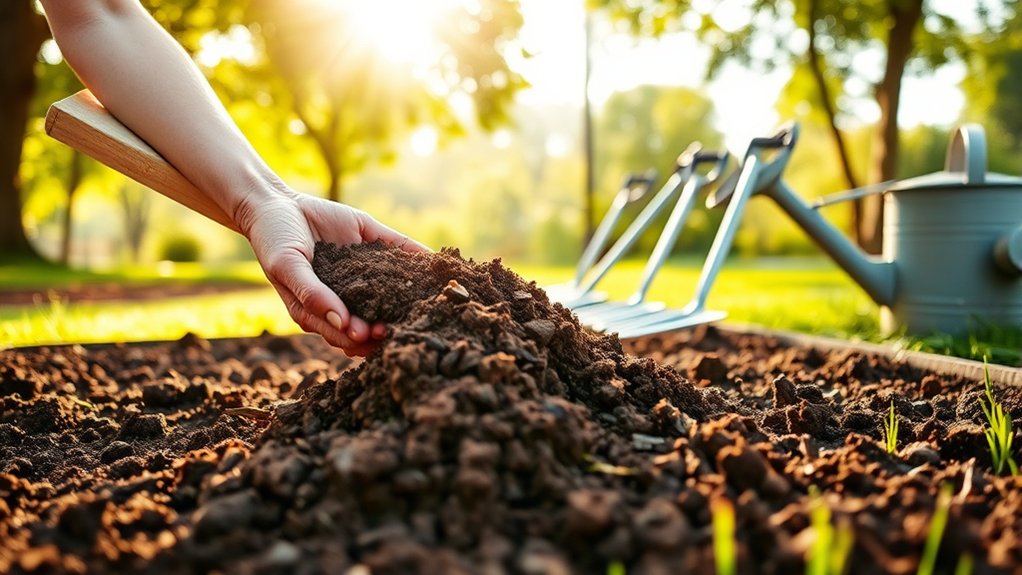
With the bed cleared and leveled, improve the soil so vegetables can develop strong roots and grow well. Start with soil testing to learn your soil’s pH and nutrient levels.
A local extension service can recommend an affordable test and explain the results. Use those findings to choose amendments instead of guessing.
| Soil clue | What you can do |
|---|---|
| Low organic matter | Add finished compost |
| Acidic soil | Apply lime if recommended |
| Alkaline soil | Follow test-based guidance |
| Compacted soil | Loosen it with a garden fork |
| Poor drainage | Mix in organic matter |
For composting basics, combine “green” scraps, such as vegetable peelings, with “brown” materials, such as dry leaves. Keep the pile moist, turn it occasionally, and use compost only when it’s dark and crumbly.
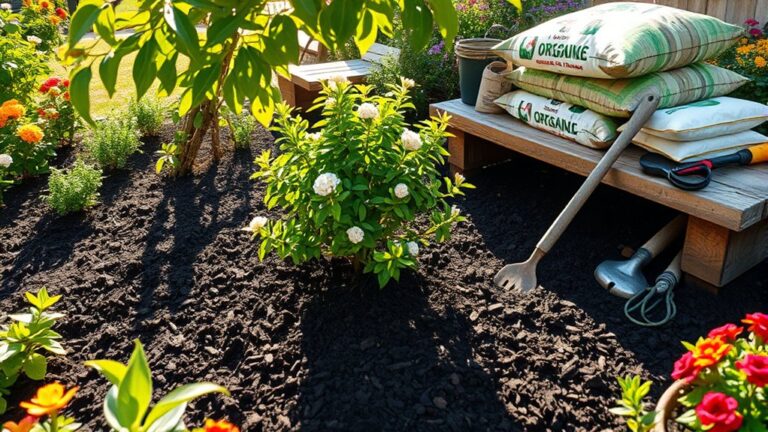
Spread a modest layer of finished compost over the soil, then mix it into the upper few inches. Don’t add fresh manure or excess fertilizer; either can harm young plants.
Match every amendment to your test results and the vegetables you plan to grow.
Level the Bed and Prepare It for Planting
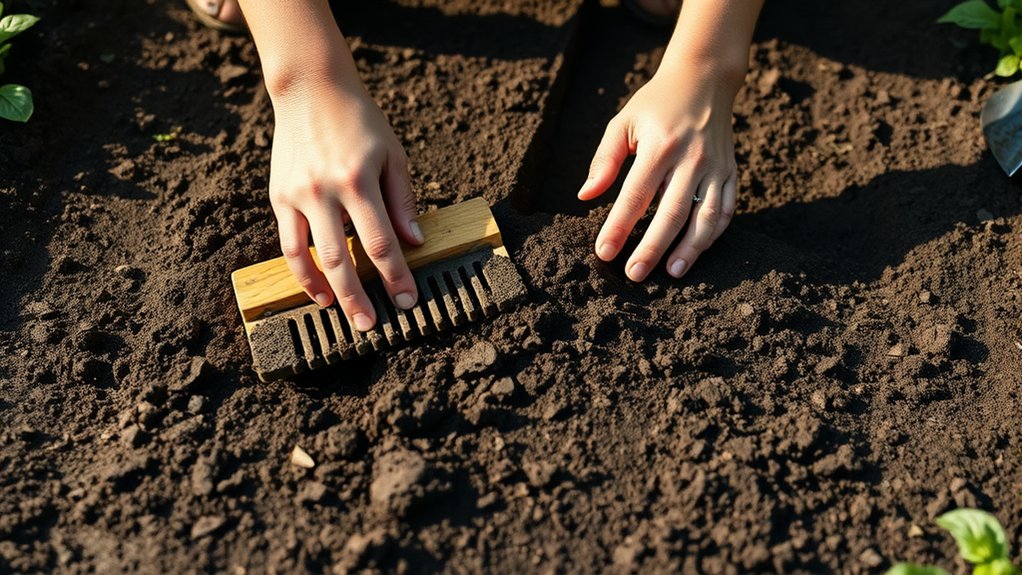
Once you’ve amended the soil, rake the bed smooth and level so water spreads evenly and seeds sit at a consistent depth. Good seedbed leveling also makes planting and weeding easier. Break up large clods, remove stones and roots, and fill low spots with loose soil. Keep the surface crumbly, not powdery, so it won’t crust after watering.
A smooth, crumbly seedbed helps water spread evenly and gives seeds a consistent depth for easier planting and weeding.
- Check the grade: Lay a straight board across the bed in several directions. Add soil to dips and rake down high areas until the surface looks even.
- Firm it gently: Walk along the edges or press the soil lightly with the back of a rake. Avoid heavy soil tamping, which can compact the bed and restrict roots, drainage, and air.
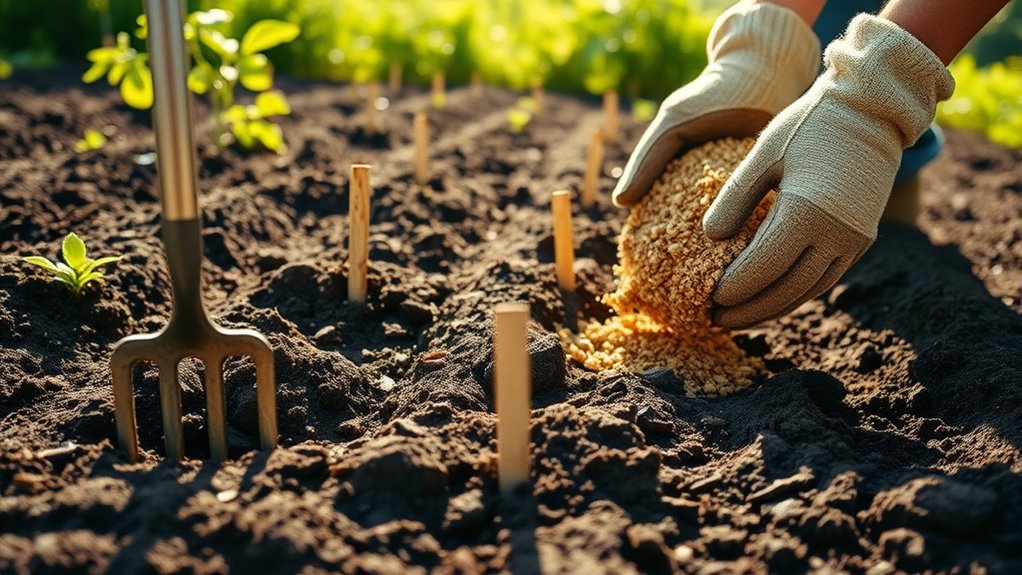
- Mark planting rows: Use string and stakes to guide straight rows, spacing them according to each crop’s needs. Make shallow furrows with a hoe or stick, then water gently if the soil feels dry.
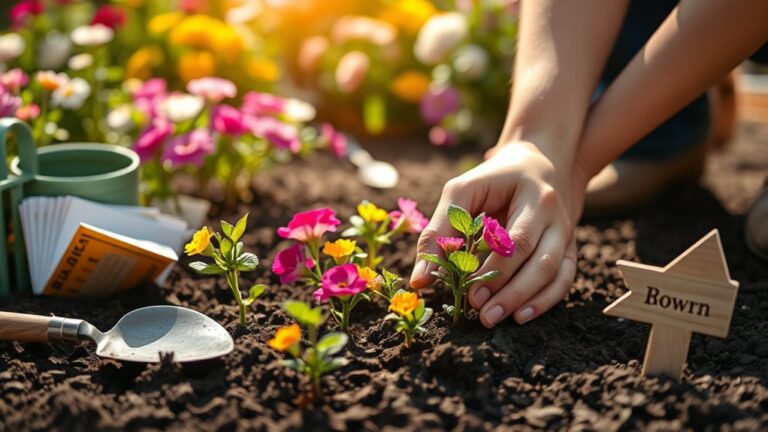
Your bed’s ready for seeds or transplants.
Frequently Asked Questions
When Is the Best Time of Year to Prepare a Vegetable Garden?
The best time to prepare your vegetable garden is several weeks before you plan to plant, usually in early spring for warm-season crops. Your best planting window depends on your local climate, frost dates, and the vegetables you’ll grow.
In mild regions, you can also prepare beds in fall for cool-season crops or spring planting. Check your area’s seasonal timing, then clear, amend, and loosen the soil when it’s workable—not soggy.
How Much Sunlight Do Most Vegetables Need Each Day?
Most vegetables need six to eight sunlight hours daily—because even tomatoes can’t thrive on compliments alone. Give your garden at least six hours of direct daily sunlight, and aim for eight or more for sun-loving crops like peppers, cucumbers, and squash. Leafy greens, including lettuce and spinach, can manage with four to six hours, especially in warm climates. Check your garden’s light throughout the day, since nearby trees and buildings may cast sneaky shadows.
How Do I Choose Vegetables Suited to My Climate?
Choose vegetables that match your climate zone, local growing season, and typical temperatures. Check seed packets or a regional planting guide for frost dates and days to maturity; select crops that’ll ripen before weather turns. Choosing crops suited to your conditions makes gardening easier.
Also assess garden microclimates: sunny walls, shade, wind, and damp spots can affect growth. Try heirloom varieties recommended locally, and ask nearby gardeners what thrives in your area.
How Much Space Should I Leave Between Vegetable Plants?
Leave enough space between plants for their mature size, airflow, and sunlight. Check each seed packet or plant label for spacing guidelines, since needs vary by crop and variety. For example, you might place lettuce 6–12 inches apart, while tomatoes often need 18–24 inches. Measure the space between plants from stem to stem, not leaf to leaf. If you’re unsure, choose the wider spacing to reduce crowding and disease.
How Often Should I Water Newly Planted Vegetables?
Water newly planted vegetables whenever the top inch of soil feels dry, often daily during the first week, especially in warm or windy weather. Check root zone moisture by gently probing the soil near each plant; keep it evenly moist, not soggy, so roots establish well. After plants settle in, water deeply less often, adjusting for rainfall, soil type, and temperature. Morning watering helps reduce evaporation and gives foliage time to dry.
Conclusion
With weeds, grass, and debris cleared, your garden bed is ready to breathe. You’ve enriched the soil with the organic matter vegetables need and leveled the surface for easy planting.
Now, picture rows of seedlings settling into their new home, roots reaching into loose, fertile earth. Give the bed a final check for stones and uneven spots, then water it lightly.
Your preparation is complete. Plant your vegetables and watch your garden grow from a clean, welcoming canvas. These simple steps show how to prepare land for planting vegetables.