How to Make Flower Beds in 7 Easy Steps
Starting a flower bed can feel overwhelming when you’re not sure where to begin or which flowers will thrive. You’re not alone—many gardeners struggle to turn a patch of lawn into a colorful, easy-to-care-for space. This guide to how to make flower beds in 7 easy steps will help you plan and plant with confidence.
To make a flower bed in seven easy steps, check sunlight throughout the day, then choose a shape that suits your yard. Mark the outline with a hose, stakes, or string, and clear away grass and weeds. Loosen the soil 8–12 inches deep and mix in compost.
Choose flowers suited to the site, arrange them by height and mature width, and plant at the right depth and spacing. Water thoroughly, add mulch, and keep up with simple care. The steps below can help you get each detail right.
Key Takeaways
- Observe sunlight throughout the day, then choose flowers suited to the bed’s light conditions.
- Outline a practical bed shape with a hose or stakes, checking access and how it fits the yard.
- Remove grass and weeds, loosen soil 8–12 inches deep, and mix in 2–3 inches of compost.
- Arrange flowers by height and mature width, then plant them at recommended spacing in holes wide enough for their roots.
- Water thoroughly, add 2–3 inches of mulch away from stems, and regularly weed, deadhead, and adjust watering.
Check Sunlight Before Choosing a Flower Bed Site
Before choosing a spot for your flower bed, check how much sunlight it gets throughout the day. Observe the area in the morning, around midday, and late afternoon. Nearby trees, fences, and buildings can cast shadows that shift as the sun moves, so don’t judge the site from one quick glance.
Track sunlight exposure for a full day, or revisit the spot at different times over several days. Note whether it receives full sun, partial sun, or mostly shade. These conditions affect which flowers will thrive there.
Check plant labels or reliable gardening resources to learn each flower’s light needs, and compare them with what your site offers.
If you’re considering a shaded location, pay attention to shade tolerance. Some flowers grow well with limited direct light, while others need several hours of sun to bloom.
Choose plants suited to the site’s actual conditions, rather than expecting them to adapt to an unsuitable spot. This simple check helps you select flowers that can flourish.
Plan Your Flower Bed’s Shape and Layout
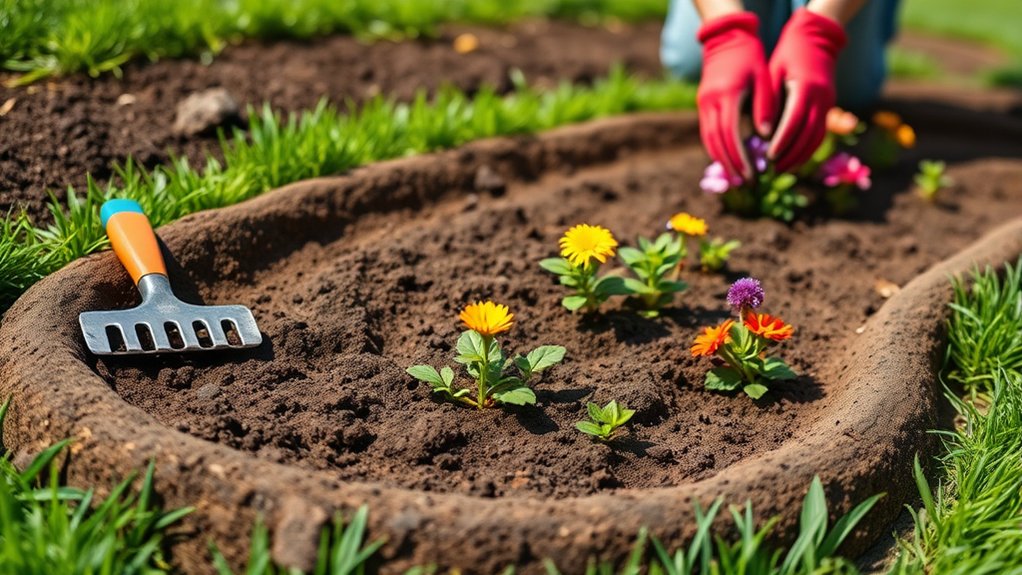
Choose a shape that suits your yard and complements your home’s style. Then, lay out the shape with a garden hose or string so you can see how the bed will fit before you start digging.
Choose a Shape
Start by deciding how your flower bed will fit into the yard. Look at nearby paths, patios, trees, and buildings, then choose a shape that complements those features. A curved bed can soften a straight fence or walkway, while a rectangular bed may suit a formal garden or narrow space.
For a relaxed look, try an oval or free-form outline. Consider how much room you have to plant and maintain the bed, and avoid shapes that make mowing or access difficult.
These shape considerations can help you create a bed that feels balanced without overwhelming your yard. Think, too, about border materials, since edging such as stone, brick, or flexible metal may work better with some curves than others. Pick a shape you’ll enjoy caring for and viewing.
Map the Layout
Once you’ve settled on a shape, map it onto the ground to see how it fits your yard. Use a garden hose, rope, or flour to outline the bed’s edges. Walk around the marked area and view it from different angles, including from windows and paths. Adjust the curves or corners until the outline looks balanced and leaves enough room to move around it.
Check how the bed relates to nearby trees, fences, and structures. Keep the layout accessible for planting, watering, and maintenance, and avoid blocking walkways or sightlines.
If you’re planning idea one or idea two, sketch each option on paper first, then mark your preferred design outdoors. Measure the outline and note its dimensions so you can estimate materials and choose plants that fit the space.
Gather Tools and Mark Your Flower Bed
Gather a few basic tools before you shape your flower bed: a garden hose or stakes and string, a tape measure, a shovel, and a rake. These supplies help you gather tools efficiently and mark edge lines with care. Check that your tape measure works and that your stakes are sturdy enough to hold their position.
Refer to the layout you planned in the previous step. Use a garden hose to outline smooth curves, shifting it until the shape looks balanced from several angles. For straight sides or crisp corners, use stakes and string instead. Place stakes at the bed’s corners, then lay string between them to create clear boundaries.
Measure each side and compare the dimensions with your plan. Adjust the outline now if it feels too wide, narrow, or awkward in your yard. Walk around the marked shape to check its appearance from nearby paths and windows. Once you’re satisfied, leave the hose or string in place as a visible guide for the next step.
Clear Grass and Prepare Flower Bed Soil
Remove the grass and weeds so they don’t compete with your flowers. Then loosen the soil to help roots spread and water drain. Finally, mix in organic matter to enrich the bed and support healthy growth.
Remove Grass and Weeds
Clear the planting area of grass and weeds so your flowers won’t compete for water and nutrients. Choose removal strategies that suit your bed’s size and the plants you plan to grow.
For a small area, pull weeds by hand, removing roots to limit regrowth. For larger patches, cut sod into strips and lift it away with a spade. Don’t leave unwanted plants behind.
- Remove visible weeds, including roots and runners.
- Lift grass and sod; shake loose soil back into the bed.
- Dispose of seed-bearing weeds in the trash, not your compost.
- Cover the cleared area with cardboard or a thick layer of mulch for weed suppression.
Check the bed again before planting, and pull any new growth promptly. Avoid herbicides near flowers you intend to grow.
Loosen the Soil
With the grass and weeds gone, loosen the soil to help roots spread and water drain. Use a garden fork or spade to turn the ground about 8 to 12 inches deep.
Work in small sections, pressing the tool down and gently lifting the soil rather than chopping it into fine pieces. This approach improves loosen soil aeration while preserving a crumbly structure.
Check the loosen soil soil texture as you work: sandy ground should hold together slightly when squeezed, while clay soil should break apart without forming hard clumps.
Avoid digging when the soil is wet, since you can compact it and damage its structure. Remove any remaining roots, rocks, or debris by hand.
Rake the surface level, but don’t pack it down; keep the bed ready for planting.
Add Organic Matter
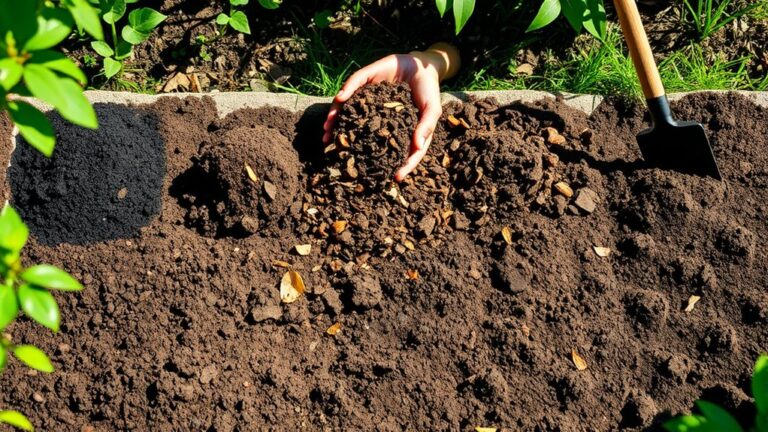
Once you’ve loosened and leveled the soil, mix in a 2- to 3-inch layer of compost or other well-rotted organic matter to improve its texture and help it hold moisture and nutrients. Spread it evenly across the bed, then work it into the top 6 to 8 inches with a garden fork or spade.
This compost addition supports beneficial soil organisms and gives roots a healthier place to grow. Choose clean, finished materials, not fresh manure or unfinished compost, which can harm plants.
- Use leaf mold to improve moisture retention.
- Add aged manure for a gentle nutrient boost.
- Mix in shredded bark to loosen heavy clay soil.
- Avoid excessive amendments; too much organic matter can disrupt drainage.
After mixing, rake the surface smooth and remove any remaining grass roots or debris before planting.
Choose Flowers for Your Sunlight and Soil
Before choosing flowers, check how much sun your bed gets and what kind of soil it has. Track sunlight throughout the day, noting whether the area receives full sun, partial shade, or mostly shade.
Match flowers’ sunlight needs to your bed’s conditions; sun-loving varieties may struggle in shade, while shade-tolerant blooms can scorch in intense afternoon light.
Next, examine your soil’s texture and drainage. Squeeze a handful of moist soil: sandy soil feels gritty, clay soil feels sticky, and loam crumbles easily.
Most flowers grow well in loam, but you can find varieties suited to other conditions. After watering, check whether water drains away or lingers; choose plants that tolerate your bed’s moisture level.
Test soil pH with a home kit or through a local extension service. The results show whether your soil is acidic, neutral, or alkaline.
Choose flowers that suit its pH, or amend the soil if needed. Read plant labels and group varieties with similar light and soil preferences.
Plant Flowers at the Right Depth and Distance
Plant flowers at the depth and spacing listed on their labels to help them establish strong roots and grow without crowding. Check each plant’s tag before digging, since the ideal planting depth varies by type. Set most plants so the top of the root ball sits level with the surrounding soil. Burying a crown too deeply can cause problems, while leaving roots exposed can dry them out.
Use the recommended spacing to give each flower room to mature and allow air to move between plants. Arrange the pots on the bed first, then adjust the layout before planting.
- Space spreading flowers farther apart than compact varieties.
- Group plants with similar height, placing taller blooms behind shorter ones.
- Keep mature widths in mind, not just the size of young plants.
- Stagger rows for fuller coverage without packing flowers tightly.
Dig holes wide enough for roots to spread naturally. Loosen tangled roots gently, set each plant upright, and fill around it with soil. Check the label again if you’re unsure.
Water, Mulch, and Care for Your Flower Bed
After planting, water the bed thoroughly to settle soil around the roots and help flowers recover from transplanting. Then, check moisture regularly by feeling the soil an inch below the surface. Water when it feels dry, aiming at the soil rather than the leaves to reduce disease risk. Give your flowers a deep drink in the morning so roots can absorb moisture before the day heats up.
Spread two to three inches of organic mulch, such as shredded bark or compost, around plants. Keep mulch a few inches away from stems to prevent rot. Careful mulch layering helps suppress weeds, regulate soil temperature, and improve water retention as the material breaks down. Replenish it when the layer thins, but don’t pile it against plant crowns.
Inspect your bed weekly for weeds, pests, and damaged blooms. Pull weeds while they’re small, remove spent flowers to encourage more blooms, and trim unhealthy growth with clean shears. Adjust watering during hot, dry, or rainy weather.
Frequently Asked Questions
When Is the Best Time of Year to Create a Flower Bed?
The best time to create a flower bed is spring or early fall, when mild temperatures and regular rainfall help plants establish roots. Your seasonal timing should match your local climate: plant after the last frost in spring, or several weeks before the first frost in fall.
You’ll also have comfortable conditions for soil preparation, including removing weeds, loosening the ground, and adding compost before planting. Avoid extreme heat or frozen soil.
How Much Does It Typically Cost to Build a Flower Bed?
You’ll typically spend $100–$500 to build a flower bed yourself, depending on its size, soil, edging, plants, and mulch. A professionally installed bed may cost $500–$2,000 or more. To manage gardening budgets, measure your space, compare material prices, and choose affordable plants suited to your climate. Reusing stones or dividing existing perennials can cut costs. Container dining is a separate outdoor upgrade, so include it only if you’re also planning a patio.
Can I Create a Flower Bed in a Small Space or Container?
Yes—you can create a flower bed in a small space or container. Picture a bare balcony corner; with a few thoughtful choices, it could soon burst with color. Small space gardening works beautifully in patios, windowsills, and compact yards.
For container planting, choose a pot with drainage holes, fill it with quality potting mix, and select flowers suited to your sunlight. Water regularly, and watch your little garden transform. You don’t need much room to begin.
How Can I Keep Pets From Digging in My Flower Bed?
Keep pets out of your flower bed by covering exposed soil with sturdy wire mesh, secured beneath mulch, or by placing decorative rocks around plants. These simple pet deterrents support digging prevention without harming animals.
You can also install a low fence, provide a designated digging area elsewhere, and reward pets for using it. Avoid toxic sprays or sharp barriers, and supervise pets until they learn to leave your garden alone.
Do Flower Beds Increase a Home’s Curb Appeal?
Yes, flower beds can increase your home’s curb appeal by adding color, texture, and a cared-for appearance. Choose flowers that suit your climate and complement your home’s style, then keep the beds tidy with regular weeding, pruning, and watering.
Flowers’ relevance to curb appeal depends on thoughtful placement and maintenance; even a small, well-kept bed can make your entrance more welcoming and help your home stand out to visitors and potential buyers.
Conclusion
Your flower bed is more than a patch of soil. It’s a small promise of color and growth.
By checking sunlight, planning your layout, preparing the ground, and choosing and planting suitable flowers, you’ve given that promise a place to bloom. Keep watering, mulching, and tending your plants, and you’ll watch your effort take root through every season.
Start with one flower bed, then let its beauty inspire the next. Your garden’s story is just beginning.