How to Grow: 5 Simple Steps to Start
Starting a garden can feel overwhelming when you’re not sure what to plant or how to keep it alive. You’re not alone—many new gardeners struggle to find simple, reliable advice. These five easy steps can help you grow with confidence.
To start growing a garden, choose a few beginner-friendly plants suited to your space, season, and local frost dates. Find a convenient spot with enough sunlight, then select suitable soil and containers with drainage holes. Plant seeds or seedlings at the depths and spacing on their labels. Water deeply when the top inch of soil feels dry, and feed plants as needed. Watch for wilting, yellow leaves, or pests; a few simple checks can help you grow with confidence.
Key Takeaways
- Choose a few beginner-friendly plants suited to your space, season, and local growing conditions.
- Check sunlight throughout the day, then pick an accessible spot with enough light for your plants.
- Select suitable soil or potting mix, and use containers with adequate space and drainage holes.
- Plant seeds or seedlings at the recommended depth and spacing, following the label instructions.
- Water when the top inch of soil feels dry, watch for signs of pests or stress, and note what works.
Choose Beginner Plants for Your Space and Season

What should you grow first? Choose plants that match your experience, available space, and local season. If you’re new to gardening, start with forgiving crops such as lettuce, radishes, bush beans, or herbs. These grow reliably and let you see progress without complicated care. Pick just a few so you can learn what works before adding more.
Next, consider how much room each plant needs. Compact greens and herbs suit containers, while sprawling squash needs more space. Check plant labels for mature size, days to harvest, and recommended growing conditions. Compare seedling varieties, too: some offer disease resistance or compact growth that makes them easier to manage.
Use seasonal timing to guide your choices. Cool-weather crops thrive in spring or fall, while tomatoes and peppers need warm conditions. Check your area’s frost dates and choose plants suited to the weeks ahead. Buying seedlings can save time, but sowing seeds gives you more options. Start with plants you’ll enjoy eating, and keep your first plan manageable.
Pick a Sunny Spot for Your Garden

Where you place your garden can shape how well your plants grow. Start by tracking Sun exposure across your yard or balcony. Watch the area at different times of day, noting when direct light reaches it and when buildings, fences, or trees cast shade. Most vegetables and flowering plants need several hours of sunlight, but some leafy greens tolerate partial shade.
Match the spot to the plants you chose, and remember that sunlight shifts with the seasons.
Next, consider garden layout concerns before settling on a location. Choose a place you can reach easily, so you’ll notice when plants need attention and won’t avoid routine care. Check whether nearby trees may block light as they grow, and avoid spots where passing people or pets could disturb your plants.
If you’re gardening on a balcony, observe how railings and walls affect light throughout the day. A little observation now can help you pick a practical, bright location that supports healthy growth.
Choose Soil and Containers for Your Plants
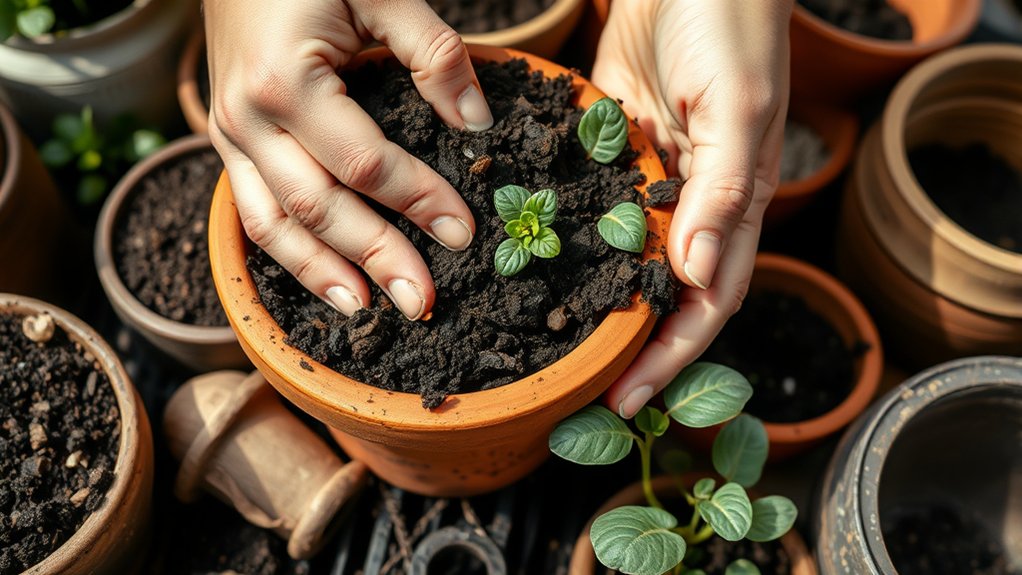
Choose soil and containers that suit the plants you want to grow. Match your soil types to each plant’s needs: some thrive in rich, moisture-retaining mixes, while others prefer lighter, fast-draining soil. For containers, consider container sizes, drainage, and material. A larger pot holds more soil and moisture, while a smaller one fits compact plants and tight spaces. Make sure every container has drainage holes to prevent waterlogged roots.
Before you buy soil, check what you already have. Soil testing can reveal its pH and nutrient levels, helping you decide whether to amend it or choose a ready-made mix. If you’re gardening in pots, use potting mix rather than dense garden soil, which can restrict drainage and airflow.
Let sun exposure and environmental factors guide your choices, too. Hot, windy spots dry containers quickly, so you may need larger pots or moisture-retaining mixes. In shaded, damp areas, prioritize drainage. Choose practical options you can move, fill, and maintain comfortably.
Plant Seeds or Seedlings at the Right Depth
Plant seeds or seedlings at the depth their labels recommend, since planting too deep can delay growth or prevent sprouting. Check each packet for seed depth, because tiny seeds often need only a light covering, while larger seeds can go deeper.
If directions say to surface-sow, press seeds gently onto the soil instead of burying them.
| Planting choice | What you should do |
|---|---|
| Tiny seeds | Scatter on the surface |
| Medium seeds | Cover lightly |
| Large seeds | Follow packet depth |
| Seedlings | Match soil line to root ball |
| Crowded plants | Check seedling spacing |
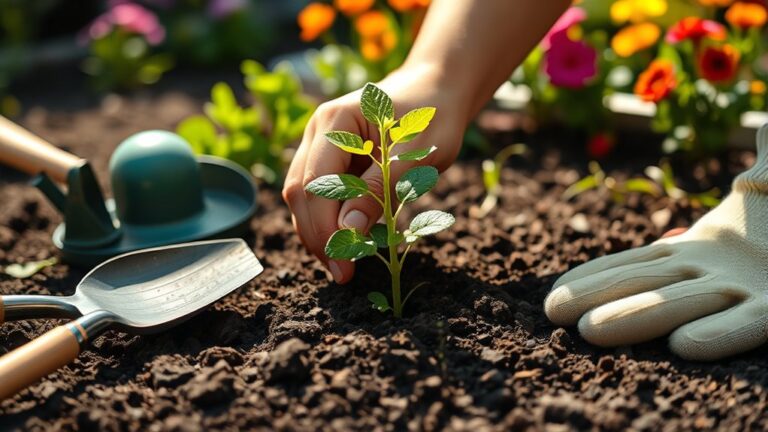
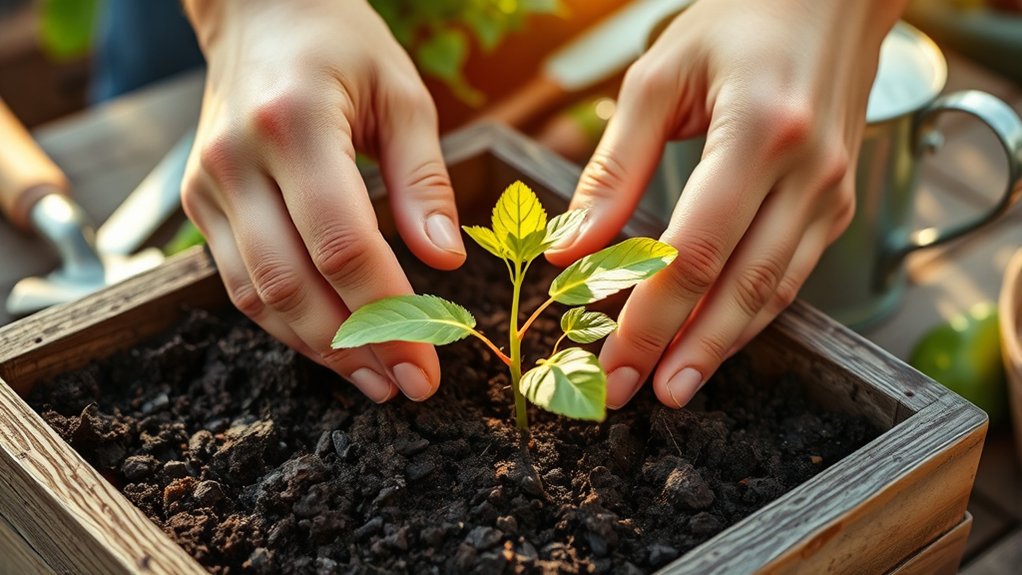
For seedlings, dig a hole just deep enough to hold the root ball. Keep the stem’s base level with the surrounding soil; burying it may cause problems for some plants.
Set each plant according to the spacing on its label, leaving room for mature growth. Handle seedlings by their leaves or root ball, not by the fragile stem.
If you’re planting in rows, use a ruler or garden marker to keep depths and spacing consistent. Then gently firm the soil around each seed or plant.
Water, Feed, and Troubleshoot Your Garden
After planting, keep the soil evenly moist, but don’t let it become waterlogged. Check moisture with your finger, and water deeply when the top inch feels dry.
Your water management routine should match your climate, soil, and plants; containers may need more frequent attention than garden beds. Water near the soil, ideally in the morning, to reduce evaporation and leaf disease.
Feed plants according to their needs, using compost or a balanced fertilizer as directed. Too much fertilizer can burn roots or encourage leafy growth at the expense of flowers and fruit.
Watch for changes, then use these troubleshooting basics to respond thoughtfully:
- Yellow leaves may signal overwatering, poor drainage, or nutrient shortages.
- Wilting can mean dry soil, but check moisture before adding water.
- Chewed leaves often point to pests; inspect both sides and remove pests by hand.
- Stunted growth may reflect crowding; thin seedlings to improve airflow.
- Keep notes on watering, feeding, and symptoms so you can spot patterns and adjust care.
Frequently Asked Questions
What Tools Do I Need to Start a Garden?
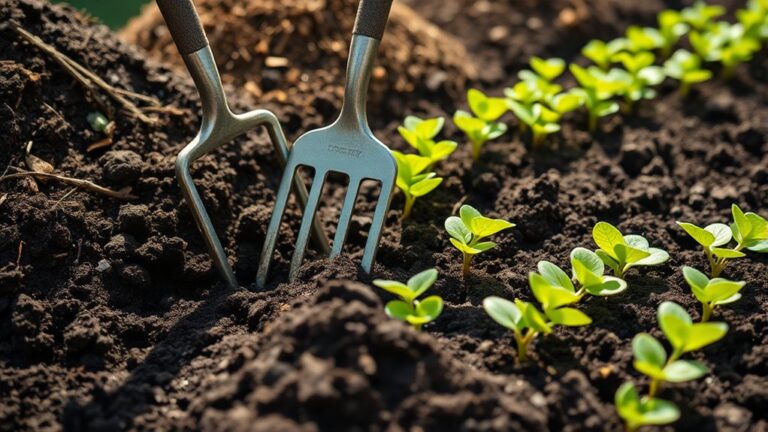
To start a garden, gather a hand trowel, sturdy gloves, pruning shears, a watering can or hose, and a garden fork. Choose Growing soil suited to your plants, and check your Planting schedule before buying seeds or seedlings. Your Starter supplies should also include plant labels and a measuring tape. For Tools and resources, use a reliable gardening guide or local extension website. You can add equipment later as your garden grows.
How Much Does It Cost to Begin Gardening?
You can begin gardening for about $30–$100, depending on your space and what you already own. For budget planning, start small with a few containers, seeds, and basic supplies.
The cost of soil usually ranges from $5–$20 per bag, while tools for beginners may add $15–$40. Your starter kit needs can stay simple: a trowel, gloves, watering can, soil, and seeds. Reuse household containers to save money.
When Is the Best Time of Day to Garden?
For comfortable, careful gardening, choose early morning or late afternoon. You’ll avoid the midday heat, reduce water loss, and give yourself a pleasant start or finish to the day.
Morning watering lets foliage dry before nightfall, which can help limit disease. Check the forecast and your plants’ needs, too: the best soil temperature varies by crop, while optimal sun exposure depends on whether you’re growing sun-loving vegetables or shade-tolerant plants.
Dress for the weather and enjoy your time outside.
How Can I Keep Pests Out of My Garden?
Keep pests out of your garden by making it harder for them to find food, shelter, and entry points. Try these pest prevention tips: cover young plants with row covers, inspect leaves regularly, and encourage beneficial insects with diverse flowers.
Water at the base of plants to keep foliage dry, and remove damaged growth promptly. Consistent garden cleanup routines—clearing weeds, fallen leaves, and ripe produce—also reduce hiding places and breeding sites for common pests.
How Do I Know When to Harvest My Crops?
You’ll know it’s time to harvest by checking each crop’s color, size, firmness, and days to maturity. Pick tomatoes when they’re fully colored and slightly soft; harvest leafy greens while leaves are tender, and gather root vegetables when they reach the expected size.
Learning how to read harvest indicators helps you avoid picking too early or late. Harvest regularly, use clean tools, and check when to prune for maximum yield so plants keep producing.
Conclusion
Growing a garden isn’t complicated: choose plants that suit your space, find them sunlight, give them decent soil, and plant them at the right depth. Water and feed them, then investigate when leaves droop instead of issuing a stern speech.
You’ll make mistakes; plants are famously poor at following instructions. Keep learning, and your garden may thrive. So will your patience.
In a world obsessed with instant results, tending something slowly is a quietly radical act—and far more rewarding than another productivity app. These simple steps to start growing a garden can make the experience even more rewarding.