How to Make a Flower Bed Over Grass in 3 Easy Steps
Starting a flower bed over grass can feel like a big job, especially when you’re unsure how to stop the lawn from growing through your flowers. You’re not alone—many gardeners struggle to get a new bed off to a healthy start. The right tools and supplies can make the process easier and help your flowers thrive.
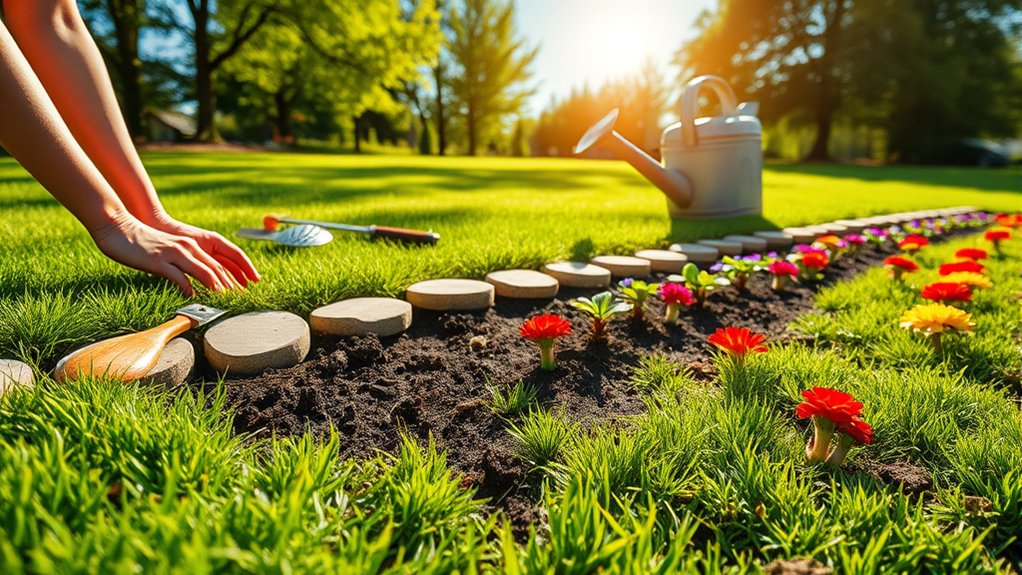
To make a flower bed over grass in three easy steps, first mow the lawn short, cover it with overlapping cardboard or newspaper, wet it, and weigh it down with mulch. Next, test your soil, correct nutrient needs based on the results, and add finished compost; check drainage and remove visible weeds. Finally, arrange flowers by mature size and sunlight, plant them at their nursery-pot depth, water thoroughly, and spread two to three inches of mulch, keeping it away from stems. A few simple details can help your bed thrive.
Key Takeaways
- Mow the grass short and clear away leaves, sticks, and other debris.
- Cover the area with overlapping cardboard or newspaper, leaving no gaps that let light reach the grass.
- Wet the covering thoroughly, then weigh it down with two to three inches of straw or wood-chip mulch.
- Let the grass smother for several weeks, keeping the covering damp and patching any exposed edges.
- Add finished compost, arrange flowers by sunlight and mature size, then plant, water thoroughly, and mulch around but not against the plants.
Smother the Grass for a Flower Bed
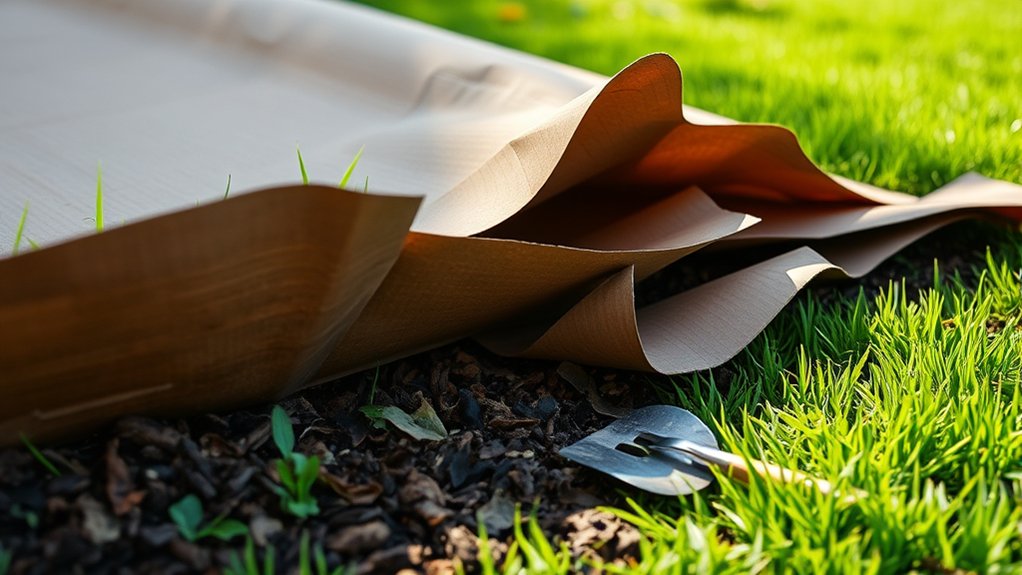
To create a flower bed without digging up the lawn, smother the grass with a light-blocking layer. Choose cardboard or several sheets of newspaper; both offer simple smothering techniques that block sunlight and weaken turf over time.
First, mow the grass short and remove any debris. Lay overlapping cardboard pieces or newspaper sheets across the bed area, making sure no gaps remain. Overlap edges by several inches so grass can’t find light along the seams.
Mow the grass short, clear debris, and overlap cardboard or newspaper to block sunlight and smother the turf.
Wet the covering thoroughly to help it stay in place and begin breaking down. Add a layer of mulch, such as straw or wood chips, to weigh it down and protect it from wind.
Keep the covering damp while it decomposes, and check the edges for exposed grass. This approach takes longer than digging, but it saves effort and preserves the lawn’s surface. If you’re comparing grass removal alternatives, smothering works well when you can wait several weeks before planting.
Get the Soil Ready for Your Flower Bed
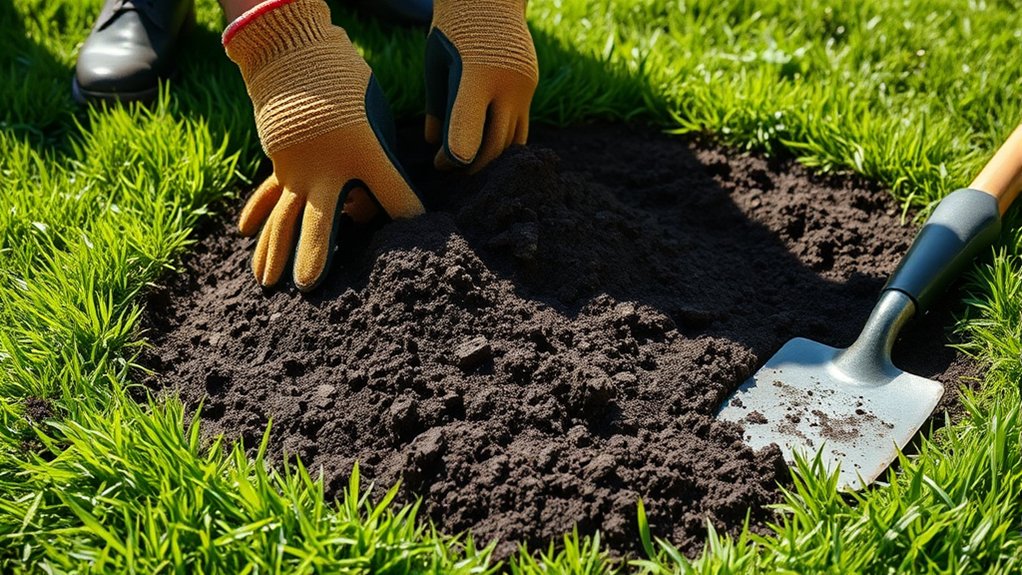
Once the grass is covered, prepare the soil for planting. Start with soil testing to learn your soil’s pH and nutrient levels. A local extension service can recommend a reliable test and explain the results.
Use those findings to improve nutrient balance rather than adding fertilizer blindly.
Next, perform a drainage assessment. After rain, check whether water pools or drains quickly; either condition can stress future plants. If the ground stays soggy, loosen compacted areas and consider how you’ll redirect excess water.
For fast-draining soil, plan to add organic matter that helps retain moisture.
Handle weed control before you plant. Remove visible weeds and roots, and keep the covered area undisturbed so buried grass and seeds don’t resurface.
For compost sourcing, choose finished, weed-free compost from a trusted supplier or your own well-managed pile. Spread it over the bed and mix it lightly into the topsoil.
Finish with irrigation planning: check your water access and decide how you’ll deliver consistent moisture once the bed is planted.
Plant Flowers and Mulch the Bed
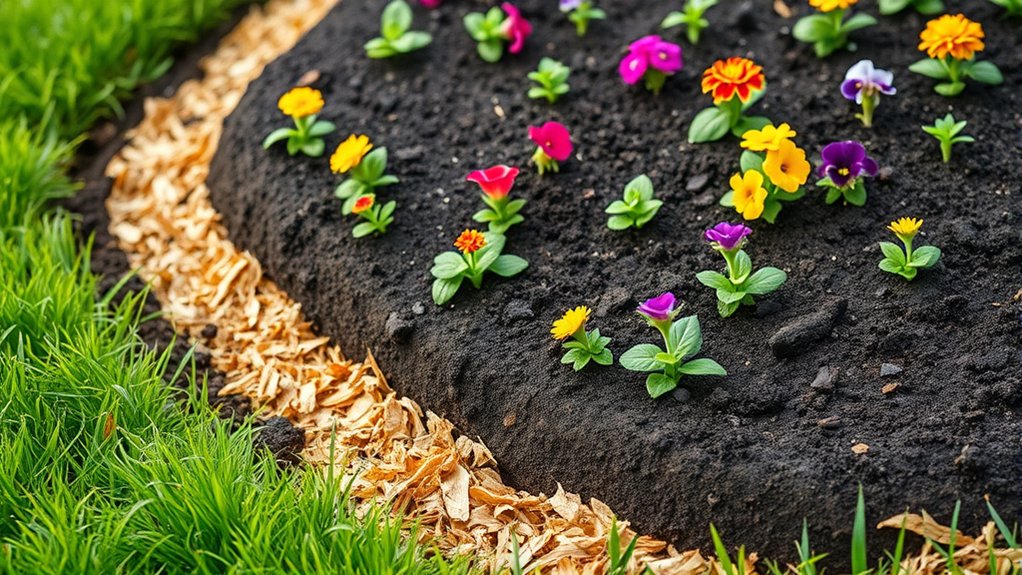
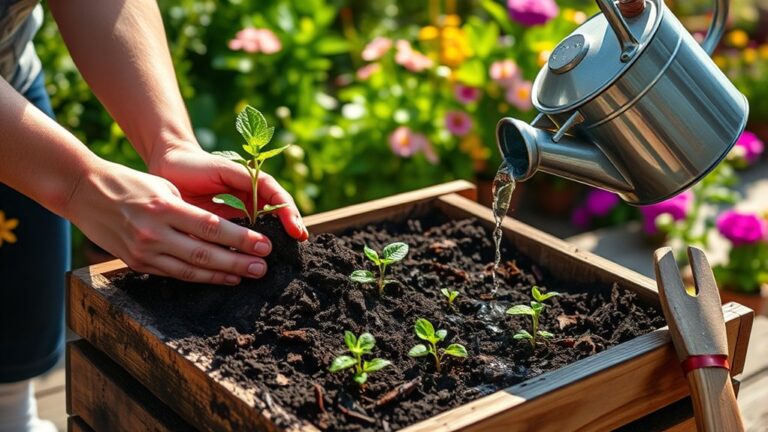
With the soil prepared, arrange your flowers according to their mature size and sunlight needs, leaving enough space for them to grow. Set each plant at the depth it grew in its nursery pot, then firm the soil gently around its roots. Water thoroughly to settle the soil and help your flowers recover from transplanting.
| Task | Tip |
|---|---|
| Position plants | Place taller flowers behind shorter ones. |
| Check spacing | Follow each plant’s mature width. |
| Water roots | Soak the bed after planting. |
Spread two to three inches of mulch over the bed, keeping it a few inches away from stems and crowns. Mulch helps retain moisture, suppress weeds, and protect the soil. Choose shredded bark, leaves, or another suitable material; don’t pile it against plants.
For a simple idea1, repeat a few flower varieties to create a cohesive look. Use idea2, such as contrasting blooms, to add visual interest. Check moisture regularly and water when the topsoil feels dry. Remove weeds promptly as your new bed fills in.
Frequently Asked Questions
What Is the Best Location for a New Flower Bed?
Choose a spot that suits the flowers you want to grow and is easy for you to reach. What is the best location for sun exposure? Pick a place that gets the amount of sunlight your plants need, often six or more hours for sun-loving blooms.
What soil drainage matters most? Look for soil that drains well, so roots don’t sit in water. Avoid low spots, and consider visibility from your home or patio.
How Wide Should a Flower Bed Be?
Like Goldilocks, you want a flower bed that feels just right: make it 3 to 4 feet wide if you’ll reach it from one side, or 6 to 8 feet wide if you can access both sides. When you ask, “how wide should” your bed be, consider your plants and available space. The best location for a new flower bed should also let you reach every plant comfortably without stepping into the soil.
Which Flowers Attract Pollinators?
Choose pollinator friendly flowers that offer nectar rich blooms and provide food throughout the growing season. You can plant coneflowers, black-eyed Susans, asters, and native milkweed to attract butterflies and bees.
Add lavender, salvia, and bee balm for hummingbirds and other helpful visitors. Select varieties suited to your climate, and include different flower shapes and bloom times. You’ll create a lively garden that supports pollinators from spring through fall.
How Can I Design a Flower Bed for Year-Round Color?
To keep your flower bed colorful year-round, don’t put all your eggs in one basket: choose plants that bloom in different seasons. Start with spring bulbs, add summer perennials and annuals, then include fall asters and ornamental grasses. For winter interest, use evergreen shrubs, colorful stems, or seed heads.
These design ideas create overlapping seasonal color. Check your local climate, sunlight, and soil, and group plants with similar water needs for easier care.
What Edging Options Work Best for a Flower Bed?
Choose edging materials that match your garden’s style, budget, and maintenance needs. Metal creates a crisp, durable line; brick or stone adds a classic look; and flexible plastic works well for curves.
For a natural finish, use timber, but check it regularly for rot. Your edge installation techniques matter, too: bury edging securely, keep it level, and leave enough height to contain mulch without blocking mowing or water flow.
Conclusion
You can turn grass into a flower bed without a shovel-wielding army. Smother the lawn with cardboard or newspaper, then prepare the soil with compost so roots have a welcoming place to grow.
Plant flowers suited to your light and climate, and finish with mulch to hold moisture and discourage weeds. Give the bed regular water as it settles in.
Before long, you’ll have a colorful flower bed over grass fit for a medieval king. All it takes is a little patience and care.