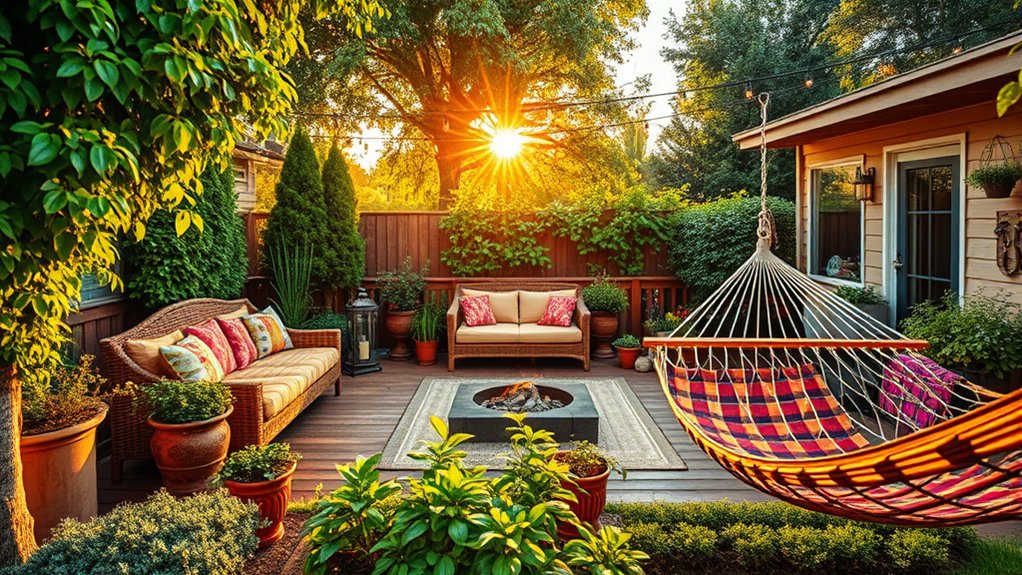
10 Tips to Decorate Your Backyard
A backyard can be hard to pull together: you want it to feel inviting and comfortable, but choosing the right layout, furniture, and finishing touches can feel overwhelming. You’re not alone—many people struggle to turn an outdoor space into a place they love using. These 10 tips to decorate your backyard can help you create a welcoming spot for relaxing and entertaining.
Plan your backyard around daily routines, then create separate dining and lounge zones with clear paths. Choose comfortable, weather-resistant seating and arrange it so guests can talk easily.
Add shade for sunny afternoons, then layer warm lighting for evening use. Make the space cozy with outdoor rugs and cushions, and create a focal point with a fire pit or fountain.
Finish with plants, coordinated colors, and durable decor suited to your climate. A few simple details can make your yard feel more inviting; discover how to choose them below.
Key Takeaways
- Plan around everyday activities, clear pathways, sunlight, drainage, and a realistic budget.
- Create distinct dining and lounge areas, placing seating and tables for easy access and conversation.
- Add shade and layer warm, adjustable lighting for comfort and ambiance after dark.
- Use climate-appropriate plants, weather-resistant textiles, and a coordinated palette of colors and textures.
- Add a focal point, such as a fire pit or fountain, and choose decor suited to outdoor conditions.
Plan Your Backyard for Everyday Use
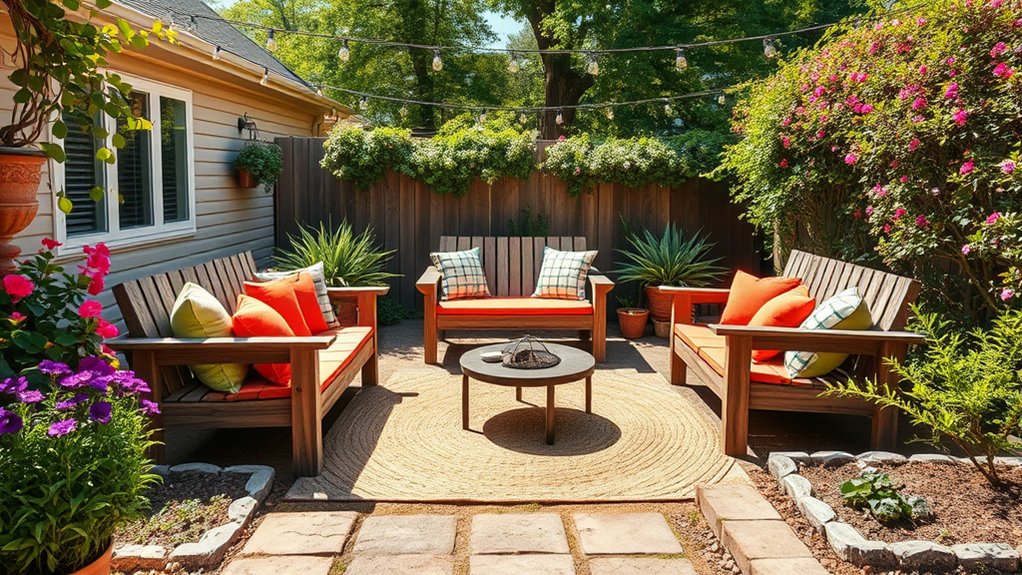
How do you want to use your backyard day to day? Start by listing the activities you’d like to enjoy, such as gardening, dining outdoors, playing with children, or hosting friends. Your routine will guide the layout and help you decide which areas deserve the most attention. Keep paths clear between the house, garden, and any outdoor features you use often.
Check your yard’s sunlight, drainage, and existing plants before making changes. Place activity zones where they’ll work best: reserve sunny spots for growing herbs, and use shaded areas for tasks that need relief from heat. Think about planning safety, too. Keep grills away from fences and overhanging branches, secure uneven steps, and leave enough room to move around safely.
Set a realistic budget before you shop. Budget constraints don’t have to limit your creativity; tackle essential improvements first, then add decorative touches over time. Choose durable materials suited to your climate, and measure spaces carefully to avoid costly mistakes. A simple plan helps you create a backyard that feels useful, welcoming, and easy to maintain.
Choose Comfortable Backyard Seating

Choose weather-resistant seating materials so your furniture can withstand the elements. Then add cushions for comfort and arrange the seats so everyone can chat easily.
Choose Weather-Resistant Materials
Before buying backyard seating, consider how well its materials will handle sun, rain, and temperature changes. Choosing for weather resilience can help you avoid fading, rust, cracking, and costly replacements. Match each material to your climate and the care you’re willing to provide.
- Check the frame. Powder-coated aluminum resists rust and stays light enough to move. Teak offers natural outdoor durability, though you’ll need to clean it and may choose to seal it.
- Inspect woven pieces. Look for synthetic resin wicker designed for outdoor use; natural wicker can weaken when exposed to moisture.
- Review fabrics and finishes. Choose UV-resistant materials and water-repellent coatings, then check care labels for cleaning and storage instructions.
Even sturdy furniture lasts longer when you cover it during storms and store it through harsh winters. Compare warranties, too, since they can reveal how confidently a maker stands behind its materials.
Prioritize Cushioned Comfort
Weather-resistant materials help outdoor furniture last, but comfortable cushions make it a pleasure to use. Choose seats with supportive padding that suits how you relax, whether you prefer a firm bench cushion or a plush lounge chair.
Check cushion thickness and fabric feel before buying, and make sure covers come off easily for washing. Quick-drying foam helps prevent dampness after rain, while UV-resistant fabric keeps colors from fading in strong sun.
For weatherproof seating, look for water-repellent covers and sturdy ties or fasteners that keep cushions in place. Add a few cushions in colors that complement your backyard, but don’t sacrifice comfort for style.
Regular outdoor cushion care, such as brushing away debris and storing cushions during storms, helps them stay fresh and inviting through the seasons.
Arrange Seating for Conversation
Arrange seats in a loose circle or face-to-face layout so guests can talk without raising their voices. A thoughtful seating arrangement helps everyone feel included, while comfortable chairs encourage guests to linger. Leave enough room to move between seats, and keep the layout flexible for different group sizes. Use these three touches to make your setup more inviting:
- Place a small table within easy reach so guests can set down drinks or snacks without interrupting conversation.
- Mix chairs, benches, or outdoor sofas to add variety while keeping seats at similar heights.
- Add cushions, a rug, or lanterns to bring warmth and texturing conversation with visual interest.
Check the arrangement from each seat before guests arrive. If anyone feels isolated or must twist to join in, shift the furniture until everyone can connect naturally.
Separate Dining and Lounge Areas
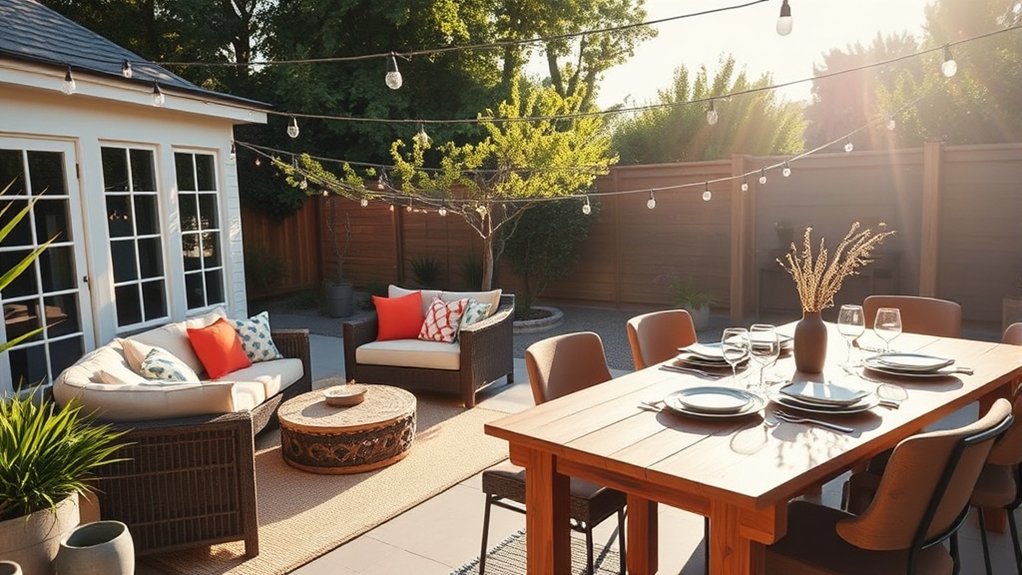
Give your backyard a natural flow by defining separate dining and lounge areas. Place your dining table near the house or grill to make carrying food easy. Choose a level surface, then leave enough room to pull out chairs and walk around the table comfortably. Consider weather durability when selecting outdoor furniture, so your dining set can handle regular use and changing conditions.
Create a distinct lounge zone with chairs, a loveseat, or a compact sectional. Arrange the pieces to encourage conversation, and add a small table for drinks or books. Keep the seating arrangement open enough for people to move between both areas without squeezing past furniture.
An outdoor rug can anchor each zone and make the change in purpose clear, while coordinating colors or materials helps the whole yard feel unified. If space is limited, use a bench that serves both areas or choose lightweight pieces you can reposition. Clear boundaries make each spot useful without making your backyard feel divided or crowded.
Add Shade for Sunny Afternoons
Once you’ve set up your dining and lounge areas, add shade to keep them comfortable on sunny afternoons. The right cover gives you sun protection and helps your backyard feel inviting, even when the sun is strong. Choose an option that suits your space, budget, and style.
- Stretch a shade sail. Anchor it securely above a seating area for a modern look and filtered light. Check its angle so rain can drain away.
- Set up a pergola. Use a retractable canopy or climbing plants to adjust coverage. This structure can define your lounge area while keeping the space open.
- Place a market umbrella. Move it as the sun shifts, and choose a sturdy base to keep it stable in breezy weather.
Before buying, measure the area and note where sunlight falls throughout the day. Compare shade structures for durability, upkeep, and coverage. You’ll create a cooler retreat without blocking useful airflow or crowding your outdoor layout.
Set the Mood With Backyard Lighting
Once the sun sets, backyard lighting can make your space feel warm and inviting. Try layering string lights, lanterns, and path lights to create a balanced glow. You can also use spotlights to highlight features like trees, garden beds, or a water feature.
Layer Your Light Sources
Layering light sources gives your backyard warmth and depth after sunset. With layered lighting, you can create an ambient glow that feels inviting without flooding the space with harsh brightness. Combine different types of fixtures to make your patio comfortable for dining, relaxing, or chatting with friends.
- Start with soft overhead light. Hang string lights or use a dimmable pendant to spread a gentle glow across your seating area.
- Add task lighting. Place lanterns or portable lamps near tables so you can see food, books, and games clearly.
- Mix in low-level light. Set solar path lights along walkways or tuck small lanterns beside chairs for a relaxed, balanced effect.
Choose warm-toned bulbs and use dimmers where possible. You’ll adjust the brightness as the evening changes, keeping your backyard cozy and practical.
Highlight Key Features
After creating a warm overall glow, use accent lights to draw attention to your backyard’s best features. Aim for subtle feature highlights that add depth without overwhelming the space. Uplight a tree, wash a textured wall with light, or place a small spotlight near a fountain. Choose fixtures suited to each location, and check material durability before leaving them outdoors year-round.
| Feature | Lighting idea |
|---|---|
| Tree | Uplight the trunk |
| Garden bed | Add low spotlights |
| Water feature | Highlight its movement |
Keep beams angled away from neighbors’ windows and your seating area to reduce glare. For a relaxed mood, use warm bulbs and dimmers so you can adjust brightness as evening settles in. Solar fixtures can simplify installation, while wired lights offer dependable control. Test each light after dark, then reposition it until the feature looks inviting from your favorite seat. Regularly clean lenses to keep the glow clear.
Bring Your Backyard to Life With Plants
Plants can transform your backyard from a plain space into a lively retreat. Choose greenery that suits your climate, sunlight, and available space, then combine different heights and textures for a layered look. You don’t need a large garden; a few well-placed pots can brighten a patio or frame a path.
Create a welcoming backyard with climate-friendly plants, layered textures, and a few well-placed pots.
- Pick plants for your conditions. Check how much sun each area gets, and select varieties that thrive there. Native plants often need less water and support local wildlife.
- Add color through the seasons. Mix flowering plants, leafy shrubs, and ornamental grasses so your yard stays inviting as blooms change. Try pollinator gardening with nectar-rich flowers to attract bees and butterflies.
- Keep care simple. Group plants with similar watering needs, use mulch to retain moisture, and prune when needed. Watch for pests and yellowing leaves; early attention helps protect plant health.
With thoughtful choices, you’ll create a vibrant outdoor setting that feels personal and welcoming throughout the year.
Add Cozy Rugs and Outdoor Cushions
Choose weather-resistant rugs to make your backyard seating area feel inviting. Then, layer in outdoor cushions for extra comfort. Mix colors and textures to give the space your personal touch.
Choose Weather-Resistant Rugs
A weather-resistant rug can make your patio feel like an outdoor room without worrying about a little rain or dirt. Choose one that suits your space and stands up to the conditions in your backyard. Check these details before you buy:
- Fiber: Polypropylene resists moisture and dries quickly, making it a practical choice for exposed patios.
- Construction: Look for tightly woven edges and a sturdy backing; these features support material durability when you move furniture or clean the rug.
- Care: Pick a rug you can rinse or shake out easily, and let it dry fully after washing to prevent mildew.
Consider your local weather resilience needs, from intense sun to frequent showers. A UV-resistant design helps limit fading, while a breathable weave can release moisture. Secure corners so wind won’t lift the rug, and measure your patio first.
Layer Cushions for Comfort
Layer cushions and a soft outdoor rug to make your seating area more comfortable and inviting. Choose outdoor cushions with supportive outdoor foam that holds its shape through regular use.
Check that covers come off easily, so you can wash away dirt and spills without a hassle. For a relaxed seat, layer cushions of different thicknesses on benches, chairs, or a porch swing.
Add a lumbar cushion where you need extra back support, and keep a few spare cushions nearby for guests. Secure cushions with ties or nonslip pads to stop them from sliding when you sit down.
Store them in a weatherproof box during rain or when you’re not using the space. With a cushioned seat and a rug underfoot, you’ll enjoy lingering outdoors longer.
Mix Colors and Textures
Bring your backyard seating to life by mixing colors and textures that complement your space. A cozy rug can anchor the area, while outdoor cushions add comfort and personality. Choose a palette that suits your furniture and surroundings, then vary materials to keep the look inviting without feeling cluttered.
Use these three tips to create a polished, comfortable retreat:
- Build color harmony: Pick two or three shades, such as leafy green, warm terracotta, and cream. Repeat them across your rug and cushions for a coordinated look.
- Try texture pairing: Combine a flat-woven rug with nubby cushions, smooth cotton, or weather-resistant linen. Contrasting surfaces add depth and make your seating feel more welcoming.
- Balance patterns: Mix one bold print with smaller motifs or solid cushions. Keep patterns within your palette, and choose outdoor fabrics that handle sun and moisture.
Create a Focal Point With Fire or Water
Want to give your backyard a natural gathering spot? Create a focal point with fire or water, then arrange seating to make it easy to enjoy. Investigate fire pit ideas that suit your space: a compact gas model works well on a small patio, while a wood-burning pit adds warmth to a larger yard.
Check local rules, keep flames away from branches and structures, and leave room for safe movement.
| Feature | Best placement |
|---|---|
| Fire pit | On level ground, clear of overhangs |
| Water fountain | Near a seating area for gentle sound |
Thoughtful water fountain placement lets you hear the trickle without blocking walkways. Choose a fountain size that fits your yard, and place it where you can reach an outlet or maintain a solar panel.
Keep the surrounding area stable and consider how splashing may affect nearby surfaces. Whether you choose dancing flames or flowing water, let one feature anchor the layout and draw people together.
Add Personal Touches With Outdoor Decor
Outdoor decor can make your backyard feel like an extension of your home. Add personal touches that reflect your taste, interests, and favorite colors. You don’t need a major makeover; a few thoughtful details can make the space feel welcoming and uniquely yours.
- Showcase favorite finds. Arrange a small collection of pottery, lanterns, or travel souvenirs on a table or shelf. Choose pieces that tell a story, and leave room around them so each one stands out.
- Bring in color and pattern. Use cushions, a patterned outdoor rug, or a bright table runner to tie your seating area together. Repeat one or two colors for a coordinated look.
- Add handmade details. Hang a piece of your own artwork, display painted planters, or create a simple sign with a meaningful phrase. These touches help your backyard feel personal without crowding it.
As you decorate, consider how each item fits your daily routine. Keep favorite books, games, or serving pieces close at hand, and arrange them where you’ll enjoy them most.
Choose Backyard Decor That Handles the Weather
Because backyard decor faces sun, rain, and changing temperatures, choose pieces made to withstand the conditions in your area. Check product labels for UV resistance, water protection, and temperature limits before you buy. For cushions and umbrellas, look for weatherproof fabrics that resist fading and dry quickly after a shower. You’ll spend less time replacing worn textiles and more time enjoying your space.
Choose furniture made from durable materials, such as powder-coated metal, treated wood, or resin wicker. If storms are common, select lightweight pieces you can move indoors or secure safely. Store cushions in a deck box, and cover furniture during long periods of harsh weather. Make sure covers fit snugly so wind won’t pull them away.
Don’t overlook pest prevention when choosing decor. Avoid items that trap standing water, and clean planters and birdbaths regularly. Seal wooden pieces to discourage insects, and keep fabric dry to reduce mildew. With weather-ready choices, your backyard can stay inviting through every season. You’ll also protect your investment and keep routine maintenance manageable.
Frequently Asked Questions
How Can I Decorate a Small Backyard on a Budget?
Decorate your small backyard affordably by focusing on a few useful, attractive touches. Try a budget friendly vertical garden with hanging pots, repurposed pallets, or herbs in recycled containers to save floor space. Add thrifty seating ideas, such as painted secondhand chairs, a sturdy bench, or cushions on wooden crates.
String up inexpensive lights, define a cozy corner with an outdoor rug, and shop your home for planters and accessories. You’ll create charm without overspending.
Which Backyard Decor Styles Work Best for Modern Homes?
Modern minimalism and industrial chic work especially well with modern homes. Choose modern minimalism for clean lines, uncluttered spaces, and a restrained palette of black, white, gray, and natural wood.
Try industrial chic if you prefer metal accents, concrete planters, and weathered finishes. You can also blend both styles with sleek furniture, warm lighting, and a few sculptural plants.
Keep your choices cohesive, and your backyard will feel polished, comfortable, and connected to your home.
Do I Need a Permit to Build a Backyard Pergola?
You may need a permit to build a backyard pergola; your local rules hold the key. Think of the permit process as a gate you’ll want to open before construction begins.
Check permit requirements with your city or county, since size, height, location, and whether you attach the structure to your home can affect approval. Review building regulations, too, and ask about property lines, utility easements, and homeowners’ association rules before buying materials or starting work.
How Can I Make My Backyard More Private From Neighbors?
You can block sightlines with privacy screens, a lattice panel, or a pergola draped in outdoor fabric. Plant privacy hedges, such as arborvitae or clumping bamboo, for a living barrier; check mature size and local rules before planting.
Add tall planters or reposition seating away from neighbors’ windows. Try budget friendly small yard projects, like a DIY trellis, and use seasonal decor ideas to soften the space without sacrificing privacy.
What Are Easy Backyard Decorations to Change Seasonally?
You can refresh your backyard each season with potted flowers, cushion covers, and a few decorative accents. Your garden gnomes might even send a telegram about the upgrade.
Choose seasonal color palettes to guide your choices: warm oranges and golds for fall, bright pastels for spring, or cool blues for winter. Try affordable decor swaps, such as changing lanterns, tablecloths, or outdoor rugs.
Add seasonal wreaths or string lights, and store off-season items neatly.
Conclusion
Your backyard doesn’t need a complete makeover to feel special. Start with one comfortable chair, a string of lights, or a few weather-ready cushions, then build from there.
Think of decorating like setting a table: each thoughtful detail makes the whole space more inviting. One homeowner added a simple fire bowl and turned unused evenings into weekly gatherings with friends.
Choose what suits your routine, and you’ll create a backyard retreat you’ll love using all season.