How to Stake Hydrangeas in 10 Easy Steps
Drooping hydrangea stems can leave your garden looking less lush than you’d hoped, especially when heavy blooms weigh them down. You’re not alone—many gardeners struggle to keep their hydrangeas upright. Learning how to stake hydrangeas can help support those stems while keeping your plants looking natural.
To stake hydrangeas in 10 easy steps, first check which stems droop, then gather clean stakes and soft ties. Choose stakes suited to stem height and bloom weight. Set each stake firmly in the soil, clear of the root crown, and lift stems gently. Tie them loosely, leaving room to sway and grow. Add support beneath heavy blooms, and check ties after rain or as stems thicken. Remove stakes once stems stand firmly; below, you’ll find tips for each step.
Key Takeaways
- Assess stems during bloom; stake those that bend or flop, considering variety, plant age, shade, and watering conditions.
- Choose sturdy stakes sized to the stems, and gather soft, flexible ties that won’t scrape or constrict growth.
- Place stakes upright between stems, beyond the root crown, with their tips hidden beneath foliage.
- Gently lift drooping stems and secure them loosely in figure-eight ties, leaving room for movement and growth.
- Add support beneath heavy blooms, check ties after weather changes, and gradually remove stakes once stems stand upright.
Check Which Hydrangeas Need Staking
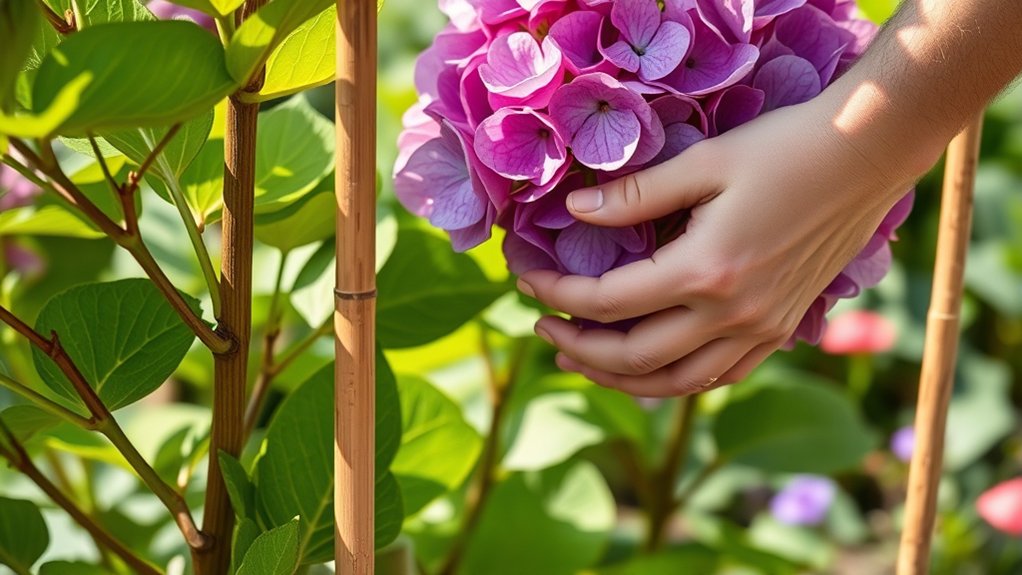
Before staking, check whether your hydrangea actually needs support. Some varieties naturally grow sturdy stems, while others carry large flower heads that can bend or flop, especially after rain. Observe your plant during bloom, when its full weight makes weak growth easiest to spot. If stems remain upright and flowers hold their shape, you probably don’t need to stake.
> Check your hydrangea during bloom: if stems stay upright and flowers hold their shape, staking may not be needed.
Consider the variety, too. Smooth and bigleaf hydrangeas may droop under heavy blooms, while panicle hydrangeas often develop stronger, more upright stems. Young plants and those growing in shade may also produce weaker growth.
Check the soil and your watering habits: excess water can make blooms heavier, but drought stress can weaken stems. Your hydrangea’s moisture needs vary with weather, soil, and variety, so aim for consistent moisture without waterlogging.
Choose staking timing based on what you see, not the calendar. Support stems before they lean badly, but don’t stake healthy plants just in case. Identify only the stems that need help.
Gather Stakes and Soft Plant Ties

Once you’ve identified the stems that need support, gather stakes and soft plant ties. Collect your supplies before you begin so you can work steadily without leaving the plant half-supported.
You’ll need clean stakes, flexible soft ties, and scissors for trimming tie ends. Keep everything within reach, and check that your ties feel smooth and pliable rather than stiff or rough.
For these staking basics, choose ties that won’t cut into stems as they move in the breeze. Soft fabric strips, stretchy garden tape, or reusable plant ties can all work.
Avoid thin wire or anything that might scrape tender growth. Have enough ties ready to secure each stem that needs help, plus a few extras in case you adjust the arrangement.
Think about bloom weight management as you gather supplies: heavy flower heads may need more than one gentle connection. Don’t tie stems yet. First prepare your materials, then you can match support to each stem’s needs.
Choose Stakes for Stem Height and Weight

Choose stakes that are tall enough to support your hydrangea stems without sticking up above them. They should also be sturdy enough to hold heavy blooms, especially after rain. Coated metal or strong bamboo stakes can last through the season.
Match Stake Height
Match each stake to the hydrangea stem’s height and weight so it supports the plant without showing above the blooms. Measure from the soil to just below the flower head, then choose a stake that reaches that point when inserted.
Your stake height should suit each stem, not the whole shrub.
| Stem size | Stake length | Best use |
|---|---|---|
| Short, light | 18–24 inches | Compact stems |
| Medium | 24–36 inches | Typical flower stems |
Push the stake several inches into the soil beside the stem, keeping it upright and clear of the root crown. For taller growth, select a longer stake, but leave its tip hidden beneath foliage.
Check the fit from different angles; you’ll want a natural outline and bloom weight balance. If stems vary, match stakes individually rather than choosing one length for every stem.
Support Bloom Weight
After matching stake height to each stem, consider how much weight the blooms add. Large flower heads can pull stems sideways, especially after rain. Choose support that steadies the stem without forcing it into an unnatural position.
Check each plant as blooms develop, and adjust ties before stems bend or crease.
- For heavy, rounded blooms, place a stake close to the main stem.
- For lighter flower clusters, use a slender support that won’t crowd nearby growth.
- Set stakes where they’ll catch leaning stems without piercing roots.
- Tie stems loosely with soft ties, leaving room for growth.
- Recheck support after rainfall, when soil moisture and wet blooms increase the load.
If you plan harvest timing, support stems until you cut the flowers. A well-placed stake keeps blooms upright while preserving the plant’s natural shape. Count the flower heads, too, and support the heaviest stems first.
Choose Durable Materials
Durable stakes hold steady through wind, rain, and a full season of growth. Choose a stake that matches your hydrangea’s stem height and bloom weight. Short, slender stems need only light support, while tall varieties with heavy flower heads call for stronger stakes that won’t bend or snap.
Pick durable materials such as coated metal, sturdy bamboo, or rot-resistant wood. Make sure each stake reaches far enough into the soil to stay secure, but don’t drive it through the root ball.
Consider staking alternatives if you want support that blends into the garden. A discreet ring, grid, or nearby shrub can help hold stems upright without a prominent stake. Whatever you choose, check that it supports the plant without rubbing, constricting growth, or damaging stems as they move in the wind.
Place Stakes Clear of Hydrangea Roots
Before driving in a stake, check where the hydrangea’s main stems emerge and keep the stake outside the root crown. Careful stakes placement gives the plant support without crowding its base. Hydrangea roots spread through the surrounding soil, so don’t assume the area beyond the stems is empty. Use these visual cues to plan root protection:
- Look for the crown, where the stems meet the soil.
- Note exposed roots or raised soil around the plant.
- Keep stakes beyond the crown’s edge.
- Choose open spots between stems, not directly beneath them.
- Leave room for the plant’s natural spread.
If you can’t see the roots, use a hand trowel to gently explore the surface soil where you plan to place each stake. Stop if you meet resistance or uncover a root, then choose another spot. Give the hydrangea enough space to sway naturally, and avoid placing stakes so close that ties will press branches against them. This careful positioning helps prevent damage while keeping support points near the stems that need guidance.
Set Each Stake Firmly in the Soil
A firmly set stake won’t wobble under the hydrangea’s weight. Before you drive it in, check your soil preparation: clear away mulch and loose debris, then feel the ground for rocks or compacted patches. Moist soil is easier to work with than dry, hard earth, but don’t soak the area.
Hold the stake upright beside the plant, keeping it clear of the roots as planned. Use a rubber mallet or hammer to tap it into the ground. Start with light strikes to guide the point, then use firmer, controlled blows. Keep the stake vertical as you work; a slanted support can shift under pressure.
Drive the stake deep enough to anchor it securely, leaving sufficient height aboveground for later support. Test its stability with a gentle push. If it rocks, tap it farther into the soil. These staking basics help you create a steady support without disturbing the hydrangea’s root zone.
Gently Lift Drooping Hydrangea Stems
With the stake secure, gently lift each drooping stem toward it, supporting the stem with one hand near its base. Move slowly, guiding the stem rather than pulling it upright.
Hydrangea stems can bend or snap if you force them, especially when blooms weigh them down. Raise each stem only to a comfortable staking height, where it looks supported without straining.
- Notice where each stem naturally curves before you move it.
- Lift from below the bend, not from the flower head.
- Keep your fingers spread to cradle the stem gently.
- Pause if you feel resistance or hear a crackle.
- Check that leaves and blooms face outward, not pressed together.
Work around the plant one stem at a time, comparing their positions as you go. You don’t need every stem perfectly vertical; a natural, balanced shape is the goal.
If a stem won’t rise easily, leave it lower rather than risk damage. You’ll secure the lifted stems next.
Tie Hydrangea Stems to Stakes Loosely
Choose soft ties to support your hydrangea stems without damaging them. Leave enough room for each stem to grow and move naturally, and secure the stems gently so the ties stay loose rather than tight.
Choose Soft Ties
Soft ties support hydrangea stems without cutting into them as they grow or sway in the wind. Choose a flexible material that cushions each stem and holds it gently against the stake. You can use soft ties to keep your support discreet and protect the plant’s natural shape, improving your staking aesthetics.
- Cut strips of soft cloth into manageable lengths.
- Use stretchy garden tape for a neat, cushioned hold.
- Try soft-coated plant ties that won’t scrape stems.
- Avoid wire, fishing line, and thin plastic cord.
- Tie a simple loop around the stem and stake.
Check that each tie feels gentle when you touch it, and replace any material that frays or stiffens. Choose a color that blends with the foliage or stake, so your support doesn’t distract from the hydrangea’s blooms.
Leave Room to Grow
Once you’ve selected a gentle tie, fasten each hydrangea stem loosely to its stake. Leave enough space for the stem to sway slightly and thicken as it grows. A tie that’s too tight can rub the bark, restrict movement, or pinch the stem as its diameter increases. Check that you can slide a finger between the tie and the plant without forcing it.
Place ties at a few points along taller stems, keeping them above the soil and away from the plant’s crown. This spacing supports the stems without pressing into the ground or disturbing nearby roots, helping maintain root protection. As the season progresses, inspect each tie and adjust it if the stem expands or the tie shifts. Your hydrangea needs room to grow, so don’t pull stems snug against their stakes.
Secure Stems Gently
With your stakes in place, tie each hydrangea stem loosely so it has support without being pulled rigidly against the stake. Use soft garden ties, strips of cloth, or flexible plant tape to protect the bark. Your goal is securing stems while allowing natural movement and room for growth. Practice gentle handling, especially with young or brittle shoots.
- Loop a tie around the stem and stake.
- Cross the ends gently, without pinching the stem.
- Fasten the tie so you can slide a finger beneath it.
- Place ties below heavy flower heads for extra support.
- Add another loose tie higher up if the stem still leans.
Check each connection after watering or windy weather. If a tie starts to dig in, loosen or reposition it promptly. Avoid wire or tight knots, which can damage stems as they thicken.
Add Support Beneath Heavy Blooms
Are your hydrangea blooms drooping despite the stakes? Add direct bloom support beneath the heaviest flower heads. A stake can steady the stem, but a large, rain-soaked cluster may still bend under its own weight. Choose a slim bamboo cane, a sturdy plant support, or a short crosspiece that won’t damage nearby growth.
Position the support just below the bloom, close enough to carry its weight without forcing the stem upright. For effective stake placement, set the support into the soil beside the stem, taking care to avoid the roots. Rest the flower head or its main stem gently on the support; don’t push the bloom into place or squeeze it.
If several clusters droop, add supports where needed rather than relying on one stake to hold every stem. Check that leaves and flowers have room to move naturally. This simple adjustment helps prevent bending and keeps your hydrangea’s display upright through wind or rain.
Check Hydrangea Ties for Tightness
Check hydrangea ties regularly to make sure they support stems without cutting into them. Inspect each connection after rain, wind, or a growth spurt. A tie should hold the stem upright while leaving room for it to thicken and sway gently. If you spot a problem, loosen or reposition the tie rather than pulling the stem toward the stake.
> Check hydrangea ties after storms and growth spurts, keeping them loose enough for stems to thicken and sway.
- Look for bark marks, pinching, or flattened spots beneath each tie.
- Check that stems don’t rub against rough stake edges.
- Replace brittle, frayed, or weather-worn ties to maintain stake durability.
- Keep ties above the soil so they won’t trap moisture or disturb roots.
- Confirm the stake remains stable without pressing it deeper near the plant’s base, protecting root protection.
Use soft, flexible ties, and fasten them in a loose figure-eight between stem and stake. This spacing cushions the stem and prevents direct contact. Recheck ties as the hydrangea grows, especially around heavy blooms, so support stays comfortable and secure. Don’t leave tight loops in place.
Remove Stakes When Stems Stand Firmly
Check whether your hydrangea stems can stay upright without support. As they grow stronger, gradually loosen the ties. Once they stand firmly on their own, carefully remove the stakes.
Check Stem Stability
Once the stems stay upright on their own, remove the stakes to let them move naturally in the breeze. Check stability on a calm day, then watch how your hydrangea responds to light wind and rain. If stems remain upright without leaning or splitting, you can leave the stakes out. If they sag, provide temporary support and reassess later. Use these care tips to judge readiness:
- Look for firm stems that hold flower heads without drooping.
- Check that the plant’s base stays steady in loose soil.
- Notice whether stems recover after a gentle breeze.
- Watch for cracks, bends, or fresh damage.
- Compare several stems, not just the strongest one.
Once your hydrangea stands securely, let it grow unsupported. Keep pruning timing in mind, since healthy growth helps maintain a balanced shape.
Loosen Ties Gradually
As stems grow stronger, loosen their ties a little at a time so they can move naturally without losing support. Check each tie every few days, especially after rain or strong winds.
If a stem stays upright and doesn’t rub against its support, ease the tie another notch. Keep ties loose enough to allow growth, but close enough to prevent bending.
Watch for pinching, marks, or restricted movement, and adjust any tie that presses into the stem. These simple care tips help your hydrangea build strength while reducing damage.
Don’t rush the process; a plant that still leans needs more time and gentle support. You can also review your pruning methods to ensure crowded or weak growth isn’t adding strain.
Wait until stems stand firmly before moving on to stake removal.
Remove Stakes Carefully
When your hydrangea stems stay upright on their own, remove the stakes carefully. Choose a calm day, then loosen each tie completely. Don’t tug a stake straight up; a sudden pull can disturb nearby roots.
Instead, rock it gently from side to side as you ease it out. These staking techniques support root safety and protect tender stems.
- Clear mulch and leaves around the stake’s base.
- Hold the stem steady with one hand.
- Wiggle the stake gently to loosen compacted soil.
- Pull upward slowly, keeping it away from the plant.
- Press loose soil back into the hole and water lightly.
Watch your hydrangea over the next few days. If a stem leans, guide it upright and give it time to strengthen. You can reuse clean stakes for another plant or store them for next season.
Frequently Asked Questions
When Is the Best Time of Year to Stake Hydrangeas?
The best time of year to stake hydrangeas is early spring, before new growth gets tall and heavy. This best timing lets you support stems before blooms weigh them down.
You can also add stakes in late fall if winter winds or snow threaten your plants. Check your hydrangeas regularly, and adjust ties as they grow.
With good seasonal timing, you’ll protect stems without restricting healthy growth or damaging branches.
Can Staking Damage Hydrangea Stems or Affect Flowering?
Yes, staking can damage hydrangea stems or affect flowering if you tie them too tightly, use rough materials, or leave supports in place too long. For stability concerns, place stakes carefully and secure stems with soft, loose ties that allow growth and movement. The flowering impact is usually minimal when you avoid buds and flower heads. Check ties regularly, loosen them as stems thicken, and remove stakes once your plant stands upright on its own.
What Alternatives to Staking Can Support Floppy Hydrangeas?
Let floppy hydrangeas lean on a gentle green safety net: grow sturdy companions nearby, such as compact shrubs, or use a low, discreet plant ring to cradle stems. Prune selectively after flowering, and avoid heavy nitrogen, which can encourage weak growth. For stakes vs wire supports, choose a broad wire ring when you want shared support without tying individual stems. Water deeply at the base; drip irrigation benefits include steady moisture without soaking blooms.
How Can Pruning Help Prevent Hydrangeas From Drooping?
Pruning helps prevent hydrangeas from drooping by removing weak, crowded, or damaged stems, so the plant can direct energy toward sturdier growth. For drooping prevention, cut back only at the right time for your hydrangea type: some bloom on old wood, while others bloom on new wood.
These pruning benefits include better airflow and a balanced shape. Use clean, sharp shears, and avoid removing too much at once, which can reduce flowering and stress your plant.
Do Different Hydrangea Varieties Need Different Support Methods?
Yes, different varieties often need different support methods because their growth habits and flower sizes vary. You can usually leave sturdy panicle hydrangeas unsupported, while bigleaf and smooth hydrangeas may need help when heavy blooms bend their stems.
For a climbing hydrangea, use a trellis or sturdy wall support as it grows. Check your plant’s shape and local conditions, then choose gentle supports that hold stems upright without constricting growth or damaging them.
Conclusion
With the right stakes and loose ties, you can help your hydrangeas hold their blooms high without restricting healthy growth. Check the supports after rain or wind, and adjust any ties that begin to pinch.
Once the stems stand firmly on their own, remove the stakes so your plants can sway naturally. Think of staking as giving your hydrangeas a steady hand, not a cage.
A little care now can keep your garden looking graceful all season long. Follow these tips for how to stake hydrangeas and help your plants thrive.