3 Tips to Get Good at Growing a Garden
Want to grow a thriving garden but feel unsure where to start? You’re not alone—many people struggle to figure out what their plants need. These simple tips can help you get good at growing a garden.
To get good at growing a garden, start by tracking sunlight at different times of day and checking soil moisture before watering. Let excess water drain, and adjust your schedule after rain or during hot, windy weather.
Next, choose plants that fit your garden’s light, soil, and local climate; check labels for spacing and growing-season needs.
Finally, build a simple weekly routine for watering, weeding, and checking for pests. A few small adjustments can make these habits easier to sustain.
Key Takeaways
- Observe direct sunlight at different times of day, then place plants where their light needs match the garden’s conditions.
- Check soil moisture regularly, water deeply when it begins to dry, and let excess water drain.
- Adjust watering for rain, heat, wind, and soil type; avoid frequent, shallow watering.
- Choose plants suited to your local climate, sunlight, soil, and growing season.
- Build a simple weekly routine for checking moisture, removing weeds, and spotting pests.
Check Your Garden’s Sunlight and Water Needs
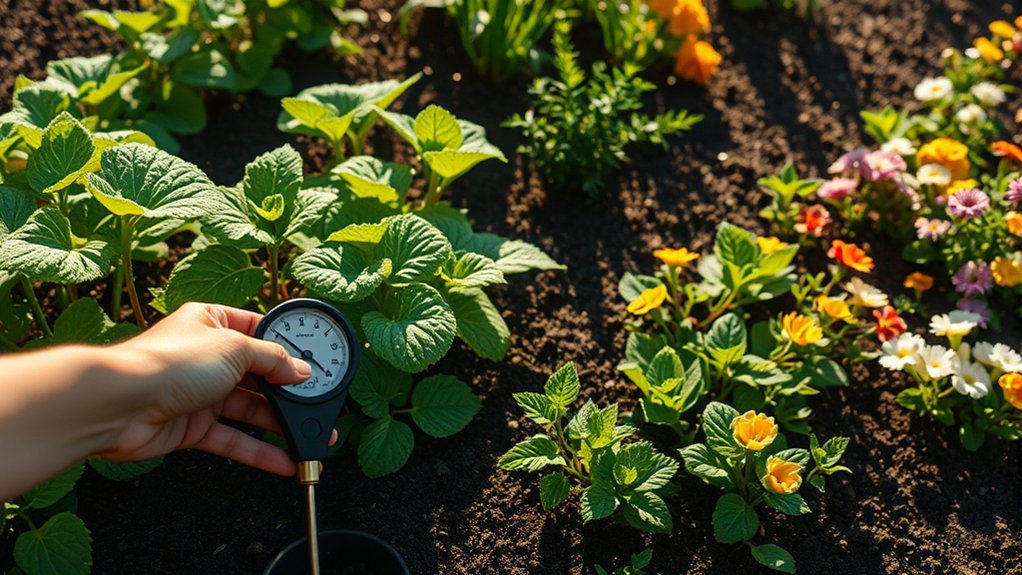
Before planting, check how much sunlight your garden gets and how quickly its soil dries out. Observe the space at several times of day, noting when buildings, fences, or trees cast shade. Your sunlight requirements depend on the light pattern, so record the hours of direct sun rather than guessing from one visit.
Next, learn how your soil holds moisture. Push a finger an inch or two into the ground, or use a moisture meter, and check again after watering. Sandy soil may dry quickly, while dense soil can stay wet longer. These observations help you plan water scheduling without relying on a rigid daily routine.
Check conditions after rain and during warm, windy weather, too. Water deeply when the soil begins to dry, then let excess moisture drain. Avoid frequent, shallow watering, which can leave deeper soil dry. Keep a simple log of sunlight and moisture so you can adjust your routine as conditions change through the season.
Choose Plants for Your Garden’s Conditions

Which plants will thrive in your garden? Choose varieties that match the conditions you’ve already observed, rather than trying to reshape your space for every plant. Check seed packets or plant labels for climate, spacing, and growing-season requirements, then compare those details with your garden.
Your soil composition matters, too. A simple soil test can reveal whether your ground drains quickly, holds moisture, or needs adjustments. Select plants suited to those traits, and consider native varieties that already tolerate local conditions.
Test your soil to understand its drainage and moisture, then choose plants suited to those conditions, including native varieties.
- For compact spaces, choose dwarf or container-friendly varieties.
- For windy areas, favor sturdy plants with strong stems.
- If you’re new to gardening, pick resilient varieties that forgive small mistakes.
- For fewer surprises, look for plants with manageable pest management needs.
Think about how plants will fit together as they mature. Crowded roots and leaves can limit growth and airflow. A well-matched selection gives each plant a better chance to flourish and helps you enjoy a garden that feels rewarding, not demanding. Check local recommendations before buying unfamiliar varieties.
Build Simple Habits for Growing a Garden

Build a simple routine to keep your garden on track without making it feel like a chore. Choose a few short tasks you can repeat each week, such as checking soil moisture, pulling weeds, and looking for pests. Tie them to habits you already have: water your containers after breakfast or inspect your beds when you get home. This kind of habit formation makes garden care easier to remember and less likely to pile up.
Use routine planning to fit tasks around your schedule and your plants’ needs. Keep a small calendar or phone reminder for watering, feeding, and seasonal jobs, but adjust it when rain or heat changes conditions. You don’t need to do everything every day; a quick, regular check helps you catch problems early. Keep your tools where you use them, and make each task simple to start. As your garden grows, review your routine and change what isn’t working. Small, steady efforts will help you build confidence and keep plants thriving.
Frequently Asked Questions
When Is the Best Time to Start a Garden?
You should start your garden after your area’s last expected spring frost, when the soil has warmed enough for your chosen plants. Your start timing depends on climate zones, so check a local planting calendar for your region.
If you’re growing cool-season crops, you can often sow them earlier, while warm-season vegetables need warmer conditions. You can also start seeds indoors several weeks before transplanting, giving seedlings a head start without exposing them to cold.
How Do I Prepare Soil Before Planting?
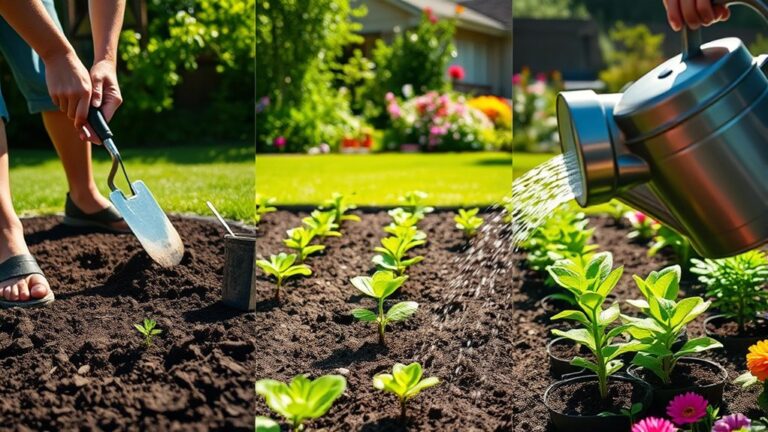
Prepare your soil like you’re fluffing a pillow: clear away weeds, rocks, and leftover roots, then loosen the top 8–12 inches with a fork or spade.
Check its texture and drainage, and mix in compost as a soil amendment to improve nutrients and structure. Avoid working soil when it’s soggy, since that can compact it.
Finish by raking the surface level, creating a loose bed that supports root aeration and healthy growth.
What Tools Does a Beginner Gardener Need?
You’ll need a sturdy hand trowel, pruning shears, gardening gloves, a watering can or hose, and a small hand fork. Add a rake and shovel if you’re preparing larger areas.
For garden bed design, use a tape measure and string to mark clear, accessible paths. Seed starting basics require seed trays, labels, and a spray bottle. A sunny windowsill can replace a grow light.
Start with these essentials, then buy specialized tools only when needed.
How Can I Keep Pests Out of My Garden?
Keep pests out of your garden by checking plants often and removing insects or damaged leaves by hand. Use row covers to block pests, and encourage helpful predators like ladybugs by planting flowers nearby.
Try companion planting: herbs such as basil or rosemary can help deter some insects around vegetables. For effective pest deterrence, water at the base, clear away fallen leaves, and avoid broad-spectrum pesticides that can harm beneficial insects.
When Should I Harvest Vegetables and Herbs?
When to harvest depends on each crop’s signs of readiness: your garden’s a small orchestra, and every vegetable plays its ripeness cue. Pick tomatoes when they’re fully colored and slightly soft; harvest leafy greens young and tender, and gather herbs before flowering for the strongest flavor.
How to test ripeness? Check seed-packet guidance, color, size, firmness, and aroma. Taste a sample, then harvest regularly to encourage continued growth and prevent overripening.
Conclusion
With a little patience, you can turn your garden into a thriving corner of your own. Check how sunlight and water move through your space, then choose plants that suit those conditions.
Build simple habits, like watering consistently and checking for new growth, and you’ll learn what your garden needs over time. You don’t need a green thumb worthy of Midas, just curiosity, care, and a willingness to grow alongside your plants. With these tips, you can get good at growing a garden.