How to Grow a Cottage Garden in 3 Simple Steps
Starting a cottage garden can feel overwhelming when you’re unsure which plants will thrive or how to arrange them. You’re not alone—many gardeners want a charming, colorful space but aren’t sure where to begin. These simple steps can help you grow a cottage garden that suits your climate, sunlight, and style.
Grow a cottage garden in three steps: choose flowers and herbs suited to your climate, sunlight, and taste; prepare the soil and arrange plants by height; then maintain blooms with thoughtful care. Mix long-flowering annuals, classic perennials, and useful herbs, checking mature sizes before planting.
Improve soil with compost, space plants properly, and place taller varieties behind shorter ones. Water deeply when soil dries, mulch, and remove faded flowers. Keep going for simple tips to help your garden flourish.
Key Takeaways
- Choose flowers and herbs suited to your climate and sunlight, combining long-blooming annuals, cottage favorites, and useful herbs.
- Plan a balanced mix of tall, medium, and short plants, checking mature sizes and spacing before planting.
- Test and prepare the soil with compost, improve compacted ground, and match plants to the bed’s conditions.
- Water deeply when soil is dry, mulch the bed, and feed lightly with compost if growth slows.
- Deadhead faded flowers, remove damaged foliage, and check regularly for pests to encourage healthy blooms.
Choose Flowers and Herbs for Your Cottage Garden
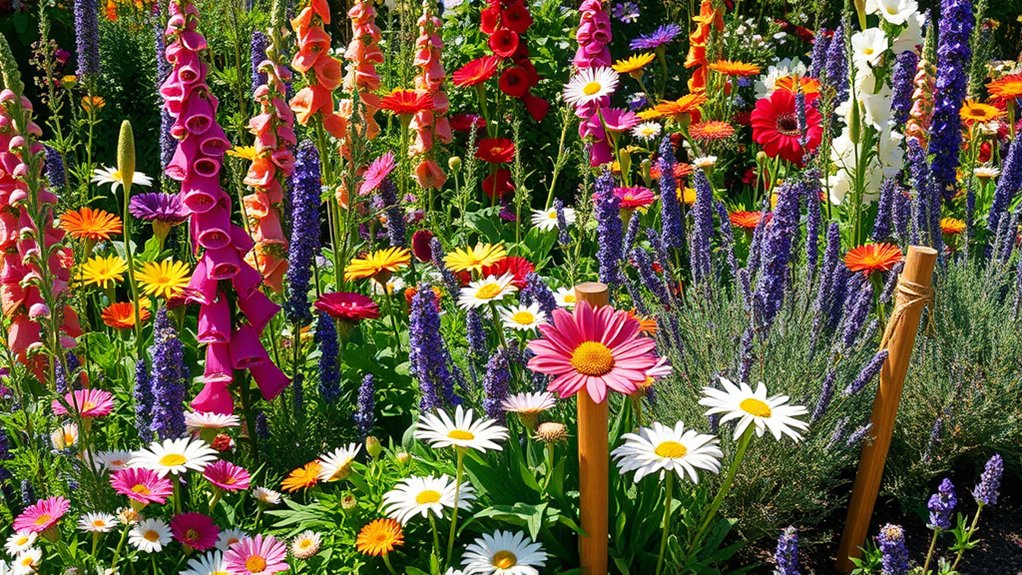
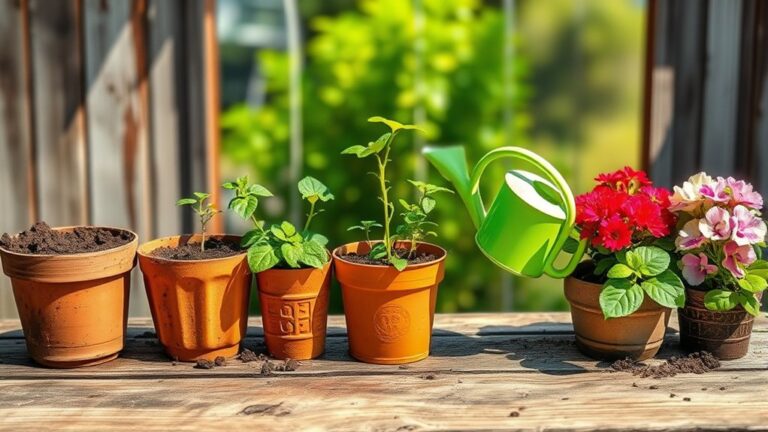
Which flowers and herbs should you choose? Build your cottage garden around plants you love, then select varieties that suit your climate and sunlight. Choose a mix of long-blooming flowers, such as cosmos, zinnias, and calendula, for color through the season.
Choose flowers you love, match them to your climate and sunlight, and mix long-blooming varieties for color through the season.
Add classic cottage favorites like foxgloves, hollyhocks, or delphiniums if they thrive where you live. Check each plant’s mature size and flowering period before buying, so your choices support a balanced garden design.
Include useful herbs alongside ornamental blooms. Basil, thyme, chives, and parsley offer fresh flavor, while lavender and rosemary bring fragrance and attractive flowers. Consider herb companions that share similar needs: thyme and lavender prefer well-drained soil, while basil and parsley appreciate regular moisture.
You can also choose herbs that attract pollinators, such as flowering oregano, and let some plants bloom rather than harvesting every stem. Select a practical range of annuals and perennials, and favor varieties you’ll enjoy caring for and using. This thoughtful selection gives your garden color, scent, and harvest.
Prepare Soil and Arrange Plants by Height
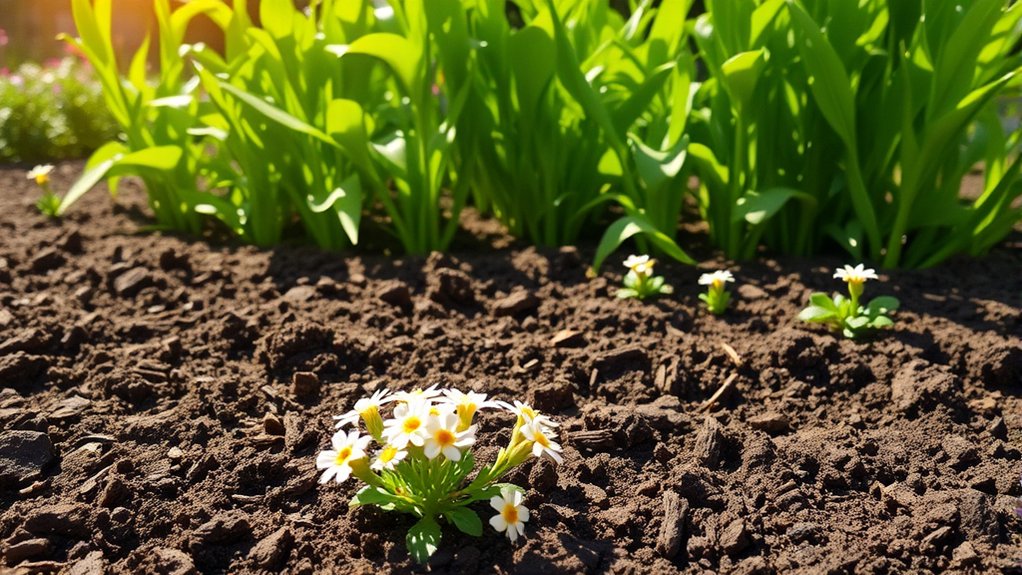
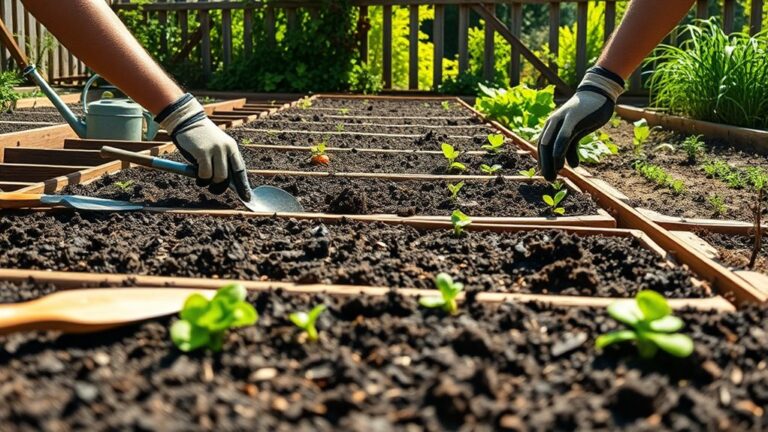
Once you’ve chosen your flowers and herbs, prepare the soil and plan where each plant will go. Start with soil testing to check soil pH and identify any nutrient gaps. Match your selections to the bed’s sun exposure, then use compost mixing to enrich the earth.
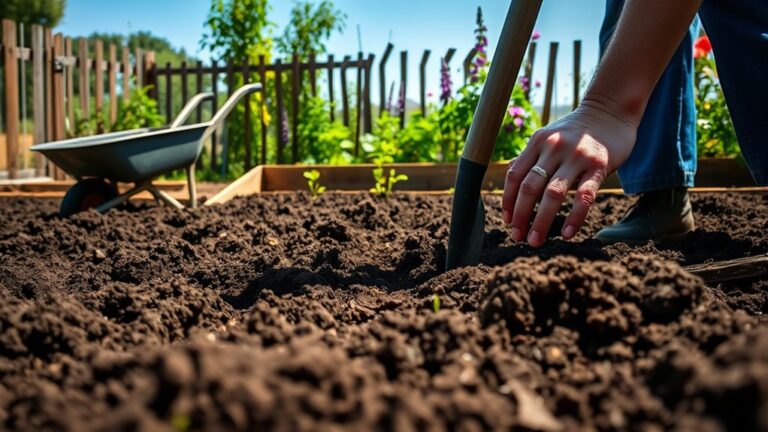
If the ground feels compacted, try aeration techniques, such as loosening it with a garden fork, so roots can spread.
Next, use plant height planning to create a layered display. Place tall flowers at the back of a border or in its center if you can view it from all sides. Set medium plants in front, then edge the bed with shorter blooms and herbs.
Add border edging to define the shape and keep soil in place. Spread mulch evenly, leaving stems uncovered; aim for a suitable mulch depth of about two inches. Water thoroughly after planting, and follow a steady watering schedule while roots establish. Check labels for spacing, and leave room for mature growth.
Keep Your Cottage Garden Blooming
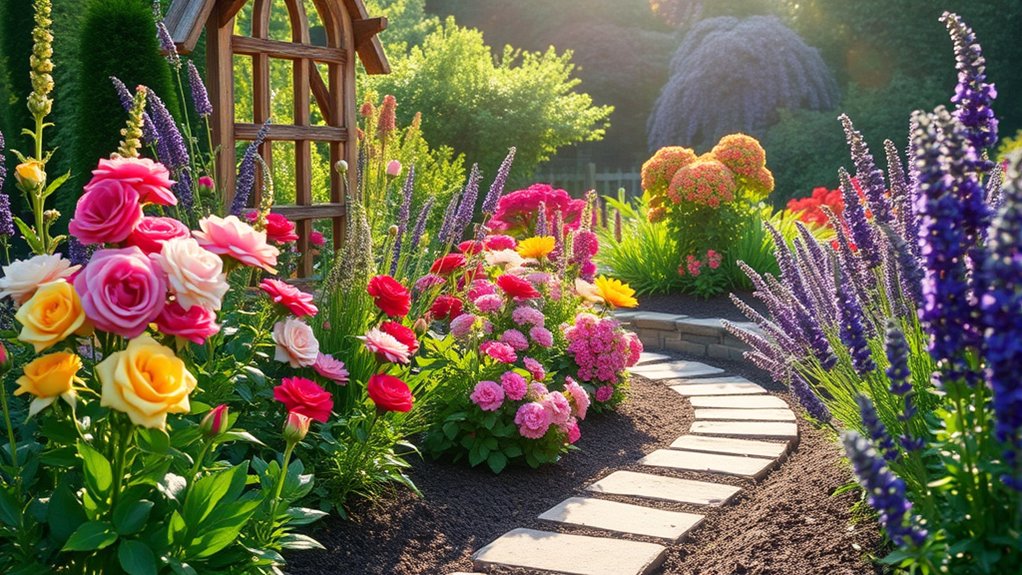
To keep your cottage garden blooming, remove faded flowers regularly so plants can direct energy toward new growth. Snip spent blooms just above a healthy leaf or bud, and check your beds every few days. Deadheading encourages many annuals and perennials to flower again, though some plants, such as ornamental grasses, offer attractive seed heads you may want to keep.
Water deeply when the soil feels dry, rather than giving plants frequent, shallow drinks. This supports strong roots and helps with water conservation. Apply mulch around plants to slow evaporation, suppress weeds, and steady soil temperatures. Water near the ground in the morning to limit waste and reduce leaf diseases.
Feed plants lightly with compost if growth slows, but avoid excess fertilizer, which can produce lush leaves at the expense of blooms. Don’t let gardening myths dictate your routine: observe your plants and adjust care to their needs. Remove damaged foliage, watch for pests, and enjoy each new flush of color.
Frequently Asked Questions
How Much Sunlight Does a Cottage Garden Need?
A cottage garden usually needs at least six hours of direct sunlight daily for abundant blooms. Check each plant’s sunlight requirements, since some flowers thrive with more sun while others prefer partial shade.
If your garden gets less light, choose varieties with good shade tolerance, such as foxgloves, hostas, and astilbes. Observe your space throughout the day, because nearby trees and buildings can change how much sun each bed receives across the seasons.
Can I Grow a Cottage Garden in Containers?
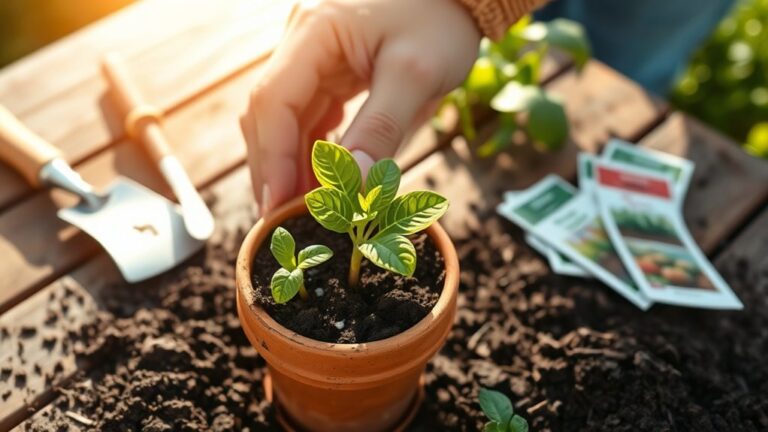
Yes, you can grow a cottage garden in containers; even a small pot can become a little patch of paradise. Choose plants that suit your climate and available sunlight, such as compact roses, lavender, herbs, and trailing flowers.
Use pots with drainage holes and quality potting mix, then water regularly because containers dry out faster than garden beds. For balcony gardening, group varied heights and colors to create a lush, informal look without overcrowding your space.
How Do I Attract Pollinators to My Cottage Garden?
Attract pollinators by planting a variety of pollinator friendly plants that bloom from spring through fall. Choose native flowers in different shapes and colors, and group each type together so bees and butterflies can find them easily.
You’ll support attracting beneficial insects by avoiding pesticides and providing shallow water with stones for safe landing. Leave some bare soil and undisturbed stems for nesting, and let a few flowers go to seed for food and shelter.
Is a Cottage Garden Suitable for Small Spaces?
Yes, a cottage garden suits small spaces when you plan thoughtfully. If you’re asking, “is cottage garden suitable” for your balcony, patio, or narrow yard, you can make it work with vertical supports and containers.
Try these small space ideas quick tips: group pots, use wall trellises, and layer plants by height. Is compact design possible? Absolutely.
Choose space saving plant choices, such as dwarf roses, compact herbs, and climbing flowers, to create abundant color without crowding your space.
What Garden Tools Are Essential for Beginners?
Start with a hand trowel, garden fork, pruning shears, watering can, and sturdy gloves. You’ll use the trowel for planting, the fork to loosen soil, and the shears for basic pruning.
Add a hoe if you’ll tackle weeds, plus a wheelbarrow for moving compost or plants. A garden hose can simplify watering larger beds.
Choose tools that fit your hands, clean them after use, and consider mulch decisions before buying extra equipment.
Conclusion
Grow a cottage garden by choosing flowers and herbs you love, preparing rich soil, and arranging plants from tallest to shortest. Then keep blooms coming with regular watering, deadheading, and seasonal care.
Don’t worry about perfect rows or matching colors; a little wildness is part of the charm. With each season, your garden will grow fuller, more fragrant, and more welcoming.
Plant with patience, tend with care, and soon your outdoor space will feel like a story in bloom. That’s the joy of growing a cottage garden.